Happy Friday 13th – may your luck go the right way today! Welcome to another roundup of stories that caught our eye this week.
This week in Greater Auckland
- On Monday, we ran a follow-up guest post by Kasey McDonnell, on why trams should rebuild Wellington. (Check out Kasey’s blog Welly Climate Nerd (formerly threesixtysix) for excellent explainers – their social channels are also great!)
- On Wednesday, big reader George Weeks brought us a review of Ben Channon’s new book, Happy By Design.
- And on Thursday, Matt dug into The Western Line to Newmarket Question. Which is: once the CRL opens, what’s the quickest way to get to Newmarket if you’re coming from the west? Is it a one-seat ride… or a cross-platform transfer at K Road? (Spoiler: almost always the latter)
This roundup, like all our work, is brought to you by the Greater Auckland crew and made possible by generous donations from our readers and fans.
We’re now a registered charity, so your donations are tax-deductible. If you’d like to support our work you can join our circle of supporters here.
The war on kids: our streets aren’t safe
Last week, a child in Selwyn was tragically killed after being hit by a car on his way home from school (there’s a GiveaLittle to set up a scholarship in his memory). And this week in Auckland, three children – that we know of, so far – have been taken to hospital after being hit by cars on local streets.
As reported by the NZ Herald (and by Stuff), on Monday, two children were hospitalised after being hit by drivers while on their way to school. One was trying to cross Whangaparaoa Rd, a 50km/h arterial:
Local [Whangaparaoa] resident Livy Gledhill heard multiple sounds of sirens and said the spot where it happened was a recipe for disaster.
Gledhill said she’s waited for something to happen at the location, as it doesn’t have a pedestrian crossing.
“So many people have to run [across the road] no matter what especially the kids… it was scary over the holidays watching all the young ones while parents are at work.
“You also have primary kids using that spot for crossing in the morning and afternoons. “
The other child was trying to cross Onewa Road in Northcote, likewise a 50km/h arterial route:
Police confirmed they then received reports a pedestrian had been hit by a car on Onewa Rd at 8.26am.
“An intermediate-aged child suffered moderate injuries and was taken to hospital in a stable condition.”
An email from Northcote College to parents confirmed a student was hit by a car when crossing Ōnewa Road.
Then on Wednesday evening on Te Atatū Peninsula, a child riding a bike was hospitalised after being hit by a bus on Te Atatū Road, also a 50km/h arterial. We understand this crash happened close to the location where another crash grievously injured a local father almost exactly a year ago.
Three notes:
- these are just the ones we’ve heard about
- none of these locations were protected by survivable speeds, even though they are locations where vulnerable humans are expected to frequently cross paths with people driving vehicles
- nor were these locations covered by the safety figleaf of the “variable speed zones” that Simeon Brown and David Seymour insisted are key to “prioritising the safety of young Kiwis”
It’s almost as if there are better, more evidence-based ways to make sure our streets don’t become killing fields?
Slowly unpicking Simeon Brown’s disastrous speed legacy
Just before Christmas 2025, Waikato and the Coromandel saw the restoration of some stretches of safe speeds that had been removed by Simeon Brown’s 2024 Speed Rule. Under Brown’s lethal new rule, safety is “balanced” with “productivity” and put to a popular vote.
But look at this:
- In Kūaotunu, 71% and 69% felt there were positive benefits in lowering 2 sections of SH25 from 70km/h to 50km/h.
- In Wharekaho, 63% were positive about speed limits going from 70km/h to 50km/h in their area.
- 58% saw the benefits of changing the speed limit to 50km/h between Thames and Tararu.
- Karangahake: 41% saw benefits, 57% had concerns, believing it would cause more delays. Many also commented that a lower speed limit would help people navigate the tricky nature of the road.
- SH2 Waihī: half had concerns but many stated the lower speed limit would make the busy Dean Crescent intersection safer, noting the high number of heavy vehicles and cars towing trailers using that intersection.
Even when the feedback leaned towards higher speeds (Karangahake), the call was made to err on the side of safety. Good.
Now, Northland – where locals know their roads best – is also consulting on bringing back safer speeds, with feedback due by 24 March 2026. It’s great to see a return to sanity. But you have to wonder:
- how much harm has been caused in the meantime?
- is the cost of all this doing-and-undoing folded into the Cost-Benefit Disclosure Statement (CBDS)* that’s now required for every single new speed on every street and road?
*Could Be Doing Something better with all that time and money, eh.
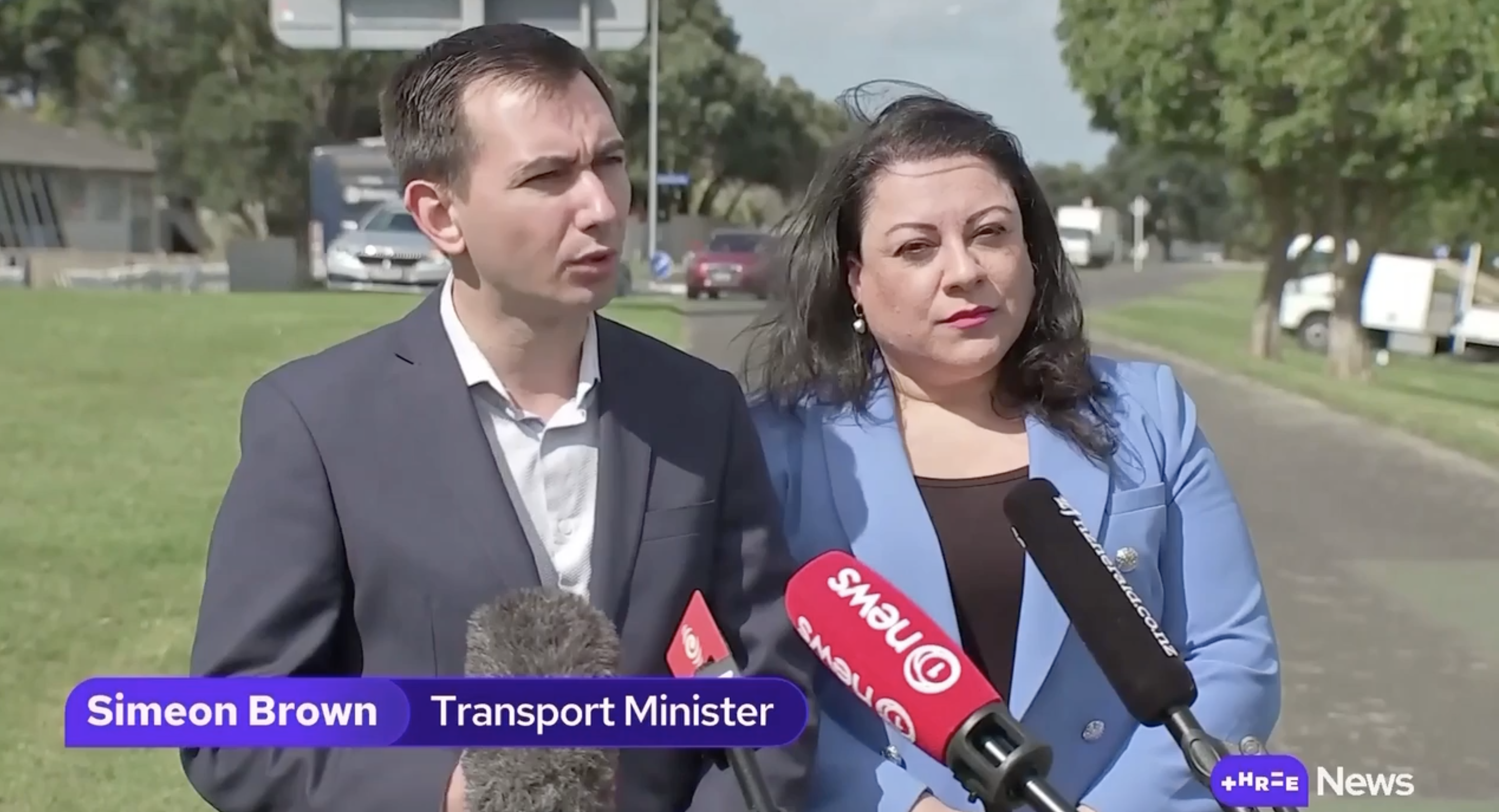 Simeon Brown announcing his Speed Rule, September 28 2024 screenshot
Speed-calming is popular, actually
David Zipper writes in Bloomberg that traffic-calming works and people generally love it:
What I learned surprised me. With rare exceptions, these strategies to reduce speeding are effective, often to a striking degree. And contrary to common perceptions, residents generally support them.
So why aren’t these lifesaving measures being implemented everywhere?
Spoiler: the problem is twofold – unbalanced reporting… and un-courageous city leaders:
Outlets that exaggerate opposition to speed countermeasures will hamper reforms, because they lead policymakers to conclude that providing support could be tantamount to committing political suicide. Based on what I have learned, such fears are overblown.
That may be the most important lesson about local speed mitigation tactics. These moves can clearly save lives; researchers don’t doubt their effectiveness. Even better, many residents are eager to see them implemented. The missing link: policymakers courageous enough to do the right thing.
First-person advocacy for better streets and safer driving
Auckland Councillor Julie Fairey, who was injured last year when hit by a driver while astride her bike at a give way sign, has written a powerful first-person account for ACC. It’s a great read, making the case for better driving, better infrastructure, and hanging onto what’s good about being on a bike:
Despite everything, Julie insists she’ll ride again.
“For me, cycling is the best way to get around. It helps my physical and mental health, it’s efficient and it connects me to my community,” she says.
“This is the only time I’ve been hit by a car in all my years of cycling. And no one ever says to a driver after a car crash, ‘Will you drive again?’”
She describes her custom-built e-bike like it’s part of the family.
“When you ride, you feel connected. You can smell dinner cooking, hear kids playing, say hi to people on the street. In a car, you’re in a box. You’re separated from all that.
“Cycling feels human, and it’s like the closest thing to flying while you’re still on the ground.”
This perspective is bolstered by a new meta-analysis of how everyday exercise can boost mood and help tackle depression. As reported by RNZ:
We found exercising had a high impact on depression symptoms and a medium impact on anxiety, compared to staying inactive.
The benefits were comparable to, and in some cases better than, more widely prescribed mental health treatments, including therapy and antidepressants.
We also found aerobic activities – such as walking, running, cycling or swimming – were best at reducing both depression and anxiety symptoms.
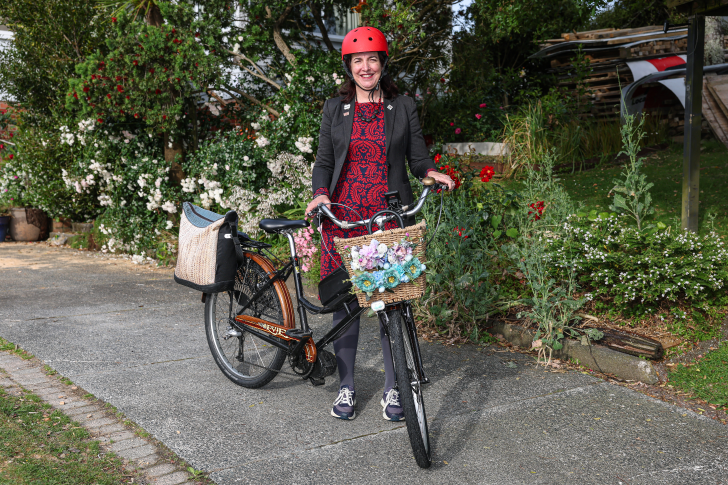
Councillor Julie Fairey and beloved bike. Image via ACC.
Eastern Busway to be finished
Auckland Transport announced:
Cost savings and additional funding will allow the final stretch of the Eastern Busway to be built, enabling buses to directly connect to Botany Town Centre on a corridor separate to other traffic.
The final section of busway to be built from Tī Rākau Drive through Guys Reserve Whakamaumahara was previously unfunded, with a plan to provide an interim bus route in general traffic for the final section where Tī Rākau Drive meets Botany Town Centre.
NZ Transport Agency Waka Kotahi (NZTA) and Auckland Council have confirmed $101 million in funding to enable construction of the Botany link route at Guys Reserve. Significant overall programme savings and efficient delivery have helped contribute towards the funding.
AT’s Eastern Busway Alliance will start construction in March.

Supporting Te Huia
The Spinoff’s Hayden Donnell agues that we shouldn’t kill of Te Huia right as the network is finally about to be sorted.
KiwiRail’s Dave Gordon says there’s no reason why Te Huia can’t keep running. The service has been built into the proposed timetable for the City Rail Link. There’s even room to enhance it by electrifying the train lines between Pukekohe and Hamilton, which would allow Te Huia to run through the new City Rail Link tunnels where diesel engines remain barred. “It’s just the cost, but these are not issues where you scratch your head and think ‘how would you do it?’” he says. “The real question is whether it’s a – and I mean this with a small n – national priority.”
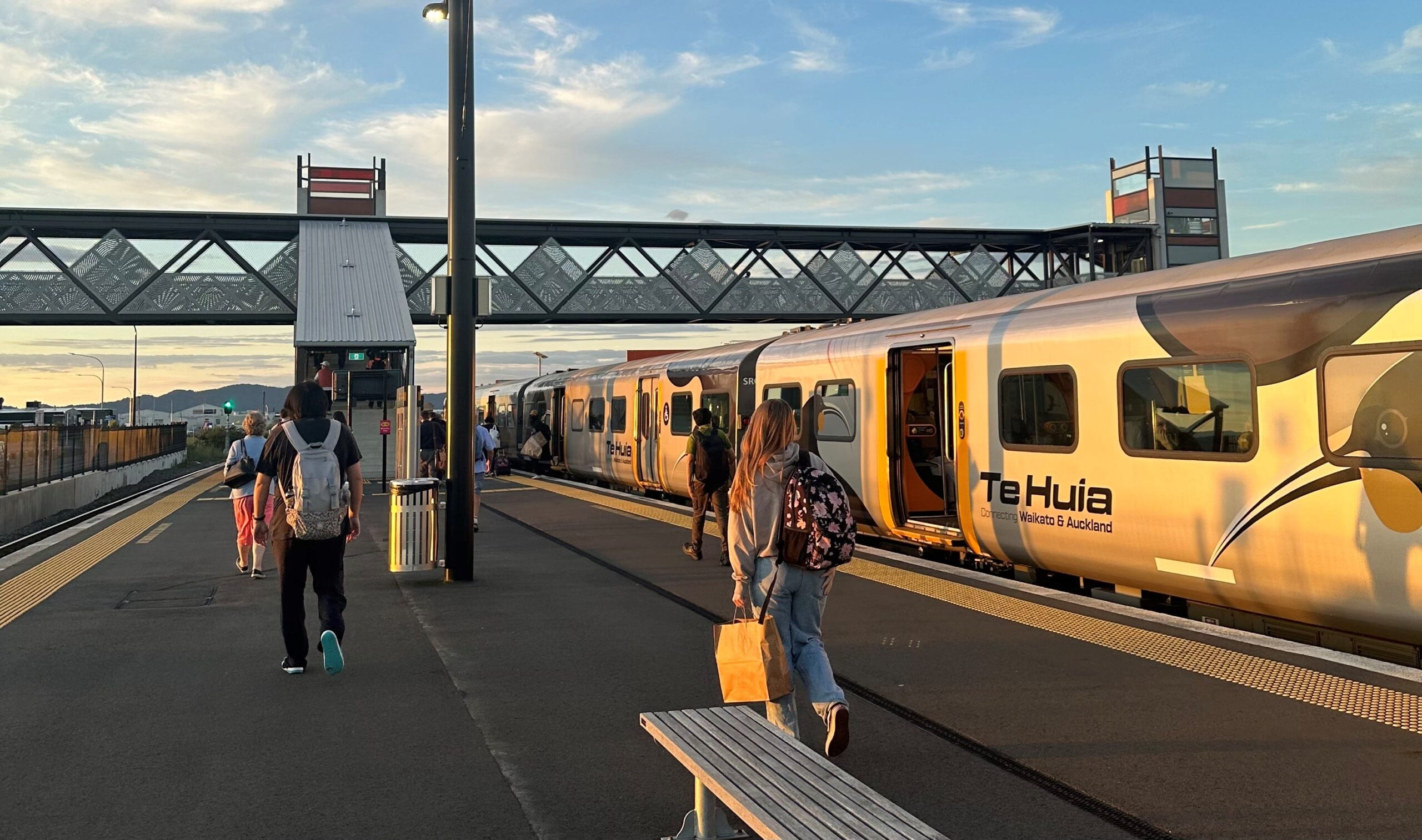
Te Huia at Rotokauri Station. Image credit Darren Davis
Feel-good story of the week
Every dreamed of a ride-on model railway of your very own? A chap in Castlecliff, Whanganui has spent a decade building exactly that, and it’s now for sale. Any takers?
Over the last 11 years, Ian Jones has painstakingly recreated a fully functional miniature railway on his 759m² section in Castlecliff.
Over 370 metres of track has been laid out with 10 tunnels (yes, 10), two bridges, a station and a 600w electric loco train which chugs through the 12-minute loop. He previously had a 3.5hp Briggs & Stratton engine.
But that’s not all – there’s an elevated boardwalk over the tunnels between mature kawakawa and nikau palms, as well as a permanent house bus to hop off at and grab a cuppa before the next service to Nikau Junction.
There’s an endearingly home-made video showcasing the layout here. Also, whomst among us, etc.
“The first thing I did was I bought the bus and put that on (the land),” says Jones. “Then I accidentally put a bid on a miniature railway locomotive on Trade Me and won the auction.”
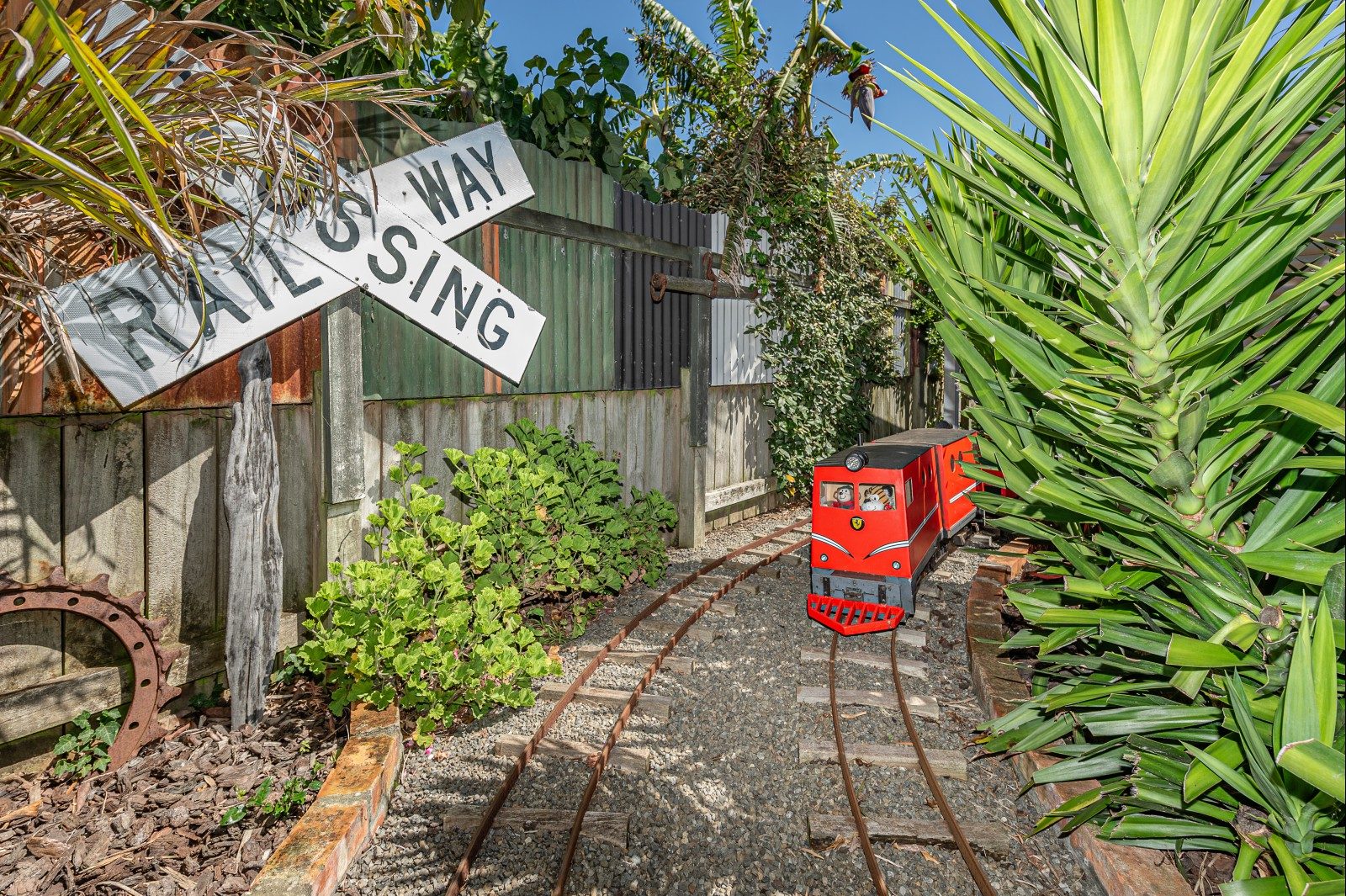
The accidental locomotive in question? Image via TradeMe listing.
Bike news on a roll…
Some good reads and timely updates from our wheely good friends over at Bike AKL:
- A great list of the top ten bike links to look forward to in 2026 (plus honourable mentions)
- How accessibility is improved by things like decent bike networks, actually.
- Haere rā Dean Kimpton: a measured assessment of the departing AT CEO’s tenure.
- A quick fix on Quay St.
- And a handy feedback guide for polishing the Waitematā “LAMP” (Local Active Modes Plan) – a package of quick and easy improvements for cycling and walking in the Inner West (which we covered here last year). Speak up for more than sharrows!
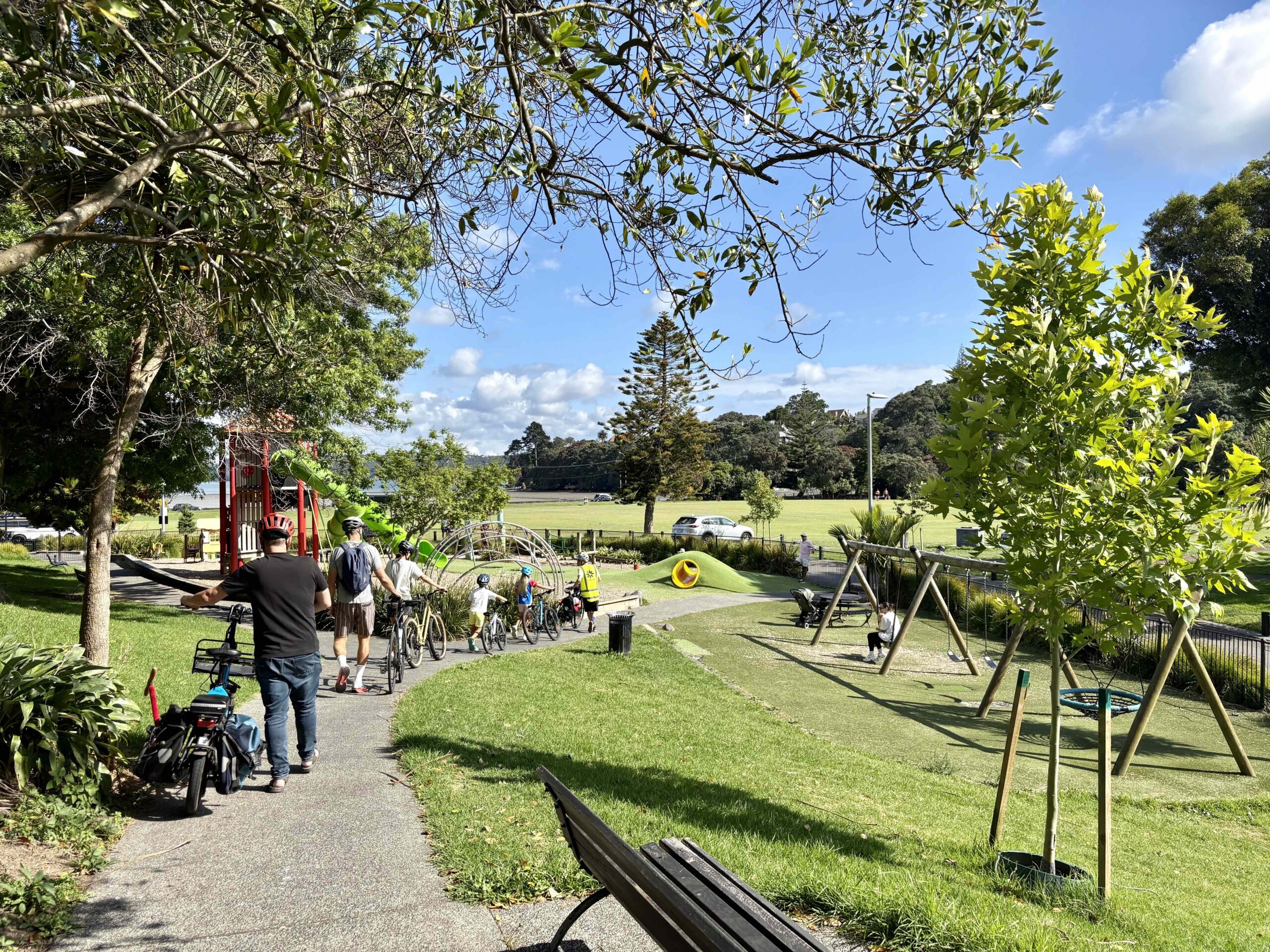 An upgrade to this path linking Nottingham St in Westmere to the greenways through Cox’s Bay Reserve is just one of many improvements in the Waitematā LAMP.
Making cities greener (and also redder?)
It’s been a record hot couple of weeks for our city. Perfect timing for this piece by Jamie Morton in Newsroom, about the need for more street trees and urban greenery to help mitigate dangerous heat, espiecally with Auckland Council planning under a severe 3.8C warming scenario.
Welch says Auckland’s solution lies in reversing a decades-long trend of paving and building over natural surfaces – or what he calls going from “grey to green”.
It also requires sustained attention and clear investment priorities: a process that Auckland has already begun.
The first step, he says, is addressing the unnecessary footprint of the car – particularly redundant parking, one of the biggest heat island contributors.
“There are a lot of opportunities that many cities have identified to reduce the number of car parks with materials that are better at absorbing water and reducing heat.”
Meanwhile in Denmark, a town is introducing red-tinted streetlights in areas busy with bats, to make things easier for the nocturnal fliers (and presumably also for birds and moths).
As Arezki Amiri explains in Daily Galaxy, “The shift from white to red lighting followed findings that short-wavelength light can significantly alter bat activity, while red-spectrum light is less likely to interfere with their echolocation and feeding patterns.”
The project is designed to balance the need for safety and visibility with ecological sensitivity. “Warm white light remains in areas with significant pedestrian or vehicular traffic. Red light is used only where disruption to wildlife is likely.”
Red-spectrum LED lighting can also reduce energy use and costs. “Compared to legacy sodium lamps or halogen systems, LEDs require less power, last longer and support smart lighting controls, including dimming and motion sensing.”
How the coalition government slammed the brakes on EV uptake
Electric vehicle uptake in New Zealand has stalled after the government not only scrapped the clean car discount, but also slashed penalties for the clean car discount, and brought EVs into the Road User Charge net. As Ed Harvey, founder and CEO of Evnex, spoke to the Detail this week, the loss of uptake lays clearly at the governments feet, with wider consequences:
But Harvey says it has come at a devastating cost to the environment and for EV businesses.
“It’s done huge damage to the industry. There were a lot of fledgling businesses that were building, whether it be EV charging infrastructure, like us, or battery recycling, or EV service specialists that were starting to grow quite well back in 2022/23. It’s done a huge amount of damage to those businesses, and they have lost a lot of confidence.”
It prompted him to write opinion pieces for The Post and on LinkedIn, saying “the New Zealand government’s lack of strategy and ambition around electrification is nothing short of embarrassing. Our transport minister is capitulating to the interests of lobbyists and short-term political gains”.
Videos worth watching
Late-breaking news – A new face aboard at All Aboard
Via LinkedIn: Tim Adriaansen is the newly appointed director of All Aboard Aotearoa, which advocates for decarbonising the transport system. Congratulations to Tim, who really knows his stuff as you can glean from the compelling guest posts he’s shared here over recent years.
All Aboard will be undertaking some exciting mahi this election year. You can keep up-to-date by signing up for their newsletter here.
That’s it from us, we hope you enjoy your weekend!

 Processing...
$110m for that final stage of the Busway is hilariously massive
Crazy.
Perhaps why the Airport to Botany extension remains unfunded and not planned for completion until 2041.
Of course, if it was one of the RoNs…..
You can probably investigate for yourself with Google Maps to see how difficult it is to get past one of the busiest, most congested crossroads in Auckland for a fast busway connection. $110m is hilariously cheap.
Lol, you think? I know what I’d put it to instead.
The enormous price we pay for outdated transport planning and misuse of the Auckland Forecasting Centre’s model.
For anyone interested in my review of ‘Happy by Design’, here’s a good article by environmental psychologist Marta Saniewska, who works at Foster + Partners.
https://www.ribaj.com/intelligence/science-of-wellness-nature-and-health
“The biggest challenge is not to find relevant research (this field is quickly expanding); it is to apply it in practice and in accordance with the other design concerns at play.”
There is a meet-up planned for ex workers of the East Town workshops this weekend, shame it was closed down in the first place. Will the planned rail yard between bunnythorpe and palmy have facilities for building engines?
Maybe another bit of evidence that people like safer speeds / safer cycling / etc is that Julie Fairey got more votes than the very experienced Christine Fletcher in the Albert-Eden-Puketāpapa Ward
Meanwhile, in Blenheim, the only on-road protected cycleway in the whole town is being removed and painted cycles lanes being put in because, you guessed it, car drivers have been complaining about it ever since it was built in 2017. Talk about a backwards step. Stupid small town nz mentality
https://marlboroughapp.co.nz/news/articles/698bb9148fa48d4568322038
Who are the idiots making these decisions and how can we go about removing them from their positions of power?
This is the same council that elected two ACT local members
How do we make cities cooler whilst at the same time increase their density?
I’m confident that this is the kind of thing that can be effectively balanced when designing neighbourhoods from scratch (e.g. green or brownfield developments).
I am less confident (admittedly as a result of bias) when it comes to the types of boxy infill housing that we’ve seen in Auckland. A lot of impermeable surfaces to absorb the suns heat on those bodged shitboxes (not to mention cause flooding issues).
A good wrap up of the weeks stories (and a particularly good week of articles for the blog overall; i’d say).
I live in a fully insulated double glazed house and our power bill is significantly lower than similar families we know in older houses. We have the heatpumps going (cool or heat) all night as it seems to cost almost nothing.
So the boxy infill housing will perform significantly better than the ones they replace.
The heat island effect caused by high density built environments isn’t just an indoor phenomenon. Its great that you live in a building with effective climate control though (thousands of other people are not so lucky).
Asphalt has a very high thermal mass, and we have covered half our cities in the stuff
Yes, its a bit of a worry given the propensity of infill housing developments to add to that effect by removing almost all permeable surfaces for driveways and maximum built-over space.
The mansion block system could maybe address some of this (e.g. by forming canopies from street trees and preserving some kind of internal (within the block) space for further greenery.
There is nothing proposed for New Zealand that appears capable of doing this from what i’ve seen.
Whangaparaoa could have been made a thriving, accessible, low traffic community, with excellent bus connections to town and elsewhere, and with arterials made safe for for all users, including children.
All at a fraction of the price of Penlink, and without inducing a deluge of new traffic onto the motorway and city like Penlink will do.
Instead, a child is sacrificed to our revolting planning system, and many people are trapped in foul car dependence.