Here’s a bunch of stuff that caught our eye this week, during all the hot and humid weather.
This Week in Greater Auckland
- On Tuesday Matt explored what progress has been made on the North Western Busway.
- On Wednesday, Patrick took a look at potential improvements to increase accessibility to the Auckland Museum from the City Centre.
- On Thursday, Matt examined some of the statistics behind the performance of road policing.
This roundup, like all our work, is brought to you by the Greater Auckland crew and made possible by generous donations from our readers and fans. If you’d like to support our work, you can join our circle of supporters here, or support us on Substack.
The new crop of Councillors
On Tuesday the five new councillors attended their first Governing Body meeting of the term, each giving their maiden speeches.
Aside from some of the personal stories, there are a couple of things that stand out.
Bo Burns has this vision which good
“My vision is simple: A city people not only want to live in, but love and feel proud of.
“Too often I hear people say, ‘I don’t want to live here anymore’. That breaks my heart.”
From John Gillon
The Beach Haven father of two daughters set out a long list of issues he wants to “sink my teeth into this term”, ranging from fairer funding for local boards to chip seal that “the public hate”, and rolling out shade sails over all of the city’s playgrounds.
“Shade sails are extremely important as they protect children from the sun, but also prevent the equipment from getting scorching hot.”
We can definitely get behind more shade sails at playgrounds.
Speaking of playgounds, Matt Winiata noted:
“We aren’t in the money business, we are in the smiles business.”
“Bike hubs, community events, concerts, skate parks, playgrounds, sports fields, activations and pop-ups – visit any of these and you’ll see smiles on faces and the light in the hearts of our communities burning bright.”
If the council is looking to get out of these, Matt Winiata said, the creative spark of communities will wane and potentially disappear.
Congestion Pricing Legislation passes
Congestion pricing has taken another step forward with the legislation needed to enable it passing unanimously. When was the last time that happened?
Legislation to allow the introduction of congestion charging has passed its third and final reading at Parliament.
The Land Transport Management (Time of Use Charging) Amendment Bill establishes a framework permitting local authorities to set up a congestion charging scheme, by notifying NZTA.
Auckland Council is set to be the first local authority the government will look to partner with.
Transport minister Chris Bishop said the charges were not about raising revenue, but accepted the charges would be contentious at first.
“People, broadly, don’t like paying for things they think they’ve already paid for. Fair enough,” he said.
“Once it starts, and the benefits start to flow in terms of smoother journey times, reduced traffic at peak times, smog goes down, safety improves, people go ‘this is fantastic,’ and immediately public opinion turns around. So we’ve just got to hold, ride it out, literally ride it out.”
The legislation passed with the support of all parties in Parliament.
Better things are happening!
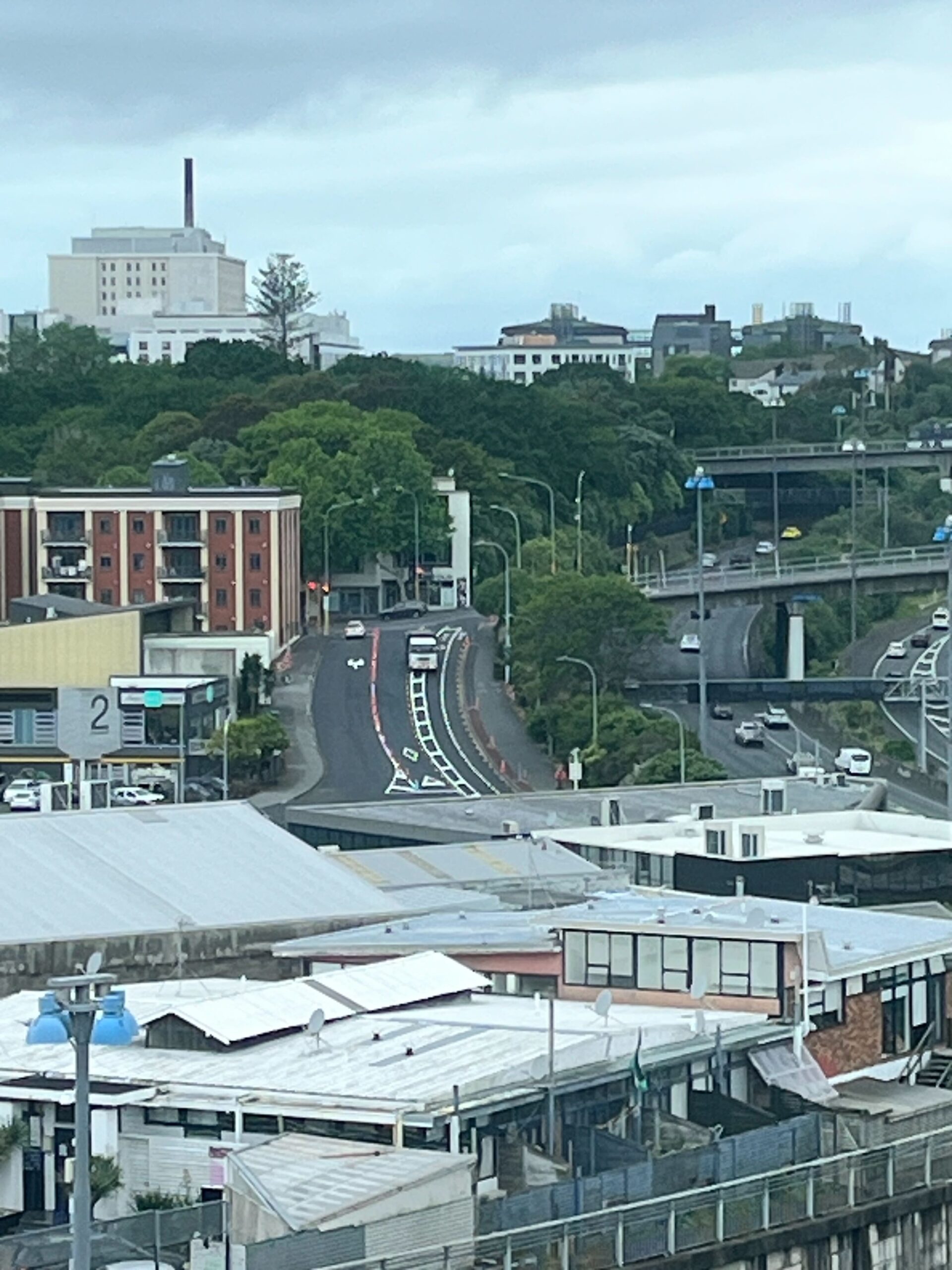
Long range snap here of the new cycle lane being put on Canada Street just outside the Mercury Lane CRL station. Always glad to see good things happening!
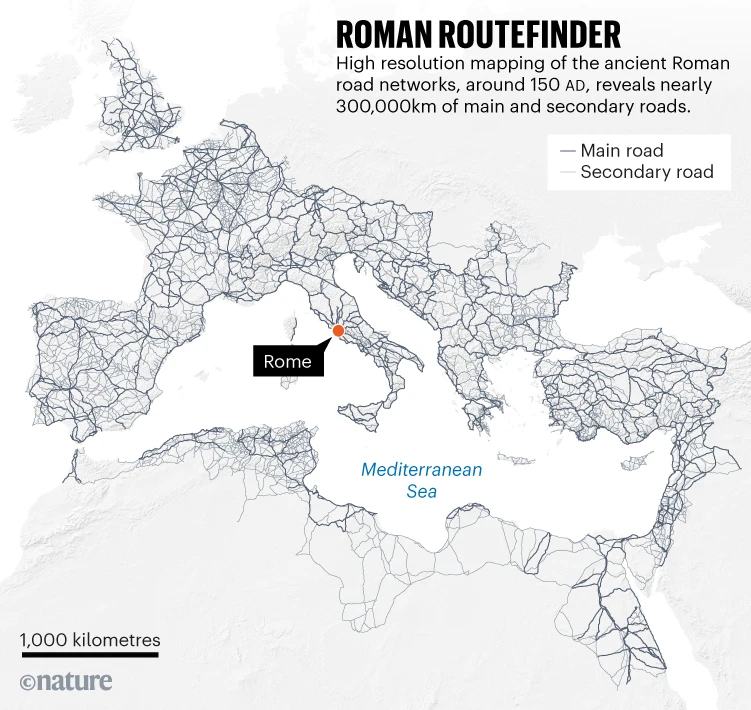
Digital map of Roman roads?
A recent piece of data work has led to the creation of a digital map drastically expanding the known length of Roman Roads. You can check out the map here.
Previous attempts to map the road networks of the Roman Empire had created incomplete data sets with low spatial resolution, and estimations for road locations rather than evidence-based reconstructions.
“Although the roads are one of the best-known aspects of Roman history, it’s surprising how many details about them we still don’t know,” says Catherine Fletcher, a historian at Manchester Metropolitan University, UK.
The researchers first identified Roman roads from previous studies, including atlases, surveys, historical sources, archaeological sources and existing milestones. They then compared this information to modern and historical aerial photographs, topographical maps and satellite imagery. The team digitized each road section with a high spatial resolution, then combined the sections into Itiner-e.
The map includes nearly 300,000 kilometres of roads existing in around ad 150, when the empire was at its maximum territorial extent.
Coming soon, Kiwis in Climate – Voices for Climate Solutions
A new book is dropping next year, a collection of pieces from a bunch of New Zealanders on the solutions we need to deal with climate change. Check it out and pre order if you are interested.
Kiwis in Climate – Voices for Climate Solutions brings together bold and practical visions for Aotearoa to lead on climate solutions. Leading scientists, politicians, CEOs and citizens demonstrate what we are doing now – and what we must do – to mitigate and adapt to the impacts of climate change.
This inspiring collection from over 30 New Zealanders explains how climate solutions can improve our lives, from cheaper energy to job creation and healthier communities. Where progress on climate is happening, efficiency is improving, costs are coming down and innovation is rising.
Chipseal woes
A lot of residents are up in arms in Tauranga regarding resurfacing of roads with chipseal, instead of the asphalt they were originally constructed with.
One of the issues was that Tauranga had many roads in residential areas that were surfaced in asphalt by subdivision developers. Developers likely know that people prefer asphalt which would be a motivation for using it.
“Those roads are progressively reaching the end of their serviceable surface life and maintenance is becoming a priority,” van Soest said.
The New Zealand Transport Agency funds 51% of local roads but for NZTA to co-fund resurfacing in asphalt, councils must show NZTA that asphalt was worth the investment as it was five times more expensive. This case was often unable to be made for suburban streets and so council would have to fund 100% of the road renewal if it went with asphalt.
“Using the example of Santa Monica Drive, the cost difference between chip seal and asphalt is almost $400,000.
“If that additional cost is divided by the number of households served by the road, resurfacing with asphalt would require each household to contribute approximately $3000 to make up the funding shortfall,” van Soest said.
Although the cost to resurface with asphalt might be approx $3000 per household, if that is amortized over a decade or two, those cost calculations start to make a lot less sense.
How prioritizing the car has shaped what knowledge matters and whose knowledge counts
An interview between Meredith Glaser and Dr Anna Nikolaeva, on some of Dr Nikolaeva’s recent research on about what knowledge is prioritised in transport planning.
The politics of knowledge are intertwined in politics of mobility because societal inequalities are often reproduced and reinforced through mobility practices. Different forms of mobility have varying levels of status, resources, access to space, and societal acceptance. Car-centrism prioritizes drivers and automobility which leads to specific politics of knowledge that emphasize technocratic aspects like traffic delays, efficiency. In other words, if we prioritize cars in our cities, it means we prioritize certain kinds of knowledge, a certain lens of looking at urban space and human movement. It also means we ignore or suppress other kinds of knowledge, like active mobility or mobilities of care (e.g. bringing kids to school or daycare, doing grocery shopping etc.) It’s not non-existent, but that knowledge is less prominent in the ways that actually lead to change.
A rail PPP?
The government are keen on paying more for infrastructure with PPPs and it seems that the Marsden Point Rail Link is in that list.
Northland’s Marsden Point Rail Link could be the country’s first to be built with a public-private partnership, with companies showing keen interest in the project.
The rail link is a 19km spur from the main North Auckland Line in Oakleigh to Northport – one of the few ports in the country without rail connection.
The Government has funded design and land acquisition for the project, but is yet to sign off on its construction after a detailed business case was submitted by KiwiRail in July.
…..
Rail Minister Winston Peters announced in August detailed rail link designs would be shared with potential investors and builders, so the best approach for the project could be decided.
This included asking parties if they were interested in “design, construction, operation, funding, and/or ownership” of the rail link, according to the Government Electronic Tenders Service overview.
There was strong interest, with more than 70 organisations requesting access to the information, said Bobby Fischer, KiwiRail programme director – Marsden Point procurement.
From the socials and elsewhere
View this post on Instagram
View this post on Instagram
That’s everything from us this week. Enjoy your weekend!

 Processing...
While at Papatoetoe last Friday I saw this by KR with both the Up main and the New 3rd main being used at the same time , with a Southbound EMU passing at the same time , so all3lines were being used at the same time .
https://www.youtube.com/watch?v=iufWTypGr10
Sorry to hear about your card. Hope you didn’t lose too much. Think I will order a new SD card because I have been using the same one for nearly 10 years.
I have 1 of them and every now and then have to reformate them , even a couple of brand new ones did the corruption thing and since then after being reformated I have had no problems .
And one other thing that has come back are the Cement Pods on Train 129 from Whangarei in the evening , which also happened last Summer .
These may be because the Ship is under survey or hopefully it could be continuing happening , as it’s taken a large number of Trucks off the road between Portland and Northport .
https://www.youtube.com/watch?v=86faY6aETB8
Main question about that chip seal vs asphalt thing is:
how long do they last? The chip seal often already seems in worse shape than the underlying asphalt after just a few years, with patches of it completely gone.
We have way too many way too wide streets. We should have at most 6m of width on our street, but we actually have 8.5m (and a lot of others have 11 or even 13m), which presumably makes resurfacing more expensive than it needs to be. We should use the asphalt, and that price difference should be reclaimed from people who systematically park their own cars on the street.
Transport minister Chris Bishop said:
“Once it starts, and the benefits start to flow in terms of smoother journey times, reduced traffic at peak times, smog goes down, safety improves, people go ‘this is fantastic,’ and immediately public opinion turns around. So we’ve just got to hold, ride it out, literally ride it out.”
Pakuranga Road?
AT want to “ease congestion” outside the hospital by turning the bus lane into a general traffic lane from 10 am to 2 pm.
https://www.scoop.co.nz/stories/AK2511/S00315/proposed-changes-to-improve-congestion-near-auckland-hospital.htm
More people use buses than cars on that stretch of road.
However you can still have your say.
Been pondering this. Ideally, they’d have the bus lane go in the opposite direction in the mid day peak instead, but then you’d have the majority of the bus lane just being a turning lane instead.
You could have the middle lane be the bus lane instead, but then buses would need to make really aggressive merges to get to the left shoulder for the hospital bus stops.
I really don’t think there’s any good solution that isn’t cutting off through traffic, which would absolutely not be on the cards in the current environment.
How the F would a PPP work for freight, revenues are tiny
It just seems to be another scam for those overpaid consultants to get another payday for doing nothing and not even going out and getting their dancing shoes dirty .
Privatised rail freight works reasonably well in the UK (in contrast to passenger services). Its important to note that freight operators don’t actually own the track though (meaning it is not a great demonstration of the potential for a Marsden Line PPP). It’s a pity the entire network isn’t open to competition.
They tried it here and it failed with the two companies [1, American and the 2nd Australian ] that strip the Guts out and when it was bought back it cost the Govn’t a more than what they should have paid and since then we are still paying after the asset stripping and non repairs to the network .
And most of the networks in Europe are all State owned .
It would be underwritten by the government, like transmission gully.
“We will pay you x per year to build and make this infra available.”
Use is not relevant.
The project’s ‘revenues’ are the payments from the government for the project being available. A PPP is a risk sharing mechanism for the delivery of a project and is not privatisation. The rail network could be either privately or publicly operated under a PPP model depending on preference.
For me, PPPs would never be the first choice. But it just seems like we are so far behind on infrastructure and it probably gets a little bit worse every year. So its become a necessary evil.
Priorities should remain with the Government of the day but the “nice to haves” go out for tender. Sam Stubbs is on LinkedIn every other day saying that we than fund these out of NZ and keep the profits here, so maybe that’s the compromise.
Before we launch into any more PPPs for road or rail I would love to see a widely-published, line-by-line post-completion “PPP cost-benefit statement” publicly released that isolates PPP financing effects (PPP unitary payments, whole-of-life PPP premium/discount, and a completed counterfactual CBA showing the PPP vs a construct-only procurement) in full technical detail for the Transmission Gully project. Completed by a well resourced independent body and audited by the Auditor General. Provided such statement arrived and showed significant benefits to the direct Government funding model I’m dead against any further PPPs. If PPS are really better show us, otherwise I smell a rat, actually lots of rats.
Nicola Willis will flick you a text.
Not sure if someone who runs the Greater Auckland blog can comment, tonight on the Petone to Grenada facebook group, there is confirmation from Andrea Compton who is the councillor for Takapū/Northern Ward and also the Chairperson of the Grenada Village Community Association has confirmed that Seton Nossiter Park is affected and that a lot of residents in Grenada are distressed
https://imgur.com/RMBWIuf
In NZ, and Transmission Gulley in particular, PPPs have proved to be an efficient mechanism of transferring public funds to private recipients with minimal bureaucratic oversight. In fact minimal oversight at all.
‘Time of Use Charging’ for private vehicles. It’s must for Auckland but not ready for a full-wide regional charging system to be implemented in Auckland Region!
1a: City centre cordon & 1c: City centre and fringe is socially practical to implement charging here in Auckland!
2c: Isthmus double cordon not practical to implement. It would be mistake to implement and penalise lower income people who don’t have alternative modes of commuting to work in most cases public transport mode is the only alternative that’s ‘fast-direct rapid transit’ or direct bus service that get commuters from point A to B directly which get you to work same time as private vehicle would!
There’s a real need for more rapid-transits in Auckland before we go thinking about a more regional or Central Auckland perimeter charge on private-vehicle-users! The government and council needs to work together to build more rapid transits particularly around the Central parts of Auckland which are badly in-need of ‘local bus services’ Only way central parts of Auckland can get ‘local bus services’ is by displacing current ‘Frequent bus services’ which are operating on our main corridors with Heavy Rail or monorail displacing the buses which frees up buses for other operational use like new ‘local bus service’. Dominion RD bus corridor full to capacity and badly needs a Heavy Rail line underneath the corridor which enables PT users orbit around inner city heavy rail line for work during peak. Hope government and council work on this! We need to give Auckland residents PT modes that’s not a bus such as Heavy Rail & Monorail and invest construction of it before deciding ‘regional-wide Time of Use Charge’ so we can free up more buses to create more routes across Auckland so every resident in Auckland has alternative commute of getting to work!
Somebody coming from a non-existent yet Southdown-Avondale line who lives in MT Roskill would be commuting 30 mins to Britomart via Western line to & from Britomart. If a direct Dominion RD tunnelled heavy Rail existed, it would save 8-9 mins getting to & from Britomart for somebody living in MT Roskill!
And now you’re shilling for monorails too??? LMAO you really are ridiculous Anon. Is this part of the great “we cannot take space away from our lords and saviours Automobile” religion?
also cause i know facts hurt your feelings here’s a bunch for ya
– If the AM class electric multiple units could travel at the speeds CAF was contracted to build them, Puketāpapa to Waitematā via the western half of the Avondale-Southdown line would take around 19-20 minutes, already significantly shorter than your claims.
– a modern surface light rail line, running in a dedicated median or on transit-only sections of street, at speeds of 50km/h, with automated traffic light priority through intersections and with stations at the Civic, Karangahape Rd, Newton Rd, New North Rd, Tawari Rd, Valley Rd, Milton Rd, Balmoral Rd, Lambeth Rd, Mt Roskill Shops, and Denbigh Ave, would be able to travel downtown to Mt Roskill in 20-22 minutes; exactly the same time you say that your vaunted $10+ billion heavy rail tunnel would take. And it would do this for much cheaper than tunnelled heavy rail or metro or elevated monorail, and with passengers never having to wait more than 4-5 minutes at peak and 8-10 minutes off peak for their train, and a corresponding capacity of 5,000-6,750 passengers per hour per direction – double or more present bus capacity
https://www.greaterauckland.org.nz/wp-content/uploads/2018/05/Rail-Travel-Time-Model-LRT.jpg
Idek who the other Anon is but I agree, monorails are stupid and light rail or trams are great EV public transportation options to retrofit into our cities.
Monorails and tunnels is transit from behind the steering wheel. They think they’re the best because it makes the transit get out of the way of their car.
Auckland not ready for ‘Time of Use Charge’ that’s outside City centre cordon & City centre and fringe! However we are definitely in-need of more rapid transits in Auckland!
Dominion RD definitely in-need of an underground tunnelled Heavy Rail underneath! The more ‘Rapid transit’ projects in Auckland, the more life improves for everyday residents who call Auckland home! It reduces commute times to&from work, reduces need of increasing ‘zone fares’ due to patronage numbers of ridership in other words helps offset ‘zone fares increases’, improves productivity for all types of businesses by making businesses more accessible and easier to visit.
Dominion RD underground tunnelled Heavy Rail if existed now, would help offset ‘zone fare increases’ but there’d still be increases to fares, but it still helps stabilise ‘zone fares’ to affordable prices for commuters to be able to afford and use PT. Prices of Auckland’s PT ‘zone fares’ already at high enough price. ‘zone fares’ annually increases due to not enough patronage/ridership since Auckland isn’t connectively convenient to commute to work wherever you live. Not enough fast Rapid transits that travel to Auckland CBD on aligned with main roading corridor within 30 mins from where services starts currently exists here in Auckland resulting in slow commutes meaning could be commuting 2 hrs+ each day to work via PT. For those who transfer from frequent bus service to connector bus service or local bus service aren’t being served a fast commute in Auckland due to no Rapid Transit corridor for exisiting frequent bus service resulting in buses stuck in congestion/gridlock with general traffic since no rapid transit for buses to bypass congestion/gridlock. If ‘zone fares’ increases more & more low income people aren’t going to be able to afford using PT here in Auckland! Auckland really needs more rapid transit projects like Dominion RD underground tunnelled Heavy Rail to help offset ‘zone fares increases’!
I already read that one
Spam repeating your point and avoiding replies that debunk you isn’t the best look Anon. –1
Why you spamming me the same points you’ve previously mentioned that are bogus misinformation for your MOTAT vanity collectors item?! Not the best look for a Burrower who copy and pastes misinformation from 3rd party sources!
Because it’s not bogus. It’s evidence-based and common sense. I want you to acknowledge that light rail is not “MOTAT vanity collectors item” but a modern evolved mass transit system well suited to a route like Dominion Road.
I want you to understand and acknowledge that frequency is not for “impatience” but for capacity and convenience that encourages people to use public transport.
I want you to give up your delusion that heavy rail can reach 110km/h on an 800m station spacing, because that is physically impossible.
-1