Kia ora and welcome to our regular roundup of stories that caught our eye this week.
Today’s header shows the new Rizal Crossing section of Te Whau Pathway in Avondale, opened last week – image courtesy of Te Whau Pathway Environment Trust.
This Week in Greater Auckland
- On Monday we shared Connor Sharp’s opinion piece on what Auckland needs from any new government, previously published in The Post (paywalled) last week.
- On Tuesday we looked at how you, our readers and supporters, can spread the word on our campaign for a brilliant new bridge over the Waitematā – building on a positive reception so far for both the proposal and our petition, which you can sign here…
- … and on Wednesday, we shared the results of an international civil engineering consultancy’s pro bono review of our bridge plan, confirming it’s buildable as well as beautiful.
- Thursday’s guest post by Darren Davis looked at recent public transit developments in the United States, and whether Aotearoa could learn a thing or two.
Greater Auckland in the news
By the end of today we should be one step closer to the formation of a government following the general election. Whatever the outcome though, it’s certain that National’s Chris Bishop – who succeeded Simeon Brown as Minister for Transport in early 2025 – won’t be returning to Parliament, leaving already-delayed transport policy and funding plans up in the air.
Connor spoke to BusinessDesk (paywalled) about possible futures for the portfolio:
Bishop had been “constrained” by Brown’s decisions, [Connor] Sharp said, which he claimed were “extremely ideological” and “culture war orientated”.
… If Brown, currently Health Minister, were to return to the portfolio, Sharp expected Crown-funded highways would be pushed through.
“But maybe someone who’s a bit more moderate, someone like [Associate Transport Minister] James Meager …. could get a continuation of what Bishop was doing.”
Sharp said it was somewhat easier to anticipate what a Labour-coalition Government might do. It could mean Green MP Julie Anne Genter as Transport Minister and a greater focus on public transport and cycleways.
Regardless, he said, there would be a focus on the broader commitments of the National Infrastructure Plan, including an emphasis on renewals over new projects.
Greater Auckland’s research and advocacy is powered by hundreds of hours of work each month. Your support helps keep us going! We’re grateful for your donations, and always open to guest posts, practical help, and pro-bono expertise.
CRL shrinks the city centre
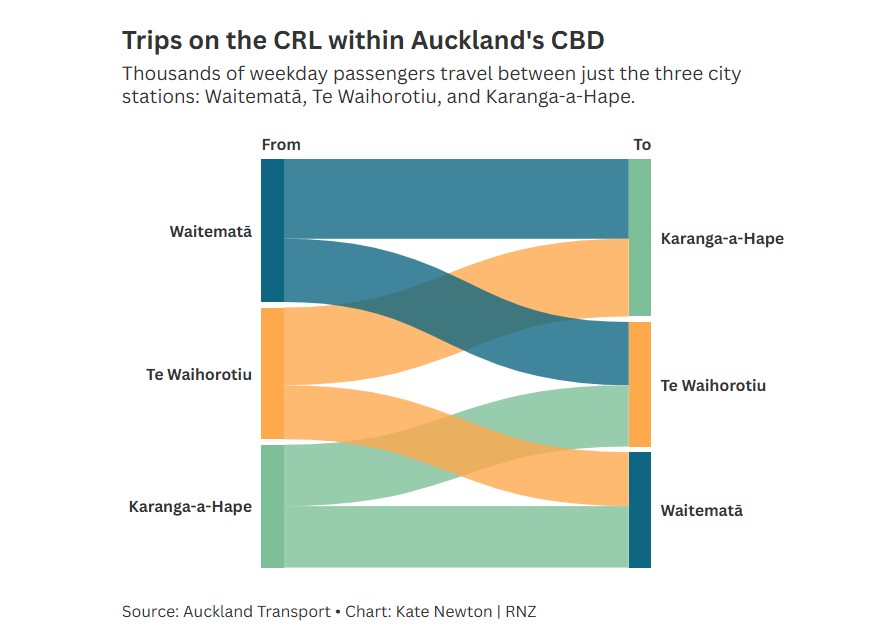
While the CRL’s real value has always been in unlocking higher-frequency travel across the region, RNZ reports that thousands of people are also using it metro-style within the city centre:
Bespoke preliminary data supplied to RNZ by Auckland Transport showed more than 3000 people were travelling between just the three city stations each weekday, and that rose to nearly 4500 a day on weekends.
There was a slight uphill bias, with about five uphill journeys for every four downhill.
Shelly – a resident living near Karanga-a-Hape Station – said she had not thought about that pattern, but it rang true.
“I’d probably walk there because it’s easier downhill… and then I get [the train] back.”
The city rail link had been “life-changing”, she said. “It’s absolutely just turned Auckland into a normal big city.”
Vocal opponents of the CRL often mischaracterised it as a “city centre loop”, and in our opinion, you can see the ghost of that idea lingering in these media angles. But now that the CRL is here, it can only be a good thing if people are finding it useful for shorter trips. Not to mention the impressive uptake it’s already sparked across the rest of the network:
Across the entire train network, weekday passengers had jumped about 60 percent in the first eight weeks the CRL had been open, compared to the same time period last year.
They were as high, if not higher, than before Covid, [Auckland Transport’s Mark Lambert] said.
… Weekend growth was even stronger – double what it was before Covid and nearly triple what it was this time last year.
In last week’s roundup, we featured Melbourne railtuber Taitset’s early impressions of the CRL. He’s now outdone himself with a second closer deep dive on CRL stations and operations, including love for the Y2K aesthetic of the Waitematā station:
Transport governance chickens coming home to roost…
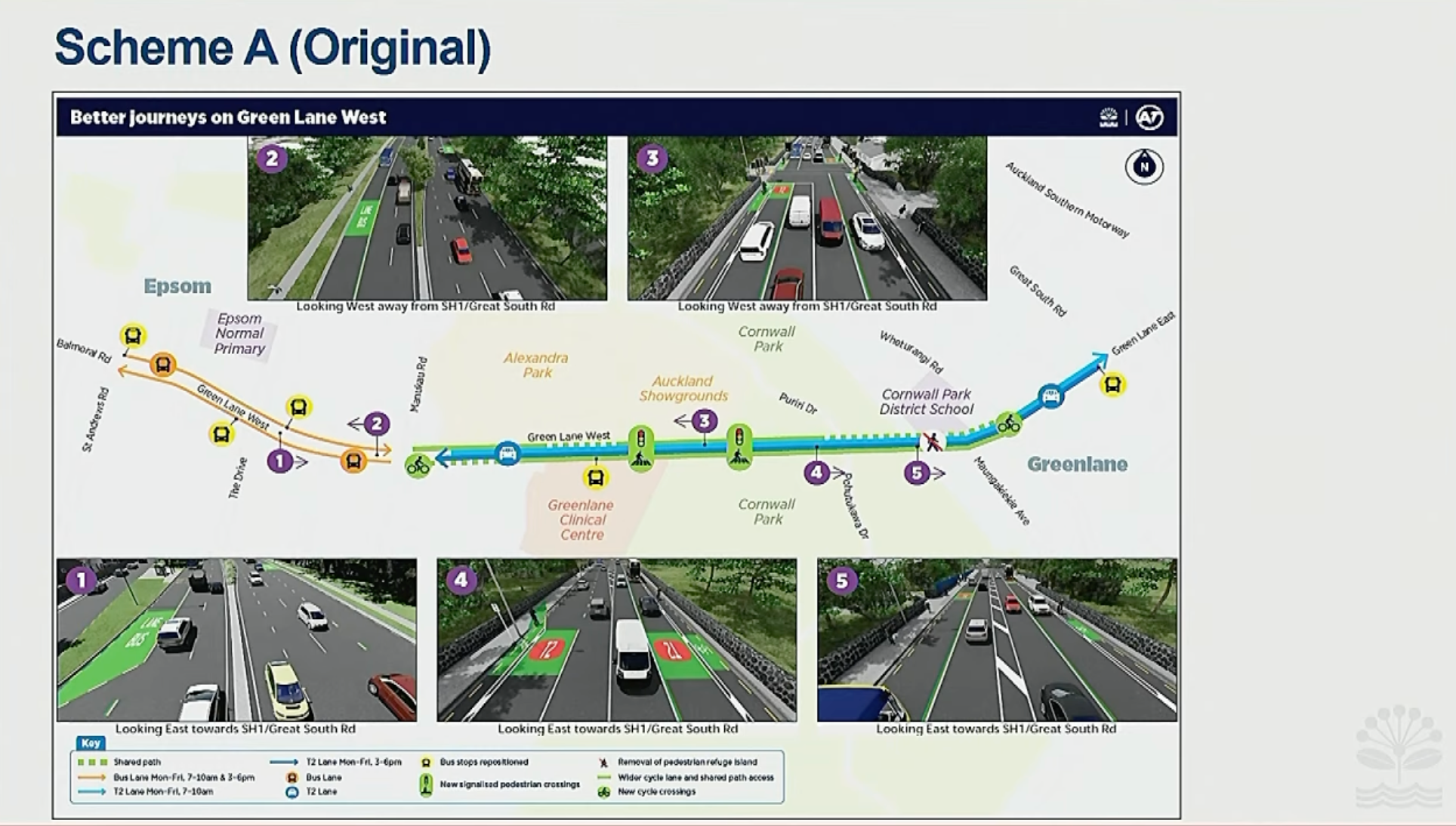
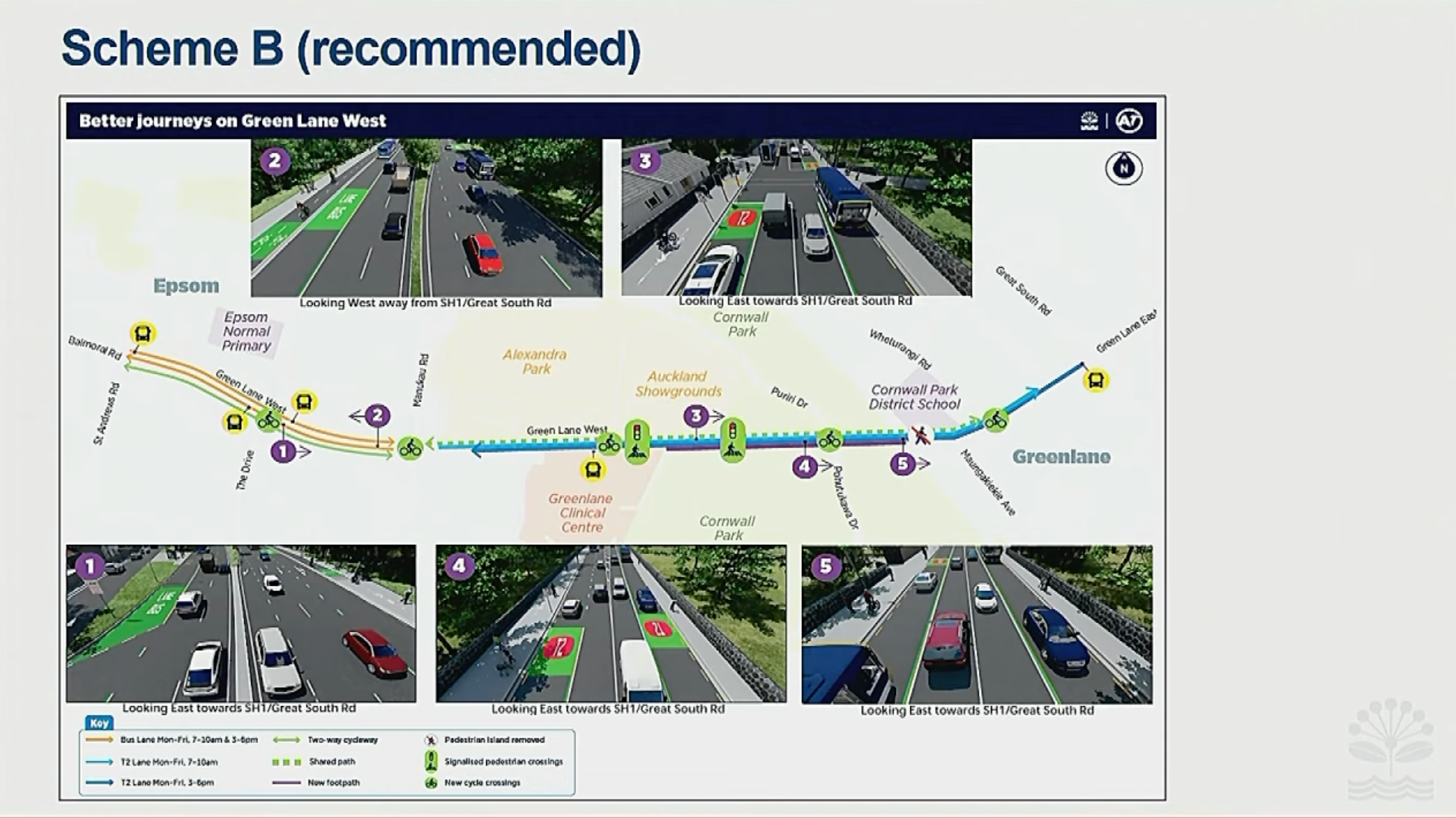
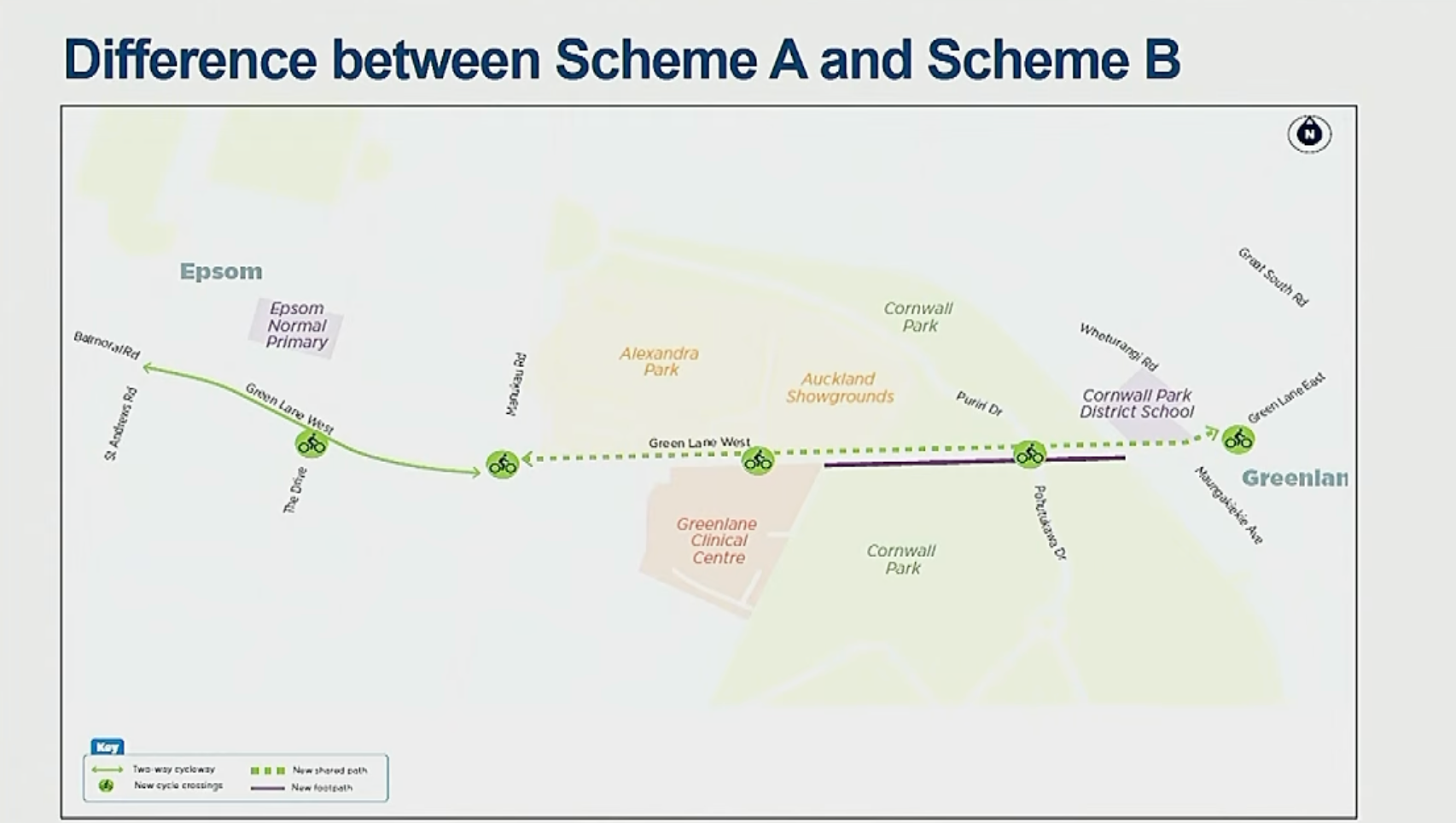
Auckland Council faced the first real test of its new transport governance role at Tuesday’s Transport and Infrastructure Delivery committee, when councillors were asked to greenlight a design for Green Lane West. The choice on the table:
- a bare minimum design with bus lanes and minimally widened bike lanes, for around $7m
- a more holistic upgrade, which significantly improves safety for people walking and cycling, for around $17m (preferred by staff, Albert-Eden Local Board, local stakeholders and public feedback)
As we’ve previously reported, Green Lane West is notoriously hostile for walking and cycling. The road is now overdue for resealing, and with costs rising across the board, even the “cheap” option isn’t getting any cheaper.
So there are compelling arguments to dig once and do this right, as pointed out by council staff and a deputation from the Local Board on Tuesday. However, funding isn’t 100% guaranteed as yet.
As reported by Tim Murphy for Newsroom, a few Councillors seemed surprised and even upset, to find themselves asked to make big calls on projects of regional importance, while others were fully up for it:
“It’s our job now, not AT’s job any more,” said Councillor Richard Hills, “to keep our communities safe wherever they are.”
Councillor Shane Henderson welcomed colleagues to the new set-up “where elected representatives get a greater say. We asked for this, we asked for a greater democratic say and we’re getting it.”
In the end, Committee chair Andy Baker threaded the needle with a recommendation to progress both designs for now, with the final decision tbc next year once the funding situation is (hopefully) clearer.
Lessons from ten years of the New Network
Anthony Cross – who has decades of experience planning public transport networks in Aotearoa, including Auckland – has a new blog Crosstown Journeys.
His first post shares an informative look back at how the New Network transformed Auckland’s bus services, beginning in South Auckland a decade ago and laying the foundations for our high-quality and still growing rapid transit system.
Auckland’s public transport system is dramatically better than it was twenty years ago. The frequent network continues to grow. Nearly fifty bus routes now operate with services at least every fifteen minutes all day, every day. Many of them are crosstown and outer suburban services, contrary to the common view that public transport only serves the city centre. New suburbs now routinely receive seven-days-a-week bus services as the residents move in. That remains only an aspiration for the residents of the outer suburbs of big Australian cities like Melbourne, which is regarded by many Aucklanders as the epitome of public transport best practice.
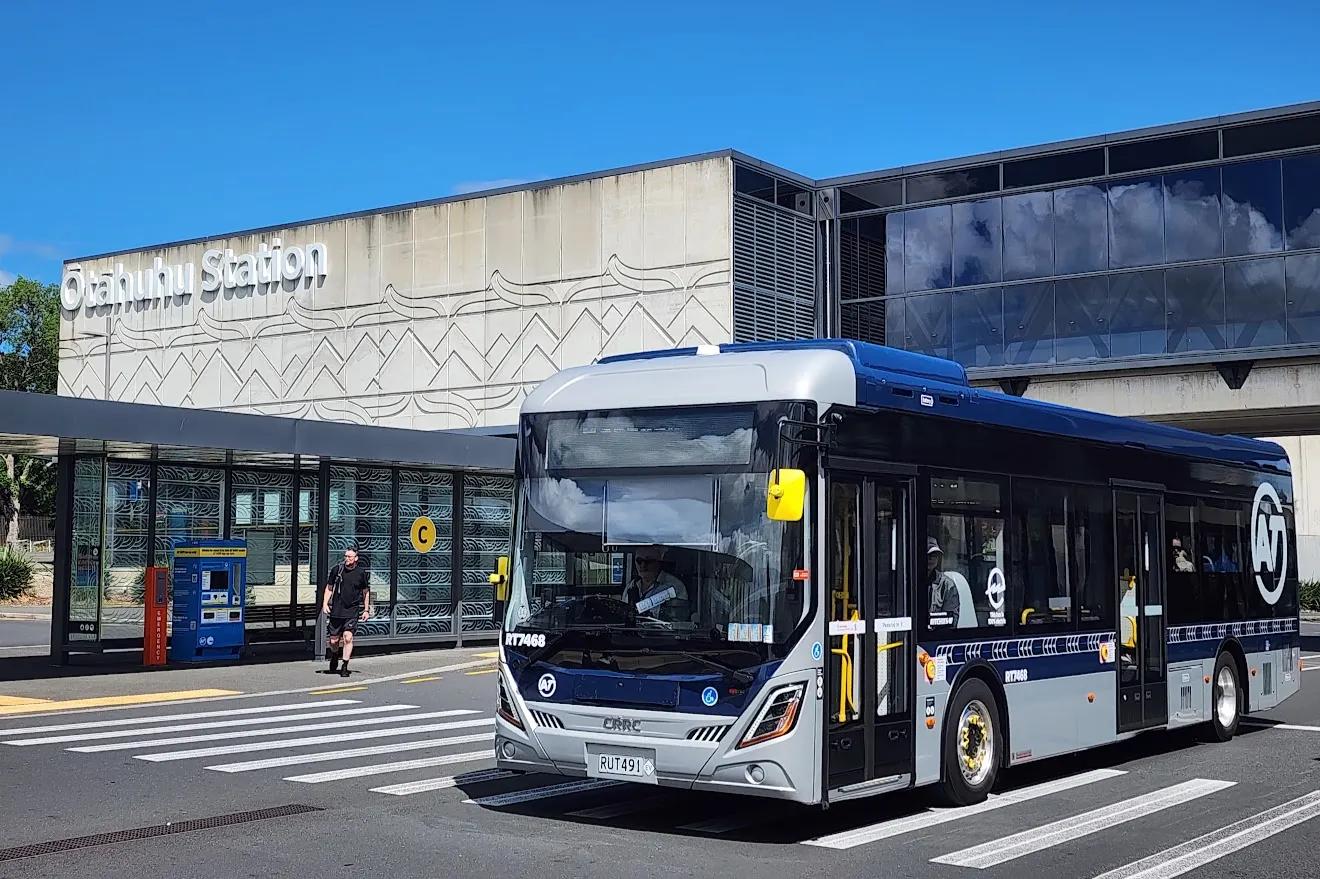
Ōtāhuhu Station, the first major station build of the New Network era, with a Ritchies-operated electric bus in the foreground. Image credit: Anthony Cross / Crosstown Journeys
Modelling the value of time-of-use charging
With consultation still open on time-of-use charging for Auckland, the conversation continues.
On LinkedIn, Saeid Adli shares a simulation of what 1.6 million Aucklanders might actually do if charges were introduced. Long story short, the fee has to be high enough to actually change people’s behaviour – otherwise, a scheme won’t work and you might as well not.
Saeid Adli’s other takeaways from the modelling:
- Pricing works on the margin it targets. A graded price produced graded responses, and the peaks moved most.
- Plan for where the traffic goes. The boundary and its interaction with the motorways matter as much as the price.
- Public transport has to be ready. Most people who stopped driving in took the bus, train or ferry instead. That capacity needs to be there on day one.
- Be honest about scale. A cordon reshapes the city centre. It doesn’t reshape Auckland.
That third point certainly stands in favour of a more comprehensive scheme – one that doesn’t just pay for itself but can also fund meaningful improvements to public transport.
We say Auckland Council’s Option C fits the bill. Have your say here – consultation closes 11 December.
Bringing buses back to Piha?
Moving from the city to the beach, hopes are rising that Auckland Council’s Long Term Plan might include funding for a trial bus service through Ōrātia and Waiatarua to Piha, at long last reconnecting a high-profile destination conly accessible by car:
Waitākere ward councillor Shane Henderson and locals have been campaigning for a Piha bus for decades, and he believes a trial is imminent.
… “[We’re] probably looking at next summer with the timing we have to do, in terms of locking aside budgets and communications. We want to make it a success, I’m feeling pretty good about it.”
… A 2018 Auckland Transport report on future public transport options for the Waitākere Ranges Local Board suggested two potential 50-minute route buses from Piha to Glen Eden and one to Piha during morning peak travel.
In the evening, there could be two buses to Piha and one out of the area to Glen Eden.
All the buses would travel via West Coast Rd to restore services to Waiatarua and Oratia, and cater demand from those areas.
Following surveys and support from locals in 2016, this trial was last mooted by Council to begin in early 2019 so hopefully with the rest of the New Network a full decade old, we might finally see something in place next summer.
Further progress on Te Whau Pathway
Speaking of connections for the west, another useful piece of the much-anticipated Te Whau Pathway is now open – passing from the western end of Avondale through Rizal Reserve, crossing the awa and connecting through to Ash Street and Ken Maunder Park.
The boardwalks with their elegant steel railings are a nice match with the far northern section of Te Whau at Te Atatū, which opened back in March.
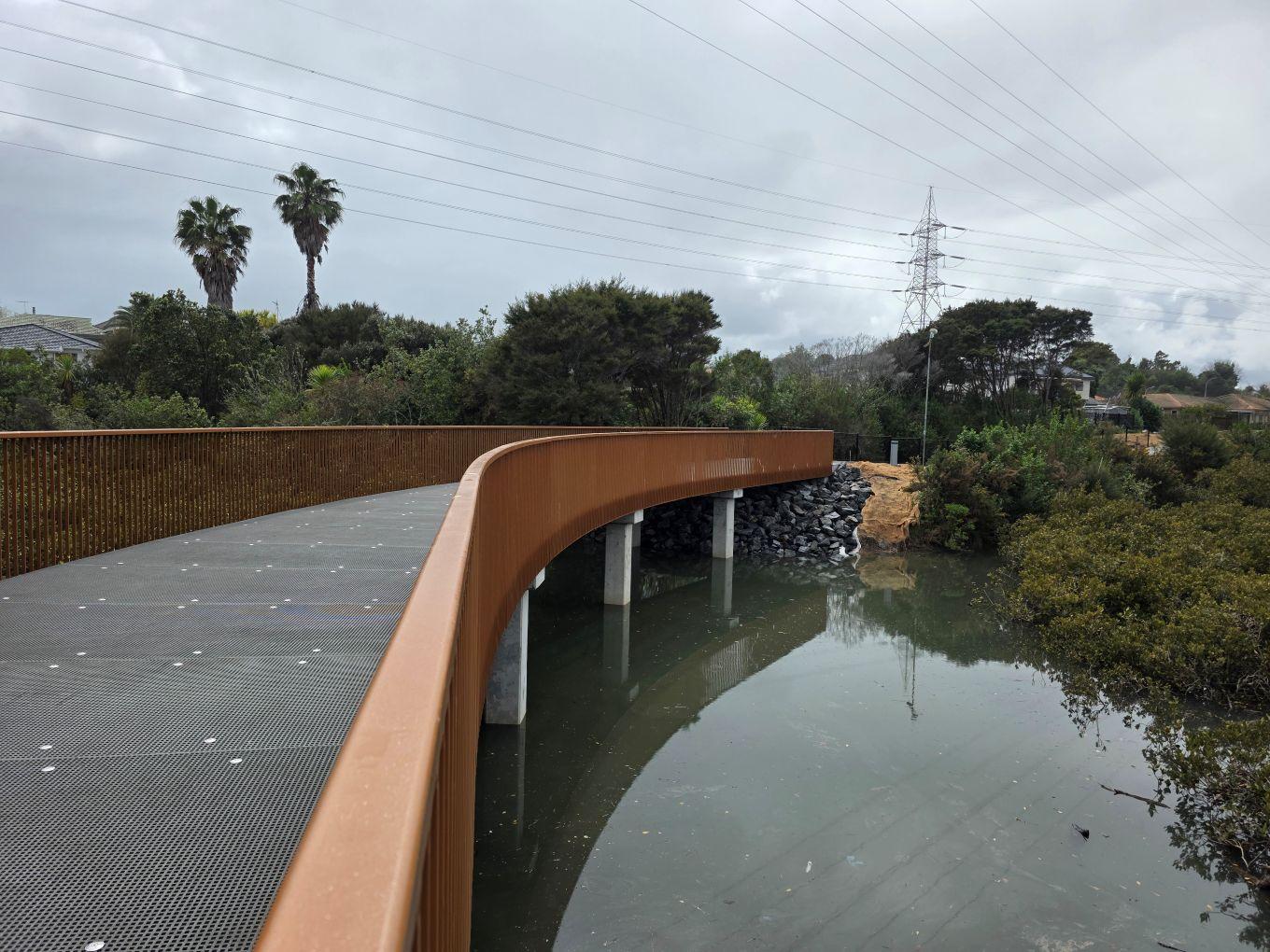
One of the new crossings at Rizal Reserve. Image credit: Our Auckland
Te Whau Pathway Environment Trust chair Tony Miguel told The Post he’s hopeful of further progress as budgets are worked through:
“We’re advocating to get funding in the Regional Land Transport Plans and the Long Term Plan with council,” [Miguel] said.
Funding would build the next sections – Horowai/Roberts Field to McLeod Park in Te Atatū South, and Wingate Street to Great North Road, Avondale/New Lynn.
“That’s the next challenge. They’re still working through their budgets so my guess is they’ll make decisions before Christmas.”
“These proposed sections strongly align with priorities by improving transport choice, closing critical network gaps, supporting access to rapid transit, and increasing safety for people walking and cycling in West Auckland.”
They strengthened outcomes for lower-income communities, improved access to schools and town centres, and converted existing isolated assets into a more functional active transport corridor, he said.
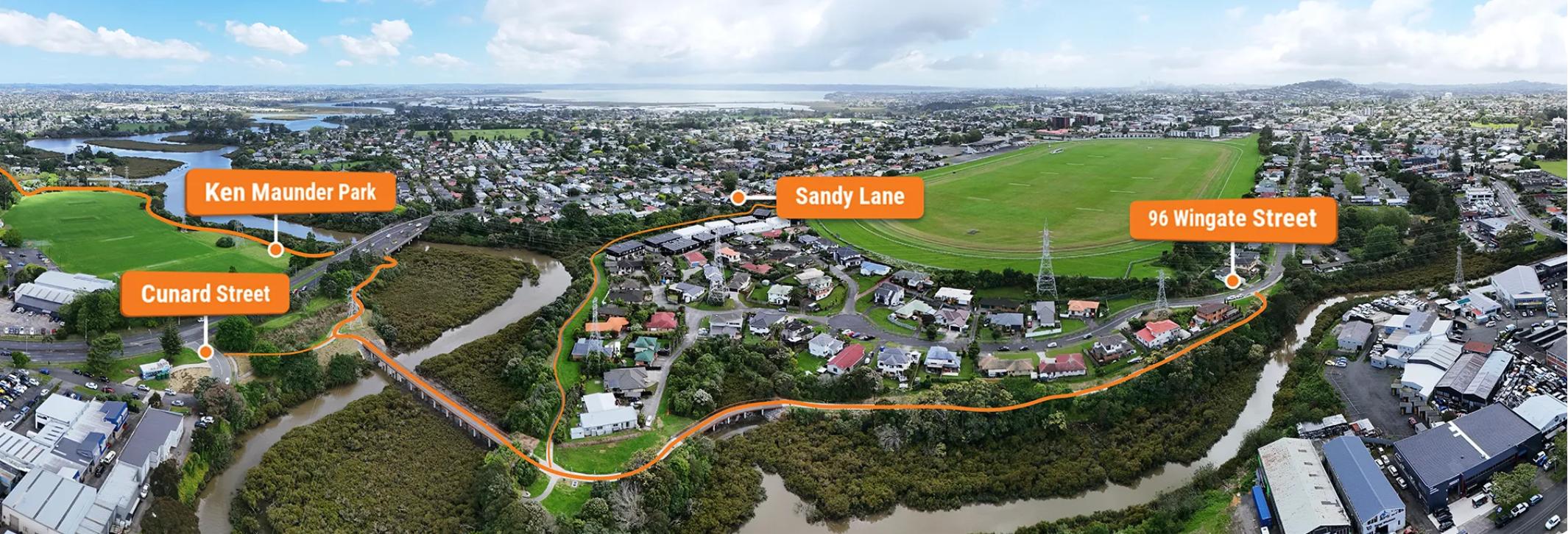
The Rizal Crossing connection in full from the air. It’s a long way yet to Te Atatū Peninsula or the Manukau, but useful and beautiful local links all add up. Image credit: Te Whau Pathway Environment Trust
And a bit more visual praise for how well-connected Auckland is for riding in this photo gallery from Wellington visitors (and bike trail legends) the Kennett Bros.
We are hearing that the Ngāpipi to Tāmaki Drive section of Te Ara ki Uta ki Tai (in the first image) may officially open on the afternoon of Wednesday 16 December. Stand by!
Christchurch’s tale of two bridges
Two bridges unalike in dignity, in fair Ōtautahi where we lay our scene: first the very bad, as reported in The Press (paywalled):
Cyclists say they are running the “gauntlet” on a narrow, bending bridge that is getting busier as development in southwest Christchurch intensifies.
The Cashmere Rd bridge, near the intersection of Shalamar Drive between the Cracroft shops and the Princess Margaret Hospital, is used by schoolchildren, commuters and cyclists accessing the Christchurch Adventure Park.
While Cashmere Rd either side of the bridge is about 12 metres wide, the bridge itself narrows to about eight metres wide with painted cycle lanes on both sides. The Press witnessed many drivers cutting into the cycle lanes in just a few minutes there on Monday morning.
Clip-on active mode lanes to widen the bridge were rejected (where have we heard that before?) by eCan some time back – which made it galling to read further reporting yesterday that the ‘gauntlet’ nearly had a tragic result within the last couple months:
Environment Canterbury (ECan) is reviewing an incident between a cyclist and a bus that forced a woman to mount the curb to avoid being struck.
Melanie Jones was cycling over a bridge on Cashmere Rd near Shalamar Drive in Christchurch in September when she was almost hit by an Orbiter bus.
The bus entered the cycleway, forcing her to mount the curb to evade it, she said.
On the other end of the safety and investment scale, the opening of a new overbridge on Brougham Street is getting a lot of attention for its dramatic engineering and extroverted red-and-white detailing. The bridge cost a shade under $18 million to build, and does indeed look pretty disco from the air:
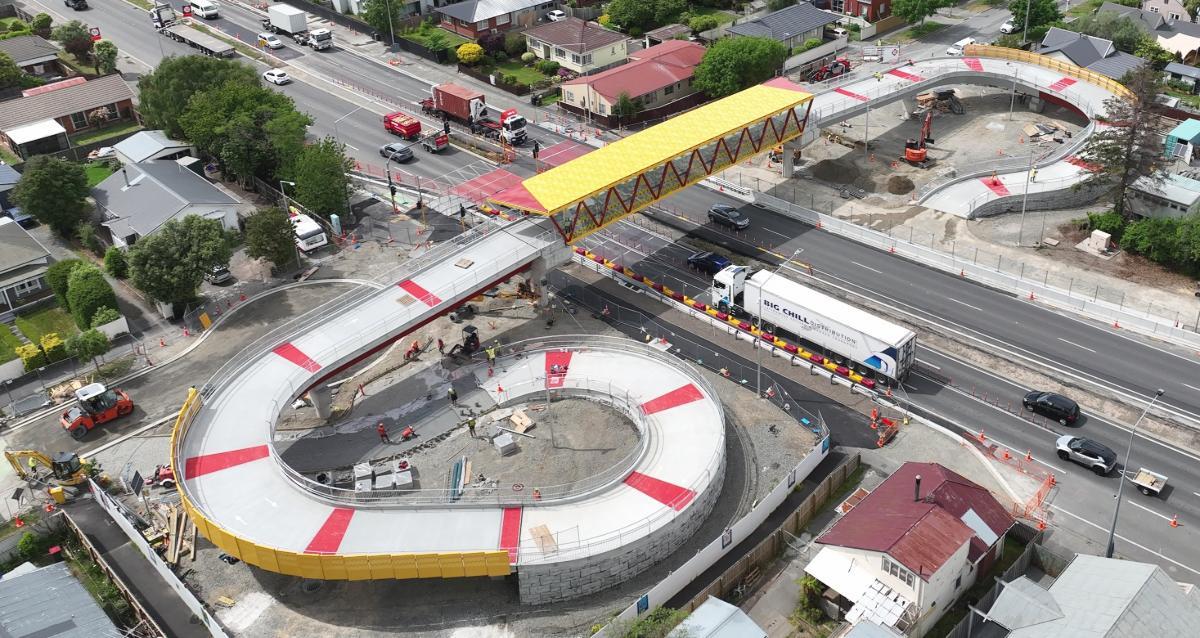
Brougham Street Bridge in Ōtautahi Christchurch, near completion earlier this month. Image: Waka Kotahi NZTA
Mike Thorpe at the NZ Herald (paywalled) had fun with visual metaphors ranging from ketchup and mustard to Chinese dragons, before putting his finger squarely on the appeal and value of the bridge to its users:
Entering the enclosed bridge feels like walking into an inferno, more for the flame-like colours than the heat of a late spring/early summer day.
Once you’re inside, the colours transform from garish to vibrant. The intricately patterned ceiling uses the sun to decorate the floor with shade. Like a solar-powered motif. The inside is a work of art.
… The bridge that looks like a hot dog without a bun will be equally welcomed by the cyclist and scooter commuters – who can now dodge rush hour traffic, and the rush hour traffic that now has fewer traffic lights to contend with.
Is this New Zealand’s ugliest bridge? For those who pass under it – possibly. But those who use it will see all of its best sides, and in the right light it’s glorious.
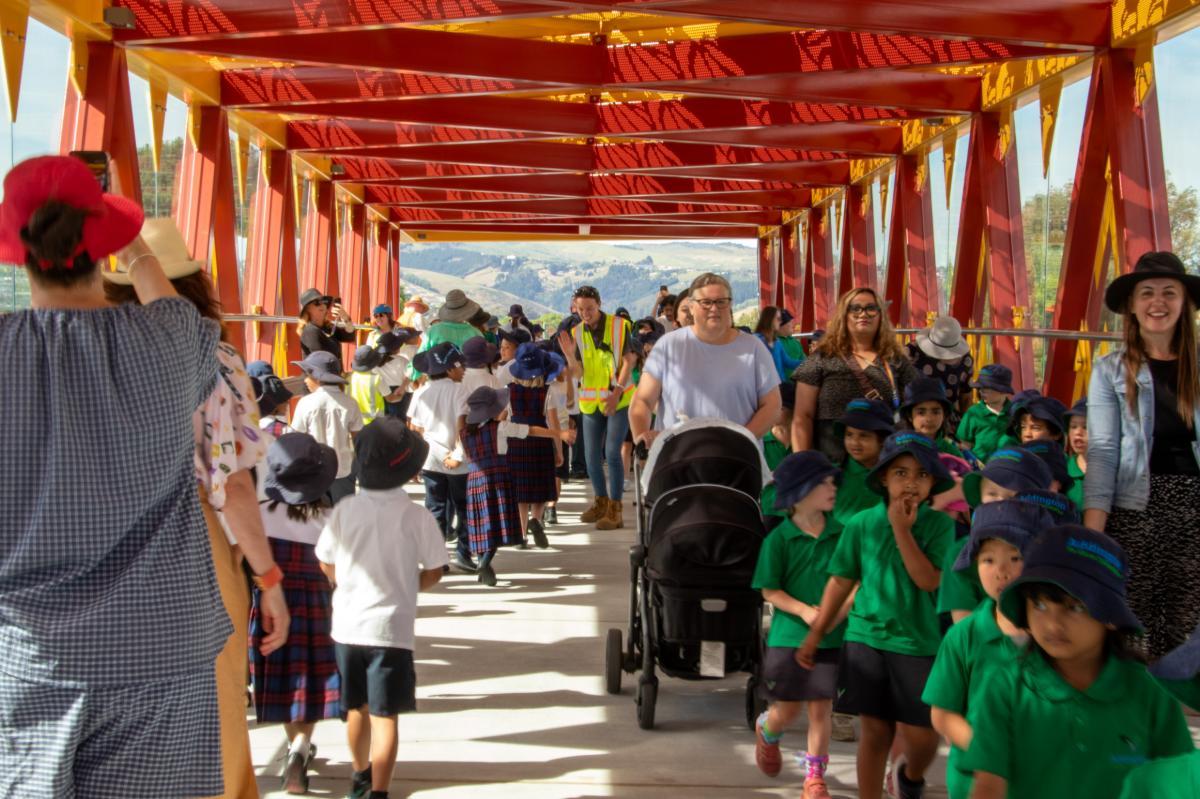
Opening day on the Brougham Street Bridge. Image: Waka Kotahi NZTA
Here’s a video ride-through from Spokes Canterbury to complete the picture.
Austerity bites, unequally
Of course, public facilities for the public good are a wonderful thing, and they’re particularly needed when times are tough and feelings of belonging and community are already under strain.
So it’s disappointing and perverse to see the language of austerity creeping in as Auckland Council considers the ramifications of a rate cap for services, which will fall more heavily on some communities than others:
“How is it fair when our most vulnerable communities are the ones missing out?”
That is the question being asked by Vaovasatoa Albert Scott, along with others in South Auckland in reaction to Auckland Council’s proposed budget plans under its Fairer Funding model, which would see drastic cuts to a range of cherished services and community facilities.
“These are things some people might think of as nice to have or luxury items,” [Manukau Ward councillor Lotu Fuli] said.
“But to us who live here and especially to communities like ours here in Manukau, these are essential services that help our families and so it’s about what’s important to the soul of our city.”
Vaovasatoa has also run workshops at local libraries, upskilling locals on how to manage their money. He added that cuts at a time when so many are struggling with the cost of living is particularly galling.
Auckland isn’t alone in facing the implications of austerity thinking, with Hutt City also contemplating closing pools and other facilities under a rates cap.
Why aren’t we building more living roofs?
Living roofs have much to recommend them – ecology, stormwater management, and cooling – but they’re not much in evidence in Auckland, where they could make a real difference in heavily built-up areas. Newsroom analysis looks at some of the reasons why the dial has been slow to move:
Cost is one of the main barriers to living roofs, but crucially, the developer or building owner who pays to install a living roof doesn’t recoup all the savings. “The tenants or the renters, and our grey infrastructure system and the wider public actually get much of the benefit,” says [University of Auckland urban design expert Zoë Avery].
This is called a split incentive, and it’s common to green infrastructure. Internationally, cities that have achieved wider uptake pair regulatory recognition, such as planning requirements and clear design guidance, with financial incentives and training for industry.
Avery emphasises that living roofs aren’t just a nice-to-have – they’re an extremely functional part of city infrastructure. “It’s not just about aesthetics, it’s about water quality, being more efficient with our energy use, increased biodiversity, more insulation, stormwater attenuation alongside pipes and other engineered solutions. It’s treating stormwater at source and having less impact.”
Avery is one of the lead authors of a comprehensive new Council report on living roofs, which includes consideration of options for Council to drive adoption – well worth a read.
Your weekend across the city
Christmas markets
Shopping is in full swing across Auckland, with lots of market options this weekend:
- Friday 27 November: Cathedral Christmas Market, Parnell, 5pm–7:30pm
- Saturday 28 November: Avondale Kirihimete Market, Avondale Art Park, 2pm–8pm
- Sunday 29 November: General Collective Lifestyle & Design Market, Auckland Showgrounds, 9am–3pm ($5 entry, under 12s free); and Clevedon Christmas Markets, Clevedon A+P Showgrounds, 8am–1pm (every Sunday until Christmas).
Kidical Mass
Saturday afternoon brings family fun on wheels at Kidical Mass – a waterfront ride for tamariki and whānau, from Queens Wharf Bike Hub to Silo Park. It kicks off from 1pm, with pre-ride activities and bike bedazzling at Queens Wharf Bike Hub. The ride itself is from 2pm to 2:45, with more fun and games on arrival at Silo Park, until 4pm. (Note that you are allowed to take your bikes on the train for free, if that helps with roll-on roll-off logistics!)
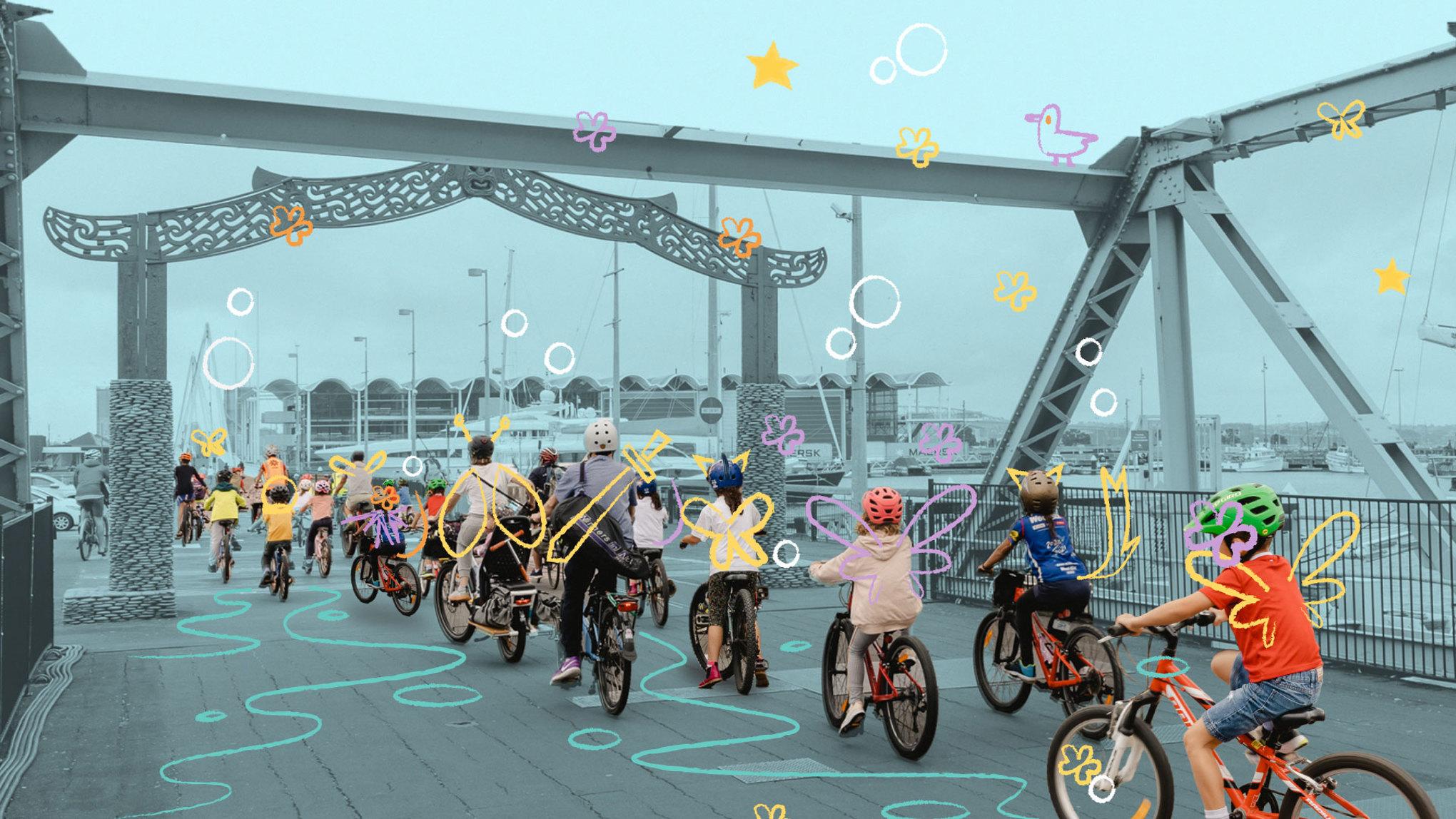
A cute preview of Kidical Mass en route to Silo Park. Image credit: Our Auckland
The Farmers Santa Parade
On Sunday, it’s the big daddy of parades, the annual Farmers Santa Parade starting at 1pm and running down Queen Street from Mayoral Drive to Britomart Place.
To assist with travel, Auckland Transport is offering 50 cent fares for the day on buses, trains and ferries with some exclusions. This should generate one of our busiest Sundays on the network so far, and also hopefully put some ghosts of Christmas past to rest.
And speaking of Christmas, Greater Auckland merch is a brilliant stocking stuffer and a great way to support the vision of a better city. Christmas pre-orders close on Sunday 13 December, so get in quick – and allow a week for delivery. Note that apparel items are print-on-demand (no returns), so double-check your sizing before ordering
That’s us for the week – have a great weekend, and see you next week!

 Processing...
For pedestrians surely an underpass at Brougham St would be much more direct?
Is it just me, or is that Sankey diagram re: CRL use utterly pointless?