August, already? Astonishing! Here’s our weekly roundup of stories from the realms of cities and transport.
This Week in Greater Auckland
- On Monday, Connor asked: what will the recently signed PPP for Warkworth to Te Hana cost us?
- On Wednesday, Patrick shared a reader’s suggestion for safe cycling around the isthmus, and readers chimed in with a lot of excellent supplementary thoughts, including this phenomenally detailed and thoughtful proposal from Grant for a Mt Wellington Greenpath.
- And on Thursday, we got to share the official launch date for CRL: Sunday 13 September it is!
By the way, remember you can sign up for free tickets to attend a “First Look” at the new CRL stations over upcoming weekends – the first of which is happening around Maungawhau station tomorrow, Saturday 8 August.
And on that topic: the Uptown area is running a special follow-up promotion that could see you win a special Platinum HOP card (a year’s free travel!) or one of four $150 HOP cards. Entry details and further info about tomorrow’s fun here. Never a better reason to check out this cool part of town!

This week’s header image, snapped by Patrick at yesterday morning’s announcement of the CRL launch date, shows from left to right: Councillors Shane Henderson and Andy Baker, Deputy Mayor Desley Simpson, Mayor Wayne Brown shaking hands with Minister of Transport Chris Bishop, Stacey van der Putten (CEO of Auckland Transport), Bevan Assink (Chief Metro officer of KiwiRail), Patrick Brockie (CEO of City Rail Link Ltd), and Martin Kearney from Auckland One Rail.
Greater Auckland’s research and advocacy is powered by hundreds of hours of work each month, and your support helps keep us going! We warmly welcome your donations, and are always open to offers of guest posts, practical help, and pro-bono expertise.
Wear your heart on your sleeve
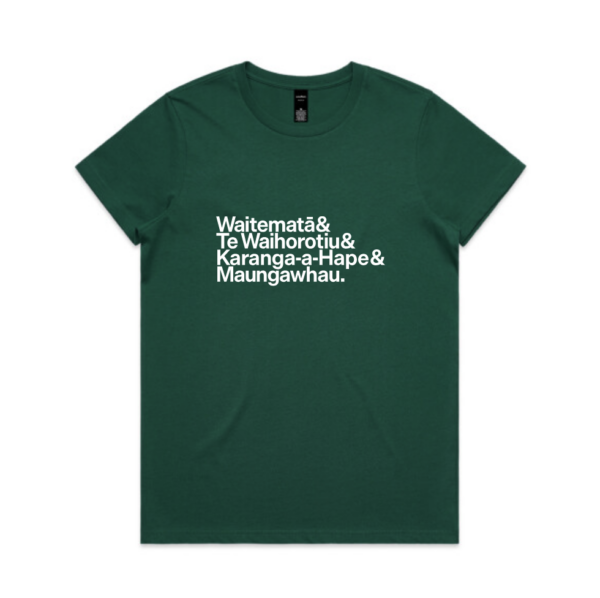
Just 38 days till you can proudly wear your Greater Auckland “fab four” station T-shirt through one of the new stations! Allow a week for delivery, and as these are print-on-demand (no returns possible), double-check your sizing before ordering.
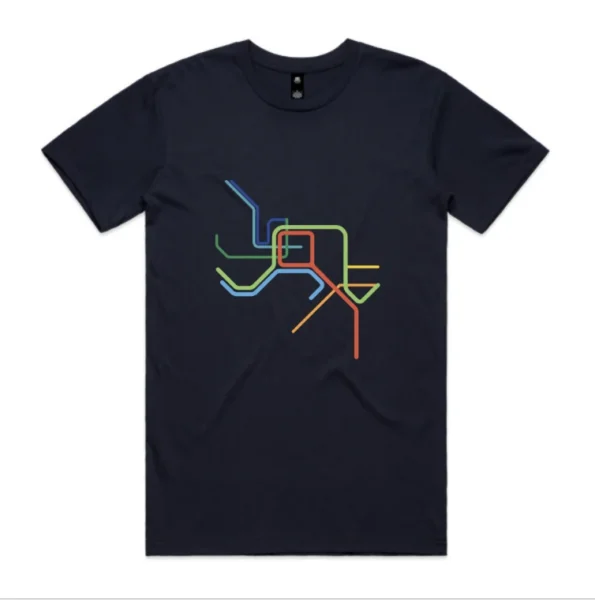
Plus! Sharing is caring, so also check out our Aussie cuzzie Peak Transit, which now has an Aotearoa selection of public-transport-themed gear. Options include pins, keyrings, stickers, totes and tees – including a nifty stylised post-CRL network design. (Special discount code for Greater Auckland readers: GACRLGO)
“Children have the right to wobble”: a visit from Professor Marco te Brömmelstroet
Some fresh eyes on Aotearoa, from visiting professor Marco te Brömmelstroet, Chair of Urban Mobility Futures at the University of Amsterdam.
His interview with Jack Tame on Q&A (video below, written version here) is full of nuggets of wisdom – including the point that most people actually want fewer cars and more space for the good things of life, including children’s wellbeing (echoing Connor’s post here).
It starts with a story from his first day on his first visit to New Zealand, when an encounter on the road revealed the hidden assumptions about who and what streets are for:
He recalled the issue crystallised on his first day, cycling with his family, when a driver in an SUV pulled up and shouted that his 11-year-old son was a danger.
“So, why is my son a danger to you while you are driving the 2000kg truck?” he recalled asking her. “And she said, ‘Well, he’s wobbling.'”
That answer, he said, exposed a gap in how different countries think about streets.
“Children who wobble — that’s sort of the starting point of how we [in the Netherlands] designed our streets, so children are allowed to wobble,” he said.
“They have the right to wobble, and you are bringing in the danger.”
He also mentions the Manifesto for Just Streets as a political circuit-breaker for safer street design. Maybe we need a local equivalent?
You can also check out Professor te Brömmelstroet’s presentation to the Auckland Conversations audience, here.
Safer streets for students of all ages
Good coverage by RNZ of efforts by schools to keep students safe on nearby streets.
Primary schools say a pilot programme that allows them to close nearby roads during drop off and pick up times is helping to curb dangerous driver’s behaviour.
It has been a growing issue in New Zealand’s biggest city, with Auckland Transport starting Safe School Streets a couple of years ago.
The programme has been testing how to manage safety, cut peak traffic and encourage walking or cycling at 13 schools.
……with permission from the council, Waimairi School [in Christchurch] has started closing the road during peak pick up and drop off times.
A teacher kept an eye on the barrier, to make sure residents on the street and emergency services could still get through….
Waimairi School got the idea from Marlborough Primary School in Auckland’s Glenfield.
It was the first school to introduce restrictions under Waka Kotahi’s Reshaping Streets regulations in March last year.
Principal Michelle Nell said drivers were having regular near misses with students. “It was chaos, it was parents behaving very badly and not thinking about their own child’s safety.
“They would come into the road and stop wherever they wanted to, open the doors let the kids out in the middle of the road and get really upset because people were blocking them getting out.
“Neighbours were [also] upset about cars blocking the driveways, so they couldn’t get out to work.”
Nell said because parents now must park further away from the school, it had cleared the roads for students trying to walk.
After surveying the community, Auckland Transport found 82 percent of parents and 90 percent of teachers thought safety had improved.
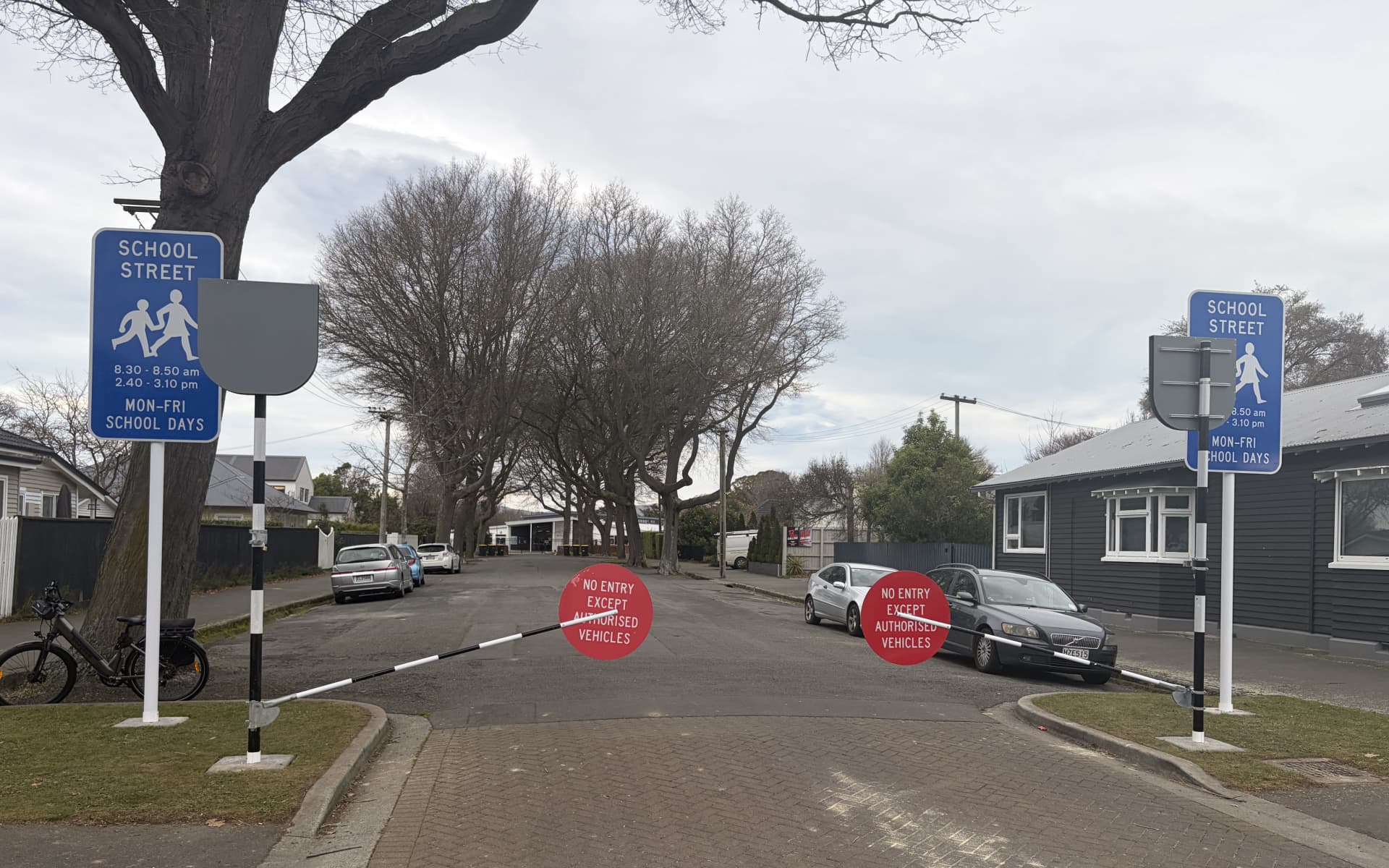
School street signage near Waimairi School, Christchurch. Image: principal Chris Panther, as supplied to RNZ.
Around the motu, communities continue to prefer – and secure – safer crossings, like this one on Ilam Road outside the University of Canterbury.
A new raised pedestrian crossing has now been approved by the Halswell-Hornby-Riccarton Community Board in the hope of making the route safer for University of Canterbury students and Ilam School pupils.
On the road’s western side is Homestead Ln, which houses nearly 2000 students living in halls of residence.
Numbers have grown significantly with the completion of the new Tupuānuku and Tupuārangi halls, adding more than 700 beds and placing increased pressure on the crossing, which the university has identified as an ongoing safety concern.
And in Wellington this week, primary school children showed up en masse to a Council meeting to make sure their low-traffic neighbourhood stayed in place.
A group of primary school students have achieved something in minutes that many adults have attempted for decades – quick change through council on a contentious issue.
The Year five and six students at Lyall Bay School visited Wellington City Council on Wednesday to deliver their submission on a trial that had made going to and from school safer for them.
A low-traffic area was trialled on Freyberg St, outside the school, making it easier for the children to cross at drop-off and pick-up times.
[…]
In their submission to the council, the students made it clear to the council why it was so important to keep the crossing, which they said had made them much more confident to cross the street.To get all their thoughts across, the children presented to the council in a reporter-and-interviewee style, asking the questions they thought everyone would wonder about why the crossing needed to stay.
Others who weren’t so keen on presenting came along to support their peers with handmade signs.
One of those signs reads: “Keep our beautiful faces safe”, and the RNZ story comes complete with a video of the presentations, which is well worth watching. The kids are all right.
City Centre on the up-and-up
Fast-track approval has been granted for the Te Pūmanawa Downtown West development that will rise where the Downtown Carpark now stands, between Quay St and Customs St West. As announced by Minister Chris Bishop, the parking building will be replaced by “an integrated mixed-use precinct”:
“The rebuild will include a premium 55 level commercial office tower, a 162m mixed-use residential tower, a hotel, retail, food and beverage spaces, publicly accessible civic spaces and an expansive laneway network.”

A render of the proposed Te Pūmanawa development, a project by Precinct Properties with Ngāti Whātua Ōrakei.
And from Our Auckland, some nice before and after images of progress in the city centre, featuring Quay St, Te Komititanga, Victoria St West, and Mercury Lane…
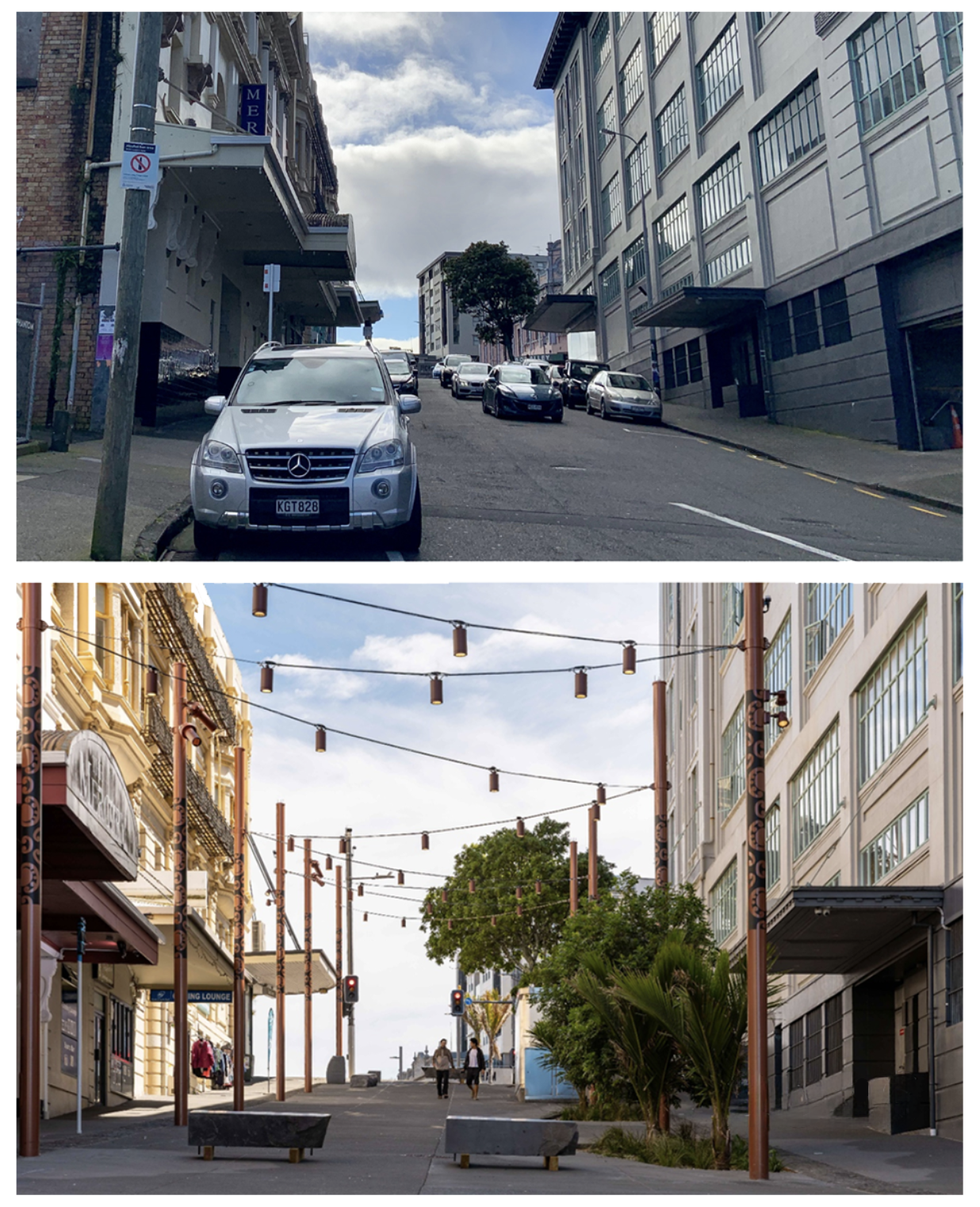
Mercury Lane as transformed by Project K (and as rescued from political shenanigans by Greater Auckland and our readers!). Images: Our Auckland
Southern train stations
Last weekend, two of the three new train stations between Papakura and Pukekohe finally opened. 1News has taken a look at the costs.
Two new train stops in southern Auckland have cost around $300 million to build, KiwiRail says, with the wider three-station programme forecast at almost half a billion.
The new train stations are being built to serve growing “greenfield” housing developments between Papakura and Pukekohe in what’s currently largely farmland.
…..
A KiwiRail spokesperson said the agency had only ever discussed the total cost across all the stations, which had shifted over time as the scope changed — originally covering just two stations and no access roads.
Individual station costs remained commercially sensitive, the spokesperson said, as the Drury and Paerātā contracts were not yet settled and Ngākōroa was still being built.
However, given the late stage of the project, the “forecast cost” for all three stations – including land purchase – was about $450 million, according to KiwiRail, with the combined cost of Drury and Paerātā “circa $300 million”.

Paerata Station
The Big Infrastructure Debate
Last night Engineering NZ, in partnership with Stuff, hosted a political debate on the future of infrastructure in New Zealand – perhaps the first major debate of the election campaign. On stage were Chris Bishop (National), Simon Court (ACT), Julie Anne Genter (Greens), Shane Jones (NZ First), and Kieran McAnulty (Labour).
The article includes full video, and by all accounts it was quite an agreeable room. Notably, we can’t help agreeing with this from Shane Jones (which chimes with what Connor has been pointing out all along):
“I personally don’t see ever another four-lane highway being built in New Zealand in my lifetime. Not because the people I belong to in Tai Tokerau don’t want one, but because the politicians are going to struggle to justify the cost,” Jones said.
Jones issued a challenge to the engineers in the audience that they needed to work with what we’ve got, not what they want to build.
“We expect a far more innovative, constructive approach as to what we can afford to build, and then that leads us to a deeper debate: Have we reached a point that we should stop building new stuff and spend more time doing repairs and maintenance,” he said.
And this, from Simon Court, on the next harbour crossing (has he been reading Patrick’s posts?):
Court said that before a decision was made to “commit to something as significant as tunnels or bridges and tens of billions of dollars over decades”, decision-makers should “take a step back and work out what does what does our international city, Auckland, need in terms of transport and infrastructure investment, and it may well be that that thing drops down to second or third on the priority list”.
And we join Kieran McAnulty in hoping for true ongoing bipartisanship on all things:
“…on congestion charging, surely that is something – now that it’s passed unanimously – there won’t be political manoeuvring about.”
The answer is always street trees…
Talk about camouflage. From New Jersey:
A Middlesex County police department used an officer disguised as a shrub to crack down on distracted driving Wednesday, issuing 74 citations.
The Dunellen Police Department conducted a distracted driving enforcement operation on the 100 block of North Washington Avenue, an area with heavy vehicle and pedestrian traffic, according to a Facebook post.
The goal was to enforce New Jersey’s handheld cellphone law and increase safety in the community.
Police issued the 74 citations during a six-hour span. “Our ‘shrub’ was busy,” the department said in the post.
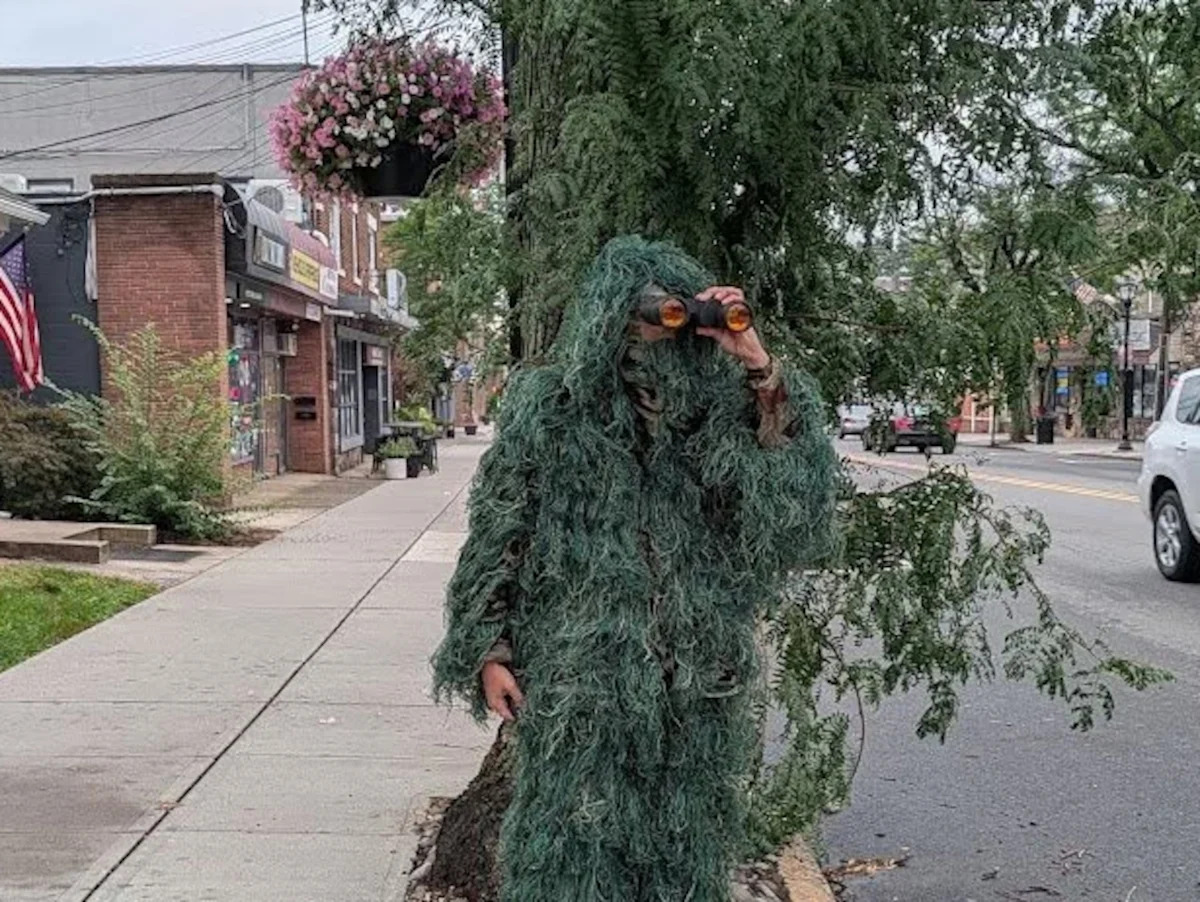
A special branch officer, obviously. Image: Dunellen Police Department
Greater Auckland visits Dunedin!
If you’re in Dunedin next Tuesday, you have two opportunities to catch up with Patrick Reynolds, who’s in town for the launch of his latest pocket-sized urban architecture guidebook with John Walsh, from Massey University Press.
Tuesday 11 August, 5.30pm
Milford Galleries, 18 Downing Street
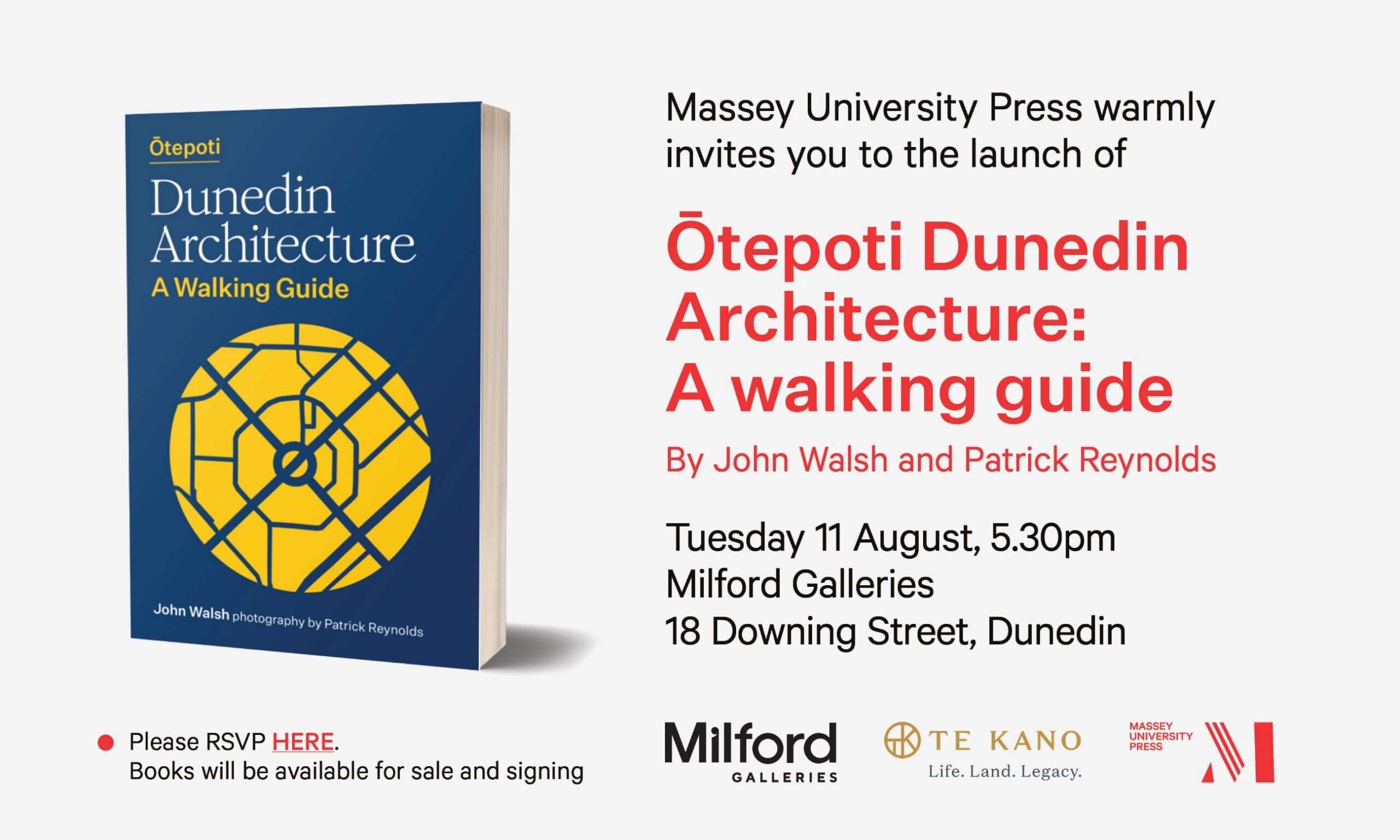
Then, following the launch Ōtepoti Urbanerds are hosting a get-together with Patrick: “Rumour has it that Mayor Sophie Barker and MP Rachel Brooking will be joining us as well.”
Tuesday 11 August, 7pm – 8.30pm
Vault 21, The Octagon
Videos to watch
A new local podcast series, Tāmaki Talk, by Myles Thomas has a very special first guest: our very own Connor! Find out what makes this transport nerd tick.
The NZ Herald looks back at the century it took to deliver the City Rail Link.
And KiwiRail has a piece covering the work they’ve done to get the rest of network fixed up.
The New Zealand International Film Festival is a midwinter must, not least because for Aucklanders it’s a chance to revel in the fruity Orientalist glories of the Mighty Civic. While you admire the gorgeous flamingo-embroidered curtain, you might find yourself wondering how it’s holding up so well after all these years. Here’s your answer…
View this post on Instagram
An Australian analysis of how Zūrich fixed its commuter train problem:
A video on the benefits and downsides of ‘trackless trams’:
And, talking trash with Mayor Mamdani. He’s so good at this!
Now this is the kind of trash talk we can get behind.We’re containerizing neighborhoods by taking trash off our sidewalks and allowing mid-size buildings to trade in their wheelie bins for a bigger, better, cleaner alternative: Empire Bins.It’s time to put a lid on it, New York.
— Mayor Zohran Kwame Mamdani (@mayor.nyc.gov) 2026-07-31T23:16:46.895Z
That’s us for the week – feel free to add links and stories in the comments, and have a great weekend!

 Processing...
“a driver in an SUV pulled up and shouted that his 11-year-old son was a danger.”
We have had drivers pull up to us at the traffic lights and yell at us that we were going to kill our kids by having them on the back of a cargo bike.
Car driving is a neurodegenerative condition.
The new vice chancellor of Auckland University area spoke on RNZ about the importance of this amazing institution in our diverse city, and attracting world talent and having a leading roll in getting consensus on important issues and developing new technologies
The university has a budget of $1.6 billion a year and about 34 000 students. It is located around Albert Park and there have been many improvements in the area making it very attractive for all students. There are many new 20 story student apartment buildings on Symonds St. Stanley St. Queen St. Mayoral Dr. New student apartments are being built on Wakefield St (2) and Queen St.
The new recreation center on Symonds St has 5000 visitors each day.
The manager of the new International convention center has also spoken about the attractions of Auckland. Being close to all the amenities such as the university, the harbour, the arts and culture and day trips etc.
I hope our city does more to support the university. And the Hospital. The areas around Symonds St, the library, Princes St. High St, Aotea center are always busy and the restaurants and cafes are packed. I would like to see Symonds St made more pedestrian friendly like Queen St. Especially near the K’Rd intersection. The number of cars on Symonds St is low and at times there are 100s of people waiting too long for the lights. On my regular visits to town I notice that the number of cars on Queen St is low and there are now more people on scooters and bikes especially in the evenings when the food delivery people on bikes are busy.
I went to the Auckland Conversations meeting and Professor Marco te Brömmelstroet talked about intersections. He showed a highly engineered, high cost one with lights, slip lanes, separated bike lanes etc that was to be the greatest in perfect planning. Then he showed another that 100s of bikers use. There are no lights and it works perfectly.
The CRL and other rail upgrades are very expensive. And that is why they are amazing!
If you pay peanuts, you get monkeys, and as a city of the future, we want a safe way to move around the expanse that is known as Auckland.
Now it seems as if some politicians agree that motorway building is a waste of space and time, we can focus on rail network upgrades, so that in ten years the entire motu is rail accessible, with hardwired twenty five thousand volt lines.
For breakfast this morning I took the train to Otahuhu, a short bus ride, and stroll, to my favourite bakery. It cost me $2.50 return from Waitemata.
If I owned a car, with insurance, that trip would be worth about $50.
So this expensive infrastructure can save all of us big money, because at outer stations, you can park your car, and train wherever you want.
Once you experience a train ride, especially the luxurious versions we operate here, traveling any other way seems hopelessly inefficient.
To a future of bikes and trains, and the end of that hideous DOWNTOWN CARPARK that blights our waterfront.
Also, we can solve the North Shore problem by doing nothing. The North Shore developed from a ferry crossing, as the isthmus developed through trams.
If we are doing back to the future, electrify the ferry fleet and let the harbour bridge rust away elegantly.
Removing heavy traffic and letting us walk and bike on it. If you take the machines off, it could last far longer. RETURN THE BRIDGE TO PEOPLE
bah humbug
I agree i would much rather train and bus to town, but “If I owned a car, with insurance, that trip would be worth about $50.”
Can you share the math on this…?
Also are we replacing the harbour bridge with ferries…? I think just build a way for some trams and bikes to go across and we’re golden
$50 a day=
$20 for parking
$5 insurance (1250 annual)
$15 fuel (5l~60km in traffic
$5 to cover repairs
$5 service rego warrant (1250 annual)
Not to mention depreciation at around 25 percent per year – the biggest cost of owning a car, which most people don’t even consider.
If you own a car already and don’t have to pay for parking, the marginal costs of using a car will beat public transport for time and cost. But it flips around if you don’t own a car or have to pay alot for parking.
PT will also win if there is a way of bypassing alot of traffic congestion like on the Northern Busway.
Kind of expected to see a section here about how Chris Bishop called the tram down dominion road “pretty good” at the CRL talk yesterday
Not a bad idea for a whole post, ta!
huh, it’s bang-on a decade since light rail started to supplant heavy rail as the preferred CC2M mode too… looking forward to a repeat of *that* discourse if the metaphorical tram gets rolling again
when I became a secondary teacher about 10 years ago, on the first day of my training placement I remember thinking that it was insanity the school couldn’t close the road out front for 10 min in the morning and afternoon. Literally just a 10 min closure while 1500-2000 kids pour out of the gates is all that is needed around our schools. It would save lives and avoid some serious injuries. There are obviously some exceptions, but it would shame if people used these to argue against it being rolled out more widely around the country.
Shane Jones: “I personally don’t see ever another four-lane highway being built in New Zealand in my lifetime.”
Was that “Goodbye to Warkworth-Te Hana”?
I wasn’t expecting to read something Shane Jones said that I agreed with.
“a driver in an SUV pulled up and shouted that his 11-year-old son was a danger.”
Driver is alarmed when they feel they might have endangered a child with their car.
Driver slams head first into cognitive dissonance because they know they are a good person who wouldn’t hurt a child.
Driver externalizes this discomfort by yelling at the child and parent.
Business must be booming for parliament’s hat makers
What’s the latest on the bollards of Mercury Lane? I cycle through there all the time and keep expecting as constuction completes to see them open and allowing through traffic?
And the lower hobson street flyover… no mention in the new of that going with the redevelopment of the downtime carpark site?
Marc Lane is operational; Up is the default position, they only lower if a vehicle is present.
Lower Hobson Flyover has to go for development to precede.
The K’Rd bike lane has a red light straight through almost all the time – I presume because of this possible opening? Seems a confusing and poorly executed approach by the traffic light designers.
Design for removing the flyover is going on. Council will have to decide on funding.
If the rest of Auckland had a good rail service people it would make the north shore relatively less attractive as a place to live. Then folk on the shore might start shouting for their own rail service.
I don’t know this Alan Fisher video has already been posted here and discussed I’m just thinking now that the CRL is closer maybe thinking about where certain hostilities might come from
https://youtu.be/1s05tSXkYFQ?si=v0xpVez4AXBQXb5Z