Here’s a bumper crop of things we came across this week to get you ready for the long weekend!
This Week in Greater Auckland
- On Tuesday, Matt dove into the unaffordable reality of the governments RoNS programme.
- On Wednesday Patrick examined a quicker (and cheaper) way to complete the rapid transit network.
- On Thursday, Connor took a look at what the new Auckland Council might mean for transport going forward.
This roundup, like all our work, is brought to you by the Greater Auckland crew and made possible by generous donations from our readers and fans. If you’d like to support our work, you can join our circle of supporters here, or support us on Substack.
No Rail Services from today
Hopefully you’re not planning a train trip today or this weekend, because we’ve got another extra long weekend closure.
Auckland trains will not be running from Friday 24 October to Monday 27 October, allowing the 24/7 work needed to be ready for City Rail Link opening next year. It means crews can work safely and deliver more work on tracks and at stations during a shorter period.
Rail replacement buses will be ready and waiting to keep Auckland moving.
Auckland Transport Director of Public Transport and Active Modes Stacey van der Putten says the four-day closure maximises the amount of work that KiwiRail, AT and City Rail Link Ltd can get done.
This includes essential upgrades, renewals, overdue maintenance and multiple large-scale infrastructure projects, for example new pedestrian bridges at three stations to improve safety as train frequencies increase.
…..
Works summary:
- Rail Network Rebuild priority upgrades, renewals, and overdue maintenance focusing on central suburbs such as Parnell and Morningside and along the Western Line between Glen Eden and Swanson.
- Network wide installation of new fibre and cables.
- Ongoing construction of new Southern Line train stations in Drury.
- Renewing rail assets such as the Parnell Tunnel.
- Henderson Station third platform & emergency access bridge.
- Remuera Station heritage signal tower refurbishment.
- Newmarket Station weathertightness renewal and glass panel replacements.
- Construction and site investigations for Glen Innes, Takanini and Te Mahia Station pedestrian bridges to replace level crossings.
- Supporting NZTA’s bridge work at Drury.
- Waitematā Station is getting a new jet fan for tunnel ventilation as well as new monitoring and safety improvement innovations.
- In the City Rail Link, old fencing is coming down at key platforms, track is being evaluated, fresh signage and communications are going in, and improvements are being rolled out with testing underway.
- Preparations for track adjustments to the North Auckland Line.
What’s the date for the CRL opening?
Continuing with the rail theme, recently, Hayden Donnell pestered a variety of politicians and executives in a desperate bid to find out when Auckland’s long awaited train project will be done. Did he succeed? Well…
Patrick Brockie is refusing to engage in a game of word association. “What feelings come to mind when I say the word May?” I ask. There’s a long silence. “May open?” he finally says. “No, we’re definitely going to open.” It’s a joke, but I won’t be deflected. “What about June? July?” The City Rail Link chief executive finally cracks under the barrage of journalism. “I appreciate you asking, mate, but unfortunately, look, it is truly complex,” he says. “We’ll be opening as soon as we can.”
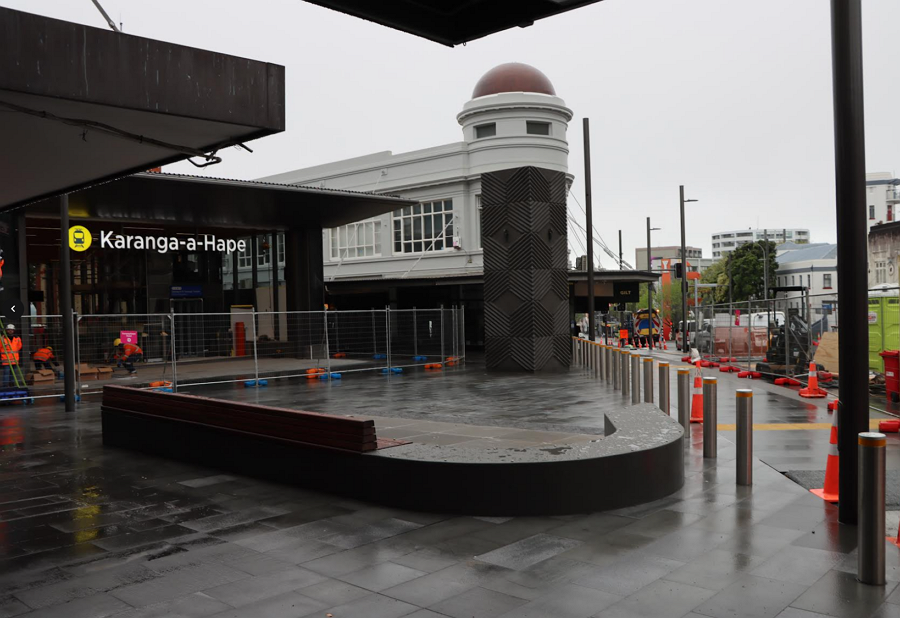
Picture from the cloudy day Beresford Square reopened – from Auckland Council
Meanwhile, an AT update on the CRL testing last weekend.
Testing of high-frequency train services has provided a glimpse into the future new City Rail Link (CRL) timetable, with trains venturing out of the tunnels and around the inner city “loop” for the first time to simulate the services people can expect from their new train network when the CRL opens in 2026.
“This testing was a great milestone. We learned more about how the CRL will function in our network, and we found things we need to adjust, but no big hurdles. We can now tweak the timetable before the next round of testing,” says Mark Lambert Auckland Transport Group Manager Rail Services.
Thirty-five drivers were involved in the testing, driving a combined total of 290 hours on the morning of 18th and 19th of October. It’s the first of several network and frequency tests for CRL, which will culminate in tests of the entire new rail timetable, operating across the whole Auckland metro network next year.
…..
During the testing, trains ran at a frequency of 18 trains per hour in both directions through the CRL tunnels and stations. The testing extended around a loop to Grafton, Parnell and Newmarket and along the Western Line as far as Kingsland.
It’s a key step towards ensuring the CRL can perform as designed, and that Auckland Transport can operate the new train timetable with more trains, more often across Auckland.
“Eighteen trains per hour, per direction, is more than we’ll be running when CRL opens, but we need to make sure we test at maximum capacity,” says Mark Lambert.
“It’s all about safety and reliability. The trains simulated a normal journey, stopping at all inner-city stations so we could check they stopped in the right places, that they were stationary for the right amount of time, and that there was a safe distance between trains as they trialled the higher frequency.”
…..
During the testing, trains ran nearly 400 times through the new tunnels, clocking up 2500km over the entire route.
“Running three minutes apart, the trains were being driven closer together than drivers are used to, and a big part of this weekend was to check that this could be achieved consistently,” says Lambert.
Did they finally learn about our terrible dwell times?
And another round is happening next month:
- The next round of CRL timetable testing is scheduled for Saturday 22 & Sunday 23 of November 2025.
Have your say: Hatfields Beach speed limit change
It seems the first tranche has begun of proposals to reverse (somewhat) the impacts of central government’s 2024 Speed Rule – due to community concerns about the higher speed limits. Auckland Transport is proposing to return the Hibiscus Coast Highway to 50km/h (which had been previously supported by the local board).
You can have your say here.
The changes we are proposing:
We are proposing to lower the speed limit on Hibiscus Coast Highway through Hatfields Beach to 50km/h. This aligns with urban speed limits, reflecting the amount of residential housing in the Hatfields Beach area and community concerns about safety near the beachfront parking area adjacent to the road.
Benefits of this project:
- Improved pedestrian safety
- Lower vehicle speeds
If the community is supportive of this change, we would like to introduce the new speed limit as soon as possible during the busy summer holiday season.
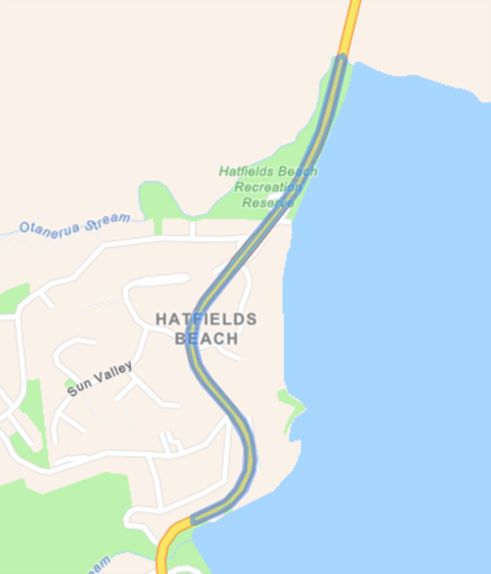
Extent of speed changes
You can also see the addition of a cost benefit disclosure statement, an extra step required due to Simeon Brown’s new rule, which obliges councils to weigh journey speed, travel time, and cost against things like human life and health. (This is of course the opposite of the Vision Zero approach).
Cost benefit disclosure statement:
The government’s Land Transport Rule – Setting of Speed Limit Rule 2024 requires us to complete a cost benefit disclosure statement for the proposed speed limit change. This sets out the expected impact of the speed limit changes on safety and travel times, and the expected implementation cost.
The proposed reduction is expected to –
- lower the average speed on this stretch of road from 57 km/h to 51 km/h
- cause a 12-second travel time increase
- incur an implementation cost of $15,000
Books and greenery while waiting for your train
Warsaw opens a library in a metro station to encourage people to forgo smartphones for books.
About 16,000 books are on offer in the 150 sq metre and can be borrowed through an “express” checkout machine using contactless chips. Readers can return them on site or through a street-level parcel locker for books, available 24/7.
Visitors can study or work in a communal area, borrow a laptop to browse the internet, or simply sit down with a complimentary coffee or hot chocolate to unwind after rush hour travel on the metro.
…
“Our dream is for Metroteka to become an educational and cultural centre, and not just a place where you borrow your books from,” says the deputy director of Targówek library, Grażyna Strzelczak-Batkowska. The wall, for example, will be used for debates on food security, sustainability and “how to save the world” in the face of climate change, she says.
She says the unique subterranean location brings the library closer to busy commuters, “both geographically and in terms of time you need to spend on getting the book”. “I always joke that books are not made of glass – you can just pop in, grab a few, throw them on a self-checkout machine, and that’s it, you’re out on a new adventure,” she says.
Not a bad idea?
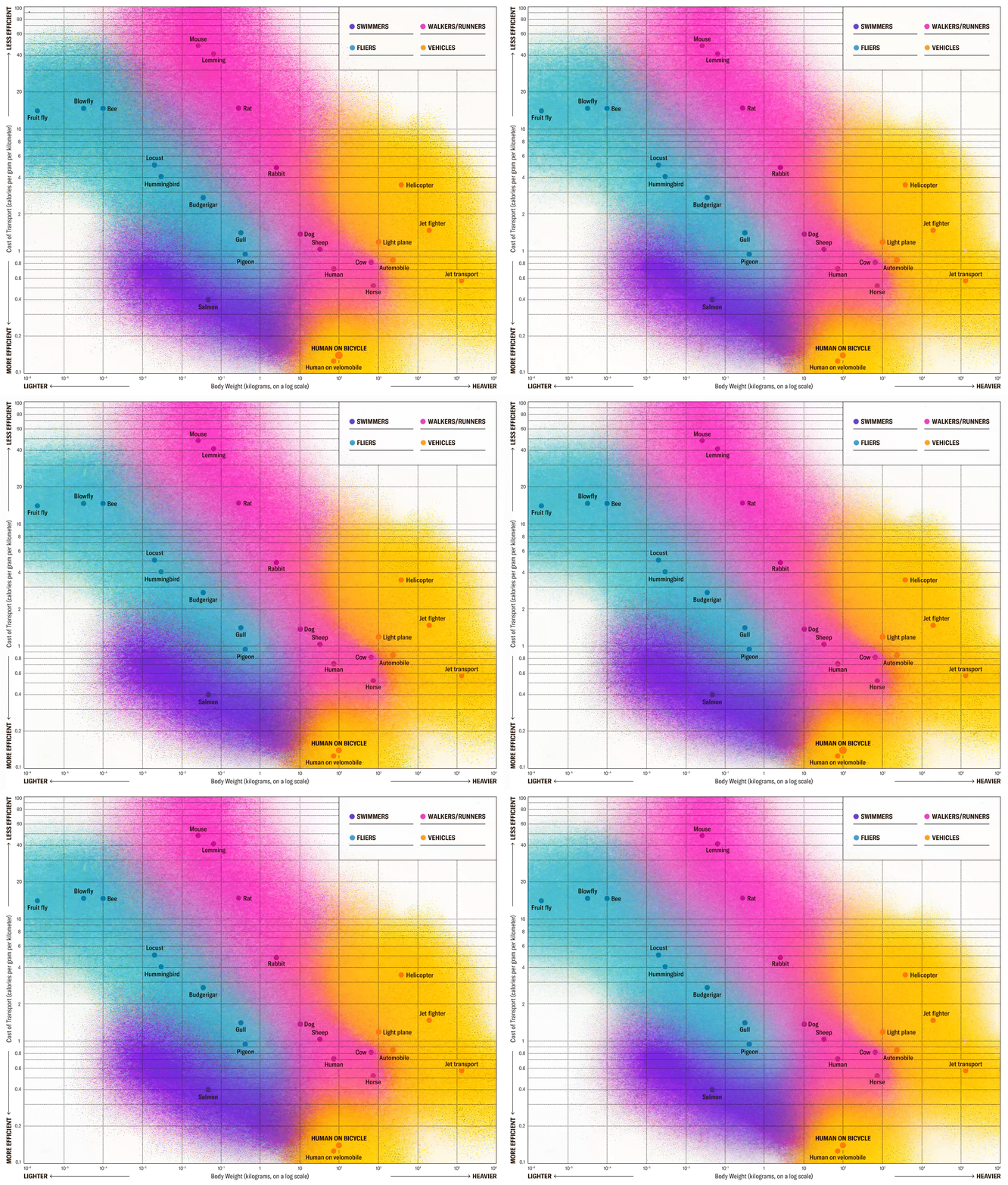
Cycling turns a person into one of the most efficient travellers on earth
A recent article in Scientific American for their 180th birthday, places people on a 1973 graphic comparing animal locomotion. Turns out a person on a bike is very, very efficient.
Franklin is getting a new bus network
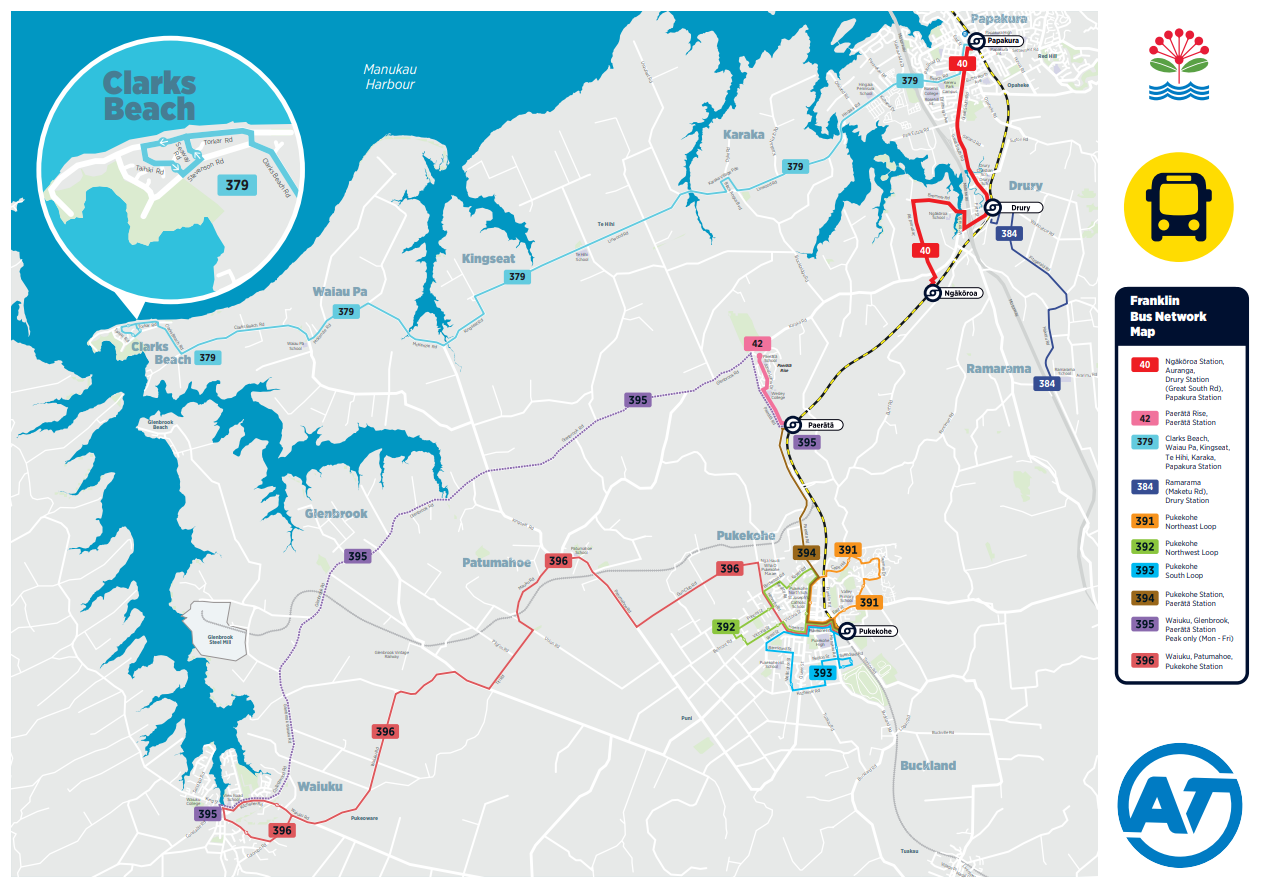
Funded from the Climate Action Transport Targeted Rate, Auckland Transport is proposing a new bus network in Franklin, in rural South Auckland.
AT is providing public transport that goes to more places more often, including areas where there is population growth and new housing.
When Paerātā, Ngākōroa and Drury stations and City Rail Link open from 2026, we’ll deliver a new bus network for west Franklin. New and improved services will help you get to and from the new stations and AT trains, as well as local schools, jobs and town centres. There will be new bus stops.
We have some ideas about what the new bus network should look like, but would like to know what you think about the routes, the hours the buses will run and how frequent they will be, and the locations of the new bus stops.
There is quite a bit of detail, but AT are also asking for input, which you can do so here.
What to do with Fred Thomas Park
Earlier this year the council confirmed they would use part of Fred Thomas park, currently used for a golf course, to provide flood protection. Now the local board is running a survey on what to do with the rest of the land.
Auckland Council is asking for feedback from residents about future recreational activities for A F Thomas Park.
The Kaipātiki Local Board will run five weeks of public consultation from 20 October 2025, through to 23 November 2025, to hear from the community what recreational activities they would like part of the park land to be used for, which may include golf.
Auckland Council is looking to restore part of A F Thomas Park to a flood storage wetland and dry water detention areas while keeping the green space available to all Aucklanders to use when the park is not flooded.
Once completed, this comprehensive flood resilience (blue-green) network will significantly reduce flood risks across the Wairau catchment.
…..
“Consultation can be completed online through AK Have Your Say, or using written feedback forms available at some libraries and leisure centres, and at a number of community sessions to be held in October and November.
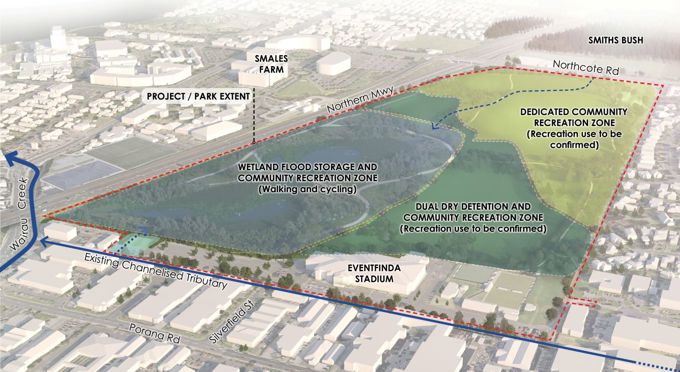
The Northern Pathway is eventually meant to run along here so it would be great if that could be built at this time. Even better would be to also extend a bridge across the motorway to the busway station to further open it up and to expand the catchment of the station.
UK’s first large-car surcharge
A first in the UK: Cardiff Council is introducing parking surcharges on bigger cars weighing over 2,400kgs. As for why:
Councillors voted on Thursday to approve a new parking plan for the city whereby owners of larger vehicles will be charged more for parking permits because their cars “take up more parking space and are a danger to other road users”.
Interestingly, public consultation showed a lot of support for the measure:
The decision in Cardiff follows a public consultation in which two-thirds (66%) of respondents said they agreed that larger vehicles should pay more for permits.
Councillors were also very blunt on the safety impact larger vehicles like SUVs had on the road.
Dan De’Ath, the cabinet member for transport, said SUVs were “much larger than your average car, they produce far more wear and tear on our roads, but fundamentally if you hit a child while driving a heavy SUV the chances of that child dying are grossly inflated”.
He said: “We don’t think it’s unreasonable to ask people driving those kinds of vehicles to pay a little bit more for road wear and the extra space they take up. We’re not talking about SUV-shaped cars, we’re talking about very heavy American-style vehicles.
“It’s not about banning things, it’s about gently encouraging behaviour change.”
Speed cameras slow traffic
Speeding fell drastically in San Francisco after speed cameras were turned on as a part of a five year pilot program.
The agency said speeding fell 72% in September compared with the previous year at the 15 camera locations it tracked last month. Average speeds fell 4 miles per hour, according to officials, after 12 of the 15 locations had previously averaged speeds exceeding the posted limits.
“Just six months after turning on our first speed cameras, we’re seeing real change on our streets, and drivers are slowing down,” Erica Kato, an SFMTA spokesperson, wrote in an email to The Examiner. “With an average 72 percent drop in speeding and about 20,000 fewer speeding cars every day, it’s clear these cameras are making San Francisco safer.”
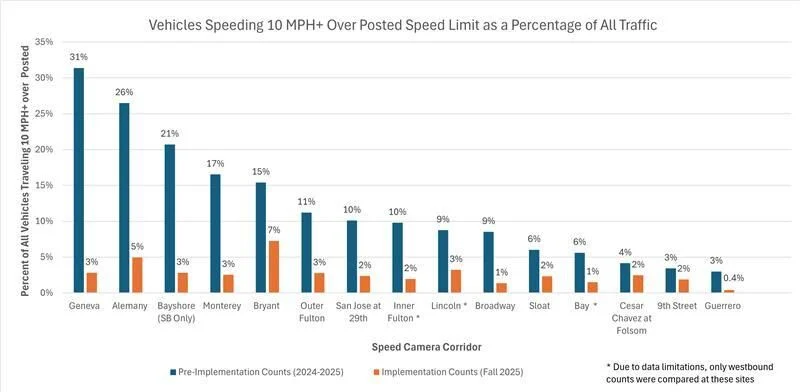 It will be interesting to see the impact on deaths and serious injuries.
Australian WWII oil tank to playground
Four storeys underground, kids are swinging off monkey bars and digging in a sand pit.
Sausages are sizzling on a council barbecue and palm trees hang overhead.
This isn’t the local park but a former World War II oil tank deep underneath Sydney.
It is like urban exploring, but for children.
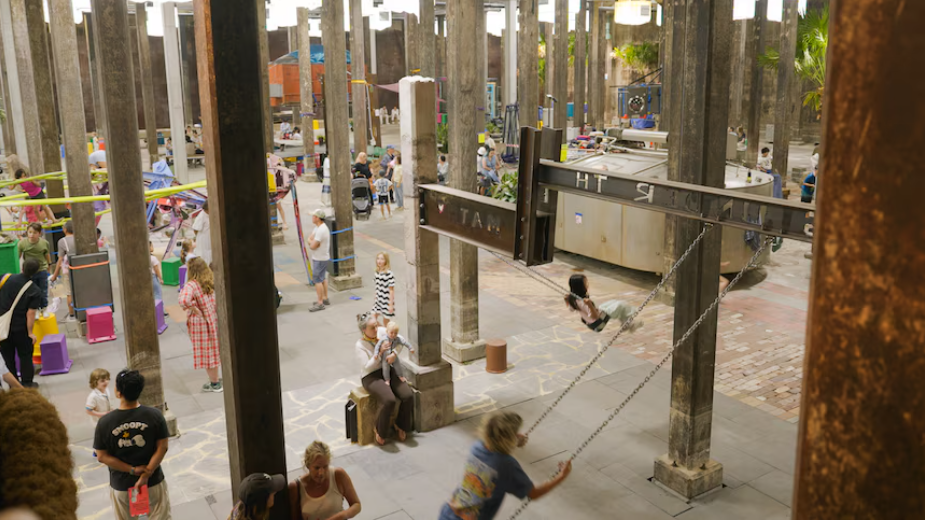
Artist Mike Hewson’s playground installation at the Art Gallery of New South Wales. (ABC News: Richard Mockler)
Some of his other playgrounds have found controversy, but Hewson says:
“There’s really nothing risky about them in that they’re compliant playgrounds. But I guess there is an aesthetic about them that seems slightly precarious,” Hewson says.
“When a child is climbing up … [if] it looks like something unstable, you watch them, they’ll go up, they’ll give it a yank … they’ll go a bit higher. They internally risk assess. They need to be allowed to do that.”
Should you opt for a electric cargo bike over a second car?
After a trip to Vienna, Clare Watson was inspired to buy a cargo bike for her own family.
It inspired us to buy one of our own – but when it arrived, I felt daunted about its size and how we’d go navigating the streets of the Australian city where we live, especially during peak school times.
After my initial trepidation, I was surprised how quickly our car trips became bike rides. Like learning to drive, it took some time to learn how the bike steered, but it soon became our go-to ride for short trips. Forgoing a second car may have been the reason we bought it, but it was simply more fun to see my son grinning on the bike.
But according to one early adopter Watson spoke to, Elliot Fishman of the Institute for Sensible Transport, there’s still a few things that need to change. Can you guess?
A fear of riding in traffic beside cars is “the number one reason why people don’t cycle”, says Fishman, who has used a cargo ebike to ferry his kids around Melbourne on carefully chosen routes since 2012.
Despite their longer-than-usual dimensions and wider turning circles, e-cargo bikes are quite easy to manoeuvre with pedal assist, he says.
Using modal filters (barriers that prevent the passage of certain vehicles) to create bike-friendly corridors is the cheapest, fastest and simplest way a city can make cycling safer, says Fishman. Placing modal filters on strategically chosen routes, such as Canning Street in Melbourne’s north, or through Redfern in Sydney, slows and reduces through traffic, and encourages people who don’t feel comfortable riding on busy roads to journey by bike.
A thriving shopping strip in Auckland?
Bucking the trend of other retail spaces, Takapuna is currently ‘heaving’.
Takapuna was seen as “a pretty dire shopping strip” when Scott Donovan opened his menswear shop, Life For Men, there in 2002.
“Not a lot of people had a lot of belief in the area,” Donovan said.
“That’s because the likes of Newmarket, Ponsonby Rd, had really taken the fair share of the shopping destinations.”
But Donovan wasn’t having a bar of the negativity. He felt the local community stayed in their seaside suburb to shop.
Fast-forward a couple of decades, and it’s that “massive” local support that’s got the suburb on Auckland’s North Shore through a “tough period”, he said.
Interestingly, turns out making spaces more friendly to people makes a shopping area more attractive for people to go to. Add in some loyal locals and you get a place that’s thriving.
The street has undergone an upgrade as part of a council-led town centre rejuvenation.
Now one-way, with wide footpaths, the street has international retail brands such as Mecca and Lululemon, interspersed with local retailers and cafés.
Nearby, on The Strand, a beachside playground attracts the young and energetic, while nearby restaurants with sea views attract a slightly older crowd.
The removal of car parking in the centre of town had been a bone of contention for some, Donovan said, but the council-run, 10-level Toka Puia car park meant there was plenty of spaces available.
Are these Christchurch public toilets the best in the country?
Inspired by the positive energy Christchurch is getting in the media, The Spinoffs Alex Casey decides to examine ‘the single biggest drawcard of the city: its phenomenally good toilets’. With one sticking about the rest:
All these heavy-hitters, and yet it is the loos at Tūranga (Christchurch Central Library) which tower easily over the rest. With a brood of unisex, mobility access bogs found on each of the five floors of the award-winning building, the toilets are all unified by their bold, coast-to-coast canary-coloured tiling. It’s a Kusama room without all the dots. It’s the yellow brick road without borders. Remember when you would hold a buttercup flower up to your chin as a kid and marvel in the warm glow? It’s that, but your whole body.
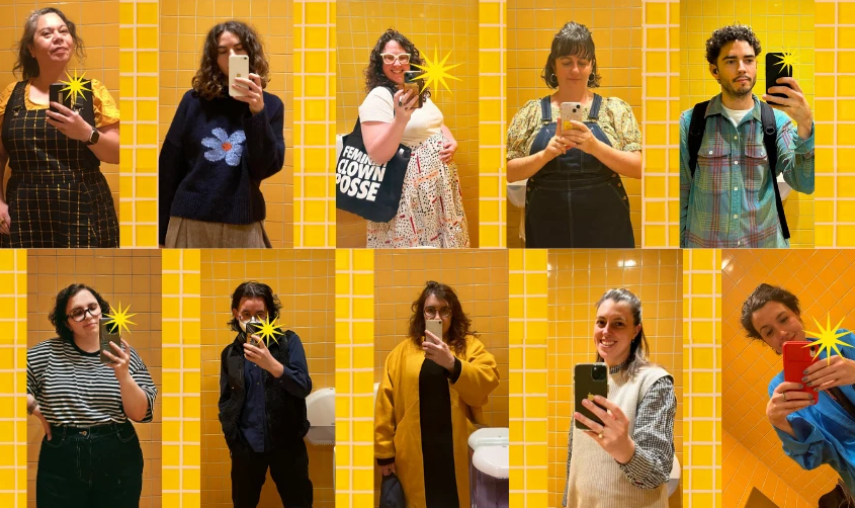
Via Spinoff
With a fair few Aucklanders moving to Christchurch… maybe we need some more fabulous public toilets here? (and cheaper housing of course).
How to Dad walks coast to coast (in Auckland)
View this post on Instagram
Thanks for reading! Enjoy your long weekend and if you’re travelling, safe travels.
PS Three upcoming events for your social calendar…
First up: Scott (aka ScootFoundation) is hosting an “emergency YIMBY drinks” tonight, from 5.30pm at the Glass Goose on Federal St. The very special guest is Joel MacManus, who’s moving to Auckland to become senior writer at The Spinoff.
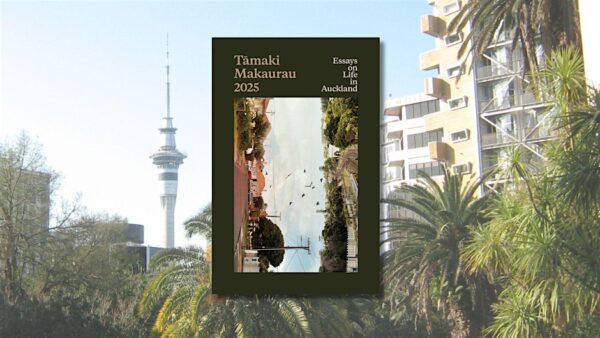
Secondly, and also on tonight: a book launch, 6 – 8.30pm at the Ellen Melville Centre in Freyberg Square, of Tāmaki Makaurau 2025: Essays on Life in Auckland.
Published by Auckland Council Libraries, the collection features writing by Anton Blank, Daren Kamali, Faisal Halabi, Jeremy Hansen (editor of the late great Paperboy), Taniera Hawke-Hohepa, Abel Mercer, Perzen Patel, Emmy Rākete, Tommy de Silva (as seen on Greater Auckland!), Jean Teng, Manu Vaea and Helene Wong. Unity Books will be on hand to sell copies of the book. Sounds like a great summer gift for the city-lover in your life!
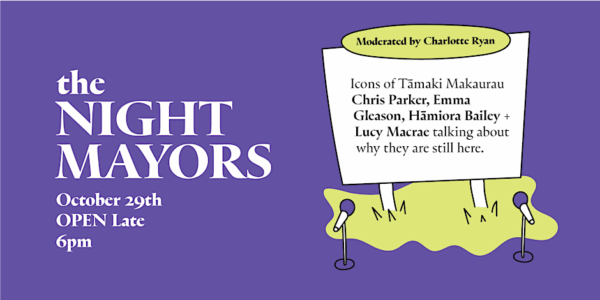
Thirdly, mark your calendars for next Wednesday 29 October, 6-8pm, for The Night Mayors – a sparkling session with Auckland icons dishing about city life after dark. This event is a collaboration between Place Creative and November Studios, and tickets are $10.
The lovely Charlotte Ryan will be moderating a panel featuring comedian Chris Parker; writer and bFM host Emma Gleason; Hāmiora Bailey, the executive director of Auckland Pride; and Lucy Macrae of Whammy/ Double Whammy/ Dick Move renown.
 When it comes to our love-like relationship with the city, Chris Parker absolutely nails it:

 Processing...
Isn’t 18 tph more than will actually use the tunnel when it opens?
Yes. From above:
““Eighteen trains per hour, per direction, is more than we’ll be running when CRL opens, but we need to make sure we test at maximum capacity,” says Mark Lambert.”
Nice to see Takapuna / Hurstmere Road doing great – the one-way design was my suggestion as the project’s transport lead. We previously had looked at blocking it off in the middle or making it into a shared space instead – but blocking it off in the middle would have been too disruptive for servicing and people who still preferred access by car, while making it into a shared space would have risked too many people still driving through for pedestrians to feel safe claiming the lane. One-way got us extra people space and fewer cars overall. Fitting in the counterflow bike lane and the loading bays was challenging, but we (Stantec, Reset Urban Design and Auckland Council / Auckland Transport) eventually found a good way forward. Good to see the locals seem to agree!
Funnily enough, Hurstmere Rd was in the news recently – with the Deputy PM, of all people, describing it as “totally dead”. The context: he was advising the good people of Blenheim not to “sacrifice” their downtown to “the war on cars.”
1) Where is he getting his alternative facts from? https://www.1news.co.nz/2025/10/03/seymour-dont-sacrifice-blenheim-to-war-on-cars/
2) Sounds like the main issue in downtown Blenheim is seagulls and their war on chips: https://www.1news.co.nz/2025/02/19/council-plans-refresh-for-blenheims-tired-main-street/
Nice work Max and team, especially the counter-flow cycle lane.
When did the Deputy PM get a taste of Hurstmere Rd? One-way (except for bikes) has made a huge difference. Petrol-head “war on people” continues to be the real problem.
Max and team – well done! It’s not perfect, that would be a pedestrianised street. Having seen city after city in Europe that is pedestrianized they are great spaces to walk and linger, and invariably when that happens you spend. I appreciate that this concept would not work in NZ. Overall, Te Whiwhirangi Square and the wider footpaths are a great asset. We can walk safely around with our 3.5 year old grandson. I never had that same enjoyment in walking through the car park.
That underground playground is amazing. Definitely will be visiting next time I’m in Sydney.
Did you read the source article? The lights in the tank are IBCs stuck upside down on the roof – what an amazing reuse. The man’s a genius and a Kiwi at that. We need some of his playgrounds here. The seven yr old in me would love to ‘play’ on some of the things he has built.
Takapuna has superb setting. A setting very much enhanced by the retention, and now enhancement, of the public space in the prime beach margin.
And now also the council redevelopments reducing much of the previous car domination.
For those in the centre of Auckland the frequent 15minute bus service makes it very accessible without car parking hassles. And it is a very scenic bus ride.
Redevelopments do not generally increase overall spending. They just influence the spendings location. So increased attractiveness of one region reduces spending elsewhere.
Hence opposition to all redevelopment council spending, by business entities established elsewhere.
Hence the strident opposition to redevelopment of the Downtown Carpark site by businesses and landowners from further up the Queen Street valley.
DonR, the 82 at 15 minute intervals, or less at peak, is a great service. It is useful of course in both directions. In addition the City/Takapuna connection is well served from Akoranga, and it seems getting better, with subtle changes happening. Particularly at off peak it can be useful to take either the NEX1 or the NEX2, travel to Akoranga, and then bus via Anzac St to the town centre. There will always be those who bitch about changing buses. It’s hard to fathom why when Akoranga has a great bus shelter. Going north to the Albany Town Centre is not a great experience.
The Cardiff councillor has a great name, just saying.
Not sure if anyone mentioned but condolences to the bus driver who lost their life in the crash on Tamaki Dr.
Sorry what “and implementation costs of $15,000” WTF! That’s outrageous all they have to do is slap new stickers over the old signs are they kidding? Probably set up 100 cones with full TM just to change a sign FFS. Where’s that money coming from anyway? Sooner AT is gone the better.
do you really think things will be much better with AT wrong. the whole system is rotten to the core. Theres a good reason 124,000 kiwis have left over the last year alone.
I fear that once AT is gone there will be two council meetings to determine the cost, a third one to claim that this is ridiculously high and a fourth one to cancel the project. If you then account for the council members’ pay, we will have paid 20,000 and not have gotten a change. (/s ?)
And yet we have AT rushing this harder and faster through than they have ever before and they are now making a road that had average speed limit compliance into now they expect the average speed to be above 50. That isn’t right it slowly erodes the public confidence in following speed limits that aren’t appropriate. The right thing to do would be to make the road 60. Oh and they are rushing it through before somone notices they are charging ratepayers $15K to put stickers over some signs. They are making NZTA look scarily efficient given they managed to install median barriers for not that much more.
Wonder if it’s traffic management while they put up new signs? Seems a lot or the cost of doing the cost-benefit report that the government now requires them to do.
“Even better would be to also extend a bridge across the motorway to the busway station to further open it up and to expand the catchment of the station.”
Absolutely yes for a bridge. What about a small high rise development alongside the west side of the bus way to leverage off everything at Smales Farm – the busway, medical facilities, restaurants, coffee shops etc