Kia ora and welcome to our regular roundup of stories that caught our eye this week.
This Week in Greater Auckland
- On Monday, we took some time to analyse the election campaign transport announcements…
- …and on Tuesday, we editorialised about what the recent campaign announcements mean for Auckland
- On Wednesday, we ran a guest post book review by George Weeks, about rethinking parking…
- …and on Thursday, we ran a throwback post from 2018, about rethinking Mill Road.
Our commentary on Mill Road appeared in two news stories: this RNZ story, featuring Matt:
Greater Auckland director Matt Lowrie said the project was like “taking a sledgehammer to crack a nut”. He said work was needed on the transport corridor, but smaller solutions could deliver the same benefits at a smaller cost overall. He pointed to the dynamic lanes added to Redoubt Road, which he said had helped ease congestion.
He said money could be better spent on improving public transport, offering people alternatives to travel around Auckland. “We’ve just seen the opening of the City Rail Link in Auckland, which has been very successful already.”
Lowrie added funding for stages two and three could cost even more than stage one.
And this coverage in The Post, featuring Connor:
Campaign director of transport advocacy group Greater Auckland, Connor Sharp told The Post the Mill Rd announcement was “quite disappointing”.
“You’re essentially looking to put in almost $2 billion dollars just for stage one for a project we may not even need any time soon.”
Sharp said the Government did not have to build a four-lane motorway in the area to fix safety and congestion issues.
“Just because the biggest thing is going to fix all the problems hypothetically doesn’t mean it is the best solution at this time.”
Greater Auckland’s research and advocacy is powered by hundreds of hours of work each month, and your support helps keep us going! We warmly welcome your donations, and are always open to offers of guest posts, practical help, and pro-bono expertise.
Another great way to support the kaupapa: Greater Auckland merch. Allow a week for delivery, and note these are print-on-demand (no returns), so double-check your sizing before ordering!
The rising cost of Roads of National Significance
While National’s announcement it would fund the Woodend Bypass is an example of a good road policy, diverting heavy traffic around a small town, the rest of its South Island announcement was yet another high-cost, high-spec highway.
Newsroom’s David Williams reported from the scene, highlighting the rising cost of highway projects amid the overall unaffordability of the RoNS. Great to see others doing this kind of detailed fact-checking on transport:
Newsroom harks back to 2023, when National’s transport policy document, ‘Transport for the Future’, estimated the 11km project would cost $270m. Now it might cost four times that. We ask: How did that happen?
“That would have been based on the costings at the time,” Bishop says.
“There’s obviously been a lot of construction cost inflation during the Covid years and throughout that period, so we’re using the most up-to-date information based on the NZTA investment case, which was done in 2025 and has been signed off by the NZ Transport Agency Board.”
Doocey adds: “In 2017, after the previous National government announced this as the next road of national significance, Labour came in in 2018 and cancelled the road. So we had six years of inaction, and that’s what’s driven up the cost.”
We point out Labour can’t have influenced an estimate made by National in 2023.
Bishop responds, reiterating that figure would have been based on publicly available information, Then he wants to look to the future. “We’re good to go and we’re going to get on with it.”
Follow the yellow brick road rail…
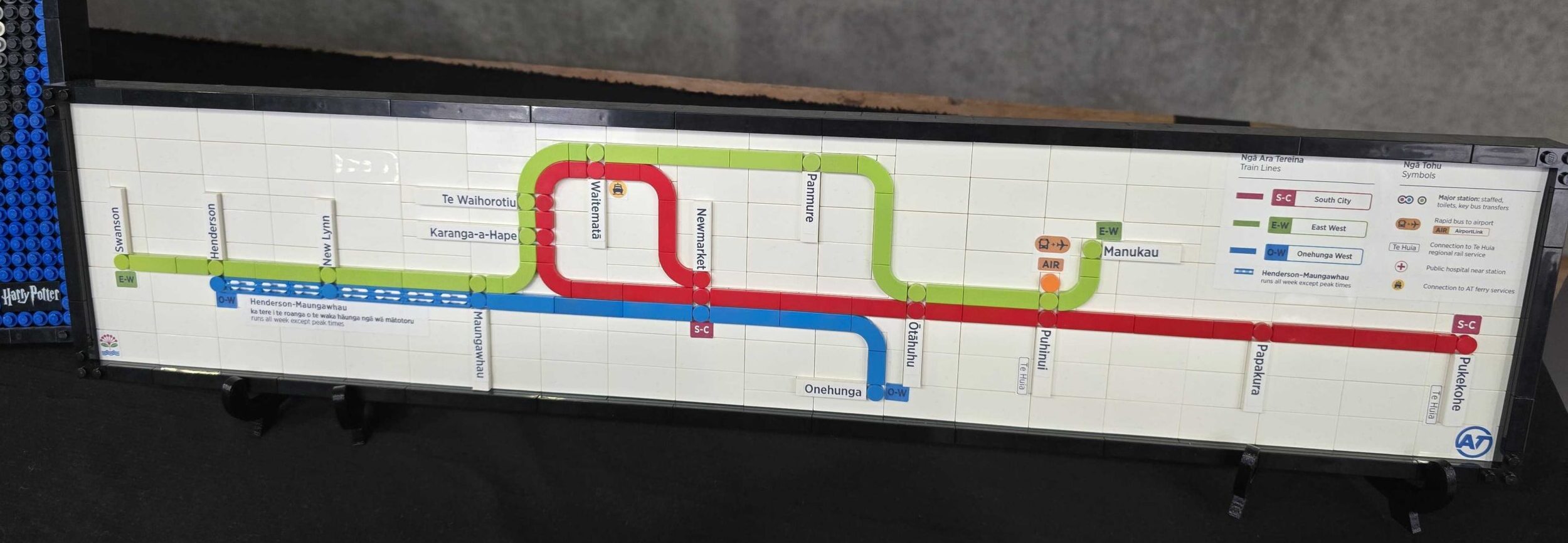
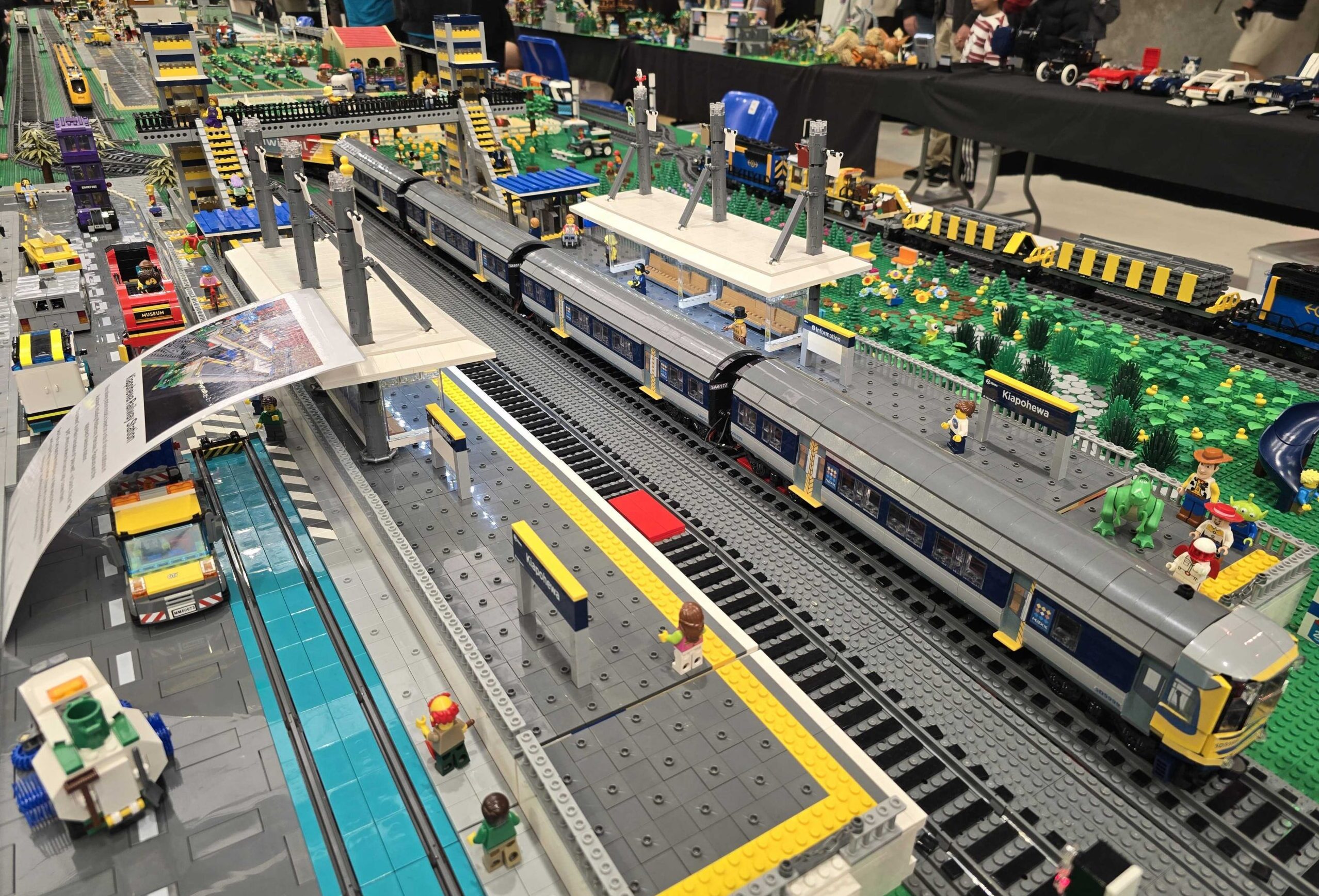
Spotted at the Auckland Brick Show last weekend: some very cute locally-themed builds! Photos by Matt Lowrie.

Auckland-Coromandel ferry back, just in time for summer
Ferries from downtown Auckland to Coromandel town are back in time for the summer holidays, the NZ Herald reports:
The Auckland-Coromandel ferry, operated by Explore Group, will resume the seasonal connection on October 23, with ferries running Friday to Monday and on public holidays.
Daily trips will operate from November 27 until Easter 2027.
Explore Group managing director William Goodfellow said moving to a daily timetable would give travellers greater flexibility.
“For Aucklanders, it’s an easy way to enjoy a day trip or longer stay in the Coromandel without taking the car, while for Coromandel residents it provides more options for travelling into Auckland and choosing when they return.”
Ferries will leave Auckland’s Viaduct at 9.15am for Hannaford’s Wharf, near Coromandel town, with the journey taking about two and a half hours.
An additional Friday afternoon service has also been announced. It will depart Auckland at 4.45pm and arrive at 6.45pm, with a return sailing leaving the Coromandel at 7pm.
Return fares remain unchanged from last summer at $135 for adults and $67.50 for children aged 5 to 15.
A shuttle from Hannaford’s Wharf to Coromandel town is included in the ferry fare.
Housing in the right places
An insights paper by Auckland Council’s Chief Economist Unit says the city could see up to 38,000 new homes in the next decade, under the revised version of Plan Change 120. Our Auckland reports:
Chief Economist Gary Blick says the modelling points to a substantial increase in housing supply if the proposed planning changes are adopted.
“The revised proposal is forecast to increase housing supply by around 36 per cent, equivalent to approximately 38,000 additional homes over 10 years, compared with the operative plan.”
The analysis forecasts an average of 14,300 new homes a year under the revised proposal, compared with 10,500 homes a year under current planning settings.
The growth is expected in areas with strong demand and good transport connections.
“The proposal would enable more homes in locations that are already well connected to employment, services and public transport. That gives more people the opportunity to live close to the places they need to go every day,” says Blick.
Meanwhile, the push-pull between more sprawly development and infrastructure continues, with Auckland Council stuck in the middle. As RNZ reports:
Auckland councillors have agreed a request to rezone 145 hectares for housing in North Auckland can proceed to public consultation.
Developer Fulton Hogan wants to build around 2000 homes at Milldale North, near Orewa, beside its existing Milldale development.
The land is currently zoned for development from 2050. If Fulton Hogan’s private plan change is approved, housing could be built there much sooner.
Chair of the Policy, Planning and Development Committee meeting, Councillor Richard Hills, notes that while for this project much of the needed infrastructure is already in place, or will be, that’s not true for other projects on the periphery. Fast-track consenting and central government moves to constrain local government’s ability to set rates will only make things harder:
“Fast track has really brought this whole thing to a head, but private plan changes we’ve tried to reject, we’ve tried to appeal, 99 percent of the time it gets approved no matter what we do.”
With rates capping, the council will “have less and less ability to fund everything everywhere”, Hills said.
“Right now, when we see thousands and thousands, up to 50,000 dwellings that we have coming down the track that will be either fast tracked or unanticipated, with about $5b of cost that we do not have any plan to pay for, is a massive issue.”
“I think if we don’t take a strong stance … then I think we will continue to have the assumption that we can just pay for everything, everywhere.”
Hills said public transport, animal management, and illegal dumping teams would be spread further away from where people were getting up every day to do those jobs.
“It’s just becoming pretty impossible and not the way to plan a city.”
Reverting to safer speeds
Towns and regions continue to push back against the widespread higher speed limits imposed by Simeon Brown after the last election. The latest return to evidence-based policy is in Canterbury, as 1News reports.
The speed limit on State Highway 1 south of Amberley will reduce from 80km/h to 60km/h from November 4.
It is one of four Canterbury speed reductions confirmed by Waka Kotahi NZ Transport Agency over the next month.
The new speed limit follows extensive community engagement, with the Hurunui Youth Council calling for the speed limit to be reduced to 50km/h on the 0.9km stretch of road south of Amberley.
Hurunui Mayor Marie Black said the lower speed limit was backed by the council and the South Ward Community Board, as well as the youth council.
She said the youth council’s submission showed why it’s important young people play a role in local decision making.
…
Reducing the speed to 60km/h is expected to reduce crashes resulting in injury by 23%, according to an NZTA assessment.
[…]
New 50km/h speed limits have also been approved on SH73 at Sheffield (from October 28), SH73 at Kirwee (October 28) and SH75 at Halswell (November 11).
Gardening, past and future
A fascinating story from RNZ about rediscovering the history of Chinese market-gardening across Auckland, as part of the Auckland Heritage Festival (which runs until Sunday 11 October).
Ruth Lam, an Auckland historian and co-author of Sons of the Soil: Chinese Market Gardeners in New Zealand, said newspaper reports suggested Chinese growers were establishing market gardens in Auckland by the 1870s.
[…]
Although early Chinese market gardeners played an important role in feeding Auckland, little trace of their presence remains in the city’s heavily urbanised landscape.
Walking with RNZ through the Carlaw Park Student Village in Parnell, Lam tried to identify the site of a 7-acre market garden once cultivated by Chan Dah Chee, also known as Ah Chee, a prominent Chinese market gardener in late 19th-century Auckland.
Today, there are few visible clues to what once stood there.
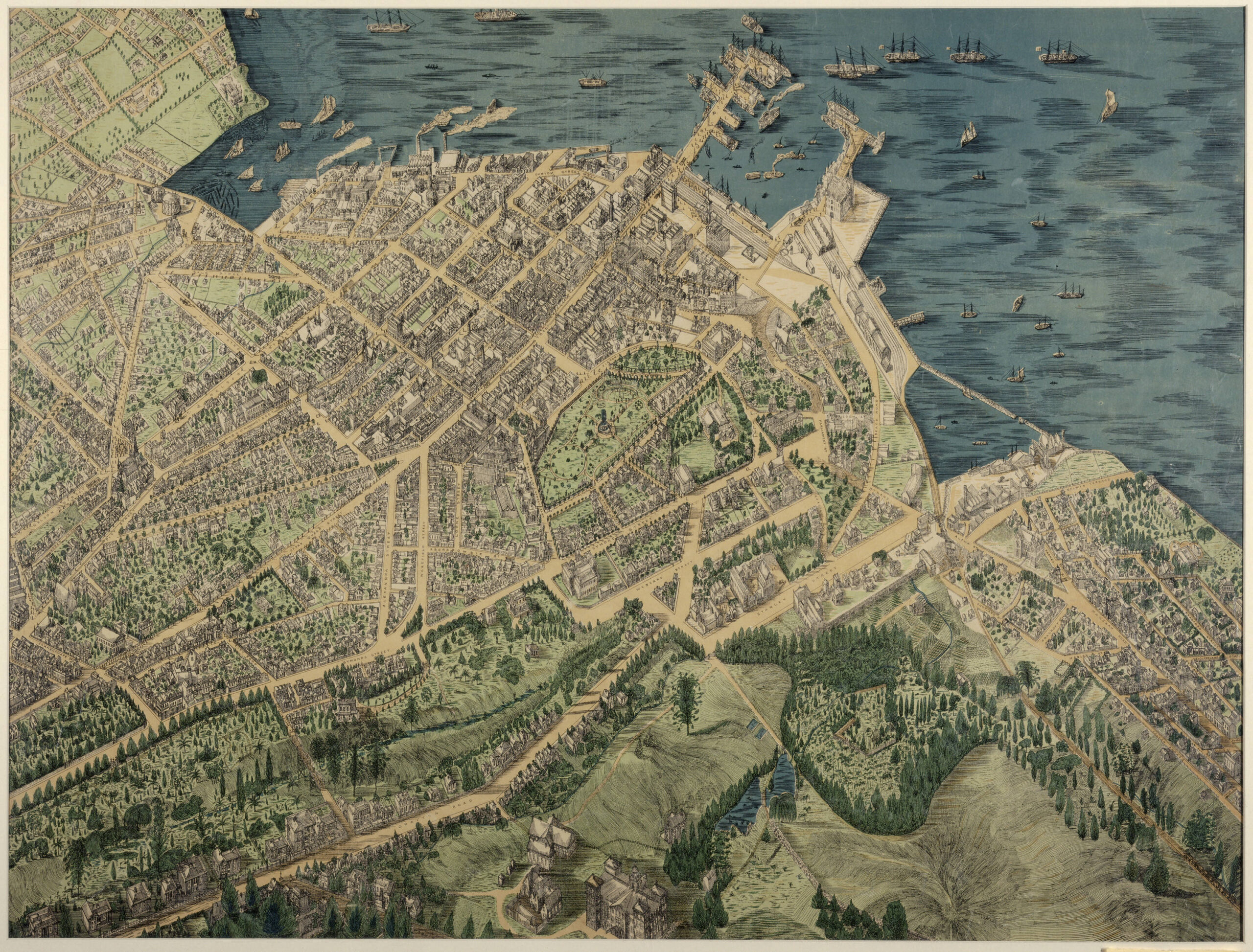
“A birds-eye-view map of Auckland (1886) compiled and drawn as from a point one thousand feet above and one hundred feet to the rear of the hospital, during the year 1885 and part of 1886, by George Treacy Stevens. It shows all points of interest from the wharves to Parnell, to Symonds Street cemetery, to Herne Bay, including Auckland Hospital, Parnell, Auckland Domain and Freemans Bay.” Click to embiggen: Ah Chee’s market garden is visible at the top right edge of what is now the Domain. Auckland Libraries Heritage Collections Map 4641.
And, hot pink solar panels might be coming to a farm near you? Like Te Ara i Whiti but for plants. As RNZ reports:
A renewable energy researcher says coloured solar panels have “tremendous” potential for New Zealand vegetable growers.
Published in Cell Reports Physical Science, a Swedish study has found broccoli grows well beneath magenta-coloured solar panels, although the vegetable takes 25 days longer to get to full size and has lower levels of micronutrients.
Victoria University School of Engineering and Computer Science associate professor Ramesh Rayudu said further research was needed, but the initial study was a bit of a game-changer.

Image: Silvia Ma Lu via RNZ and elsewhere.
A map that genuinely gives a crap
True to its name, poo.co.nz aims to be “New Zealand’s most comprehensive, accurate, and accessible map of public toilets.” It’s a public-good project, put together by one (anonymous) person. You can add a missing toilet, and you can also…
…filter for wheelchair accessible toilets, baby changing facilities, gender-neutral and unisex toilets, showers, drinking water and more. Where we have the data, listings also show opening hours, an open now indicator, directions, and whether the information has been provider-verified or poo.co.nz verified.
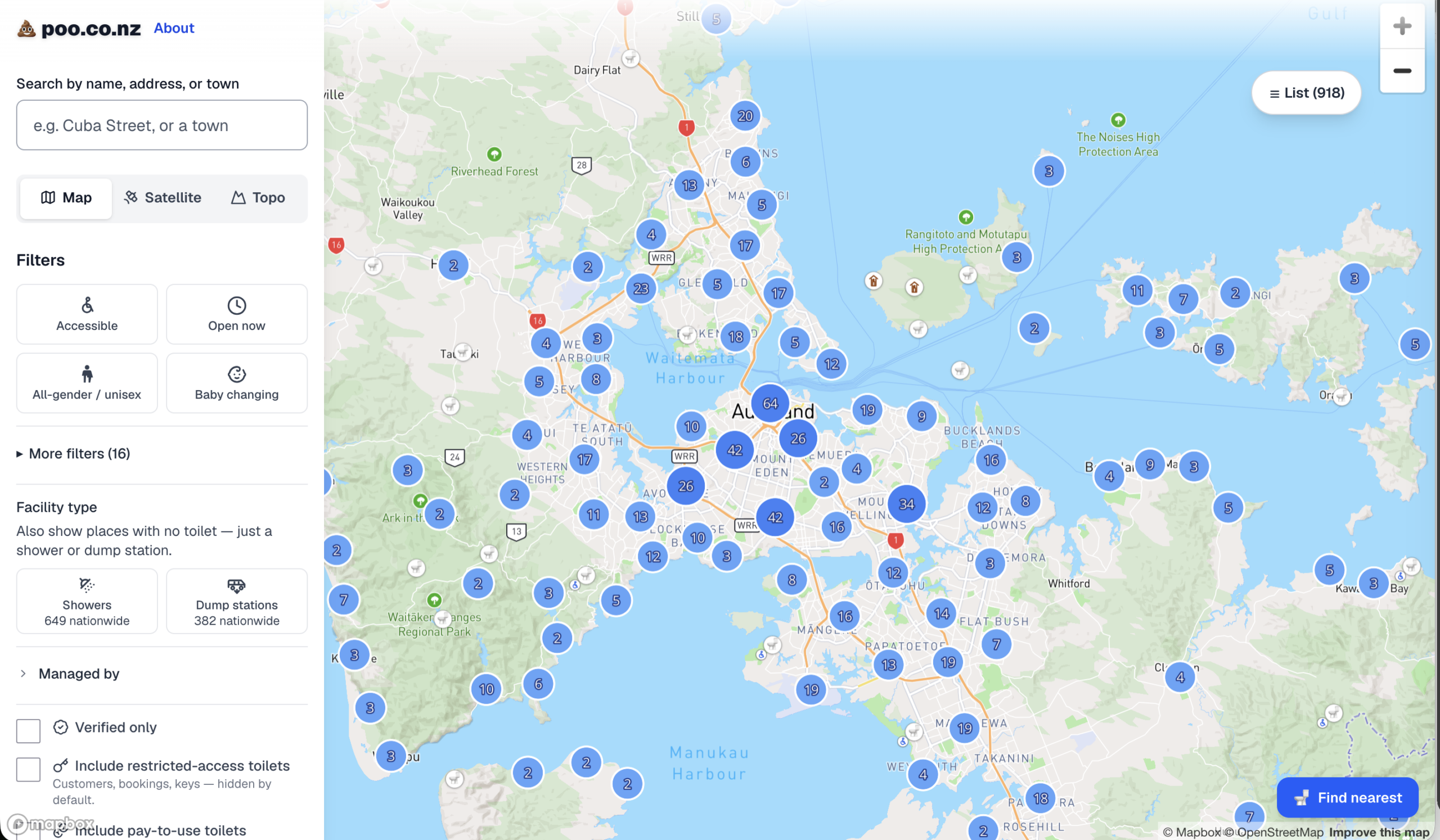
A screenshot of poo.co.nz, focused on the Auckland area.
E-Bikes: not just fun and handy, but also create jobs
Turns out, the rise of e-bikes comes with a bug that’s also a feature: a demand for e-bike mechanics. As reported by Electrek:
Europe has spent years encouraging people to ditch cars and get around on bicycles and e-bikes instead. And in many places, it’s working. But all of those increasingly sophisticated electric bicycles have created an unexpected new problem: there aren’t nearly enough people to fix them.
Europe could need to recruit a staggering 105,000 additional bicycle mechanics by 2032, according to a new report on the continent’s cycling industry.
The NextGen Mechanics report, presented at the inaugural European Cycling Industries (ECI) summit in Brussels, estimates that Europe currently has around 175,000 bicycle mechanics. But Bike Europe says the industry is already short around 45,000 workers, and growing adoption of e-bikes, cargo bikes, bike leasing, and commercial cycling fleets is expected to make that shortage significantly worse.
By 2032, Europe could require nearly 247,000 mechanics in total – around 40% more than are working in the industry today.
A bike mechanic apprentice scheme sounds like an appealing election policy for someone?
All Aboard at MOTAT
Looking for some fun for the last weekend of the school holidays, or a bit of local history? MOTAT’s ongoing exhibition “All Aboard: How Tāmaki Moves” is all about how public transport has changed over time in our city: trams, trains, buses and ferries – “and a little bit of bikes as well.” Lots of great stuff on display.
View this post on Instagram
What to watch
Senior citizens scope out the City Rail Link. This is wonderful.
View this post on Instagram
Would you rather: free parking, or rail to the North Shore?
View this post on Instagram
Why did it take sixty-five years to pedestrianise (one kilometre of) London’s shopping mecca, Oxford Street? Ironically from our perspective, it involved the council handing control over to Transport for London (the reverse of what’s just happened in Auckland…)
What’s it like cycling in China these days?
Thanks to the reader who sent in this interesting video on the Britomart development plan from Auckland City Council in 1995.
That’s us for the week – as always, feel free to share links and stories in the comments below!

 Processing...