This Week in Greater Auckland
- On Monday, we had a guest post from All Aboard, about Better Moves for transport planning.
- On Tuesday, Matt looked at how the City Rail Link is going, one week in.
- Wednesday’s post, also by Matt, looked at the options for level crossings in the Inner West…
- …and Thursday was a day of rest, as we assembled our feedback on the amended PC120.
Note: Better Moves is launching on Wednesday 30 September at the Maritime Room. It’s free and whanau-friendly, but places are limited, so be sure to RSVP here. Doors open from 5pm for networking; the event runs from 6pm-7.30pm.
Greater Auckland’s research and advocacy is powered by hundreds of hours of work each month, and your support helps keep us going! We warmly welcome your donations, and are always open to offers of guest posts, practical help, and pro-bono expertise.
Another great way to support the kaupapa: Greater Auckland merch. Allow a week for delivery, and note these are print-on-demand (no returns), so double-check your sizing before ordering!
City Rail Link curiosity continues
A (sponsored) article on Stuff.co.nz notes that Google searches for city centre destinations have shot up around the opening of the City Rail.
This infrastructure-led momentum appears to coincide with a broader uplift in urban exploration. Searches for “things to do in Auckland CBD” have risen by around 40%,while queries targeting specific downtown commercial hubs and retail precincts have surged by over 250%. It could suggest a subtle behavioural pivot: as physical barriers and years of construction disruption begin to recede, urban dwellers are potentially starting to look at the heart of the city through a fresh lens.
Interestingly, it’s very much not just people looking up trains…
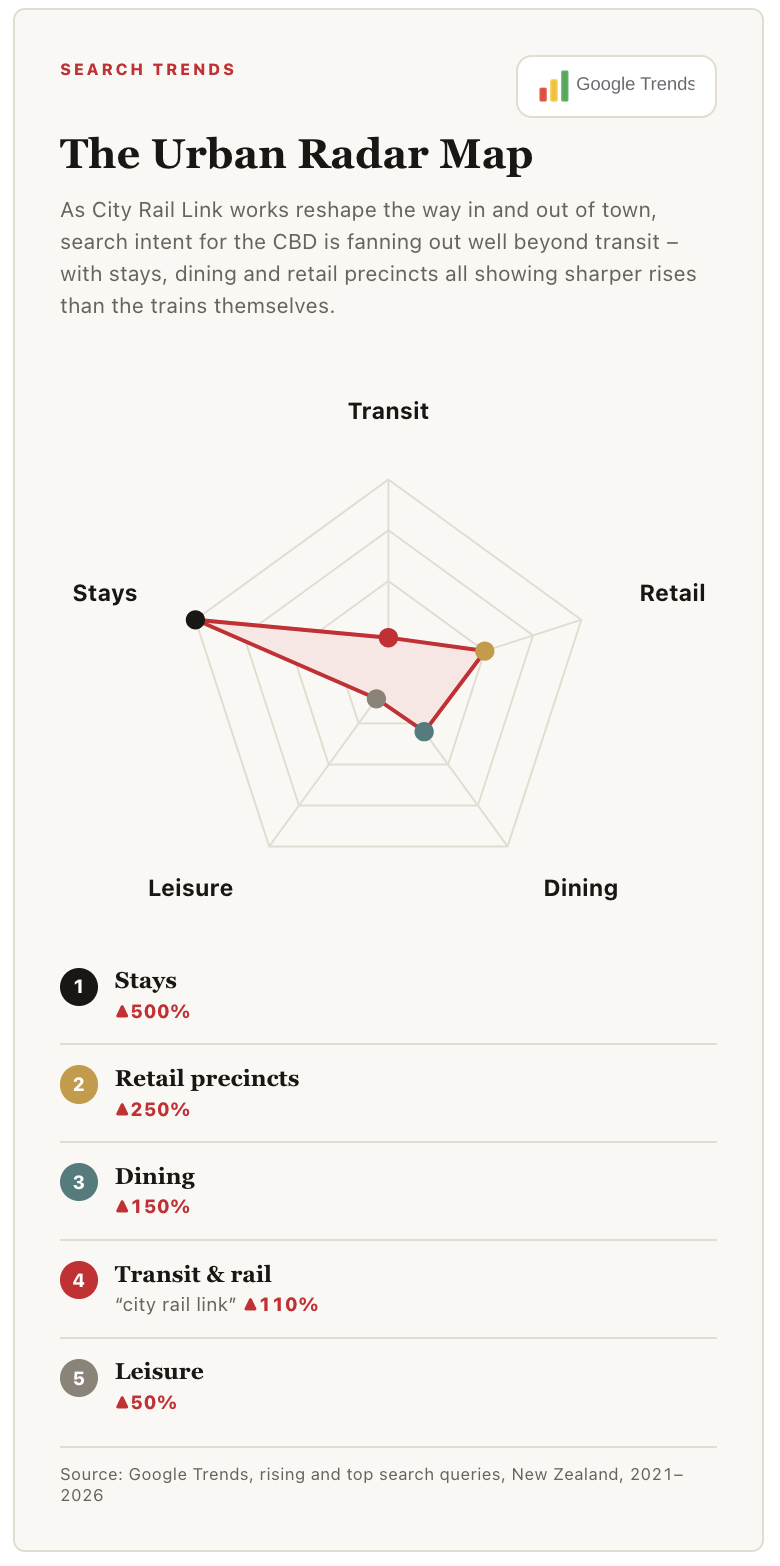
Source: Stuff/ Google Trends
Fuel shock trickle-down effect?
An interesting article by Auckland Council’s Chief Economist, reprinted by Interest.co.nz, looks at local impacts of the rise in fuel prices, which accounts for “almost one-third of the rise in household living costs in the year to June 2026.”
Aucklanders are spending more on fuel, and cutting back elsewhere:
…hospitality spending has averaged around 10% below the same time last year, while spending on both takeaways and apparel has averaged around 3% lower.
We’re also making different travel choices. Public transport is up:
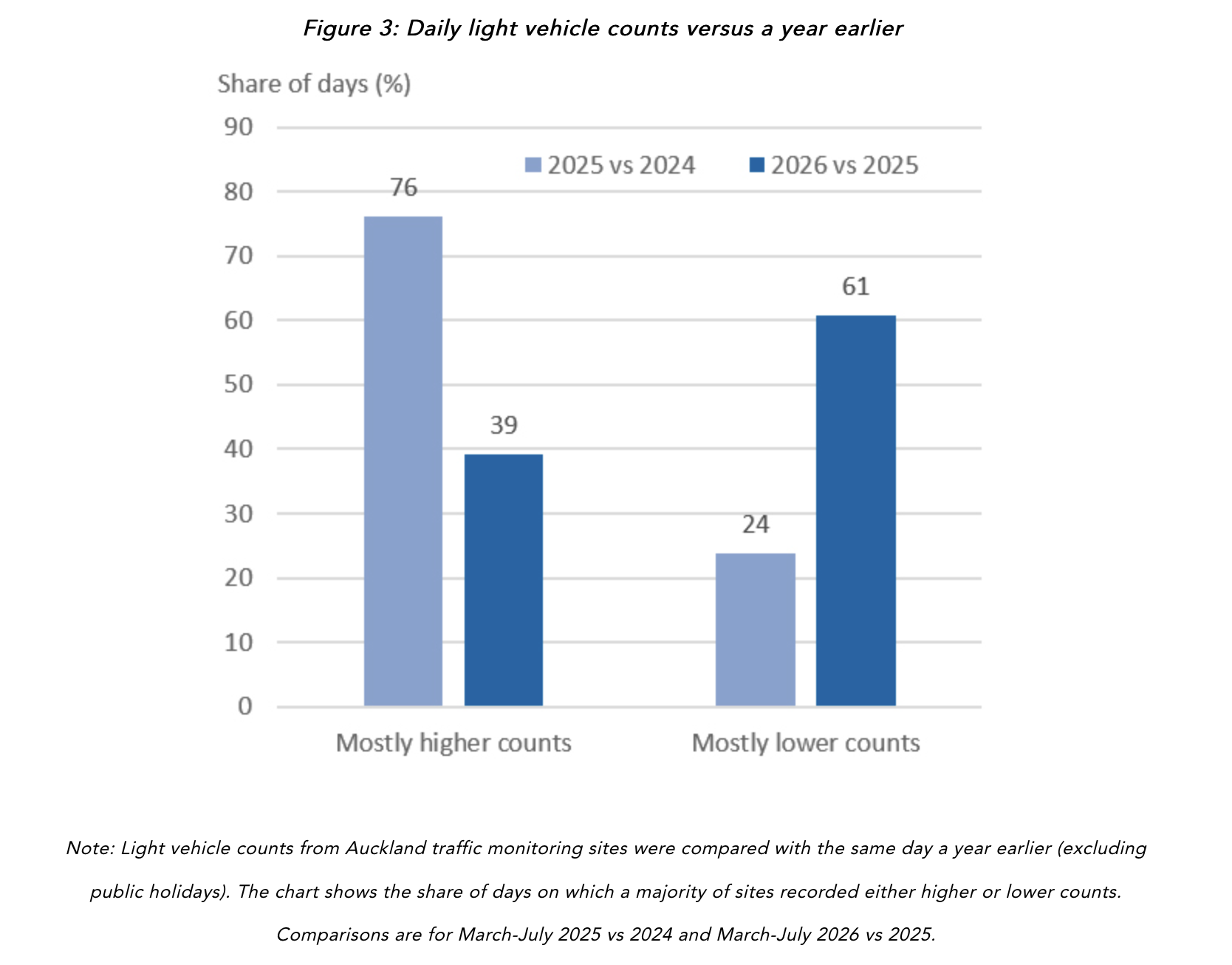
Between March and July 2026, public transport patronage was 9% higher than over the same period in 2025. In comparison,patronage was essentially flat over the equivalent period between 2025 and 2024.
And driving appears to be down:
Between March and July, a majority of traffic count sites recorded lower counts than a year earlier on 61% of comparable days and higher counts on 39% (Figure 3). In contrast, over the same period in 2025, a majority of sites recorded lower counts year-on-year on just 24% of days.
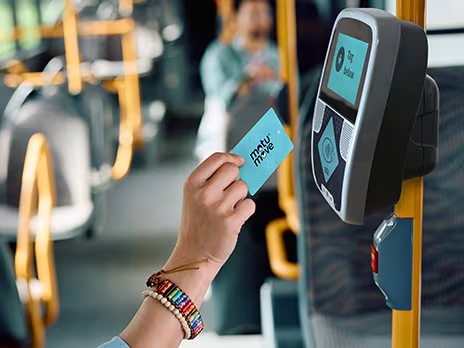
Motu Move: Nationwide ticketing system gets rolling
It’s been a long time coming but Motu Move, the public transport ticketing system that is being rolled out nationally has finally fully launched in Christchurch.
The National Ticketing Solution (NTS), also known as Motu Move, will roll out fully in Canterbury from today, marking an important milestone in delivering an easier and more convenient way for passengers to pay for public transport across New Zealand, Transport Minister Chris Bishop says.
“Current public transport ticketing systems are majority funded by Government through the National Land Transport Fund (NLTF) and are at the end of their useful life. Instead of paying to upgrade four different legacy systems, decisions were made in 2022 to fund, design, and deliver one new modern system to replace them all. That is the National Ticketing Solution or NTS,” Mr Bishop says.
“The NTS will make public transport easier and more consistent nationwide, allowing passengers to pay with contactless debit or credit cards, Apple or Google Pay, or a prepaid Motu Move card, with cash also accepted in some areas.
“Canterbury has been the testing ground for the NTS, with new features introduced progressively over the past year. Contactless payments for standard adult fares began in November 2025, followed by Community Services Card and SuperGold discounts linked to Motu Move accounts in February this year.
…..
“From today, the NTS will now also enable child, youth, and accessibility fare discounts. This means any public transport user who has created a Motu Move account, linked their eligible fare discount and preferred contactless payment method will automatically get the best fare when they travel.
“Today, we are also introducing prepaid Motu Move travel cards, available online or through participating retailers. Children aged five to 18 years old, as well as Community Services Card holders, are eligible for a free Motu Move card when their region transitions to the NTS. Children can also claim one free replacement card if they lose their first card.
…..
“The NTS will be rolled out across all regions by the end of 2027. Once complete, New Zealand will be one of the few countries in the world where people can travel on public transport across multiple regions using the same system, contactless payment method, and get the best fare automatically when they travel.
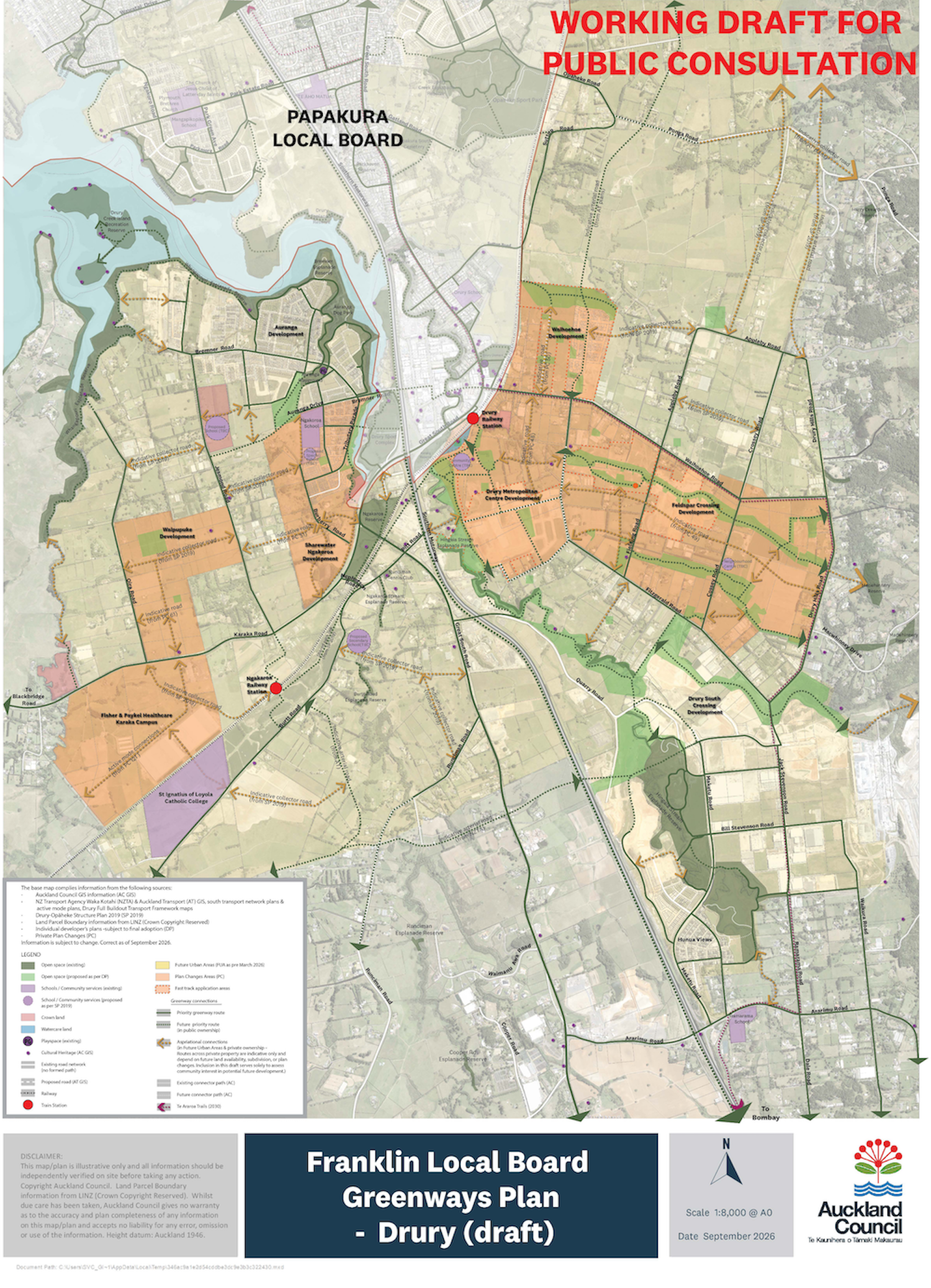
Drury Greenways Plan open for feedback
Auckland Council is consulting on a draft Greenways Plan for the Drury area, “to provide a long-term vision for future investment and planning in Drury.” It covers:
- walking and cycling connections between neighbourhoods, parks, schools, community facilities, town centres and other key destinations
- connections to streams and reserves to create greener, more attractive routes for people to enjoy.
- in the area from Auranga through to Drury East and south towards Hunua Views and Ramarama.
Public feedback is open until Thursday 22 October. Find out more here. (Click to embiggen image)
Panmure to Maungarei/ Mt Wellington
Meanwhile, the Auckland Urban Development Office is working on a project in Panmure. As described on the socials:
A new pathway is planned for Panmure to make it safer and easier for people on bikes and pedestrians to get between Maungarei (Mt Wellington) and the town centre.
The project is due to start construction early next year and has been developed in collaboration with the Maungakiekie-Tāmaki Local Board, mana whenua, Auckland Transport, Auckland Council’s Healthy Waters and the Tūpuna Maunga Authority.
The Maungarei Connection will also improve stormwater infrastructure along the route, with better drainage, and new garden beds.
The project is part of our plans to revitalise the town centre over the next 10 years to enhance Panmure as a great place to live, visit and do business.
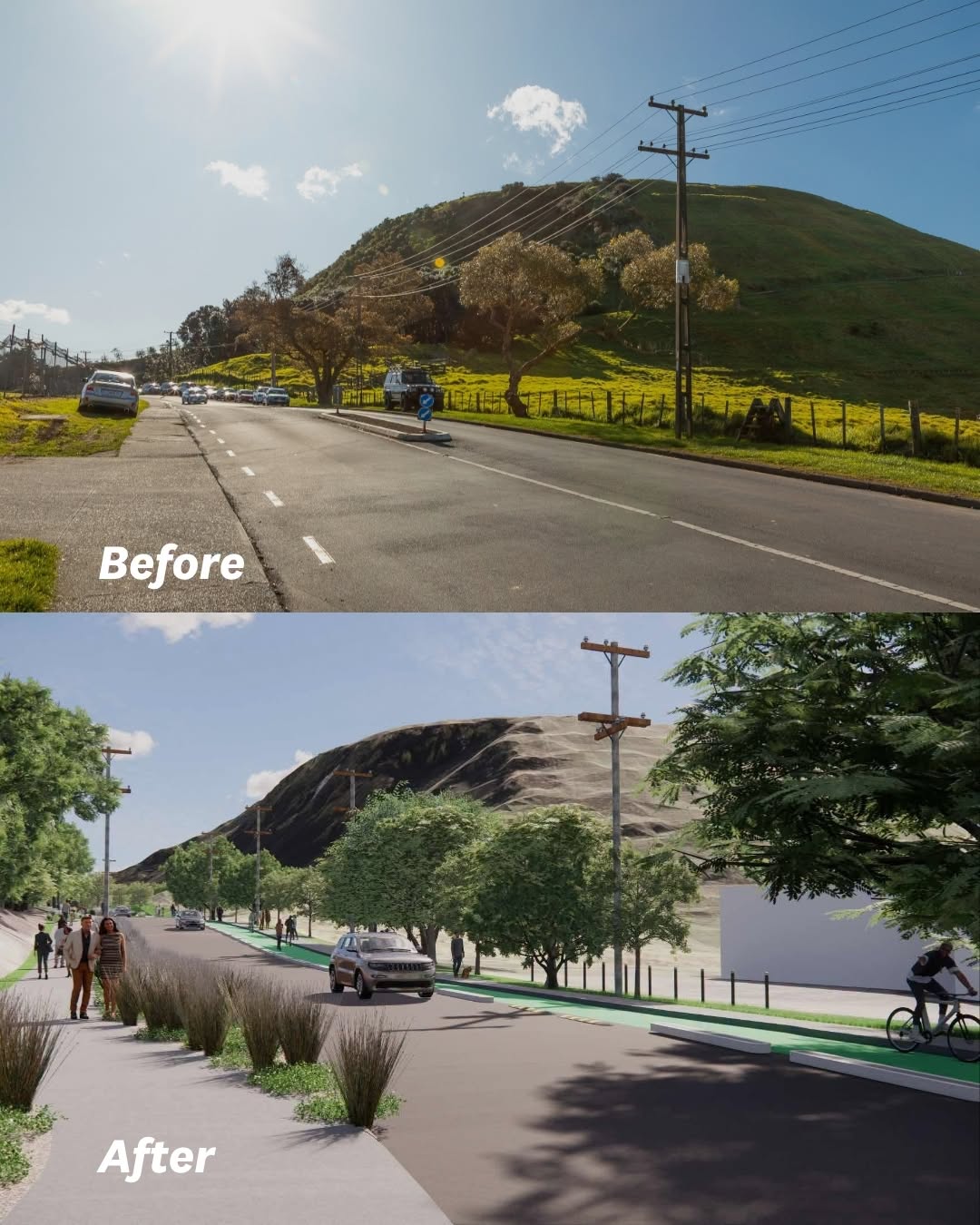
Source: AUDO
Make Space at Maungawhau
The Auckland Urban Design Office is also smartening up the space out the front of Maungawhau Station, with an activation programme called Make Space. As reported by Our Auckland:
The creative team who brought Silo Park to life will uplift the Maungawhau Station precinct next, with Make Space.
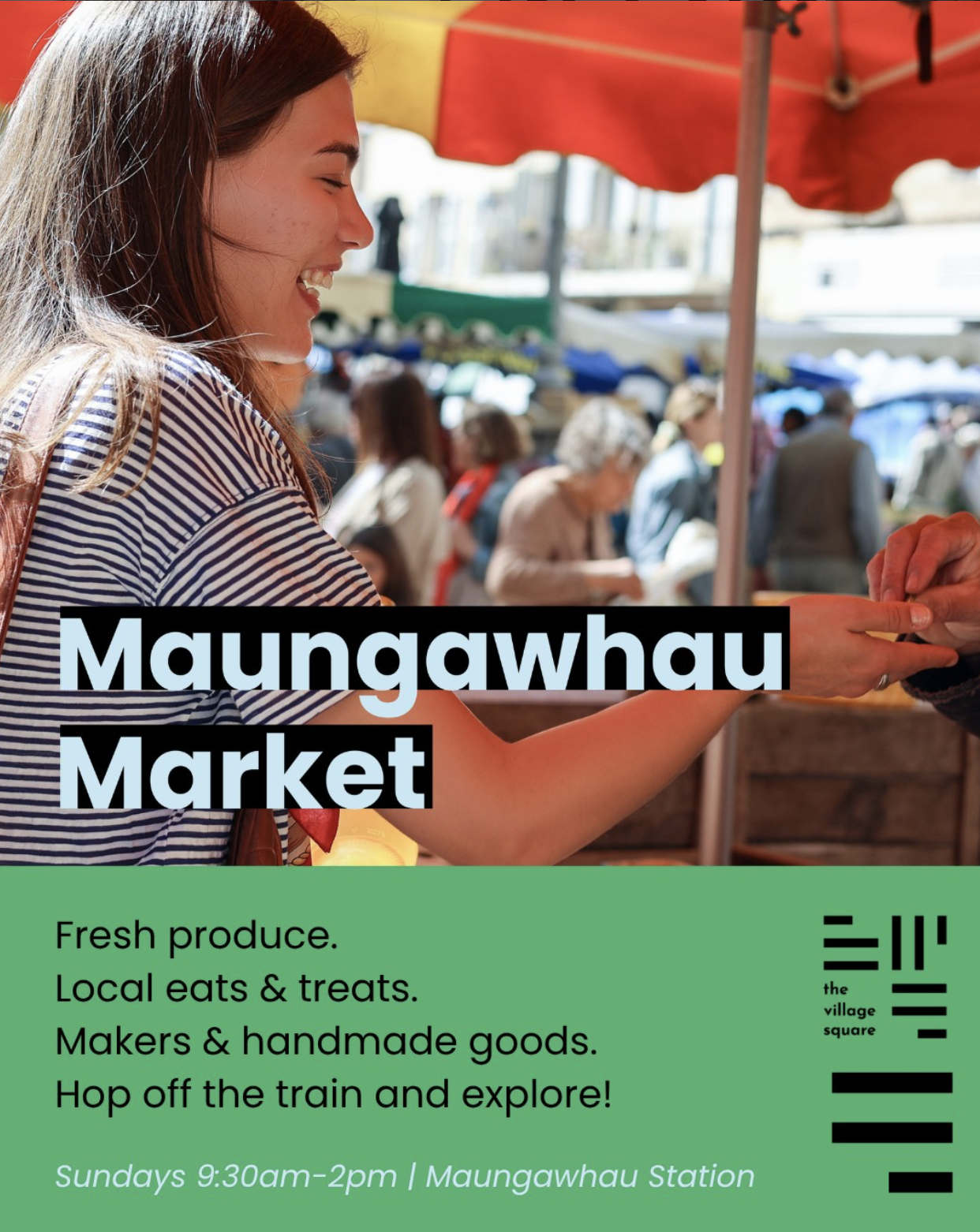
The first phase of Make Space includes a new weekly Sunday market, interactive public art and skate lessons for kids. As we head towards summer, expect to see a new bike hub, and a park and picnic area to relax on, creating more welcoming places for people to meet, play, relax and connect.
The weekly Maungwhau Market opens this Sunday 27 September, from 9.30am – 2pm, with “a variety of delicious food & drinks, local produce, crafts and unique finds, face painting and activities for all ages”. There’s also live music, and a pop-up bike hub “for free basic bike fixes, advice, and to meet other riders.” For more info see Insta, FB, and the market newsletter.
Thank you, tramdriver!
The Guardian reports on the European Tramdriver Championship, which took place recently in Warsaw. A team from Prague took the top prize, while Melbourne’s “Tramaroos” came second, ahead of London.
The event saw 26 teams compete across a series of demanding tasks, inspired – to varying degrees – by tram drivers’ day-to-day work.
In “smooth stop and go”, drivers travelled with a bowl of water attached to the front of the tram – with points deducted for every drop spilled. Other precision tasks involved speed control at 25 km/h, target braking, tram bowling, lateral distance, basketball, a perfect stop with the second door, and a reverse ride guided by whistle commands.
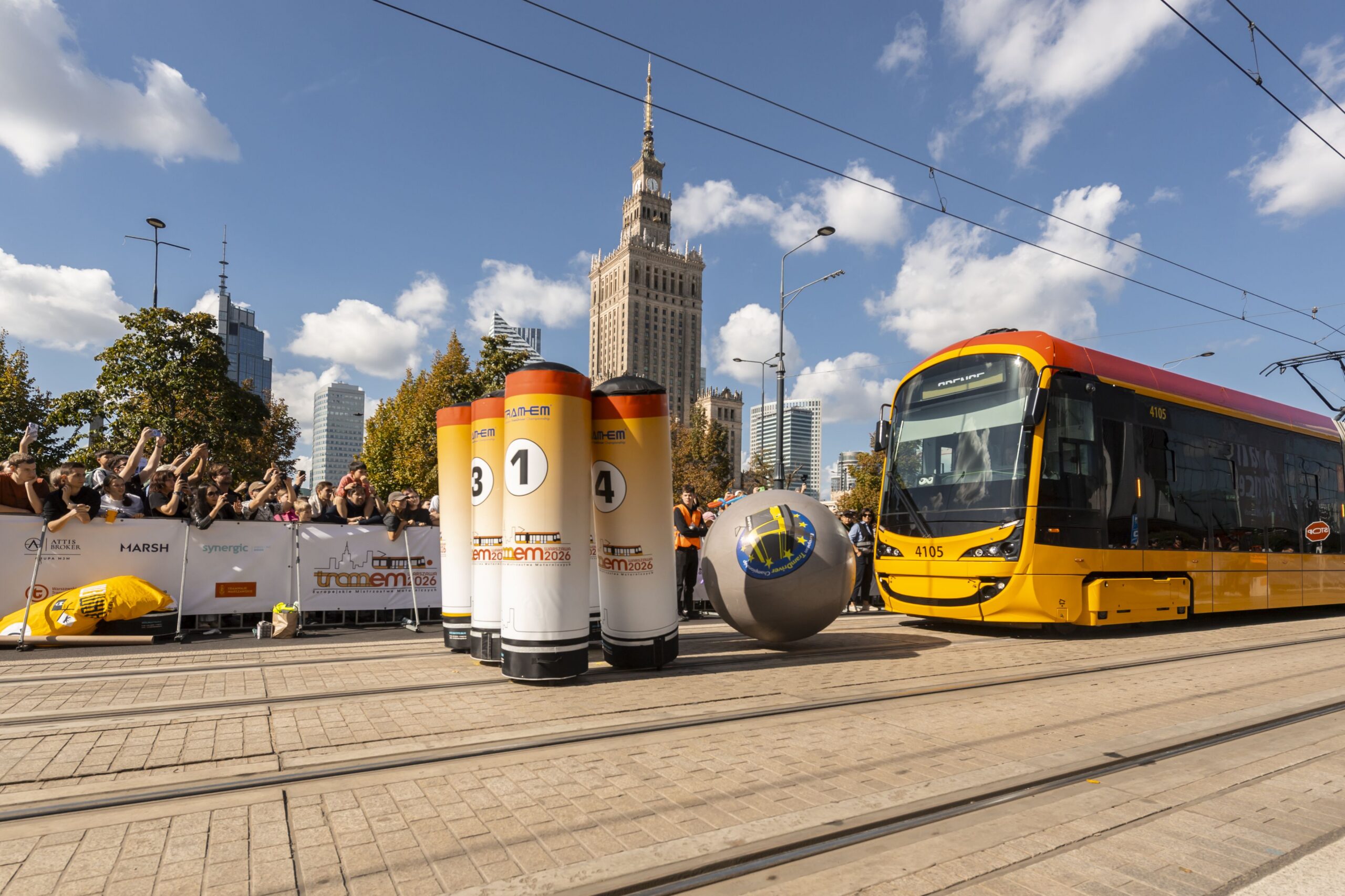
Tram bowling, at the European TramDriver Championship 2026 in Warsaw. Image via Tram-EM.
Next year’s event is in Melbourne, with the potential for participation by Australia’s other light-rail-enabled cities, including Adelaide, Sydney, Canberra and the Gold Coast. That could have been us, too. (One day…)
Mayor and Councillors bite back on fast track
Recent fast-tracking by central government of housing developments on the greenfield fringes of the SuperCity has been getting ahead of the actual infrastructure – at potential great cost to councils and ratepayers.
This week, Mayor Wayne Brown and Councillor Richard Hills took a proactive step, presenting government with a bill “that would remove residential developments from the fast-track legislation”, reports Katie Bradford for the NZ Herald.
“Two weeks ago, Auckland councillors unanimously asked the mayor and I to advocate to all parties to remove greenfield residential development from the fast-track.
“So, we’ve done the work and produced a bill, that a new Government can enact urgently to address this request.
“They can call it what they want, but Aucklanders are telling us loud and clear they do not support fast-track developments on rural land and the disruption and multibillion-dollar cost that comes with them.”
Hills said he sent the bill to all parties likely to be in Parliament after the election.
“We would like to see the law changed urgently after the election in a bipartisan way. It is ready to go and has been checked by our legal team. There is nothing stopping the new Government acting on this within their first weeks on the job,” Hills said.
Caption contest
Meanwhile: not sure what the algorithm is trying to tell us (yes, we’re on Insta), but this feels ripe for a caption?

Maybe it’s connected to this story by Hayden Donnell, examining a trove of texts between these two characters.
The texts, released under the Official Information Act last week, are an interesting peek into how Brown exerts his influence on government. They show him constantly cajoling and prodding the minister, often to some effect. But changing the nature of Auckland’s transport system is one thing. The messages also show a huge failure on Brown’s part; a goal he can’t seem to meet despite months of trying. The mayor just cannot get Chris Bishop to have a beer with him.
Fancy a private rail car?
From the New York Times, a story about private train carriages, which turn out to be a thing you can actually own, book out, and attach to regular Amtrak services. Who knew?? Would such a thing even work here?
Before politicians, celebrities and business titans traveled the world by private jet, they traveled by private train. President Franklin Delano Roosevelt had a private car specially outfitted during World War II. The actor Cary Grant is said to have courted the Woolworth heir Barbara Hutton aboard a private car. The Catholic Church even had one for a U.S.-based cardinal.
But, as the 20th century advanced, passenger rail gave way to car and plane travel. Postwar America began to travel differently, and so too did the rich and famous, who eschewed train cars for private planes. Private rail travel disappeared.
Well, almost. Amtrak, the national railway company, and a dedicated but dwindling set of enthusiastic owners, have kept private train travel alive by way of something called the Privately-Owned Rail Car Program, which charges owners of private rail cars a fee per mile to hitch them to existing Amtrak trains.
More neighbours, more neighbourly
A nice story from The Guardian highlights two similar projects in Melbourne that replaced a single family home with several well-designed townhouses. Now the architect-inhabitants are enjoying the co-housing community vibe that’s resulted. Nice architecture, too.
“I love the security of knowing I’ve got friends at my doorstep. I also equally love that sense of retreat and sanctuary; we could be in the house the whole weekend and feel like we’re not around everyone else at all,” Cosentino says. On the flip side, last summer, they say, was full of plenty of balmy evenings where private gatherings with family and friends spilled into common areas, and impromptu alfresco meals were shared, with their children playing in the communal garden. “Those incidental interactions are so beautiful and bring such a buzz.”
What to watch
A flashback to the 2003 opening of Britomart (now Waitematā) Station, featuring a few fascinating and familiar faces! Note the ambitions for future ridership, of up to 10,000 passengers per hour at peak.
Fast-forward, and we’re now talking about the impact of the new stations – midtown’s Te Waihorotiu – on theatre-going in Auckland. The Classic Comedy Club also reported their busiest week since the Comedy Festival (and in a traditionally quiet time of year).
View this post on Instagram
Via The D*List, an accessibility preview of the CRL stations – whether or not you use these features yourself, it’s great to know they exist, and everyone can appreciate the thinking behind them.
Fewer cars and faster buses in New York City:
That’s us for the week – have a great weekend, and be sure to share any links and stories we’ve missed, in the comments below.

 Processing...
Caption: WB whispering in Chris’s ear “meeoollllaaa reef”
Maungarei cycleway looks good. But on adjacent Jellicoe Rd they recently added 14 on-street carparks. Mostly now being used as 24-7 private vehicle storage for residents. Imagine if they had just added a cycle lane. Makes it hard to believe that they really want people to cycle to the maunga. Render looks pretty though. Also to Council, how long will that unofficial park and ride stay at Panmure? You’ve have the land clear for over 10 years now. Use it or lose it.
https://haveyoursay.at.govt.nz/jellicoe-road-mt-wellington-removal-of-clearway-restriction-sign
How is Panmure to Maungarei a priority given the lack of cycle lanes through this part of Auckland?
It’s a pretty random little section to be honest. Also fairly wide and quiet so not really an existing problem. They mention a future connection to Panmure Basin, but no dates. Also goes through a sea of park and rides that’s shouldn’t be there.
100%
If only the owner of the Metro Centre would sell it. It’s obvious that he doesn’t have the financial resources or expertise to turn it into what it should be: the hub for popular entertainment in Auckland.
Chlöe Swarbrick has some interesting ideas for what to do with people who’re “squatting” on commercial property
In regard to City things, we can look to Britomart, that as the train station was designed underground, Cooper and Company have made an area that is loved by all, city workers, city residents, kids, grandparents etc.
This has taken three decades, and more is on its way, showing how true town centres can be designed beautifully.
With an area conserved for pedestrians, then mid rise buildings, with higher buildings behind, creates a nicely layered area, where no one will feel overwhelmed by high buildings.
With our future city, we need to think like this, obviously adding more residential buildings, and not just offices, with which the Central City is already overloaded.
Too often we treat our Central City as some kind of international student area, putting people into little boxes, with crap windows, and then wondering why people move out of the city as soon as possible.
Think about how we like to live…we like to walk around, in parks, and other pedestrian friendly areas. We love to show visotors thiese places. We love our children enjoying these places, where they can freely explore without risk of heavy machinery crushing them.
It is the end of the car centric century. Henry T Ford was an evil man how exploited South Amercan countries for their rubber. That rubber is now located on our coastlines, making our beaches less swimmable.
We live in times of evil men, and we need to stop listening to them. They are nice men that we can listen to, and also extremely educated ladies, who make us all look stupid.
As an architect pointed out the other evening, cities are not designed for women; as others note, they are not designed for the physically less able; and in my view, they create conflict.
Last night I witnessed violence between two men walking on Pitt Street, and a scooter delivery operator, outside Subway. Because a person decided that a big yellow highly visible box should be rounded to become a football. The physical violence that followed this was unnecessary, and involved three police vehicles to ensure it did not continue.
The fascists win we attack each other. There is never justification for violence.
bah humbug
The Guardian had an interesting article about declining bus speeds in London and other cities: https://www.theguardian.com/uk-news/ng-interactive/2026/sep/23/london-buses-in-terminal-decline-why-public-transport-in-global-cities-is-slowing-to-a-crawl-visualised
“In 2025, the 22 was the second slowest bus in London, averaging just under 6mph.”
We aren’t that much better. My 25 bus takes 27 mins to travel 7km from Mt Roskill Shops to Aotea Centre @ 15.5 km/h = 9.6mph. That is in the middle of the day, not rush hour. Similar issues to those mentioned in the article – on one road it detours down they installed speed bumps!
If they do LR it can go the much more obvious route, have less tops, and have its own lanes. But because its a bus it has to be crap.