This is a guest post by Tim Adriaansen, a transport strategist and Executive Director of All Aboard Aotearoa.
Transport planning is a super power. It quietly determines so many things about our lives. Whether a child can get to school by themselves. Whether we can pick up groceries within a 5-minute walk, or if it might take a 15-minute car trip. Whether we’ll pump an extra 80 million tonnes of pollution into the air over the next 50 years.
Like many superpowers, transport planning can easily be misunderstood. Often, the transport plans and projects we come up with are reactive to existing behaviours, as though the purpose of transport is to respond to what people already do.
New Zealanders like cars. People choose to drive. We need to make driving easy.
That’s completely backwards.
What really drives transport choices?
People build their lives around the environment available to them. If we create a transport environment where driving long distances is made as fast and easy as possible, then people will drive long distances often. If the environment for walking, cycling and riding public transport is poor by comparison, then people will be unlikely to do much of any of that.
Flip the script, and the outcome is reversed: Attractive environments for walking, cycling and public transport mean more people moving in healthier, more sustainable ways. Traffic calming, safe speeds, and a fair price on driving mean fewer people driving longer distances.
Critically, the type of travel made easy by our roads and streets doesn’t just change how people choose to get around. Where people choose to live, where they choose to open a business or locate a service, and where they choose to travel to, are all variables that will shift in response to a changing transport environment. Make it easier to travel further away more quickly, and homes, businesses and other destinations end up being built further apart from each other, and from everything else.
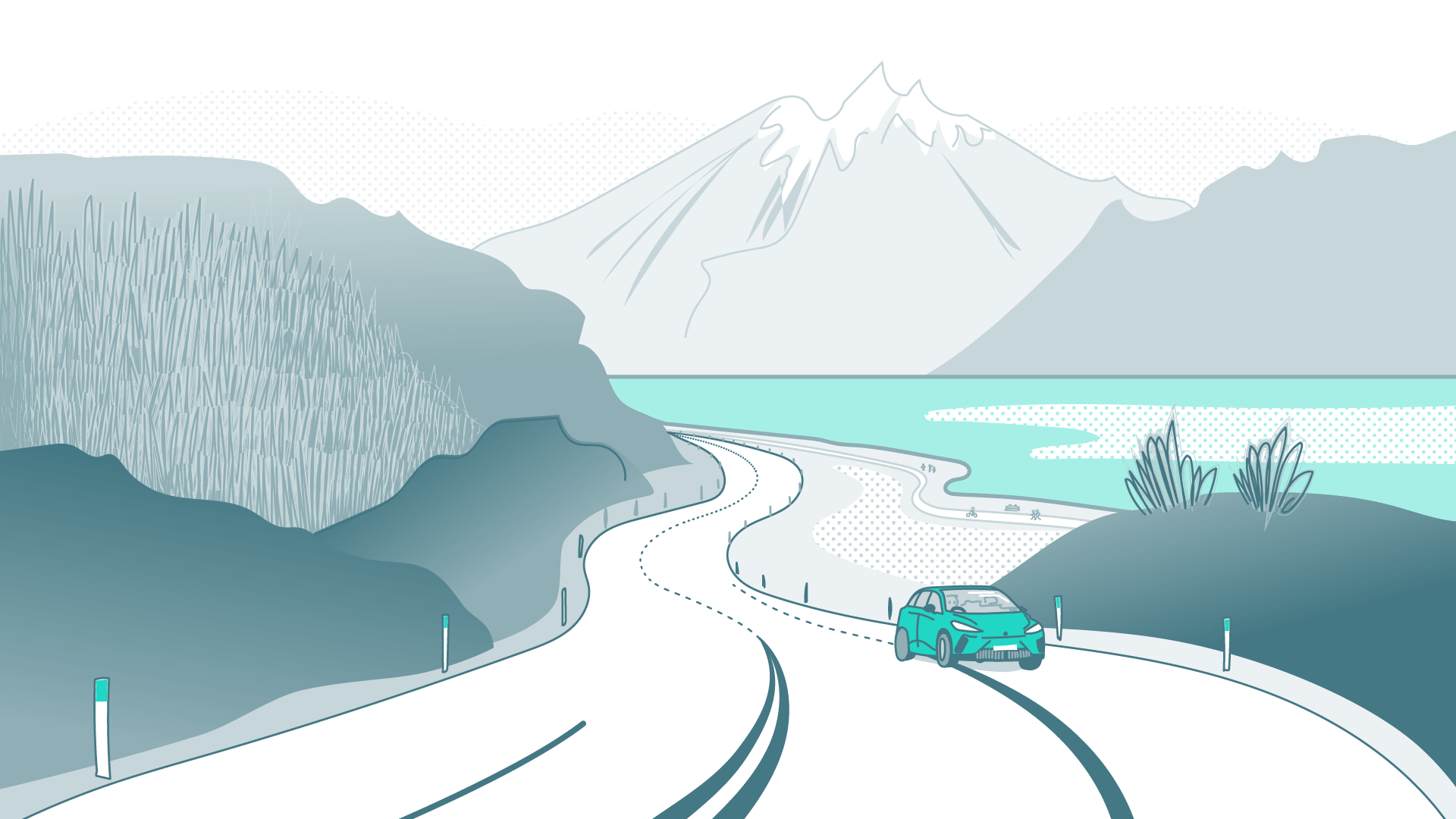
Changing how trips are made is about changing the environment that creates those trips
This is where there can be some confusion about what the idea of ‘mode shift’ really means.
Mode-shift describes a deliberate approach to replacing getting around by one mode of transport (like cars or trucks) with getting around in other ways (like bikes, buses and trains).
Transport planners do this because some ways of getting around are much more likely to cause serious problems like pollution, congestion, or crashes – and the less we use the problematic types of transport, the fewer big problems we have to deal with.
When hearing about ‘mode shift’, people may imagine the trips they make today as fixed: the same homes, the same jobs, the same schools, the same shops, the same distances — but perhaps with some car trips replaced by walking, cycling or public transport.
That leads pretty quickly to the conclusion that there’s only so much we can change about how New Zealanders get around.
But changing the transport system changes the trips themselves. Over time, people make different decisions about where to live, work, shop and spend their time. Businesses and homes locate differently. New destinations emerge in places that are easier to reach. The distances we travel change alongside the way we travel.
Driving is a great way to move people around for all sorts of reasons. But it also creates a bunch of problems. More driving isn’t always better, and often, more driving creates more problems than it solves. Problems like crashes, climate-damaging pollution, and an unsustainably high infrastructure price tag — a price tag that gets bigger and bigger as locations spread further and further apart.
That’s why good transport planning doesn’t involve making it as easy as possible to drive as much as possible. Instead, good transport planning means making it as easy as possible to get to stuff without even needing to drive in the first place.
Going from an Aotearoa New Zealand where we collectively own lots of cars and do lots of driving, to one where we can get to things easily without a car, involves changing the transport environment that determines what sort of trips people make.
Let’s say we want to reduce crash harms, climate pollution, and the high cost of living that results from a near-mandatory subscription to car ownership. The goal, then, isn’t to convince someone to take their existing 25-kilometre car commute and cycle it instead.
It’s to create a transport system where fewer people need to organise their lives around making 25-kilometre car commutes in the first place.
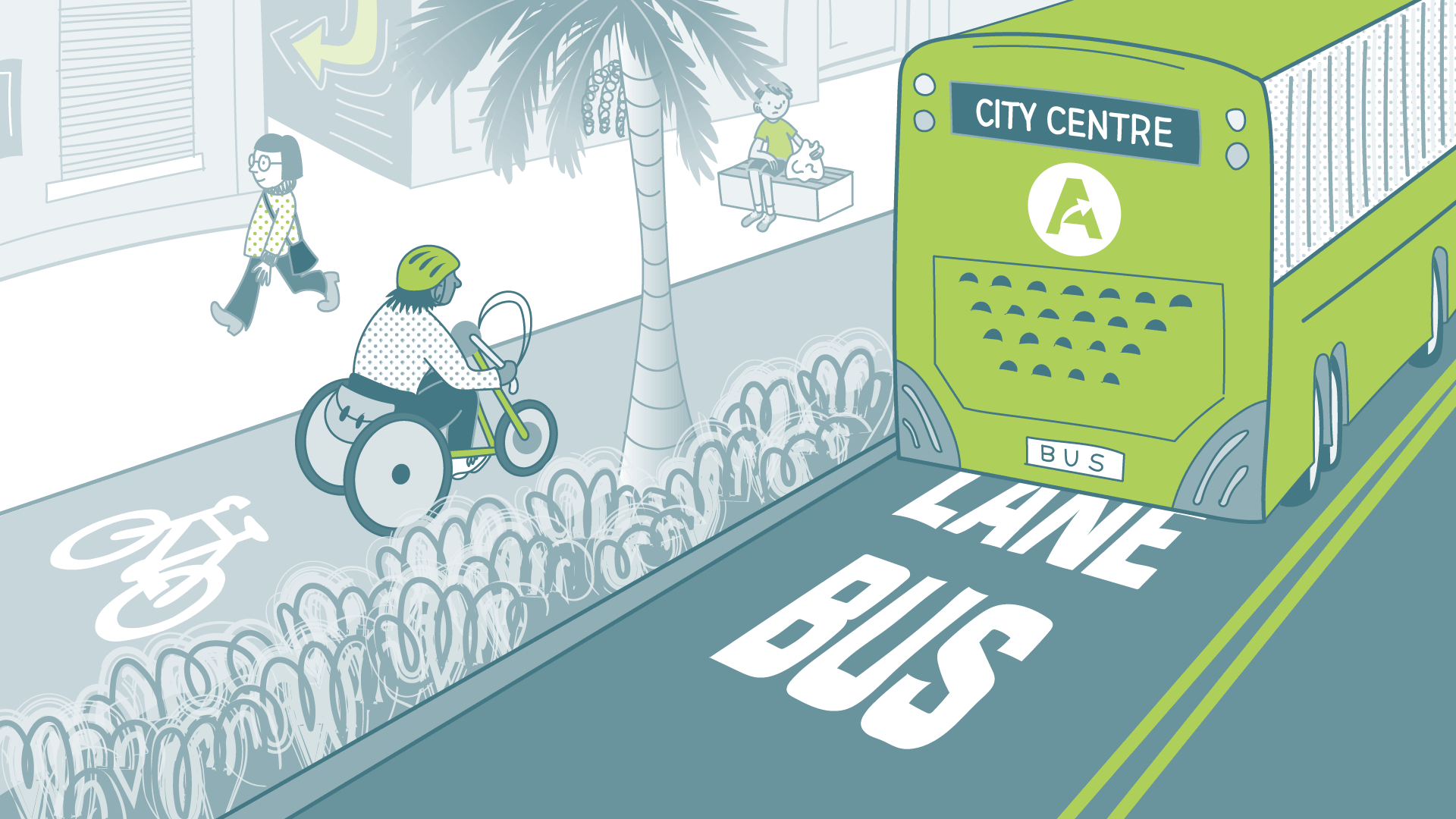
What if we updated Aotearoa’s transport system?
Creating a transport environment where it’s easy to get around without a car is the philosophy behind Better Moves, a labour of love that All Aboard Aotearoa and a team of incredible volunteers have helped to assemble over the last 12 months.
Better Moves sets out to answer a fundamental question: What would happen if we reshaped Aotearoa’s transport system to support the health and wellbeing of people and our environment?
There’s one pretty important condition for that healthier future: we need a stable climate to build it in. All Aboard Aotearoa is a charity dedicated to getting fossil fuels out of New Zealand’s transport system, and that mission sits at the heart of Better Moves.
To get fossil fuels out of transport, we need to do two things: drive less, and drive electric.
We need both because the need to reduce how much pollution we’re putting into the atmosphere is more urgent than ever, but replacing millions of vehicles takes a long time.
If every car coming into the country from tomorrow was electric, it would take around 10 years before half of the driving New Zealanders do was electrified. But we’re not even close to that yet: As of 2026, around 25% of new light vehicles sold are electric; while used vehicles and heavy vehicles being registered into the fleet for the first time are still overwhelmingly fossil-fueled.
Importing more vehicles sooner doesn’t offer a way out. Every new electric vehicle has to be manufactured before it can replace a fossil-fuelled one, and that manufacturing comes with its own financial and environmental cost. Building 4 million extra electric vehicles would come with a massive pulse of embodied carbon pollution at exactly the time when we need to be reducing greenhouse gas emissions, not adding to them.
We need emissions to fall quickly, but replacing an enormous and growing fleet is a slow, expensive, and carbon-intensive way to get there.
Reducing the amount of driving we do changes the equation. Every car we don’t need to replace is one less car we need to manufacture, import, power and provide infrastructure for. A smaller fleet can electrify faster, with less embodied carbon along the way. Reducing driving, while making more use of a smaller number of electric vehicles, reduces our transport system emissions much more quickly, and at much lower cost.
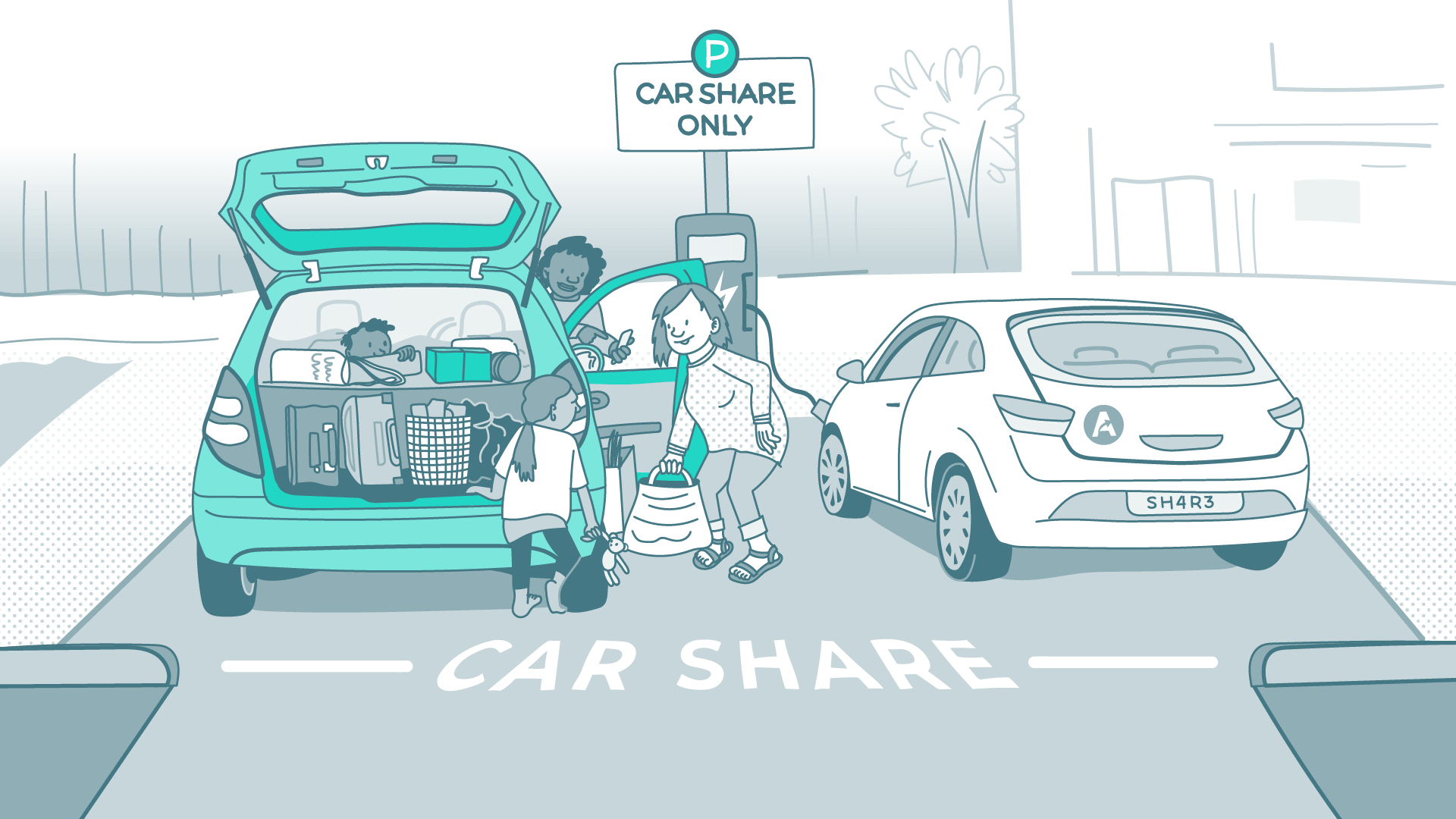
There’s another important reason not to put all our eggs in the EV basket: electric cars will eventually get rid of the need for fossil fuels, but they don’t solve the car-dependency problem. They still cost households money to own. They still need roads and parking. They still contribute to congestion and crashes. They still pollute water and air. They still encourage our towns and cities to spread further apart, and create environments where people suffer from sedentary-lifestyle related health harms.
Electrification is essential. But electric cars won’t bring about the outcomes we want: healthy people and a healthy environment. If we’re going to transform our transport system anyway, we might as well create a better, healthier future.
If we do everything that works, it works
So, All Aboard and our team of supporters tried to work out what that future would actually look like, what it would take to get there, and what the outcomes would be if we pulled it off.
We dug through hundreds of studies and reports, built an enormous evidence base, worked with experts, tested assumptions, and built a model that follows Aotearoa’s transport system over the next half-century. We modelled cars, trucks and buses as they age and are replaced; the kilometres they travel; the infrastructure they use; the energy and emissions they produce; and the costs they create for households, businesses and government.
Then we tested what happens when we pull the levers available to us: reallocating street space, building walking and cycling networks, running frequent buses and trains within and between our towns and cities, sharing more vehicles, moving freight differently, changing pricing and parking, and rapidly electrifying the driving that remains.

The results are currently under review, but we can give a few tasters ahead of publication.
One of the fastest ways to electrify New Zealand’s vehicle fleet is to build really good alternatives to driving. A smaller fleet is simply faster to electrify.
Because needing fewer vehicles means less spent on purchasing, maintaining, powering, insuring, repairing and parking cars, shifting away from Aotearoa’s current car-dependent transport system could avoid hundreds of billions of dollars in private vehicle operating expenses over the next 50 years.
And those savings significantly outweigh the costs of building and operating what would, if implemented, be some of the world’s best walking, cycling and public transport networks — across every town and city, rural communities, and also connecting to natural areas like forests, beaches and mountains. Creating a transport system that supports the health and wellbeing of people and the environment would save us all money when compared to our current car-dependent pathway.
We could also avoid millions of tonnes of greenhouse gas pollution, prevent tens of thousands of deaths and serious injuries, rebuild our streets to work with water and heat, and provide attractive, dignified transport options for people of different ages, abilities, and income levels.
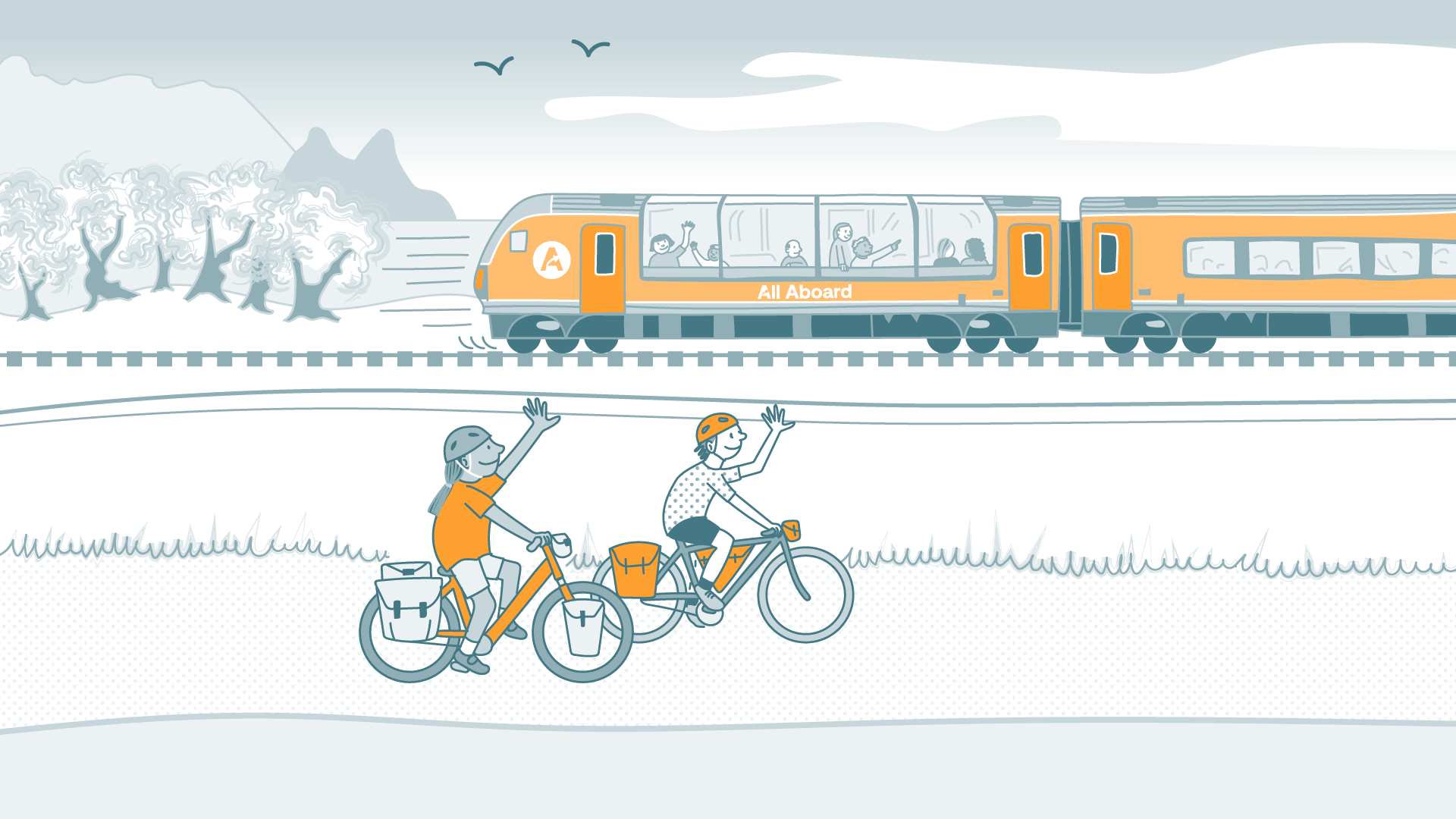
But a literature review and a transport model aren’t a plan to make it happen.
Better Moves is an ambitious, first-of-its-kind look into what Aotearoa’s transport future could be like. It’s a love letter to transport planning. It’s an exploration of what might be possible if we decided, together, to use transport planning’s superpower to create something better.
We want you to come onboard to make it happen
Aotearoa already has a pool of fantastic talent that knows how to build cycleways, run buses and trains, make streets safer and electrify vehicles. The harder work is creating the conditions that allow us to do those things consistently, at scale, over decades.
That means bringing people together. Building relationships between communities, practitioners, businesses, advocates and decision-makers. Building a shared understanding of the problems we’re trying to solve, and a shared direction for where we want to go. Building the capability to deliver change, the trust to stick with it, and the confidence that something better really is possible.
These are the enabling works for a transport transition: the essential first steps that make sure delivering a complicated project runs smoothly.
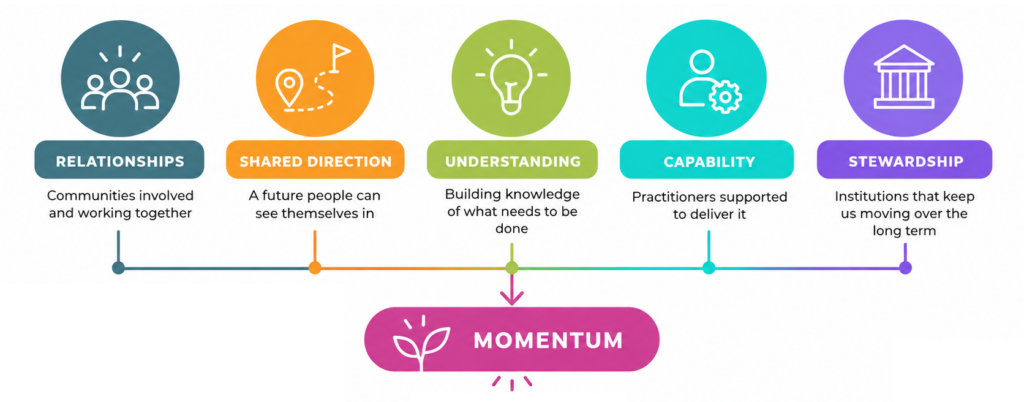
That’s why our upcoming launch of Better Moves isn’t intended to be the end of this project. We hope it’s the beginning of something much bigger.
Thousands of hours of volunteer time have gone into Better Moves over the past year. Researchers, transport practitioners, health professionals, economists, advocates and many others have challenged our thinking, checked our work and helped us make it better. We’re enormously grateful to everyone who has contributed, and particularly to The Climatics, whose support helped make this work possible.
On Wednesday 30 September, we’re bringing people together in Tāmaki Makaurau to launch Better Moves and share what we’ve found.
We’ll talk about the future we’ve modelled. We’ll talk about what surprised us. But most importantly, we want to start talking about what it would take to create it.
If you’d like to help build a better transport future for Aotearoa, we’d love you to be part of that conversation.
You can find out more and RSVP here: https://events.humanitix.com/better-moves

 Processing...
For many people driving is a compulsory part of their job with no alternative, and the business cost of owning and maintaining a fleet of work vehicles gets passed onto the customers. How to change that?
For many, or for some?
Anyway to answer your question, re-read the article. And don’t let perfect be the enemy of good.
Also, NZ’s car dependent transport system means many businesses have barely got into the swing of developing a sustainable operating model.
It’ll be fun when that starts to shift.
Yeah, the whole thing about “tradies and families with 9 kids need their big cars” is, fine, let’s restrict the motorways to tradies and families with 9 kids
Wait til their competitor delivers the same service without the cost of a fleet of utes…
Cargo bike carpenters in modern cities for example.
The Future is Rail is a supporter of this project. We focus on a nationwide revival of long distance passenger rail but as the largest city in New Zealand what happens in Auckland matters for the whole network. We have recently looked at what might come after the opening of the CRL and continue to explore how Auckland could be better linked to the rest of New Zealand by rail https://thefutureisrail.org/crl-is-open-what-next-for-auckland-rail
Out of sequence developers to fund train lines to their burbs in a paddock would change the outcomes.
And a system that lets that happen.
We can change the system. The earlier we do so, the lower the costs.
Thanks, Tim. Great post.
This work is so fantastic: comprehensive, robust… And just what the doctor ordered.
More people taking alternatives to driving reduces road congestion.
Thus making trips faster, and trip times more reliable, for those tasks that actually need motorised road transportation.
Thus reducing the costs of those trips, to the benefit of all of us.
Compact cities both reduce the lengths of journeys that actually need motorised road transport, and the size of the low density city fringe areas where public transport provision is too costly.
As a public transport, sometimes bike and often walking person; with extensive experience traveling and living in foreign cities, it bothers me how blindly our little motu accepts the post war war two military industry turning to overwhelming us with automobiles.
The health outcomes have been devastating. We have very high suicide rates (isolation is easy when we can only connect via private motor vehicle), fossil fuel emissions add thousands to our hospitals and mortuaries, tyres produce miniature debris that litters our sea shore and bodies of water.
We are destroying ourselves, and our country, with our car driving habits.
With the Central Rail Link now in operation, All Aboard is perfectly timed to help us imagine a positive future.
The dungeons in every building that operate as carparks in the central City need to be repurposed. It is time to stop driving as the default mobility. We are all human first, and automobiles only produce isolation, anger, and frustration. This is highly detrimental to our collective quality of lives.
My father and I often discuss movement, he loves to ride a bike and has excellent long term friends who ride with him, but at his age it has been impossible to give up the garage, and the car. However boomers were direct beneficiaries of the post world war two picket fence ideology, and it is on us, the younger generations to disrupt this nightmare.
bah humbug