Kia ora and welcome to our weekly roundup of stories about what makes cities great, including our own.
This Week in Greater Auckland
- On Monday, we exposed how electioneering is bulldozing sensible policymaking (again)
- On Tuesday, Connor exposed the true cost of the Warworth to Te Hana PPP (an outrageous nine billion)
- On Wednesday, Patrick examined the gratifyingly sensible Auckland Motorway Strategic Plan
- And on Thursday, we ran a guest post from Auckland Transport about level crossing options on the Western Line.
Greater Auckland in the News
Connor’s work questioning the PPP for Warkworth to Te Hana continues to ripple outwards, with an earlier interview popping up as an explainer video in this recent article by the NZ Herald.
Now Mayor Wayne Brown is calling for the project to be cancelled, as reported by Newsroom:
“We need to get stuck into this idiotic, bloody, 25km road … from Warkworth to Te Hana.
“The further away you get from Auckland, the less people are on it, the more expensive the roads get. Well that’s completely upside-down thinking.”
…
Asked what he would tell the Labour Party, if it were successful after the coming election, Brown said: “Stop it straight away and start again, and cut the cost of it drastically, and let’s have a look at what’s on what’s being built. ”
Also great to see our endorsement of Nicolas Reid’s brilliant bridge being amplified by Simon Wilson in the NZ Listener.
Reid’s concept stands out. For one thing, he’s not a politician or a hobbyist. As a technical director at planning consultancy MRCagney, he’s been closely involved in several Auckland transport and civic design projects. You’d expect him to know what he’s talking about. And although he couldn’t do detailed costings, he’s based his estimates on the cost of similar bridges overseas and similar shore-based work here. It should be $4 billion, he told me, but this is New Zealand “so let’s say $6b”.
…
Reid envisages off-site construction with minimal work needed on the approaches, and, to my eye at least, his bridge is rather lovely. Besides, who wants to cross that beautiful harbour in a tunnel?
Maybe it’s not the best option. Maybe there are problems Reid hasn’t considered. But it’s a challenge to NZTA and to the government.
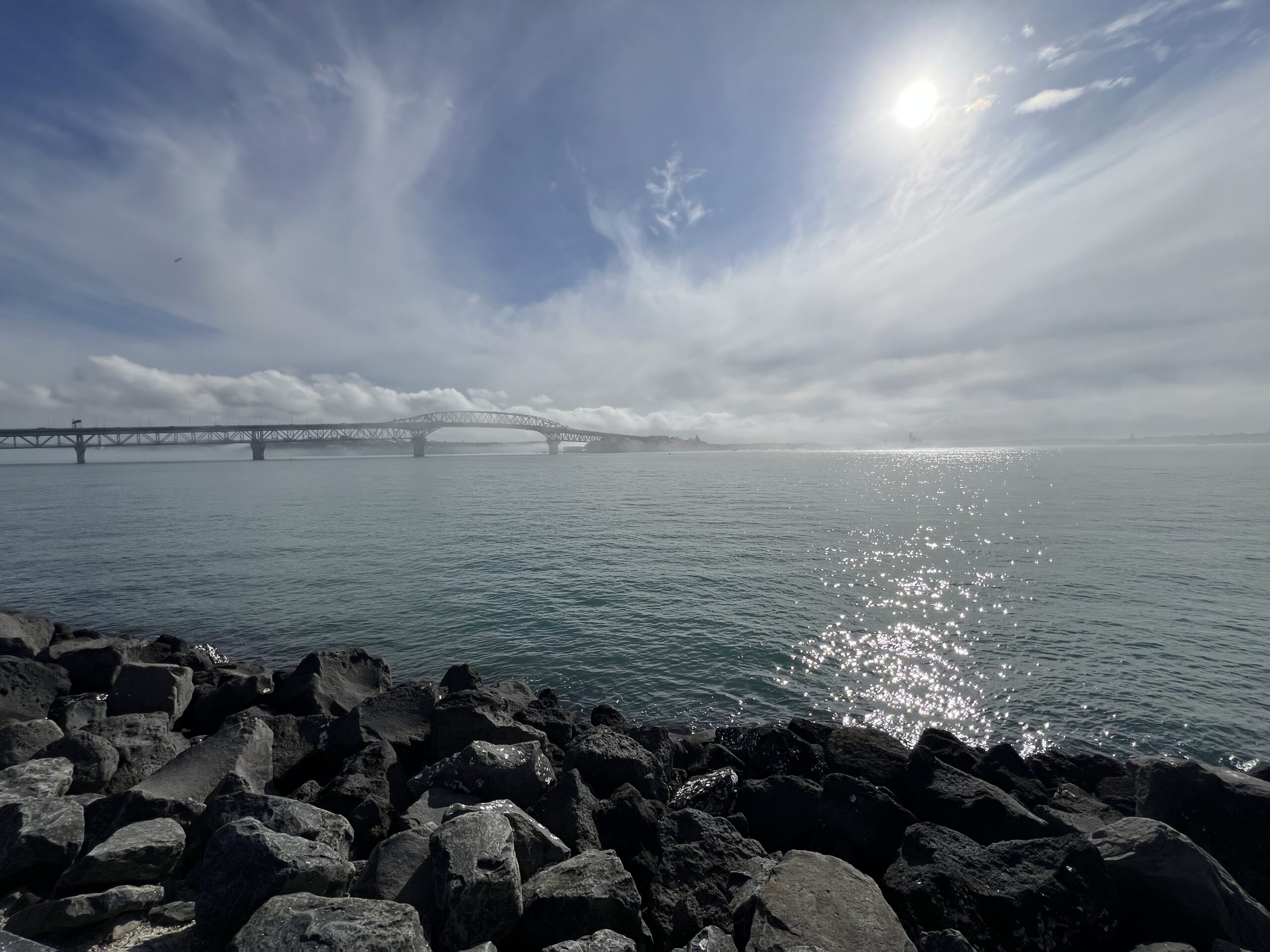
View from Westhaven Marina photo PR
Patrick is quoted and interviewed in various media platforms on Congestion Pricing, or as he prefers to called it (hat tip: Jarrett Walker):
He suggested it should instead be called “de-congestion charging”.
Greater Auckland co-founder and director Patrick Reynolds supports the idea, saying fewer cars would mean faster journeys for motorists who chose or needed to drive, while money could be invested in public transport and cycleways.
“All of this adds up to a more efficient, prosperous and happier city,” he said.
Interviewed here by Lisa Owen on NatRad: https://www.rnz.co.nz/national/programmes/checkpoint/audio/2019049089/auckland-councillors-to-decide-on-congestion-charge
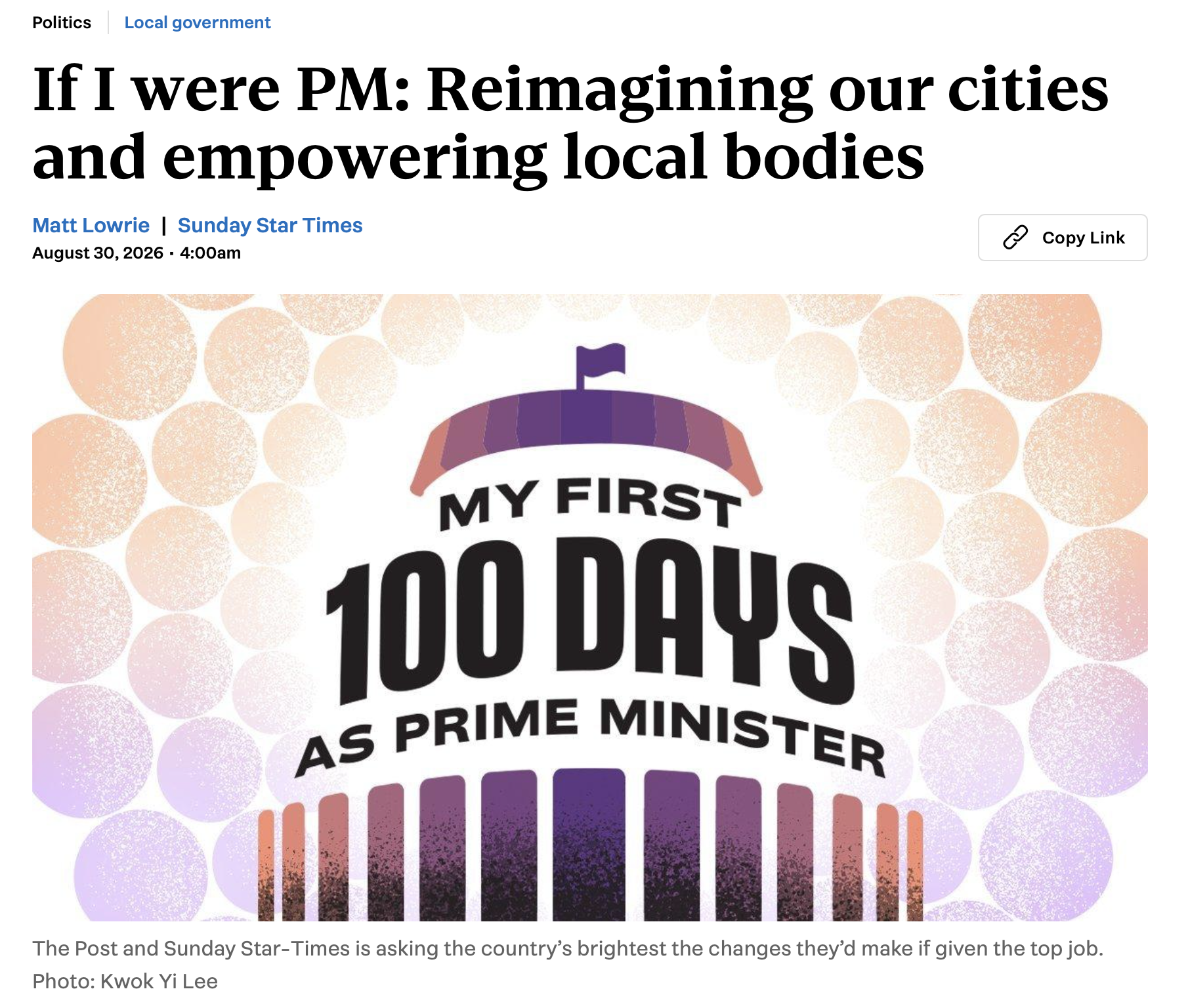
Matt for Prime Minister!
Matt was asked by The Post for his plan to fix the country, paywalled. We will run text next week:
https://www.thepost.co.nz/politics/361068784/if-i-were-pm-reimagining-our-cities-and-empowering-local-bodies
Greater Auckland’s research and advocacy is powered by hundreds of hours of work each month, and your support helps keep us going! We warmly welcome your donations, and are always open to offers of guest posts, practical help, and pro-bono expertise.
Another great way to support the kaupapa: Greater Auckland merch. If you want to be wearing your CRL-themed gear on 13 September, get in now! Allow a week for delivery – and these are print-on-demand (no returns possible), so double-check your sizing before ordering.
photo PR
Good reads about the cost of everything (and how to fund it)
Te Waihanga the Infrastructure Commission has a new report about making every dollar count, which “brings together evidence on the factors that shape the cost and affordability of infrastructure.” Among the key findings:
Different types of infrastructure have very different cost trends. Solar panel prices fell significantly over time, while real motorway costs per lane kilometre have more than tripled over the past two decades.
Canada-based The Transit Brief looks at why it costs so much to build public transit in anglophone countries (see also: the doomed tunnelled Auckland light rail project).
Transit projects — from subways to bus rapid transit — in Canada, and in the English-speaking world writ large, cost far more than projects in many other developed and developing countries, even when adjusting for inflation and differences in the relative value of currencies and inputs.
An interesting read by James Llewellyn asks whether we have what it takes to reform transport funding in this country. He makes a jolly good point about the difference between those who use public transport (some of us), and those who benefit from it (all of us):
…in New Zealand a significant problem is the word “user” rather than “beneficiary”. To give an example, well-meaning folks complain about having to subsidise public transport when they drive a car and don’t use a bus (or even have access to one). But although it might not feel like it – they are still beneficiaries.
Imagine, as John Lennon would say, there’s no buses. In urban areas, many more children would be driven to school, and many more adults would drive to work or the shops. Imagine, as John Lennon would again say, there’s no road space left as a result. It would not be hard to imagine the outcome – much worse traffic congestion and nowhere to bloody park. Public transport is great for car drivers, tradies and truckies because it at least gets some people out of their way – and keeps everyone moving.
And speaking of paying for things: the town of Carterton is consulting on charging heavy road users more, to help fix local roads.
Mayor Steve Cretney said the proposal raised the question of whether forestry would continue to be a viable industry if companies paid for roading costs through a targeted rate.
Councillor Steve Laurence said the flip side was that “granny down the road has been subsidising international forestry companies for such a long time”.
Giving safety a bump
In Nelson, the evidence on traffic calming – and local support for safer streets – is coming up against some strong opinions, as RNZ reports. Residents who are sick and tired of having to be first responders at frequent crashes are asking Council to reverse its decision to remove speed cushions (against staff advice):
Pauline Puklowsi described the road as “scary” before the cushions were installed, with many difficult driveways, fast drivers and night racers. […] Puklowski said the cushions had halved the number of crashes, so keeping them was a “no-brainer”.
However, others support the council decision, and see safety as just one of many factors:
“It’s very easy to say safety is more important, but when your house is literally being shaken by heavy traffic coming past, I would say that that is much more of an imperative.”
Community members made presentations to Nelson City Council on Thursday:
Volunteers… surveyed 109 households in the streets and found 80 percent wanted the traffic calming measures to remain, said [Brian Nelson, of the Bisley Moana Speed Humps Retention Group].
“Council evidence clearly shows dangerous speeds of 60 to 80km/h on our narrow, windy roads. Council should not encourage this by removing the speed cushions. Your roading engineers … recommend retaining the speed cushions.”
…
Resident Nelson McEwan said the two streets were intrinsically dangerous with sharp blind corners and were slippery following rain.
“Council data shows the cushions have lowered traffic volume by 41 percent, lowered mean speed by 24 percent, halved the accident rate and boy racers have evaporated. Removal of cushions will cause the prior conditions and behaviour to return,” McEwan said.
…
Residents questioned the $70,000 cost to remove safety measures without an evidence-based justification.
“Council is placing hypothetical fears of vibration and noise above genuine safety. Residents accept normal urban noise like buses and heavy trade vehicles but we do not accept being treated as collateral damage for motorist convenience,” [resident Pauline] Puklowski said.
Related: some good stats and strong points in a RNZ report from Hamilton on how the city’s raised tables are performing:
Standout statistics included speed bumps at existing intersections/roundabouts cutting fatal and serious crash risk by 40 percent, and a 50 percent reduction in injury crashes with the use of elevated stop lines at traffic signals.
Engineering New Zealand Transport Group immediate past chair John Lieswyn said speed bumps and RSPs in general have been in New Zealand and Australia’s official road transport safety guidelines “for decades”.
The main goal of the devices was to bring motorists’ speeds down, particularly when a mistake was made on the road, through “vertical deflection”, Lieswyn said.
He said there had also been a greater national focus in recent years on installing the devices to address gaps in traffic law enforcement.
“In other countries if you fail to give way to a pedestrian at a zebra crossing you’ll eventually get a ticket and it’ll be a big one. We don’t do that so we have to use engineering measures to ensure pedestrian safety.
[…]
He added councils will often install devices after complaints of speeding drivers and the public feeling unsafe.
“Go speak to the people who asked for it and they’re going to be saying ‘thank you council for putting it in’. We’re not hearing that because the news media would prefer to talk about the person with their arms folded and the frown on their face outside one of these devices, right?”
[…]
Queried if emergency services are negatively affected by the devices, Lieswyn emphasised installation leads to less road trauma, therefore reducing a need for emergency services “in the first place”.
He referenced a coastal North Island fire department initially fearing RSPs would significantly increase emergency response times.
However, the fire department’s model assumed vehicles travelled at a constant 50kph and failed to account for turns and stops.
“They said ‘people are going to die and houses are going to burn because we can’t get across town’… a more accurate model showed it wasn’t much of a difference.”
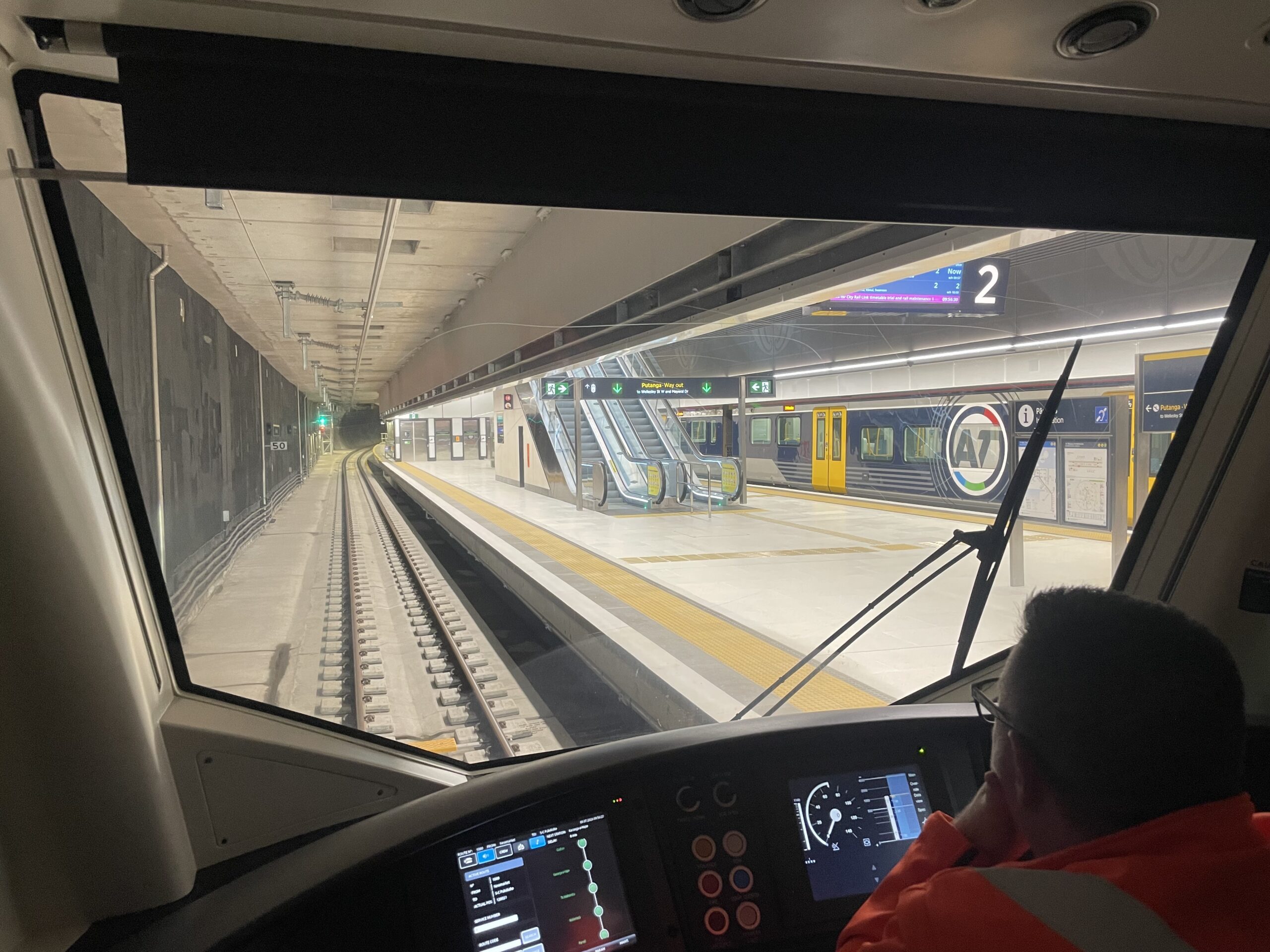
View from the cab, Te Waihorotiu Station. photo PR
Skip to the loo
If you’re caught short, Auckland’s city centre is short on places to find relief, says a new Council report. As covered by RNZ:
Auckland’s city centre does not have a reliable network of public toilets, with some busy zones having limited or no facilities. The city also has inadequate fully accessible rest-room facilities.
…
A previous city centre amenities review identified older people, people with disabilities, parents and carers with young children, and people who may need more frequent or urgent access to facilities, were disproportionately affected by the inadequate public amenity provision.
Beresford, then and now
Speaking of loos: the top of Beresford St has long been a transit station – with amenities (for men, at least). See video below for more on the Farmers Free Tram:
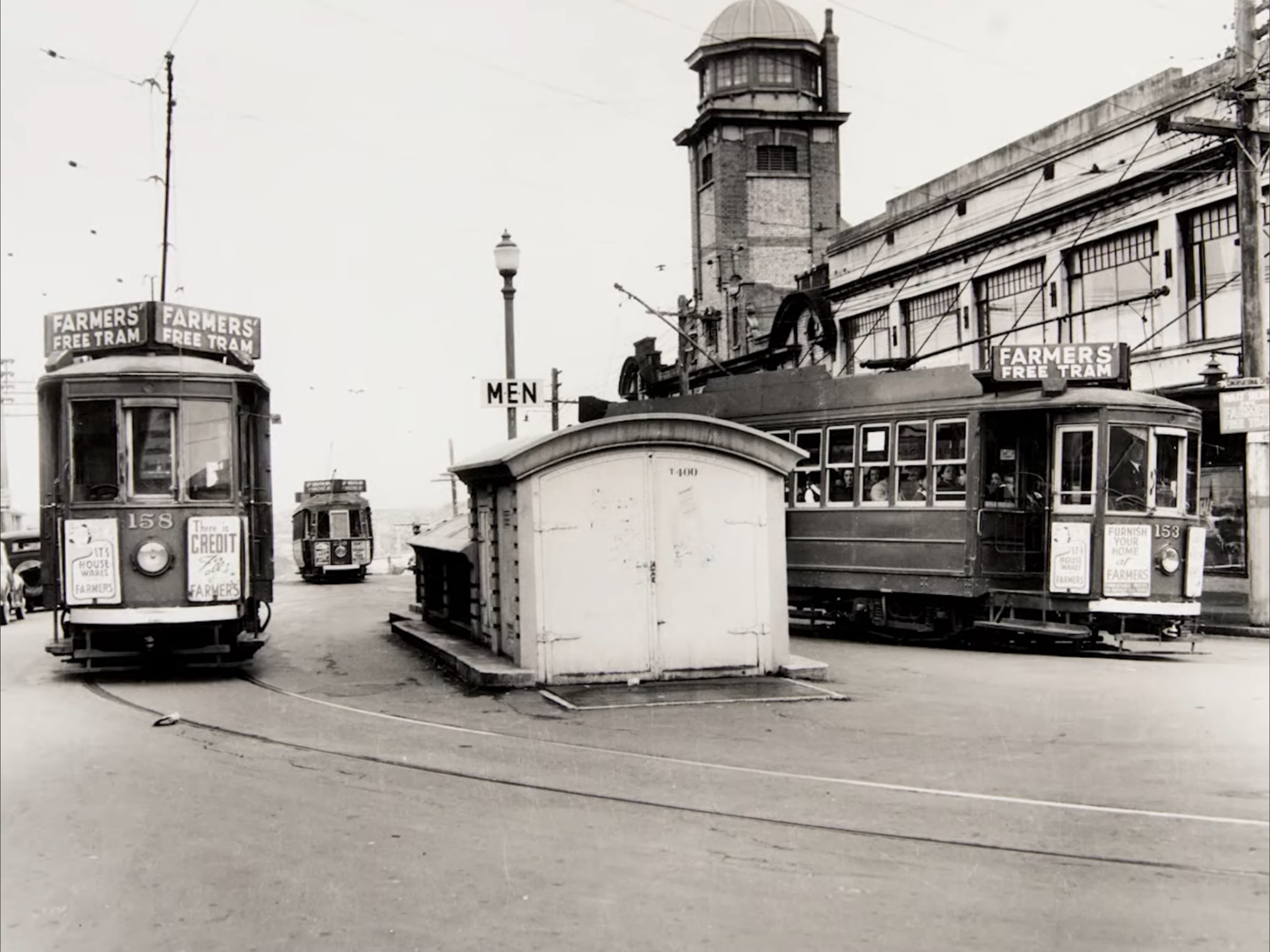
Beresford Street Farmers tram stop – and handy loo! Image via the video below about the history of the Farmers’ Free Tram. Photo Graham Stewart, Motat.
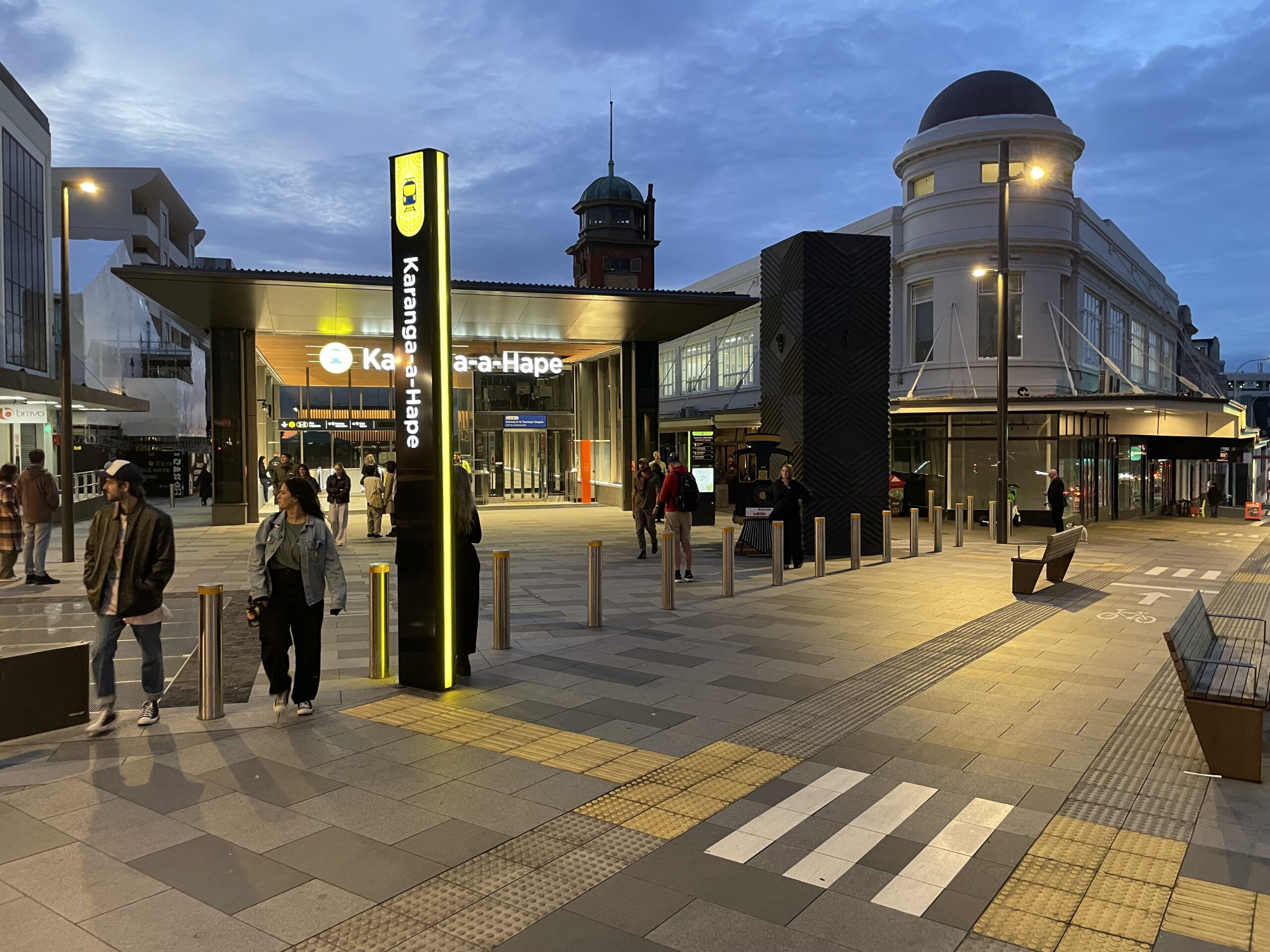
Beresford St entrance to the new Karanga-a-hape Station. Image by Patrick Reynolds
Making cities better for young and old
RNZ took a look at the endangered Kiwi art of kids playing outdoors:
One way councils have tried to create safer spaces is through Play Streets, piloted through Waka Kotahi’s Innovating Streets for People programme. Residents with approval can temporarily restrict traffic on quiet roads for neighbourhood play.
Auckland Council hopes to host some of its first Play Streets this summer, while Wellington and Hutt city councils have not rolled out the programme. Christchurch City Council says it hasn’t had requests since earlier pilots.
Avondale is getting a new destination playground as part of the makeover of its town centre, reports RNZ:
The Whau Local Board recently approved the concept design for a new playground at the Avondale Central Reserve, expected to be completed in 2027 and including a custom three-storey play tower, water play and sensory play for all ages.
…
Avondale Business Association chairperson Marcus Amosa said he was excited about what the $2.8m playground will do to lift the area’s profile.“It’s going to be a place for family and children to hang around in the main street and the middle of town,” Amosa said.
At the other end of life: it turns out the kind of things we advocate for are also key in helping to reduce the chance of dementia:
Every day, twice a day, at a level crossing in the Auckland suburb of Hobsonville, young and old gather with a mutual mission.
The young are on their way to school and the old, from the nearby retirement village, are tasked with getting them safely across the busy road.
Dr Cheryl Johnson sees it on a daily basis on her way to work, and as a geriatrician she celebrates it.
“They have a roster of people who help the kids cross the road,” she says. “That’s connection, that’s sense of purpose, that’s someone getting up in the morning to get these kids safely across the road.”
Community connections and sense of purpose are among the key factors to ageing well and warding off dementia, which Johnson ranks as one of the ‘geriatric giants’.
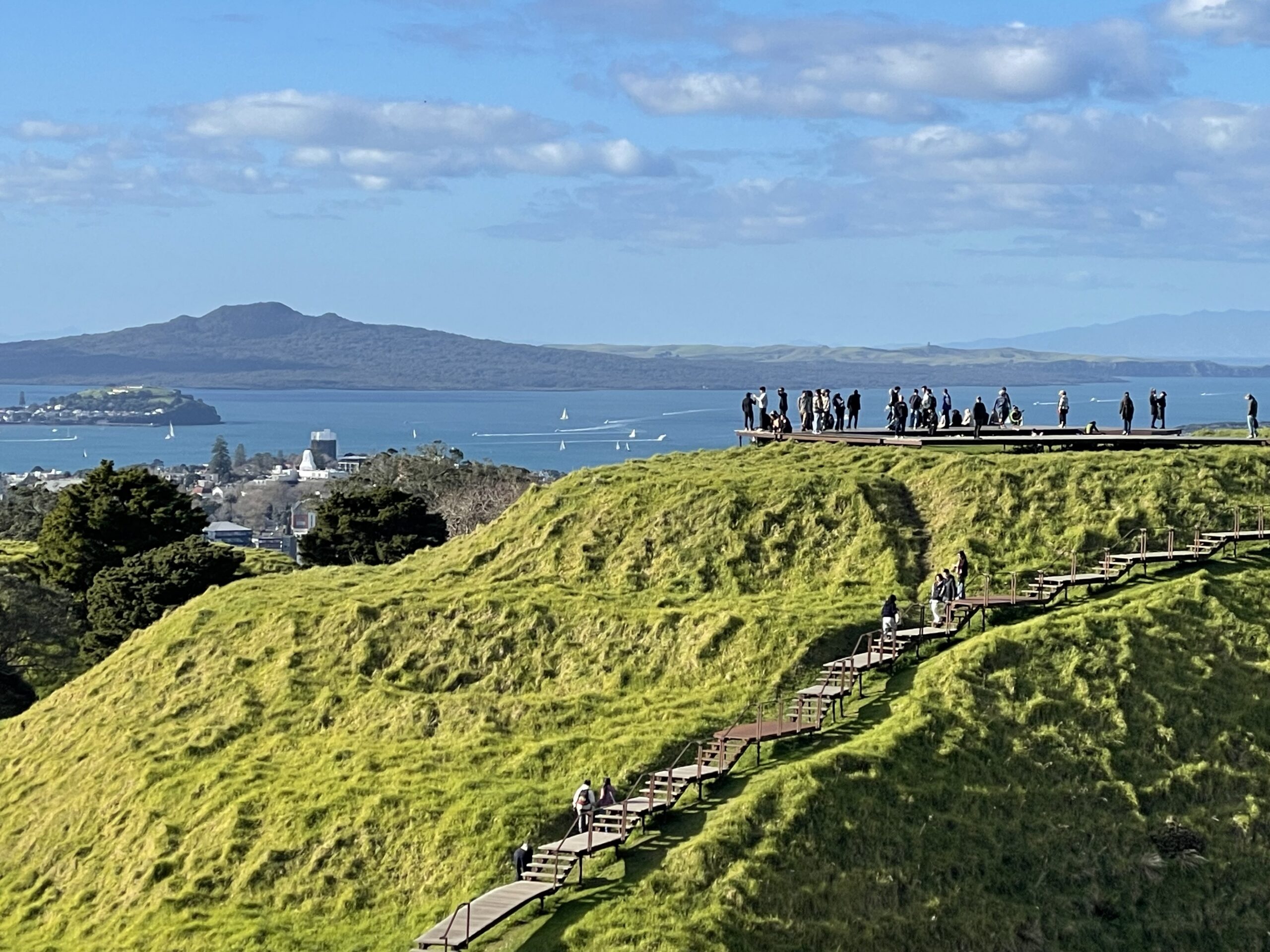
Maungawhau photo PR
Protect trees, please!
More coverage of the threat posed to urban trees by the proposed changes to the Resource Management Act – which may disproportionately effect the parts of town that are already not leafy enough:
Andrew Jenks from the Otara Waterways and Lake Trust has been planting trees at the Te Ara Rata stream in Mangere, Auckland for the past 20 years.
“We’ve seen a lot of change, the planting is really maturing to quite an interesting level in certain places and we can start introducing canopy trees.”
South Auckland has the lowest level of tree canopy in the city. The Māngere-Ōtāhuhu area sits at just nine percent compared to the Auckland average of 20 percent.
People like Andrew have been working hard to change that, but he worried the new Planning and Natural Environment bills will undo much of that hard work.
“You know that you give an inch and people will take a mile. It’s just the way it goes, and many, many more trees will disappear and they’re so hard to establish. They take absolutely decades.”
Powerfully good news
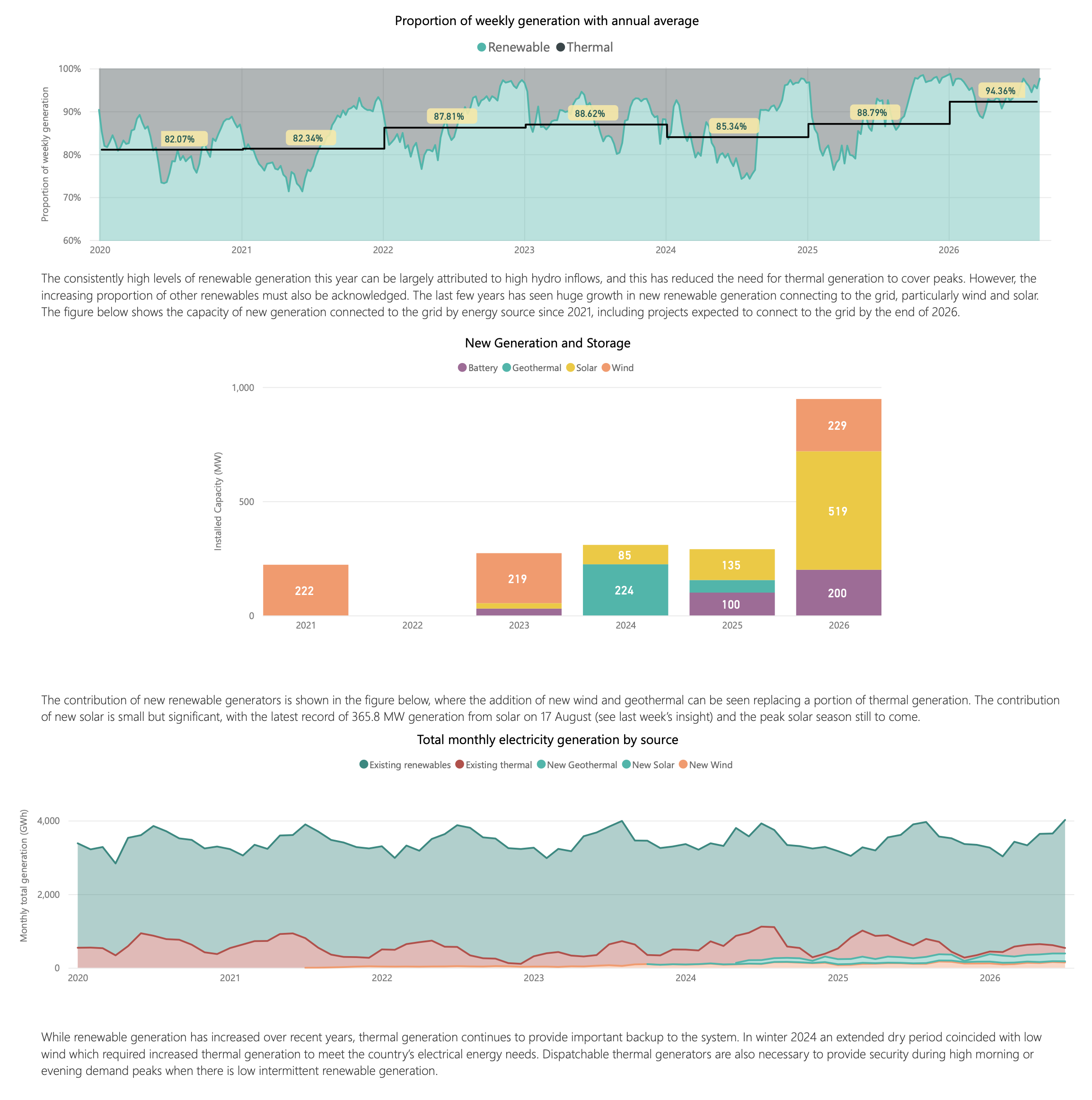
An end of August report from Transpower outlines the growth of renewable energy sources. Who needs LNG, in this scenario? A pile of coal at Huntly will do us forever as insurance (something you have on hand, but hope to never need), with ever more renewables in the picture.
Get solar and wind to just 10% each, and we’re sweet – keep going and that’s abundance! (Meanwhile, farewell to Methanex, another reason we won’t be needing that LNG terminal any time soon…)
Videos to watch
The photo of Beresford Street as-it-was, above, is from this well-researched history of the Farmers’ Tram, a warmly recommended watch:
The making of Horotiu, the resplendent eel:
View this post on Instagram
A stunningly insightful film clip from 1971, about the strains of suburbia. Set in Wellington, the lessons apply to many a New Zealand city.
Exemplary mayor Zohran Mamdani nerding out about bus priority, we love it:
That’s us for the week – have a good weekend, and feel free to drop your own links and observations in the comments!

 Processing...
That insightful note from Transpower is just so important and really points the direction of travel. Analysis of Transpowers’ connection pipeline shows another 2.6GW of generation committed over the next two years, plus 800GW of battery. Alongside the continued growth of ‘behind the meter’ solar (residential & commercial) this all means the real effort has to go into transitioning businesses from gas to electricity. There’s lots of hard stuff in there but also plenty that’s easy. eg; 2GW of industrial & commercial roof top possible in South Auckland. All it requires is better carrots from government. The current lot won’t do that – vote in a government that will.
embedded youtube videos always gets cut and not scale to the width.
At the bottom right, click on the beginning of the “Watch on YouTube” button to watch in a new YouTube window. Better still copy the video url and paste into a Brave browser to watch Youtube there. You’ll get a better experience with NO adds.
Paul Maunder, who made “Notes on a New Zealand City” (and also directed “Sons for the Return Home”) is alive and well and living in Blackball, working on community theatre. He also co-created Mahi Tupuna, the Blackball Museum of Working Class History. His website is https://paulmaunder.com/
Notes on a New Zealand City 1971
What a blast from my past.
As a twenty one year old then, bought up, and then working in, a far outer Hutt Valley suburb, and being the proud owner of newly acquired MK 3 Zephyr, to be able to speed into Wellington, and its pubs and coffee bars, on the new motorway, instead of riding “The Unit” which disgorged you some distance, from where the desired action was located.
I am surprised how much our accents have evolved from the then aspired to, BBC English.
Nelson left (Emma) Hamilton as a legacy to the nation. Now Hamilton is leaving Nelson standing.
Vibration from vertical devices is real, but isn’t always a problem. It costs a lot to fix if we get it wrong at a site, though.
Where there is vibration risk, it is harder to find other measures that can be used instead of raised platforms, speed humps or cushions, but not impossible. Modal filters can deal with a lot of problem sites, as well as horizontal deflection measures.
Has anyone seen the research on how excessive sedentary screen time is correlated with dementia? Something about how memory is developed in conjunction with spatial awareness because remembering where things are is one of the most important aspects of memory (food, useful items, landmarks, etc).