Kia ora and welcome to our weekly roundup of stories about what makes cities great, including our own. Today’s header image shows a busy Karangahape Road on the day of last weekend’s “First Look” event at the new station.
Reminder: free tickets are available here for tomorrow’s open day at Te Waihorotiu Station (Saturday 22 August). It’s the most “downtown” of the new stations, spanning the block between Victoria St and Wellesley St, and well worth a look – see our sneak peek preview from June here.
This Week in Greater Auckland
- On Monday, Patrick highlighted the power of a map, the importance of a network name that sings (ART: Auckland Rapid Transit) and the value of the art in our new metro stations.
- On Tuesday, Connor looked at the Government’s fresh approach to the long-running conundrum of the next Waitematā Harbour Crossing…
- …and on Wednesday, we shared the Minister’s answers to our questions about the fresh approach, which raised more questions in our minds.
- Thursday’s post asked why Auckland Transport’s removing protected bike lanes as part of its proposed “improvements” on Mt Eden Road, and other arterials.
Greater Auckland in the News
Connor spoke to RNZ about the “trial” to keep cars running through the part of Queen St that’s designed to maximise bus and train connections, and people. From the written version of the story:
Heart of the City pushed for the change and said banning cars on Queen Street was hurting economic recovery for businesses in the area post-Covid.
But others said keeping the area car-free would make it more inviting for the influx of pedestrians the new Te Waihorotiu station was expected to bring.
Connor Sharp, from urban advocacy charity Greater Auckland, is really excited about the soon-to-open City Rail Link.
“I mean, I’m wearing a shirt that says all the station names, so yeah I’m super excited. People are going to be really happy, and I think they’re going to be asking ‘what’s next?'”
The $5.5 billion project will open on Sunday, 13 September, and bring two completely new underground stations to Auckland’s rail network.
One of the stations is Te Waihorotiu, which has entrances on Victoria Street and Wellesley Street.
Sharp feared AT’s trial put the benefits of CRL at risk in that area.
“If we want to make the most out of City Rail Link, we need to reallocate space on these streets to better suit what the city will now look like,” he said.
AT has also been trialling running a new bus lane on part of Wellesley Street from 7am to 7pm, instead of 24/7 as had previously been considered.
Sharp said the changes made the area less appealing for pedestrians coming out of the new CRL station, and clogged up the key Wellesley Street bus corridor.
“If you want to come to town to get a drink maybe and you want to get home, you want to know that your public transport’s going to be reliable right? And since we’re not operating in that evening period, it’s going to be difficult to run those better services.”
Matt also spoke to RNZ, about the Government’s announcement of a new approach to planning the next Waitematā Harbour Crossing:
Matt Lowrie – the director of the Greater Auckland transport advocacy website – said the problem with an additional harbour crossing had always been the cost.
“NZTA have wanted the biggest most expensive option possible, and that’s what’s come out of most of the studies that have come out, even though other practical solutions often exist.
“The problem is that they’re just never able to be financed.”
Lowrie said there needed to be “a bit of reality involved” around what was affordable and practical to build.
“We can’t build the most expensive thing, as much as we might like to, we’ve got to be able to pay for these.”
He said the government should not rush to spend billions on a new harbour crossing if there were cheaper alternatives such as congestion charging, where people pay to use the road at certain times.
“Depending on the nature of that scheme, some of the implications are that that would reduce the amount of traffic on the roads and that would extend the life of the existing bridge.”
Lowrie said NZTA research showed that with the correct maintenance, the bridge will last indefinitely.
“We shouldn’t be rushing to spend billions of dollars if we can have a solution that will solve it for much cheaper.”
Lowrie said the government’s decision to include a Meola Reef option in the study was about appeasing Mayor Wayne Brown.
“The government are effectively putting the ball in Wayne’s court. He has to pay up half the money if he wants to investigate this option further.”
And Connor got a shout-out in this piece by Robbie Nicol for The Spinoff:
View this post on Instagram
Connor was also in The Post on Monday, discussing lack of transparency about the $106m+ spent on consultants for the last few years of Harbour Crossing work:
Meanwhile, Connor Sharp, campaign director of advocacy organisation Greater Auckland, said $100m was an “exceptional amount of money to spend when we still have no idea what they’re really working on”.
Sharp argued that with maintenance on the Harbour Bridge likely to cause disruption, NZTA needs to urgently be having a conversation with the public about what a second crossing might look like. “[They’re] spending this much money in secret and there’s almost no conversation about what these solutions actually look like.”
Sharp said [one] of the reasons why City Rail Link ultimately got across the line was because there was a huge concerted effort to build public support for it.
“It required transparency.”
Greater Auckland’s research and advocacy is powered by hundreds of hours of work each month, and your support helps keep us going! We warmly welcome your donations, and are always open to offers of guest posts, practical help, and pro-bono expertise.
Another great way to support the kaupapa: Greater Auckland merch. Allow a week for delivery – and these are print-on-demand (no returns possible), so double-check your sizing before ordering!
Photo of the week
A DIY CRL layout, made by our very own Matt Lowrie and his two kids, after an exciting visit to the Karanga-a-hape open day last weekend.
Auckland Transport tells us 14,750 people took a look through the station on Saturday, and some of the pedestrian counters around just a bit further down Karangahape Rd recorded one of the busiest days ever for people movements on the street.
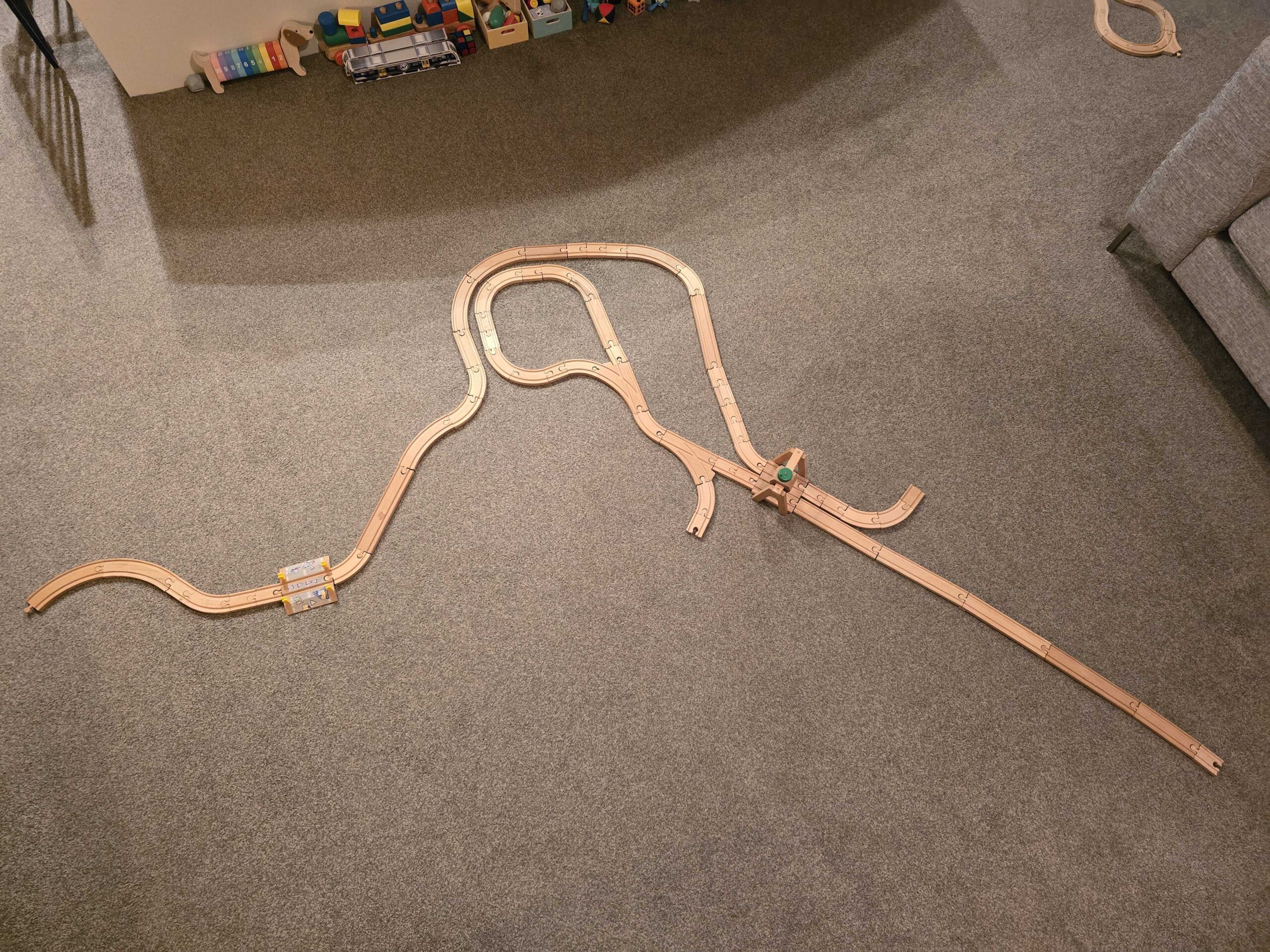
CRL layout (for educational purposes only). Image: Matt Lowrie.
Getting to yes on the CRL
Hayden Donnell has a nice piece at the Spinoff on the real heroes of the CRL an angle we covered pretty comprehensively a while back. It includes this fascinating insight on persuasion (emphasis added):
[Mayor Len] Brown’s policy adviser James Bews-Hair remembers coming up with a five-year plan to wear down the government’s resistance. He marked out key dates like central and local elections, council votes and budget decisions and mapped those to potential points where he could put pressure on transport officials and politicians. “Quite unusually for strategies full stop, but particularly for political strategies, it pretty much played out exactly as we charted it,” he says.
Counterintuitively, Bews-Hair’s plan involved getting the government to say no a lot. He believed, rightly, as it turned out, that each successive rejection was getting more difficult and politically costly. “Every no, people would say to us, ‘oh, you’ve lost’, whereas to my mind, getting those nos is what winning had to involve, and it’s what winning looked like,” he says.
Why are roads so expensive?
An epic read from the team at All Aboard, digging into the question of the hour:
Understanding why building roads gets more expensive while delivering poorer returns is a story in three parts, each explained in more detail below:
- The biggest economic prize comes from getting connected in the first place. After that, every improvement buys a little less.
- Faster driving and more traffic capacity comes at ever-increasing marginal cost. Every little improvement costs a lot more.
- Making driving easier results in more people driving—whether or not that extra driving creates a whole lot of benefit for people’s lives. But every kilometre travelled comes with a cost that the economy must pay.
Because of these three realities, building bigger, faster roads will never become more affordable or more economically viable—only ever less so. Let’s explore what’s going on and then, see if we can’t use what we know to create a better pathway forwards.
Reminder: All Aboard Aotearoa (in partnership with Bike Auckland and Auckland Council) is also running “Street Smarts” workshops on upcoming weekends around the region. Head here to find out more and register for a workshop.
Designed for community leaders, advocates and anyone who wants to create better places, the workshops explore why our streets and communities look the way they do, why change can be difficult, and where communities have the greatest opportunity to influence what happens next.
Ordinary abundance
A lovely exploration of everyday life through the perspectives of people for whom each mundane item was once breathtakingly new. Spend a moment marvelling at some of the things we absolutely take for granted.
This old house: protect or neglect?
Two high-profile old buildings in Auckland have been in the news lately; both protected by heritage status, but both falling victim to neglect, to the potential point of no return. What’s going on – and how best to determine whether these structures are white elephants, or precious diamonds in the rough deserving of investment and reclamation?
One is Carlile House in Grey Lynn. As RNZ reports, after decades of disuse and ruin, the church that owns the building has approached Auckland Council about the possibility of demolishing it – currently prohibited, given its status as a Category 1 Historic Place. Some see creative reuse on the cards, given energy and budget:
Architect and Grey Lynn local Graeme Burgess looks over a barbed wire and corrugated iron fence at the historic Carlile House on Richmond Road in Grey Lynn.
[… he] hoped the church and council could find a way to make use of the place.
“I would hope that’s not the discussions they’re having. I hope that the discussions they’re having would be about how the place can be retained to the greatest extent possible.”
Local artist John Reynolds, who has lived opposite Carlile house for decades, was less optimistic – given the roof of the building had partially caved in.
“At the current rate of decay, in 18 months it’ll be collapsing in on itself, if not before.”
Reynolds believed the church had no interest in restoring the building, and the council had not done enough to help find a resolution.
In 2019, Auckland Council offered to buy the building, but the church declined.
At the time it was estimated re-developing it would cost $10 million to $20 million.
Reynolds would like the large property to be turned into social housing.
“It could be many houses, and it could be housing for people that needs housing. It could be a win for the community, a win for the church, and actually a win for the heritage nuts.”
The other is the old Carrington Asylum, aka Building One on the former Unitec site: a high-profile building with a tragic history, visibly being left to crumble while new housing rises beside it. Locals have been organising for years around a vision for this building, and are asking those in charge to “stop the rot”.
But everyone seems to be pointing the finger at somebody else to solve this. (See also this Stuff story). What’s to be done?
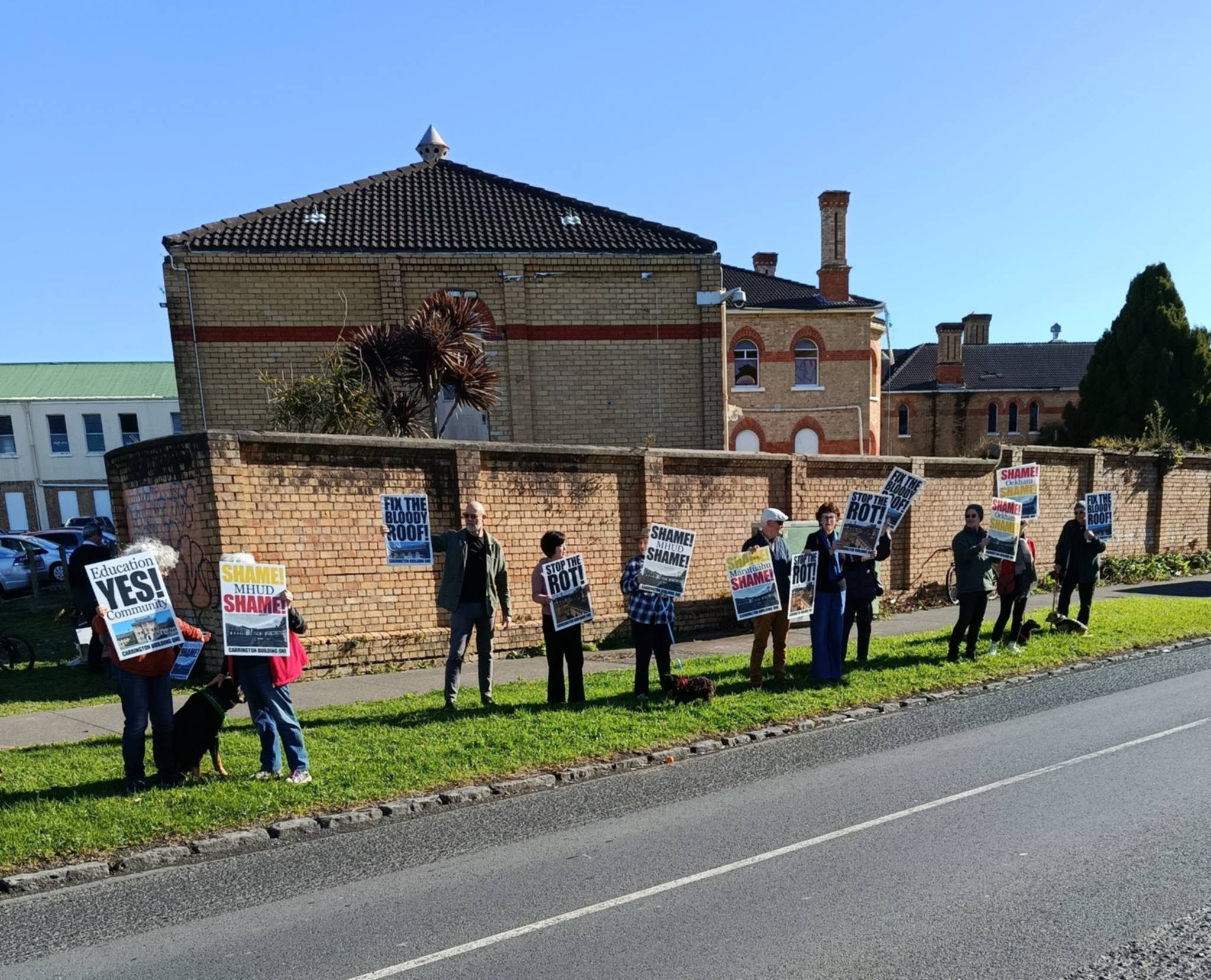
One of the regular weekly protests outside Building One along Carrington Road (from before the roadworks began). Image via Facebook.
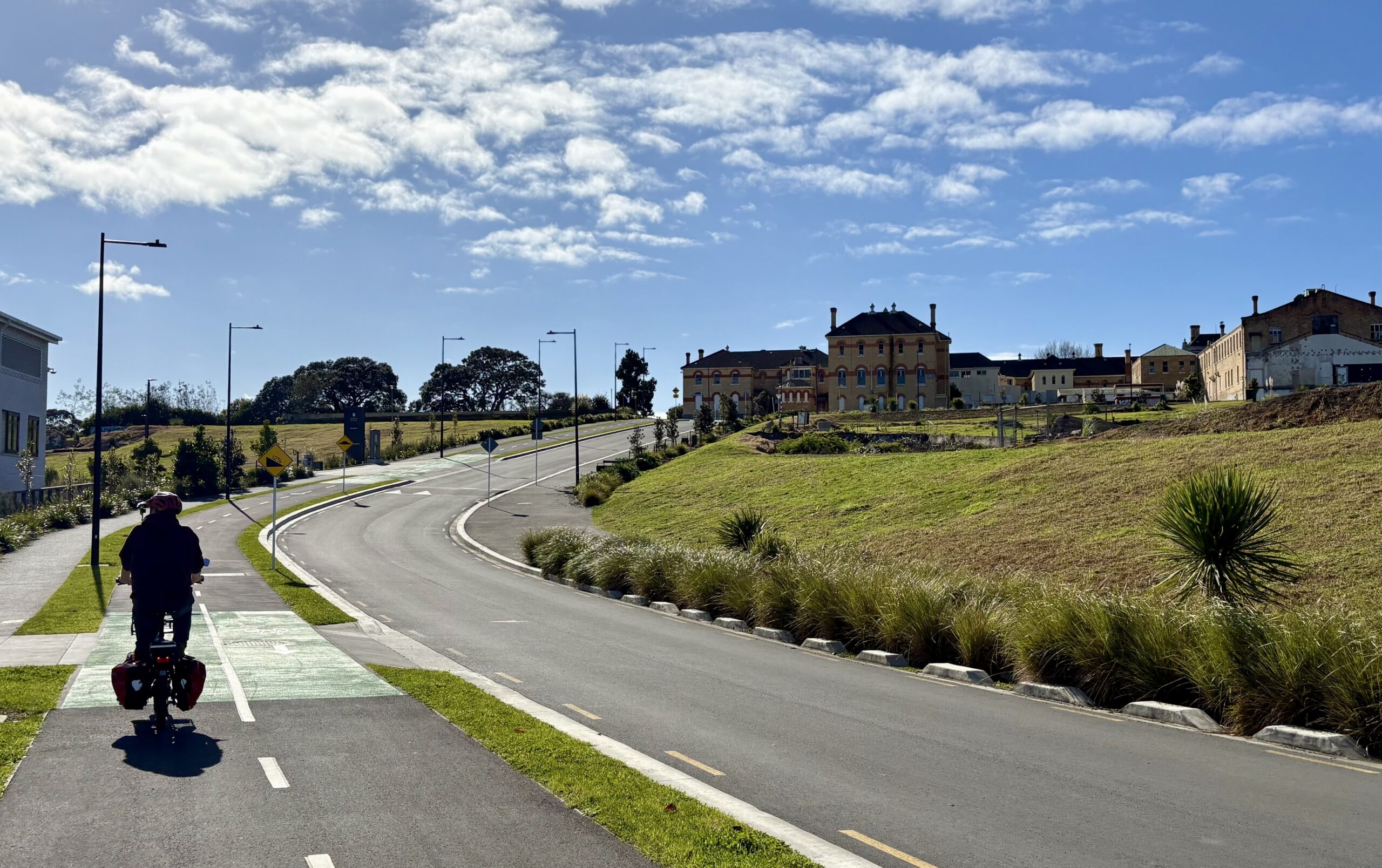
The old Carrington Hospital (Building One) as seen from the south, approaching via some of the new high-quality cycleways and roads built through the site to accommodate the rising new housing. Looks grand from a distance, but is falling into disrepair with missing roof tiles and broken windows; there is as yet no plan for restoring and reusing this heritage-protected building. Photo by Jolisa Gracewood
Shortchanging the South Island
As electioneering heats up, the regions suddenly snap into focus. Politicians were in Christchurch this week, where the question of rapid transit came to the fore. But it seems there’s no firm commitment from either of the main parties.
“I’m conceptually interested in rapid transit here in Christchurch,” [Chris] Bishop said when the question was raised with both him and [Kieran] McAnulty. “The regional council’s always mentioning it to me.”
However, Bishop also acknowledged it may be a future discussion. “We’re a wee way away from, you know, being ready to hit go on that one.”
In response, McAnulty said that while he thought the idea would be “quite popular”, he also noted there were other factors to take into consideration.
McAnulty said there needed to be a business case, an assessment by the Infrastructure Commission and clarity around how it would be funded.
A story last week from RNZ noted the relative underfunding of infrastructure in the South Island:
Only one in $9 of government roading funds gets spent in the South Island, a new report obtained by RNZ reveals.
The south accounts for almost a quarter of the country’s population, 22 percent of GDP, a third of export goods and 40 percent of international visitor spending, but receives only 11 percent of transport spending.
Local political and business leaders say the lack of investment is disappointing.
Maybe if everyone in the South Island moved to Te Hana?
More protection for trees, please!
The Tree Council and an alliance of supporters – including the New Zealand Arboricultural Association – are urging people to call on government and their local MPs to speak for the trees. As RNZ reported this week:
Special trees on private land could be set to lose protected status under new resource management laws, sparking concern among several groups that work with and promote trees.
Councils now schedule trees under a protected status for heritage, amenity, landscape, ecological and cultural reasons. But, the arborists’ association, the Tree Council and the Notable Trees Trust all say the wording of the two new bills replacing the RMA strip those back to protect only trees that have ‘historic heritage’ value.
NZArb spokesperson Ben Lovell says applying this to Auckland would see two-thirds of significant trees in the city lose any protections – clearing the way for their removal.

Why not open the Manawatū Gorge for walking and biking?
The problem is, NZTA has no budget for walking and cycling (thanks to Simeon Brown’s direction). It’s yet another example of how ideological policy-making continues to cost the regions big-time. As The Post reports:
Approaching 10 years after the closure of the Manawatū Gorge road, pressure is mounting to regain legitimate public access to the area nature is reclaiming.
The Palmerston North City Council is calling for progress, while the NZ Transport Agency is strengthening its grip on its powers to keep people out.
The road has long been envisaged to become a key part of the development of Te Āpiti recreation and nature reserve, and councillors want to know how to make it happen.

When riding a river trail is more heartbreaking than exhilarating
As Europe bakes in a succession of heat waves, rivers are running dry. A report by the Guardian on the state of the not-so-blue Danube contains this stark story from Hungary.
The water is so low in the capital that on 28 July, at about 4.30pm, Gábor Kürti, president of the Magyar Kerékpárosklub (Hungarian cyclists’ club) and owner of a cargo bike company, left his office in central Budapest, jumped on his bicycle and, in an unprecedented feat, rode for 30km along the exposed bed of the Danube, with his journey quickly going viral on social media.
“I wanted to show that if you can cycle along the bed of the Danube for 30km, it means that, because of this climate emergency, we have literally hit rock bottom,” he told the Guardian.
Riding his KTM X-Strada 20 gravel bike, Kürti set off from the mouth of the Szilas stream (Szilas-patak) and made his way across fine gravel, large pebbles, hard-packed sand and mud, eventually reaching the ferry terminal at Vác about three hours later.
“For many people it was an extraordinary adventure. For me, it was heartbreaking,” he said. “Cycling through parts of the river where, as a child, I used to swim or go kayaking, and which I could now cross on a bicycle, filled me with an indescribable sadness. It was like looking at the scene of a terrible accident. Throughout that journey, the scale of the catastrophe was unfolding before my eyes.”
London’s children are breathing easier
London Mayor Sadiq Khan reflects on his decision to ignore the nay-sayers and make London’s air cleaner.
All the mainstream political parties, including my own, were opposed. In recent years, though, those critics have gone quiet.
There is now a mountain of evidence to show that the Ulez has slashed air pollution and improved air quality across London, and research published by Imperial College London earlier this year showed that this is already saving lives. Between 2019 (when I first introduced the Ulez) and 2024, estimated deaths associated with air pollution in the capital fell by around 40%. But a new, independent study published by Queen Mary University of London today goes further still, showing how – by helping to clean up the capital’s air – the Ulez is improving the lungs and lives of London’s children.
…..
The Ulez has already had an astonishing impact on London’s air. According to research done by King’s College London, without additional action, it would take almost two centuries to get levels of one of the most toxic chemicals in our air – nitrogen dioxide (NO2) – within legal limits. But, last year, we announced that we’d done it already – 184 years earlier than predicted. Now, we’re beginning to see what our success means for London’s children.
Cross Street update
Readers will remember how we successfully campaigned for the full upgrade to Mercury Lane and Cross Street. At the Karanga-a-hape station open day last weekend, it was impossible to picture traffic pouring through the now pedestrianised Mercury Lane, full of throngs of happy people.
But what about Cross Street, which for now is still its grungy old self?
Alas, there’s been a bit of a bump in the road. Auckland Transport reassures us it remains “committed to delivering the Cross Street boardwalk”, but they’ve run into some issues. From an update to stakeholders:
As you know, the boardwalk project was strongly supported in consultation and remains an AT priority, because it will improve the local walking environment and support safer, more accessible movement through the area and to the new Karanga-a-Hape train station entrance.
However, construction has had to be deferred, and the boardwalk will now be delivered following the opening of the new City Rail Link stations.
Delay to the project has occurred due to several unexpected issues. We had mobilised a contractor, however further investigations confirmed that the ground and soil conditions across the area are more complex than originally anticipated. To ensure the boardwalk is durable, safe and fit for purpose, the design requires long screw piles and additional bracing to provide necessary strength, stability and support. In addition, an original supplier and product are no longer available which has resulted in several redesigns.
We’re glad to hear this upgrade is still on the cards, and look forward to the work getting under way.
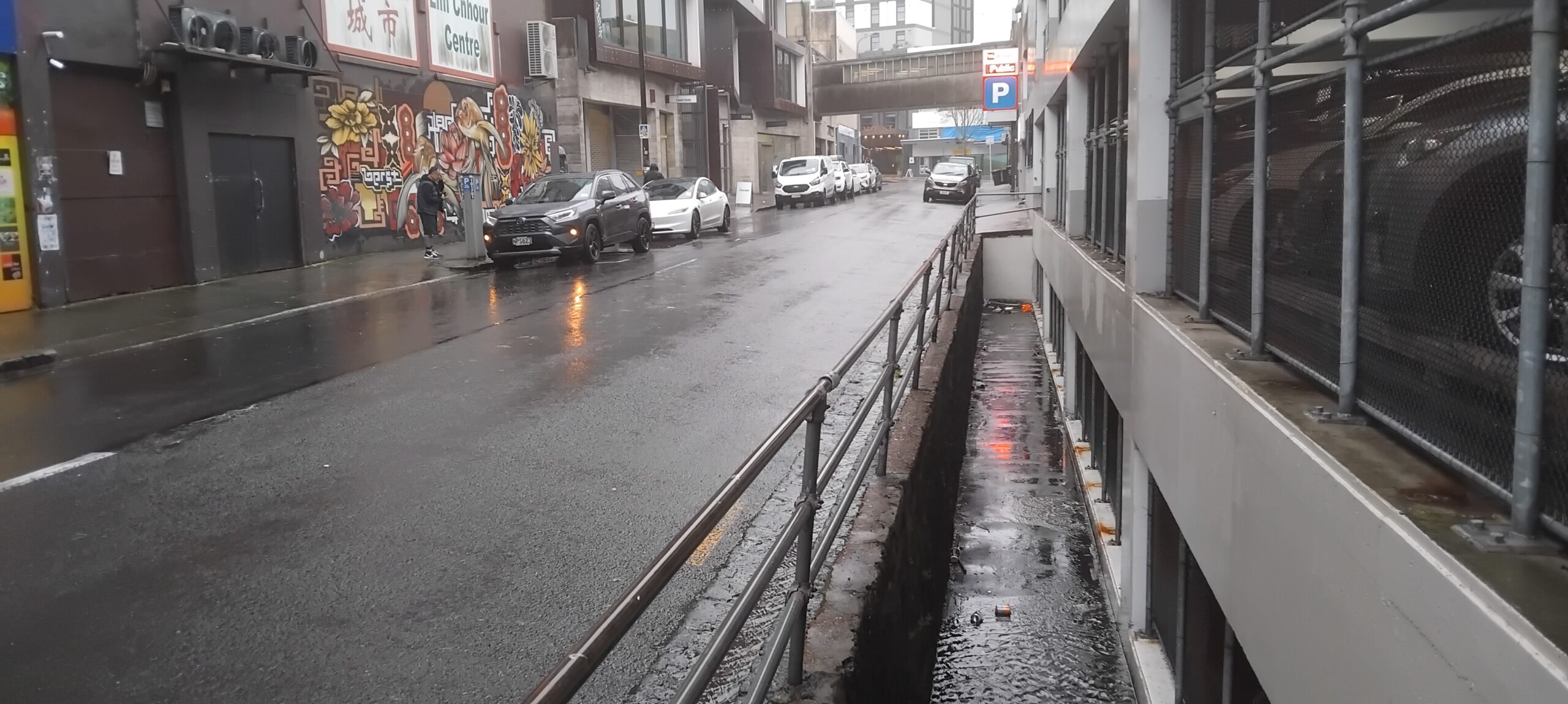
Cross Street, awaiting its promised glow-up. Photo by Connor from 2025 – it’ll be great when it’s done!
Fun guys on Karangahape Road
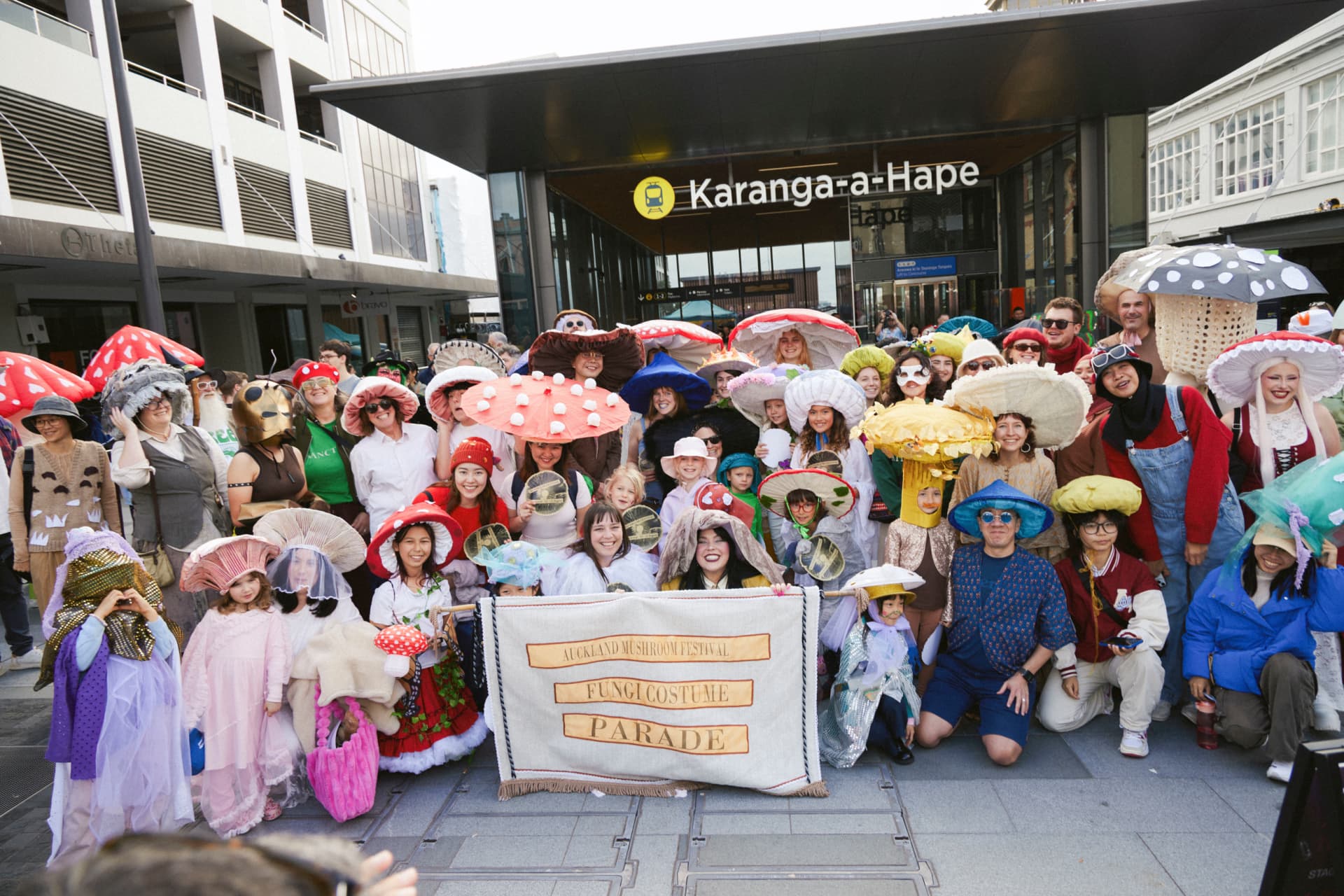
If you visited Karanga-a-Hape on Saturday you might have spotted some mushroom mayhem. RNZ captured some of it in photos, including this group shot by Felix Jackson. Click through for more fun guys!
An update on Glen Innes station upgrades
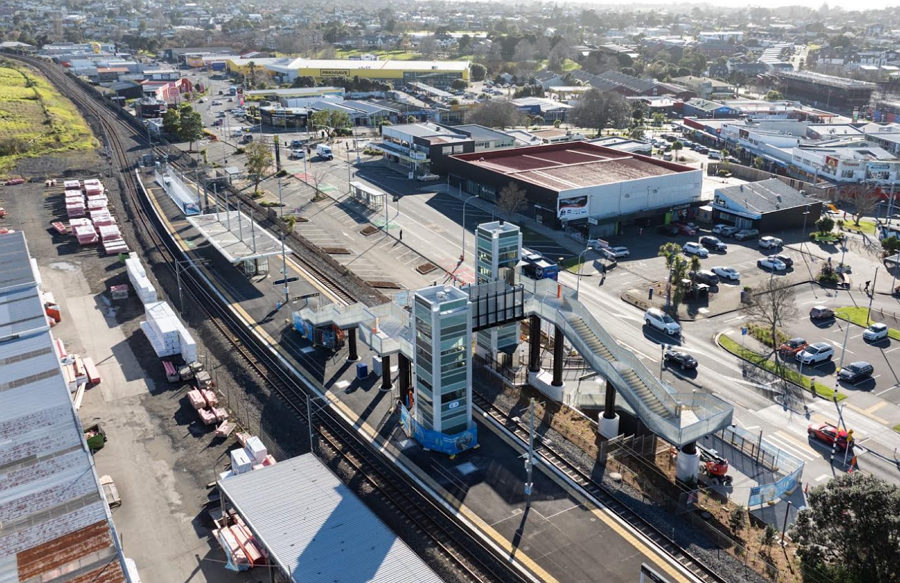
For anyone else wondering about final touches to the Glen Innes station upgrade we recently covered, a reader has shared the response they received from AT about the timeline for the missing canopies, and the location of bike and mobility parking. We agree with the reader that the delay is not ideal, as “public transport should serve everyone, all the time.”
The canopies are an additional design feature and were a result of community feedback. Installing the canopies requires a rail closure because cranes and other heavy machinery are needed to lift materials over the overhead rail wires. For this work to be carried out safely, the overhead wires must not be live, which is why a rail closure is required. As an additional design feature, they were unable to be installed during the rail closures available to us prior to opening.
Planned rail closures will continue although not to the extent as what was required to get the rail network ready for City Rail Link. Future rail closures are required for ongoing maintenance and upgrades.
For the pick-up, drop-off area, there are constraints identified by the design team, along with the mobility parking. It is proving challenging to get it right as the team are attempting to ensure it’s close enough to the lift, but also avoiding any conflicting, hazardous areas. They are aiming for November for those improvements, along with the bike parking.
Climate action progress?
Auckland Council have released their Climate Action Progress Snapshot for 2025.
Auckland is making significant progress towards a lower-emissions future, with major investments in clean public transport transforming the way people move around the region.
The Climate Action Progress Snapshot 2025, published by Auckland Council, highlights growing momentum in Auckland’s transition to low-carbon transport, supported by more than 400 electric buses now operating across the region, a fully electric rail network, and electric ferries in service.
Councillor Richard Hills, Chair of the Policy, Planning and Development Committee, says Auckland should be proud of the progress achieved so far but there is more work to do.
Fast track for Auckland
Stuff takes a look at some of the many fast-track projects around Auckland.
You could be forgiven for thinking Auckland is the official fast-track city, given the number of projects going through the Government’s infrastructure approvals regime.
Since it was enacted in 2024, the fast-track process has served as a one-stop shop, providing an alternative to what the Government perceives as a slow process for obtaining resource consents and other statutory approvals for housing and other developments.
Projects are either listed or applied for to be referred to the fast-track process. A panel then assesses each project before deciding whether to fast-track it.
As of September 20, there are over 45 projects in Auckland going through the fast-track process, with projects listed, referred, approved, or in progress.
Videos to watch
Stuff reporter Glenn McConnell did some top-notch video reporting on a comment from the Prime Minister about how “a whole bunch of bike lanes” had made it “very difficult” for him to cross Molesworth Street. Watch and judge for yourself.
See also coverage of this story by The Spinoff‘s Lyric Waiwiri Smith, and this reel by Robert Kitchen of The Post…
View this post on Instagram
Here’s a lovely collaboration between Auckland Transport and NZ Fashion Week:
And, one for the gunzels: DL class locomotives are pulling Intercity trains now, and will be fitted with ETCS from September 1.
That’s us for this week – what else have you noticed in the news? Feel free to share below.

 Processing...
I watched the video of the DL loco towing four little carriages along. This is a 108tonne machine with a 2700kW power output towing just four carriages. Seems somewhat over spec’d for the job. We need to both attract more passengers and stop moving great lumps of fossil fueled locos around.
The AM EMU 3 car sets weigh 130tonne with a 1520kW power output.
Let’s get to work extending the overhead wires to Hamilton and put EMUs on that job.
At least they only go slowly. That means when we get a good hot day like the UK gets and all the tracks buckle at least people might not get hurt as badly. Then when can go through the same process of wondering who was stupid enough to weld all the tracks together.
The Auckland/Waikato region has never got remotely close to the heat the UK is experiencing currently.
Not yet anyway, give it another decade.
We got a new locomotives see this:
https://www.youtube.com/watch?v=XafK7hf0QHc
Interested to know how the Tūhono fleet procurement is going, the new battery electric sets will surely have to be tri mode AC/DC/Battery or else they won’t be travelling far beyond the Wellington region
ACT’s next step to chain-saw massacre. Don’t forget Rodney Hide’s contribution to urban deforestation.
We never forget.
Hey. Matt! Never enough Brio in the box, is there? Video challenge – full two-track layout with plenty of trains.
Business Desk quotes $290m per year for 25 years for Warkworth to Te Hana. $52 a year for every man, woman and child in NZ. For 25 years. VFM?
Business Desk quotes $290m a year for 25 years for Warkworth to Te Hana. $52 a year from every man, woman and child in NZ. Including homeless in Dunedin, not yet born in Napier, retired in Nelson…. VFM?
in other news, for more RONS fans
from business desk
The Government will on average be paying $290 million a year for 25 years to the Northway consortium, which is building the Warkworth to Te Hana expressway, possibly bringing the total cost on transport coffers to $9 billion.
Wait till you see the cost of the extravagant artwork for the CRL.
Oh, wait….