Kia ora and welcome to our regular roundup of stories that caught our eye this week. Today’s header image (via Auckland Council news stories) shows a proposed ferris wheel, potentially coming soon to the waterfront.
This Week in Greater Auckland
A short week after a long weekend:
- On Wednesday, Patrick refreshed and re-upped a plan for the future of Auckland to Hamilton rail, in response to this week’s Waikato Regional Council report on same – building on posts from 2017 and 2024. Third time’s the charm?
- And yesterday, Connor explored the unanswerable question of how a local cycleway project can take longer than the CRL, laying down a wero for Council to pick up the pace and unblock the system – all while cycling counts climb through the fuel crisis.
Now that voting is open, you may wish to check out the political parties’ responses to our policy questionnaire.
Greater Auckland’s research and advocacy is powered by hundreds of hours of work each month, and your support helps keep us going! We warmly welcome your donations, and are always open to offers of guest posts, practical help, and pro-bono expertise.
Another great way to support the kaupapa is by purchasing and wearing our Greater Auckland merch. Allow a week for delivery – and remember these are print-on-demand (no returns), so double-check your sizing before ordering!
Mayoral manifesto for two million
Transport policy for the country is all to play for in our general election and Mayor Wayne Brown is not slowing down locally with the launch of his Auckland Manifesto for 2026 – featured on Council channels with a characteristically blunt call for central government to “back us or get out of the way”.
 The manifesto sets out goals and expectations across transport, planning for growth, economic development, “cutting stupid rules”, climate resilience and environmental protection, all framed towards the coming milestone of a city of two million people.
Transport led the initial coverage of the manifesto at its launch – including a headline-grabbing call for Auckland Council to take control over the full roading, motorway and rail network in the region, as covered by the NZ Herald:
To avoid the mistakes of the past, Auckland’s transport network needed a “single point of control” to improve standardisation and value for money, and prevent costly roading projects being foisted on the city “for little benefit to Auckland”.
“This means one agency – Auckland Council – being responsible for running our region’s entire road and rail network, guided by the agreed 30-year plan. It is the obvious next step for transport reform in Auckland.”
Brown said his expectation for a future government was to progressively shift control of state highways and the rail network to Auckland Council.
Control over major infrastructure (and its cost) is a key plank of the manifesto, with Brown specifically calling for an end to ‘government megaprojects’ determined without Council in the room, and to costly roading upgrades in particular – with a specific callout of the Warkworth to Te Hana motorway project:
We will no longer accept a government agency or party committing to roading projects that come with an unreasonable cost for little benefit to Auckland. Warkworth to Te Hana blew out in cost from $1 billion to $3.6 billion over the last decade but the government signed it off regardless.
For all that investment, you’ll only see a 7 minute reduction in travel time. That kind of waste is unacceptable and must be challenged through the 30-year [Auckland Regional Transport Committee] plan.
The mayor enlarged on his criticism of ‘supposedly vote-winning’ motorway projects in conversation with John Campbell yesterday morning – including raising the fair question of how users would derive actual value from that 7-minute travel time reduction, especially compared to the cost of borrowing.
Elsewhere the manifesto calls for the removal of greenfields housing projects from the fast-track system and for developers to be required to pay the cost of a broader range of infrastructure needed for greenfields development, including transport and schools.
As with the mayor’s last pre-election manifesto in 2023 the hope will be that a returning or incoming government comes to the table on the mayor’s expectations through policy changes or a refreshed ‘Auckland deal’.
So far the Greens have responded positively to the mayor’s announcement, noting ‘an enormous amount of alignment on the key issues’, while New Zealand First have welcomed the call to ‘wrest control’ of the rail network specifically.
We’ll take a further look at the manifesto in the coming week as Aucklanders and the rest of the country continue to head to the polls.
Not-so-fast track for greenfields housing
This week, the Government declined to fast-track a housing development in Dairy Flat, reports the NZ Herald:
The development was to have spanned 82ha of land between Horseshoe Bush Rd and Kahikatea Flat Rd west of Dairy Flat. It comprised up to 1100 residential units, a village centre spanning 1200sq m and 19ha of open space.
This has come as something of a relief to local government:
Auckland Mayor Wayne Brown told the Herald he was pleased the application had been declined and was not surprised by the decision.
“I’ve long said that greenfield housing without infrastructure doesn’t belong in the fast track process.
“My manifesto is calling for this to be removed from the system completely, and whoever forms the next Government needs to ensure that poorly planned projects which make Auckland a worse or a harder place to live don’t get approved through fast track.”
Policy, Planning and Development Committee chair Richard Hills said it was great to hear opposition to rural fast tracks finally listened to.
“This application would mean substantial urbanisation of rurally zoned land in an area not recognised by any national or regional planning document as an area appropriate for urban growth,” he told the Herald.
“There is no plan for delivery of any infrastructure by the main infrastructure providers, and the application raised unresolved concerns regarding natural hazards and open space provision.”
Getting punched above our weight at the pump
Simon Kuestenmacher on Bluesky highlights the extra per capita costs borne by citizens across the world from this year’s escalating fuel crisis, from Centre for Research and Clean Energy reporting.
You’ll see New Zealand ranks near the top, with diesel costs bringing most of the pain. We’ve got a plan for that, right?
How negatively impacted was your country financially because of the Hormuz closure? The US was hit extremely hard.
— Simon Kuestenmacher (@simongerman600.bsky.social) 2026-10-27T20:01:05.947Z
What do affordable transport policies look like?
Dr Timothy Welch in a piece for The Conversation looks at how some transport policies are framed as “an investment in the economy”, while others draw questions about “the cost to taxpayers”. What other ways can the impacts be accounted for?
In 2024, transport accounted for 18% of New Zealand’s gross greenhouse gas emissions, with road transport responsible for 91% of that total. Yet the transport programme forecasts $7 billion for state highway improvements and $460 million for walking and cycling, largely to complete existing projects and maintain infrastructure.
Its explanation for the lack of new walking and cycling projects was notably brief: “no available funding”. As well as carbon budgets, a car-centred transport system can weigh considerably on household ones, particularly when people have little choice about how they travel.
[…]
Ultimately, the test of an affordable transport policy should be whether it gives households more practical choices. That means not just cheaper journeys, but reliable alternatives that could allow more Kiwis to get by with one car – or none.
New Zealand’s next top landscapes: a strong Auckland showing
Sixteen entries from Tāmaki Makaurau made the shortlist for the 2026 Resene NZILA Awards, which recognise landscape architecture excellence across the motu.
See all of the local contenders and their creators below, sorted by category. How many have you ticked off?
Transport
- Te Ara Ki Uta Ki Tai Glen Innes to Tāmaki Drive Shared Path (Boffa Miskell)
- Te Whau Pathway, West Auckland (LandLAB)
Residential and Gardens
- Community Lane, Avondale (Boffa Miskell)
- Ti Point (Wraight + Associates)
Research & Communications
- AT Blue-Green Infrastrcture (Resilio)
- Designing Aotearoa New Zealand with nature: landscape regeneration of Western Waiheke Island (D J Scott Associates)
- Ko Te Pūkākī 2040 – Tirotiro Whānui Regeneration Plan (Ngāti Whātua Ōrākei and LandLAB) – also shortlisted for Landscape Management
Play Spaces
- Old Papatoetoe Stadium Reserve (Bespoke)
- Kaipātiki Reserve + Playspace at Parakai (Resilio)
Parks, Open Spaces & Recreation
- Maungawhau Tihi Boardwalk, Stage 2 (Isthmus)
- Te Rimutahi, Ponsonby (LandLAB)
Institutional and Commercial
- Auckland Airport – Transport Hub 01 (Isthmus)
- AUT North Campus Heart Courtyard Landscape, Northcote (Jasmax)
He Iti Pounamu (small projects)
- Karanga Jump Platform (LandLAB)
- Waka Moana Daldy Street Taonga Toi
Civic and Urban Design
- Takapuna Streetscapes (Reset)
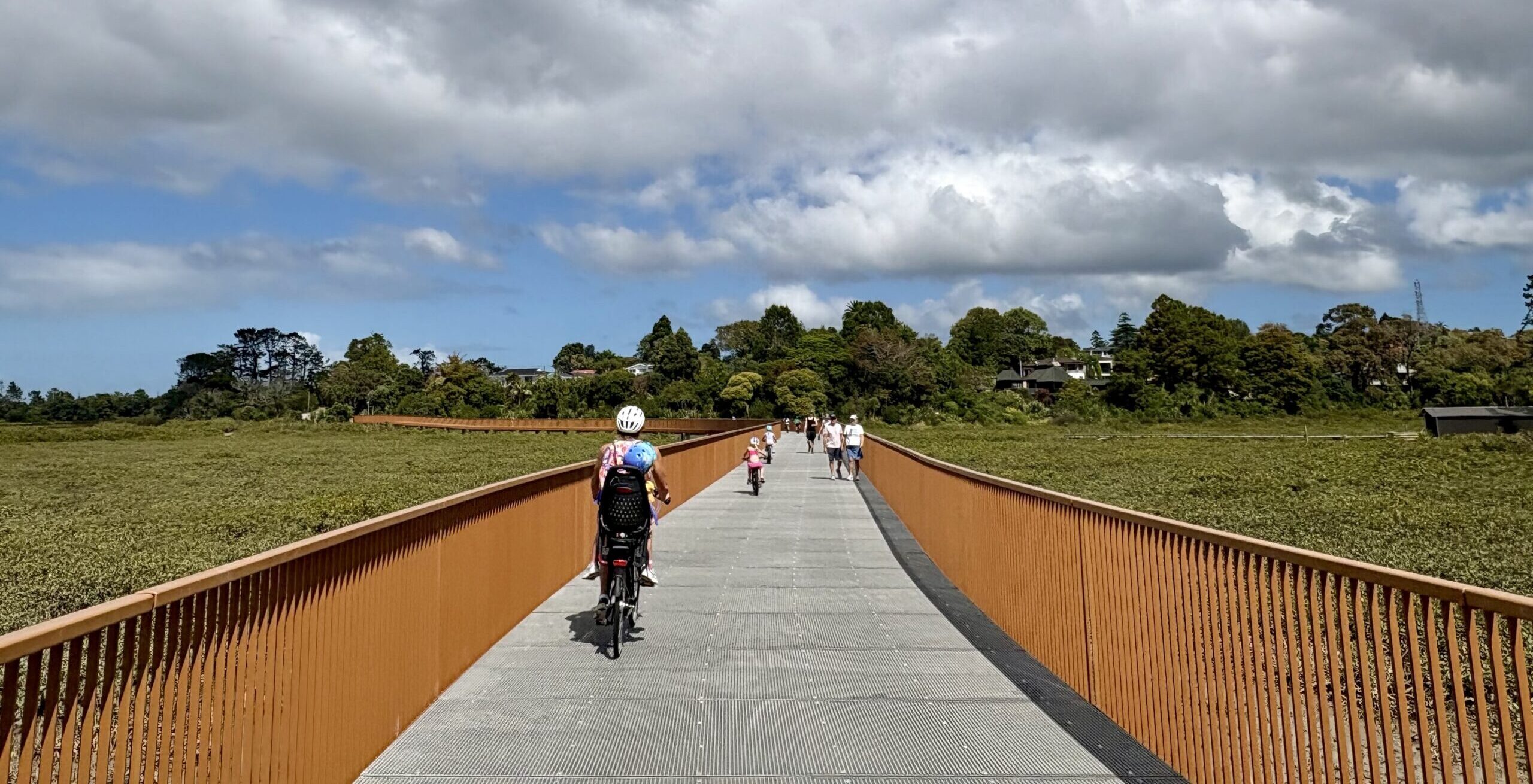
Te Whau Pathway, one of many local finalists for the awards.
A piece of Rangitoto in the central city
Speaking of iconic built environments – a combination of scientific testing and archival research (yay for multidisciplinarity!) has confirmed the once-mysterious origin of the stone used to build Albert Street’s distinctive nineteenth-century Bluestone Wall. Our Auckland reports:
For decades, it was widely believed the distinctive basalt blocks came from Maungawhau (Mt Eden). But new research has traced the wall’s stone to a single quarry on Rangitoto Island, solving a question that has intrigued historians for years.
[…] Working with salvaged stone samples, geochemists from the University of Auckland’s DEtermining VOlcanic Risk in Auckland (DEVORA) research programme analysed the rocks’ unique chemical fingerprints and compared them with an extensive database of Auckland volcanic field material.
[…] The findings also align with research by historian Lisa Truttman, who uncovered records showing the original contractor Daniel Fallon had sourced stone from Rangitoto around the time the wall was built.
The research was enabled by the wall’s removal and piece-by-piece reconstruction for the CRL, albeit just one metre further east to clear Te Waihorotiu station and the tunnels.
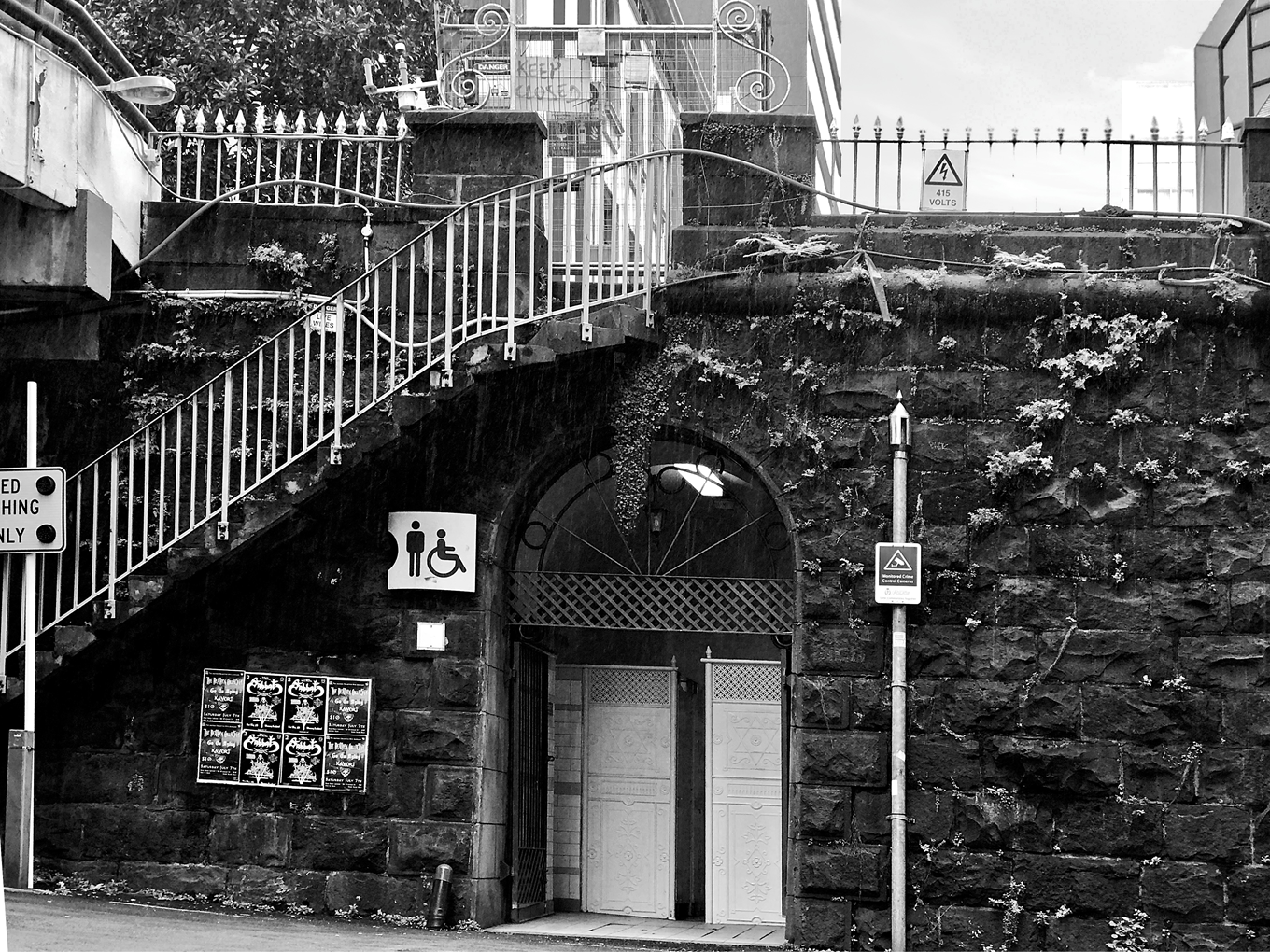
Historic rock, historic wall, historic public toilets: Albert St. Image via Our Auckland
Kind of a big wheel!
News landed this week that a giant ferris wheel might be rolling into town, as part of a plan from Tātaki Auckland Unlimited to enliven the waterfront. As reported by Stuff:
“As part of the wider plans to open the Central Wharves to the public for the first time, Tātaki Auckland Unlimited is currently exploring options for activations along Quay Street Promenade this summer,” Director of Destination Annie Dundas said.
“One of the preferred options is to operate a Ferris Wheel on the site, with a potential December 2026 opening date. However, the wheel remains subject to the necessary consents and approvals before plans can be confirmed.”
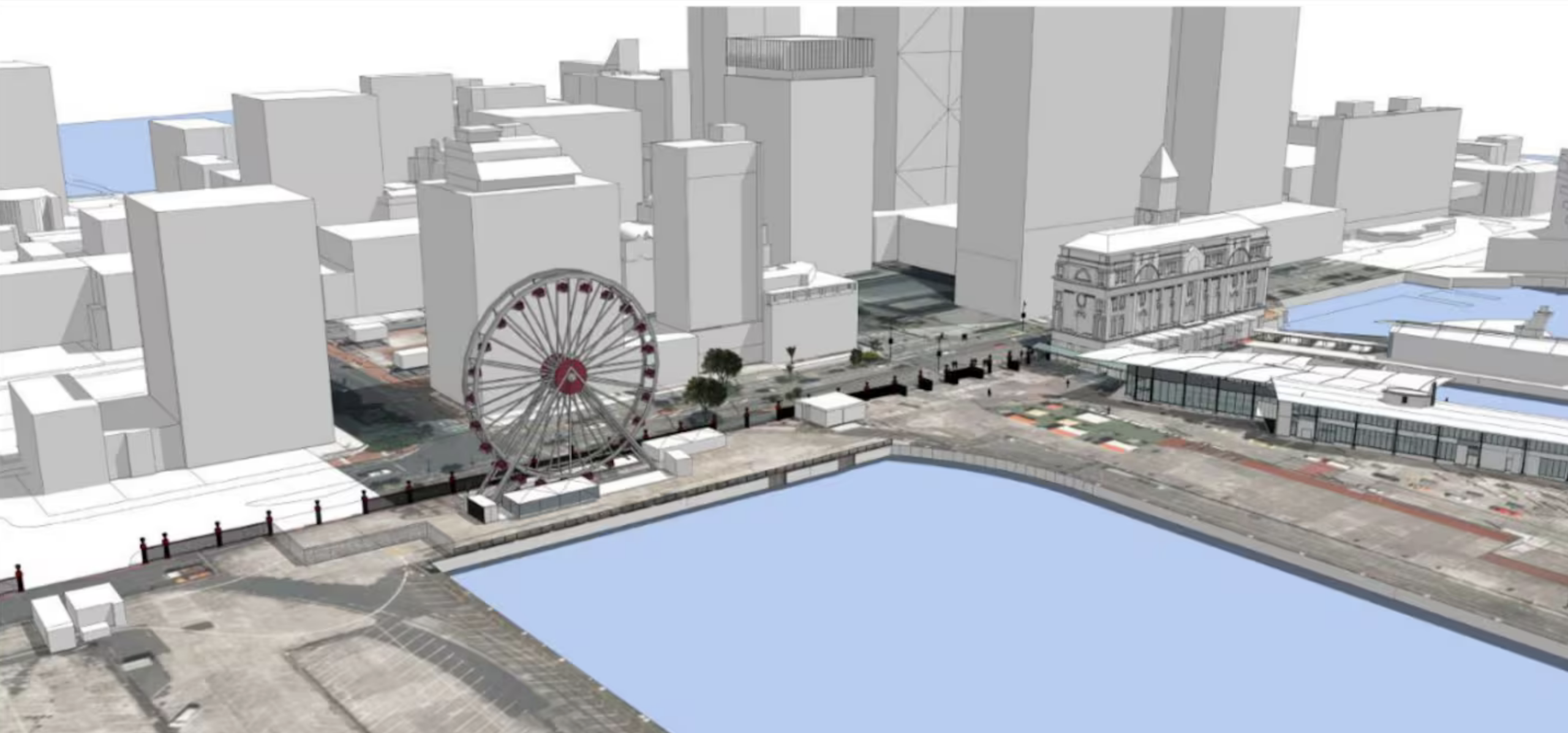
Indicative image for scale, via Auckland Council.
The prospect is already creating excitement, reported RNZ…
Heart of the City chief executive Viv Beck welcomed the proposal and said it would be a big drawcard for visitors and locals alike.
“It would be an absolute winner. Really would be exciting if this could be pulled off, particularly before Christmas.”
…but some longtime downtown-dwellers expressed concerns about what the attraction would do to their view, with one couple saying “the ferris wheel will end any sense of privacy for them and their neighbours”:
“You can’t sit in your bed with hundreds of people, sitting, gawping at you.” [Moreover] the wheel is not see-through, especially when it is moving and it will bring sounds and smells with it.
A case of swings and roundabouts? And, full circle – after all, once upon a time, Auckland’s waterfront was home to our very own Luna Park, a full-noise funfair, complete with massive rollercoaster. Time to return to tradition?
Weekend fun
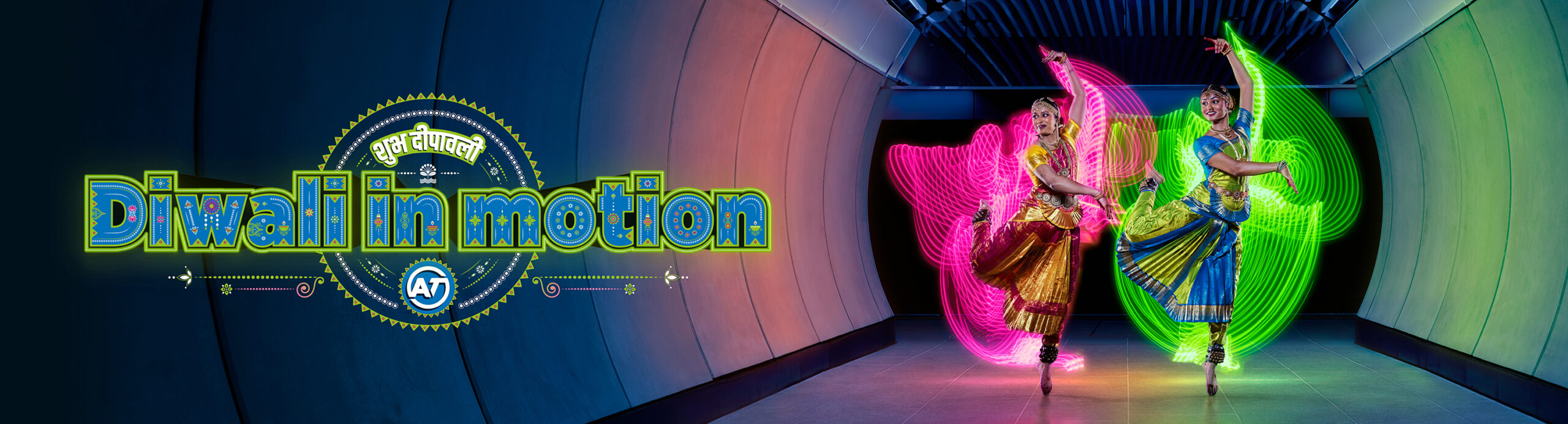
The BNZ Auckland Diwali Festival runs across Saturday and Sunday in Aotea Square and surrounding venues, just a three-minute walk from Te Waihorotiu station.
Auckland Transport has leaned in to the theme, with gorgeous imagery highlighting the connection. Keep your eyes peeled for these around town.
View this post on Instagram
And for carnivalesque all-ages fun on Karangahape Road, Freak Out Halloween returns on Saturday, following a string of popular events in the precinct surrounding and following the CRL opening. The reliably up-for-it Karangahape Business Association promises a dog costume parade, zombie stilt-walkers, a band of frogs, and more!
So get your freak on…

… and get your vote on
Wherever the weekend takes you, there’ll be somewhere you can cast your vote in the general election. Find your closest polling place and its opening days and hours here. Enrolled voters can vote at any open voting place in the country, right up to 7pm on Saturday 7 November.
That’s it for us this week – enjoy the weekend, and see you next week!
PS Filmed in Pōneke, but we approve this multi-modal democratic message for Tāmaki Makaurau too.
View this post on Instagram

 Processing...
Does anyone know why the stairs on the Bluestone Wall are still locked with gates so long after the work is complete?
It’s kinda a shame that the stairs going up that Albert St bluestone wall were closed off. They were rebuilt along with the wall, but the fence along the top has closed off access.
Nothing worst than a smelly Ferris wheel outside your bedroom window. I may visit just to smell it, I have failed to notice Ferris wheel smells in the past.
Ferris Smeller’s Day Off
At the time the wall was built , it was probably easier to transport heavy stone by sea , than by horse and cart. Though I guess the final delivery distance would be similar from wharf as it is from Maungawhau. But it is more relevant in say , the use of Oamaru stone in major buildings in cities.
The Ferris Wheel is a stupid idea and hopefully it goes know where.
Having just spent a week based in Docklands in Melbourne, their Ferris Wheel has been broken for years and instead of pulling people down to the ghost precinct of Docklands, it has become an eyesore and joke.
Just in:
Precinct have put the Tower Block redevelopment on Hold and will keep the Downtown carpark:
https://api.nzx.com/public/announcement/482697/attachment/480308/482697-480308.pdf
tragic
Like many of these fast track projects, simply an exercise in value uplift
Bring back Monsoon Poon!
That sucks, but they are promising a 5% return just on carparking?
Guessing the sale of the property didn’t come with clauses to force Precinct to add value by building within n years
It doesn’t go nowhere, it goes round in a circle
Costs a lot of money and you end up where you started. A fitting metaphor for Auckland Council.
The wheel isn’t going to reinvent itself
In East Auckland small government advocate Maurice Williamson has called for parking minimums of one carpark per two new bedrooms.
https://www.times.co.nz/news/housing-intensification-brings-parking-headaches/