Kia ora and welcome to October, or Whiringa-ā-nuku! With daylight saving settling in and spring on the way, it’s time for another roundup of stories that caught our eye this week.
This Week in Greater Auckland
- On Monday, we had a guest post from our pal Darren Davis: a letter to Santa about public transport.
- On Tuesday, Connor exposed an accounting trick in how transport borrowing is repaid
- On Wednesday, Matt looked at the three options under consideration for congestion charging
Greater Auckland’s research and advocacy is powered by hundreds of hours of work each month, and your support helps keep us going! We warmly welcome your donations, and are always open to offers of guest posts, practical help, and pro-bono expertise.
Another great way to support the kaupapa: Greater Auckland merch. Allow a week for delivery, and note these are print-on-demand (no returns), so double-check your sizing before ordering!
We’re sixty!
Auckland lands at 60 on the list of top 1000 world cities, as determined by Oxford Economics’ Global Cities Index 2026. Other cities to make the list: Wellington at 75, and Christchurch at 96. We’re all behind our western cuzzies, however: Sydney is lucky number 13, closely followed by Melbourne in16th place, and Brisbane at 36.
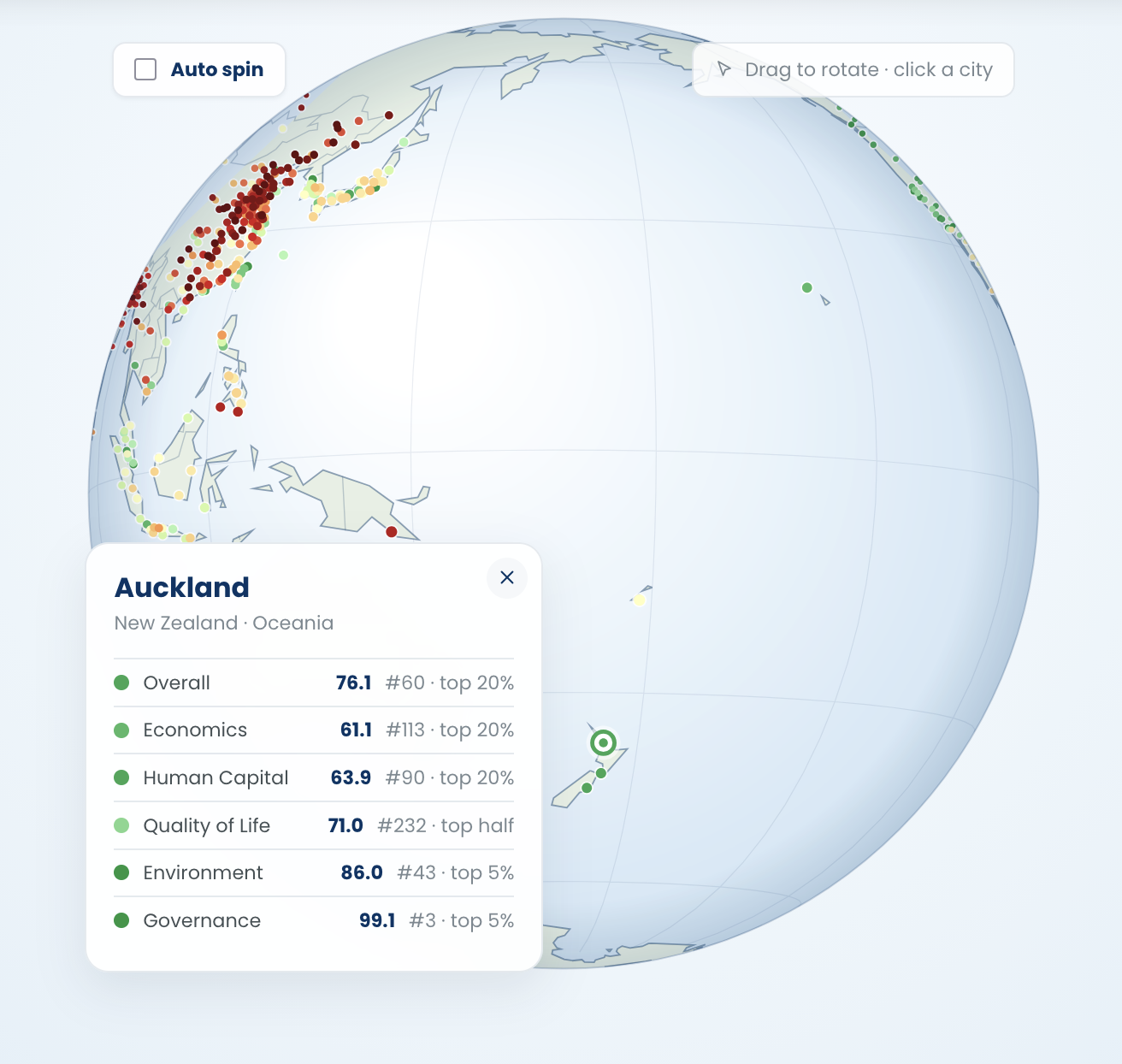
Auckland on the Global Cities Index 2026 map. Image via Oxford Economics
City Rail Link Still Going Strong
The City Rail Link was a hit in week one, setting a new one-week record for trips on the rail network with 528k trips, but that was all just people checking it out and it would drop right back down again right? Wrong!
Usage in week two has remained strong and is now the second busiest week on record with 506k trips.
More than one million train rides have been recorded on Auckland’s rail network in the first two weeks since the City Rail Link (CRL) opened, with early data showing Aucklanders are embracing new routes and changing the way they travel across the city, Transport Minister Chris Bishop and Auckland Mayor Wayne Brown say.
“More than 506,000 train boardings were recorded in the second week of the CRL, taking the total number of boardings since opening to more than one million,” Mr Bishop says.
“That continues to beat the previous record for weekly boardings, set in March 2019. That record was smashed in CRL’s first week, when 528,007 boardings made it the busiest week in the history of Auckland’s rail network.
“Aucklanders are quickly adapting to the new network, with West Auckland leading the charge. Average daily trips between western stations and the city centre have increased by almost 173 per cent compared with the six weeks before the CRL opened. That’s an extra 7,600 trips per day.
“Seven of the 10 stations recording the biggest growth in passenger numbers are along the former Western Line, while journeys between Auckland’s western and eastern rail corridors have tripled.
“This data demonstrates that faster journey times and new direct connections are making rail a much more attractive option for trips that were previously slower or required people to change trains.”
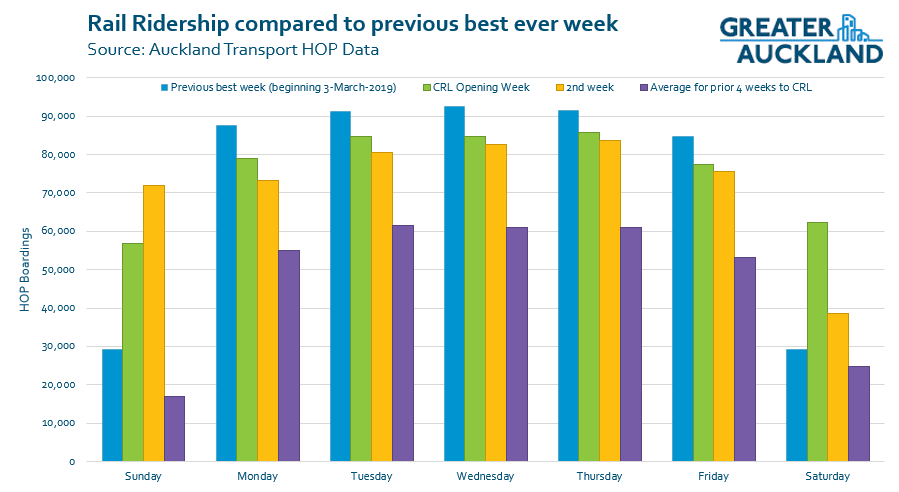
That’s also huge growth from Western stations – which is entirely expected and we understand the trips from the West are now where the most pressure on capacity is. The increase to 8 trains an hour – due in November – is definitely needed.
AT have also shared with us some interesting stats on station boardings and trips. Te Waihorotiu and Karanga-a-Hape are easily now the second and third busiest stations on the network. They also say trips between Waitemata, Te Waihorotiu and Karanga-a-Hape now make up six of the top ten origin/destination pairs – meaning people are absolutely using the CRL to just pop up the hill and get around the city centre easier.
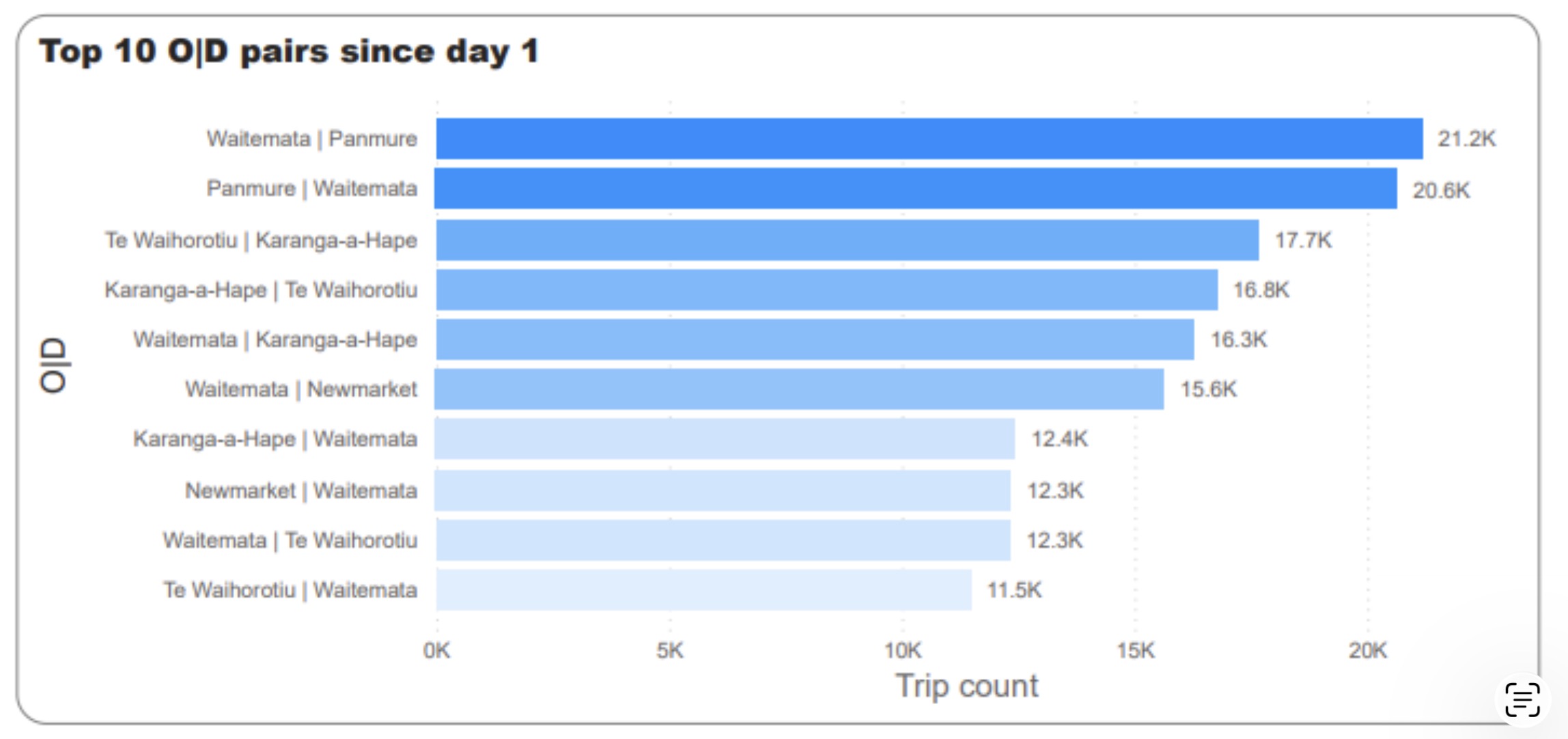
It is also clear from the Waitemata-Panmure pair taking out the top spot that Aucklanders absolutely will transfer, when the transfer itself is well designed, and when doing so offers real value. Panmure being the interchange point point for the Eastern Busway and rail network, and the station being optimised to integrate the two modes from the start. Otherwise Panmure is a pretty tough environment for walk-up catchment, being surrounded by severing Stroads (though this has improved with the new Simplicity development along a pretty useful shared path The Eastern Rail Cyleway).
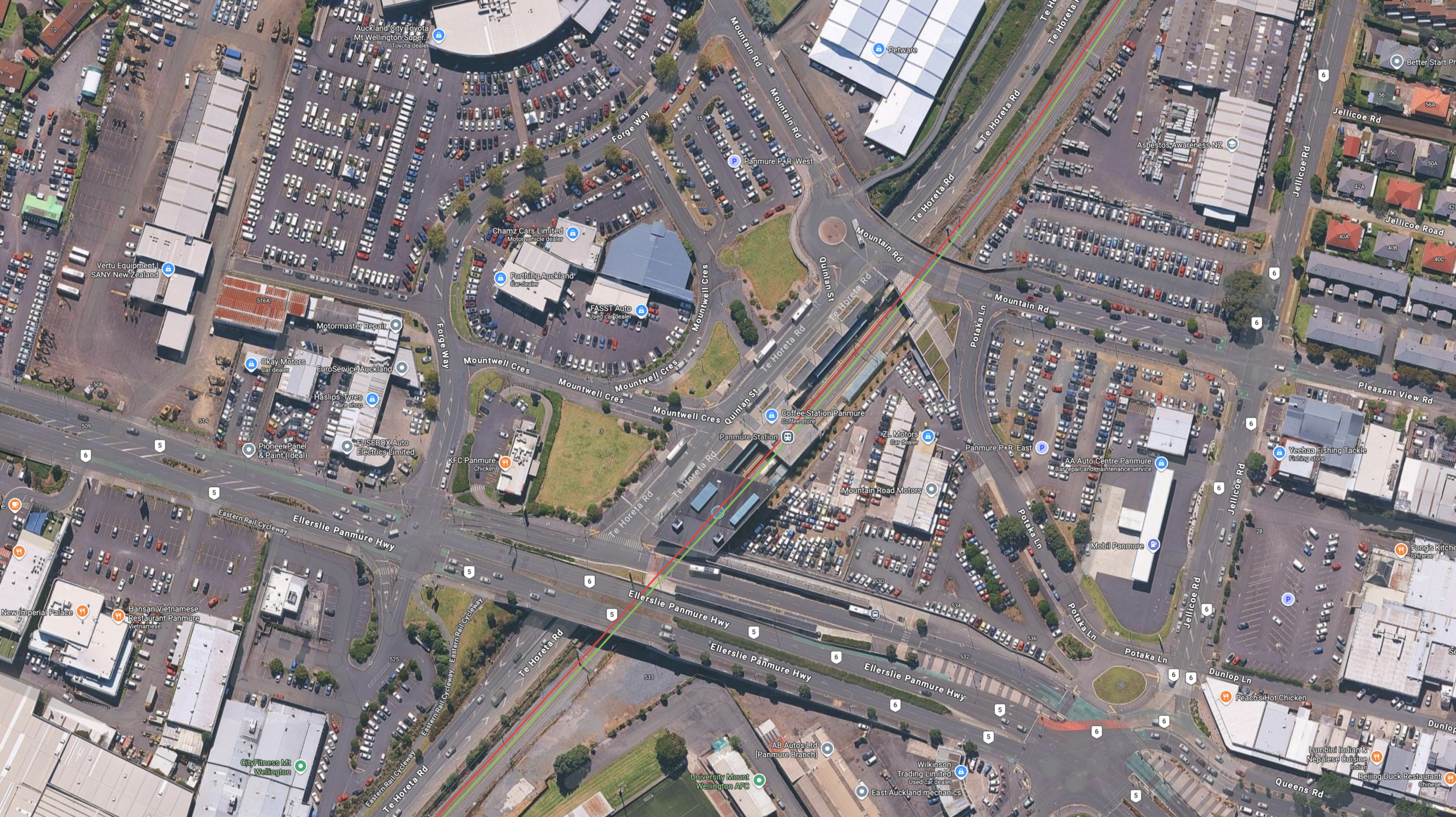
Panmure Station surrounded by parking craters and stroads.
With school holidays this week usage is down on last week, but not by that much, and is higher during the inter-peak and evenings.
Importantly, AT are also reporting that while some specific bus routes have declined, overall bus ridership has also increased
Another stat that caught our eye: from a poll of the Mt Albert electorate, commissioned by The Spinoff.
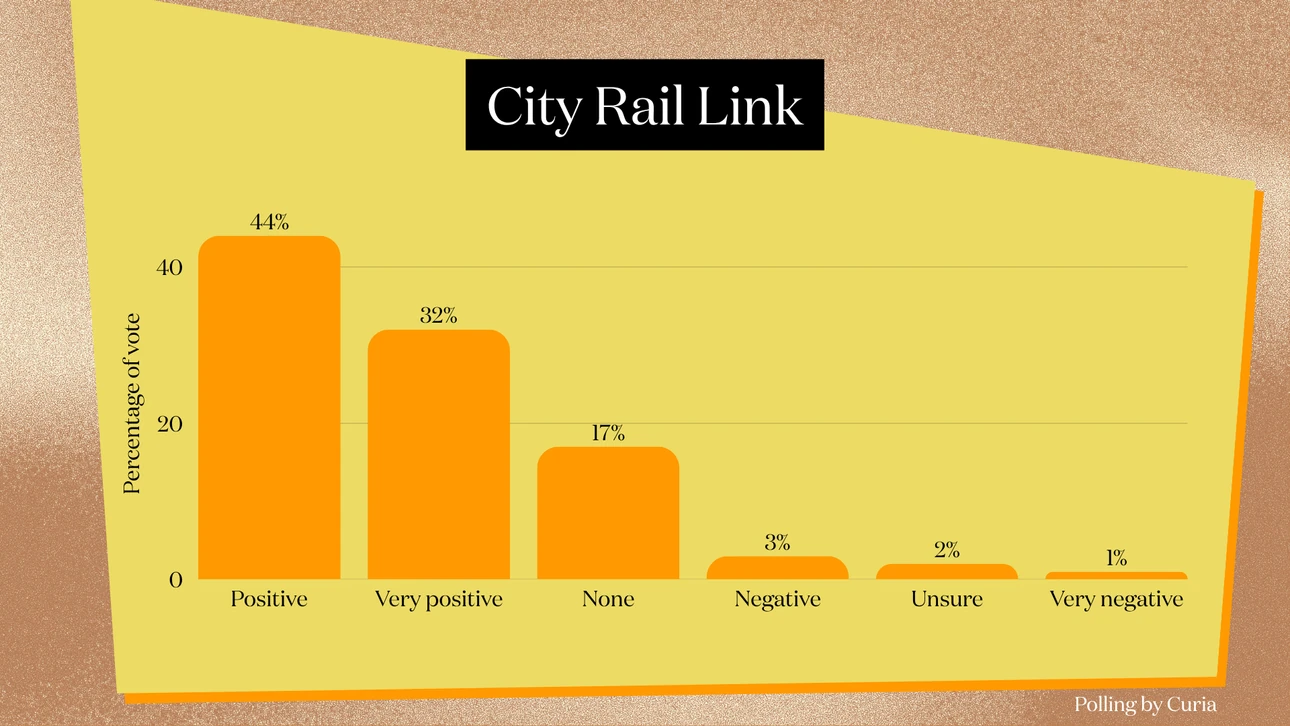
The electorate, which is home to four train stations on the east-west line, is all about the City Rail Link’s opening, with 76% of voters saying they were positive or very positive about the impact it would have on their lives, while 17% thought it would have no impact.
Auckland’s transport governance handover
As of 1 October, governance of transport (aside from public transport) has shifted back from Auckland Transport into Auckland Council. Joint media release from the Minister of Transport and the Mayor of Auckland.
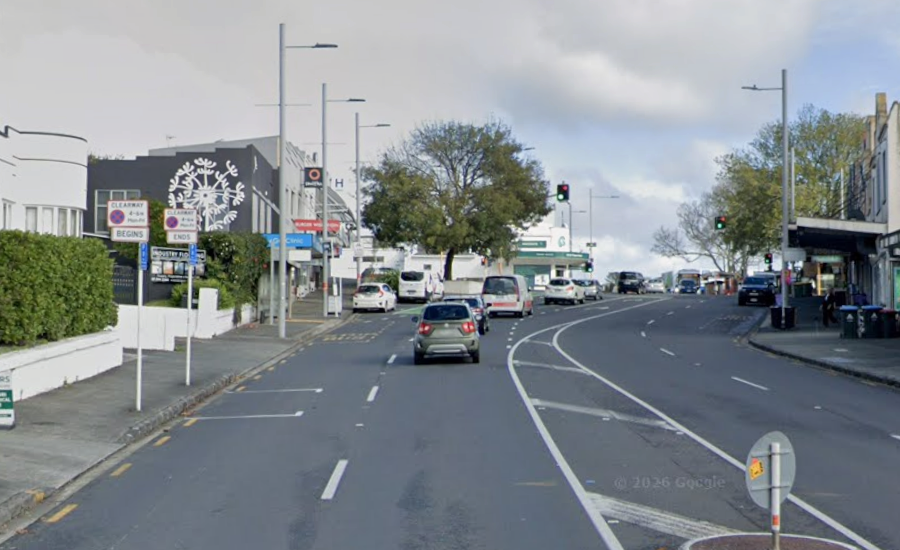
Mayor Wayne Brown was quick to highlight the change by getting out some paint and removing the “most hated” parking spot.

New road rules
As of yesterday, 1 October, new road rules apply. An explainer from RNZ lays out the basics:
The new rules:
- require a minimum passing gap of 1.5 metres when drivers pass other road users who are not driving a motor vehicle
- allow children up to 12 years old to ride bikes on footpaths and allow parents or caregivers to ride with them
- allow people to ride e-scooters in cycle lanes
- require road users to give way to buses leaving bus stops
(It also remains legal to ride on the footpath if you’re delivering newspapers, mail or printed material. See the law changes here.)
Feedback on new bits of walk/bike network
Is this a new thing? Auckland Transport is inviting feedback on recent upgrades to Surrey Crescent and Old Mill Road in Grey Lynn. This quick and clever project leveraged a planned resealing to deliver bike lanes (some protected on-road, and some off-road) and crossings at key locations – a primary school, a daycare, a church.
There are still a couple of key gaps to fill, but it’s a step forward. Feel free to weigh in on the changes, by Sunday 9 October.
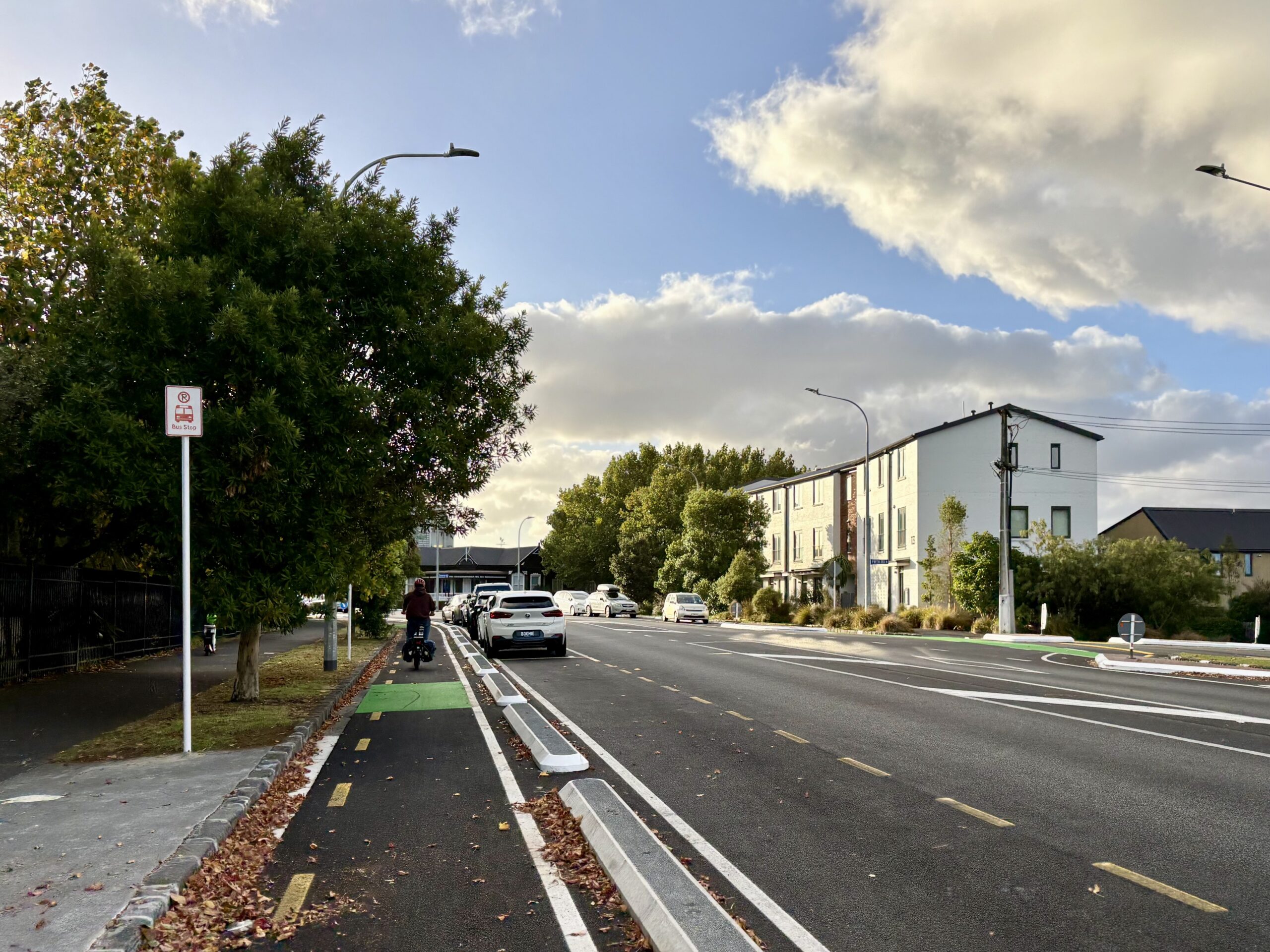
A stretch of the new cycleway past Grey Lynn School (L) and CoHaus (R). Image: Jolisa Gracewood
Better Moves
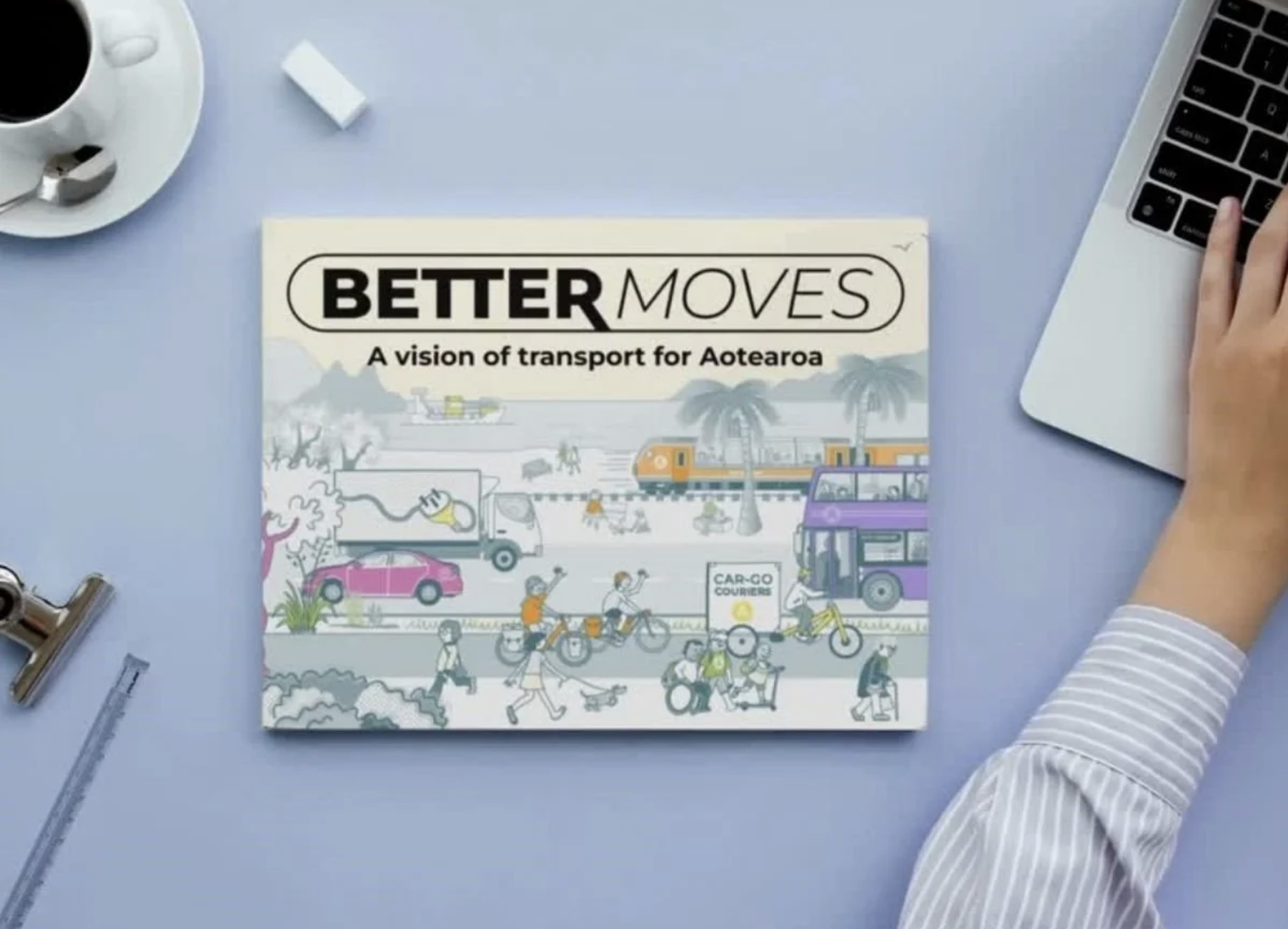
All Aboard Aotearoa launched their Better Moves report at a well-attended event on Wednesday night. Check out the report here.
Trees count, so let’s count trees!
Another great data-viz project from Tim Welch at the University of Auckland, the Aotearoa Long-term Tree Observatory has launched with a fabulous map of Auckland’s greenery.
ALTO brings Auckland’s tree records, aerial laser surveys and imagery together. For each tree, it estimates size, form, roots and environmental benefits, and links earlier canopy records where available. Open a profile to see the source data, compare estimates and find observations that could improve them.
We're on a mission to map and catalog every tree in New Zealand, creating a complete digital record of its entire life.ALTO, the Aotearoa Long-term Tree Observatory, is over 6.2 millions trees strong and growing!Check out the Auckland release: alto.tfwelch.com
Intercity trains
The NZ Herald reports that Trains Taranaki is calling for a feasibility study into restoring passenger rail from New Plymouth to Wellington, including Whanganui:
Trains Taranaki spokeswoman Louise Kuriger said she hoped central Government would pay attention to mounting interest in rail and public transport across New Zealand, not just in Wellington and Auckland.
“There’s more to New Zealand than the two major cities.”
Trains Taranaki (TT) delivered a petition with more than 3250 signatures to Parliament in June and a submission detailing its proposal, calling for a feasibility study, on August 31.
…
A survey included in its submission, with more than 600 responses (about 75% Taranaki-based), showed “overwhelming support” for the return of a passenger rail – 99% would consider using a passenger rail service, 58% would use the service from and to multiple locations, 25% would travel the entire line.
What to watch
A vision for the near future…
And a blast from the past, containing glimpses of the central city, including a very shady Queen Street.
The video also shows upgrades in progress on the Southern Motorway – at around 16.25, approaching Papatoetoe, the narrator says: “This is a part of the motorway where they’re building the new median barriers, which is causing quite a stir around Auckland at this present point in time.” It’s startling to see (and hear) opposing lanes of motorway traffic separated only by a strip of grass.
This, from New York City, on repeat…
Pedestrianized 35th reaches its final, lush form
That’s us for the week – as always, feel free to share further links and stories in the comments below.

 Processing...
Imagine how many decent bike lanes we could install like the ones in Grey Lynn is we didn’t have to have MASSIVE FLUSH MEDIAN ON EVERY F**KING ROAD
I mean seriously, is there any other city in the world that wastes so much road space on pointless road markings like this?
I am making a guess here, but I think a lot of those roads with large flush medians are ones that, in decades past, had trams running down them. Maybe we can bring them back?
Wow, March madness 2019 must have been epic.
I guess there still might be more unique users in 2026 because of the working from home effect? Any data on that?
March 2027 will be an interesting benchmark.
When does Eastern busway open? Will likely be a filip