Keen to influence what happens in your community? Give feedback on your Local Board’s three-year plan, now open for consultation. In short: if the local board hasn’t put it in the plan, it’s not going to happen.
Feedback closes at the end of the day, this Thursday 23 July 2026, so get in quick!
Below, former Waitematā Local Board Chair Pippa Coom shares her love of local board plans, and example of how they can lead to real action. But first, some top tips for feedback to help win greater things in your neighbourhood!
How to give great feedback on Local Board Plans
Keen to advocate for specific local actions, share ideas for your neighbourhood, suggest vital links for local walking and cycling – or just tautoko the general direction of travel? Seize this opportunity to have your say!
First, check here to confirm what Local Board area you live in.*
Then give feedback here on your Local Board’s Plan – by the end of Thursday 23 July 2026.
Five tips to help your voice be heard:
- On the Have Your Say page, select the local board plan for where you live. Have a read of the summary, then dive into the main plan.
- Have a close read of the Transport section, plus any other key focus areas you’d like to give feedback on: Community, Natural Environment, Built Environment, and Economic Development. (Here’s a good guide to arts & culture feedback)
- Use the online form to give your feedback. Note: all questions are optional. You can also upload additional documents, e.g. if you prefer to write your feedback offline, or if you have notes and plans for a project, or have done local surveys/ petitions, or whatever.
- Name-check any specific goals and projects/ key initiatives that you want your local board to focus on over the next few years. Note that Council will be using “AI-assisted tools” to “support analysis” of feedback – so it’s vital to use key words and spell out exactly what you’re supporting.
- Point out anything that’s missing from the plan.
It always helps to share your personal experiences, expectations and stories about what proposed projects would mean for you, your neighbours and loved ones. This helps make the plan come alive for all involved.
Encourage your neighbours, friends, and whanau to have their say. Great ideas are much more likely to make it into the plan if they come from the community at large.
*Yes, you can give feedback on more than one Local Board Plan. Especially If you live, work, shop, study and travel in different parts of town. Just note that elected representatives are most interested in hearing from people who are local in some way, and from stakeholders/ groups who represent the local community.
What happens next? Local Board Plans will be finalised and adopted over August – October 2026, so stay tuned, and let your elected reps know if you like what you see. If you have no luck convincing the local board that your community actually wants safe cycleways or other priorities – get ready to vote for better local board members in 2028!

The power of Local Board Plans
This is a guest post from Pippa Coom, who served on the Waitematā Local Board 2010-2019, including as Chair, and on Council from 2019-2022.
Whatever the motivations for the amalgamation of Auckland into one Super City in 2010, I think Rodney Hide got it right when it came to establishing Auckland’s 21 Local Boards. These are essentially mini-councils that represent their communities of interest and can put “localism” into action.
If you want to know if your elected representatives understand local priorities and aim to achieve good things, the best place to look is the three-year Local Board Plan. If something is not in the plan, it is unlikely to happen or be supported.
Back in 2011, Auckland’s newly minted local boards were given the task of drafting their very first plans. This was an exciting time in local board land. At the Waitematā Local Board we came at it with a fresh, everything-is-possible attitude and a blank canvas. As representatives of the city centre and central suburbs, there was lots to catch up on and no end of projects to get stuck into.
The previous Auckland City Council had been dominated by right-leaning Citizens’ & Ratepayers (later styled as Communities & Residents). Over the years, it had neglected parks, community facilities, the natural environment and town centres – except on the eastern, wealthier side of town, which enjoyed higher levels of attention.
There were encouraging developments underway on the waterfront and in the city centre as a result of the City-Centre Targeted Rate (CCTR), which funded projects like the first shared spaces, as part of the emerging – and to this day, inspiring – City Centre Masterplan. But overall, the old council was notoriously pro-driving, and the traffic engineer for the central area was anti-anything that prioritised pedestrians, let alone people on bikes.
The first Waitematā Local Board Plan gathered up a bunch of languishing community initiatives, and drew on the aspirations from our local social networks. For me, that included Grey Lynn 2030 and the community cycling advocacy group then known as Cycle Action Auckland.
Our plan was also guided by a progressive political manifesto shared by five of the seven elected members. And, crucially, the draft plan was tested and strengthened via public feedback.
It’s great to look back and see that many of the projects we envisioned in that first plan have been delivered – even if the time-frame has sometimes been much longer than we could have imagined back then. Among the big wins:
- A makeover of Myers Park, steadily completed over the last 15 years – including a refurbishment of the caretakers’ cottage, a new playground, and the creation of a beautiful underpass through to the Basement Theatre carpark. (Note: the final piece of the puzzle is a pedestrianised link to Aotea Square, which remains on hold.)
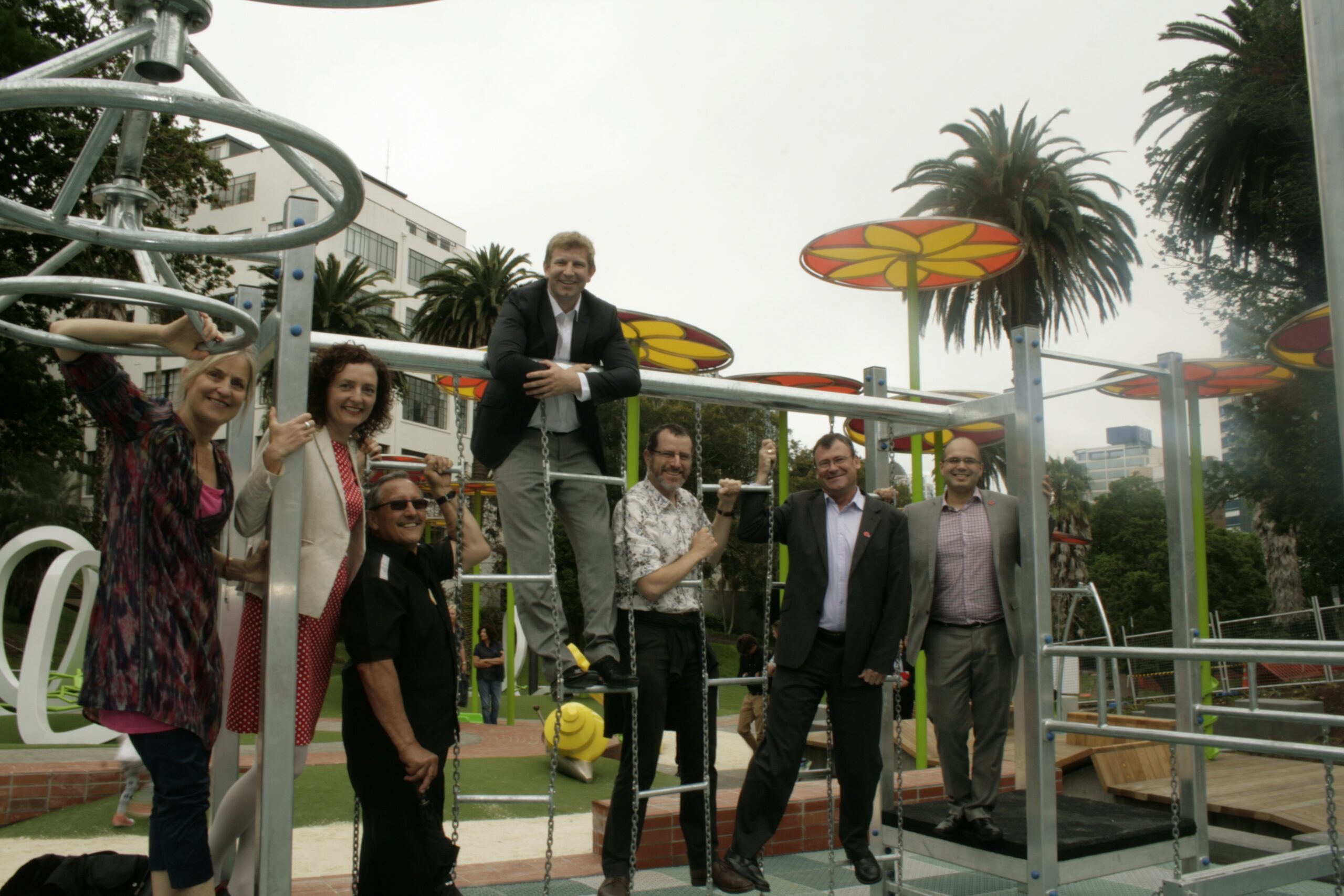
The then Waitematā Local Board celebrating the new Myers Park playground in 2014. Image: Pippa Coom.

Waimahara, the Myers Park underpass, as seen in December 2023. Image: Jolisa Gracewood. Read Connor’s post about it here.
- A multifunctional “village square” at 254 Ponsonby Road, which opened as Te Rimutahi in May 2025.
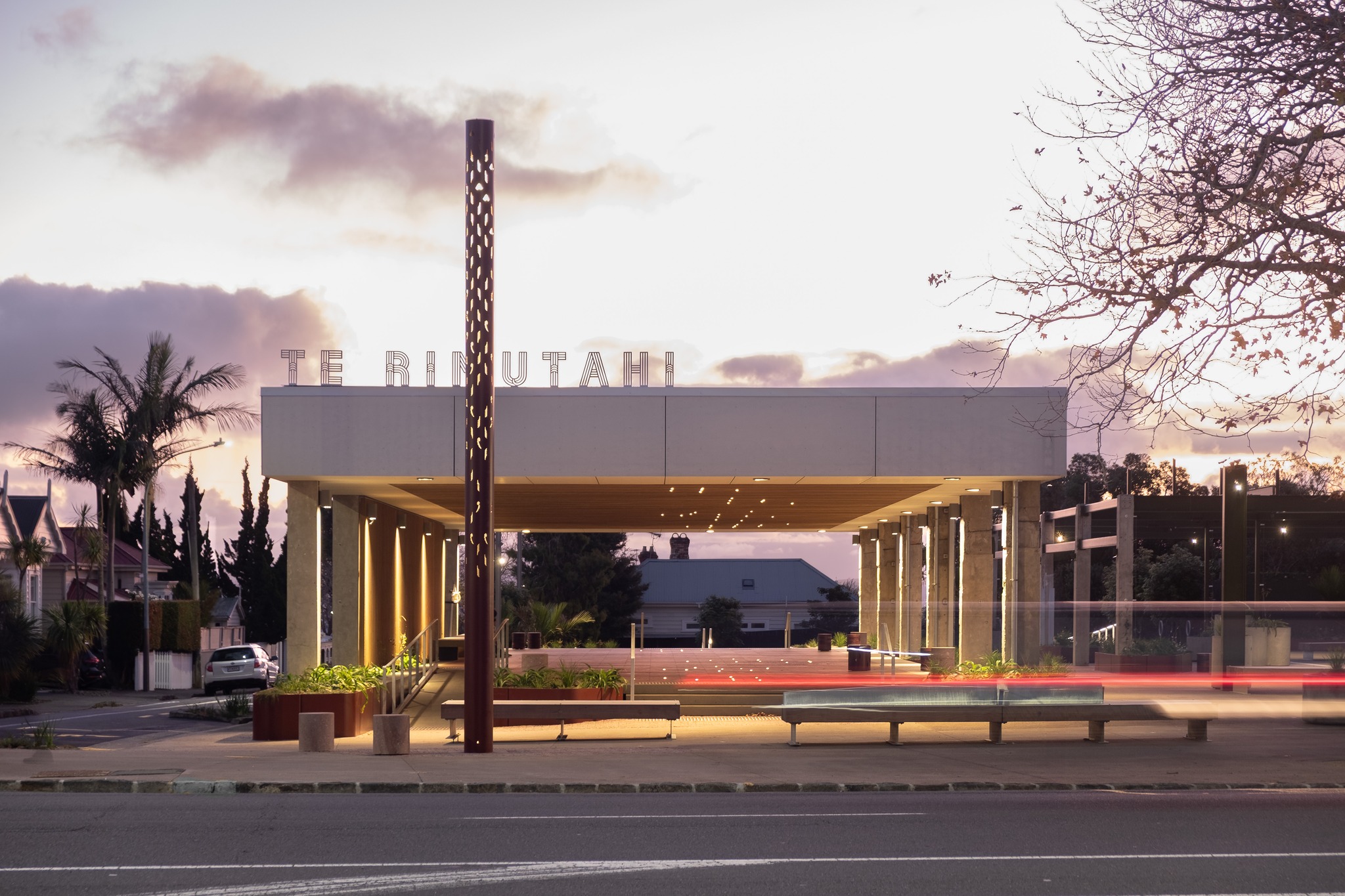
Te Rimutahi on Ponsonby Road. Photo by Sam Gould/ LandLAB.
- A community-led resource recovery centre: the Waiōrea Community Recycling Centre opened in 2023, as a joint project with the Albert-Eden Local Board, – a hub for recycling and learning, aiming to achieve zero waste to landfill by 2040.
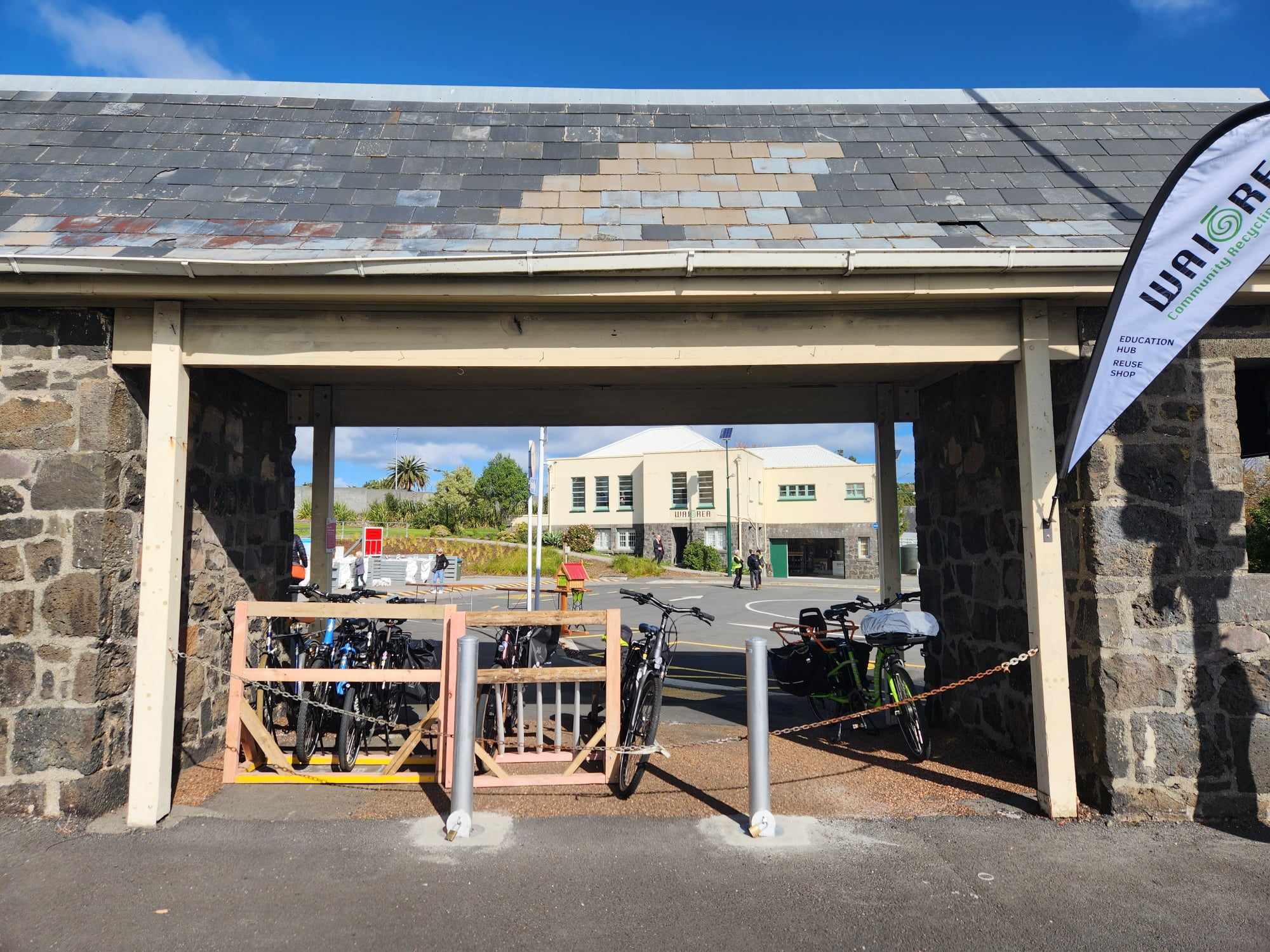
A peek through the gates at Waiōrea Community Recycling Centre at the opening event. Image: Pippa Coom
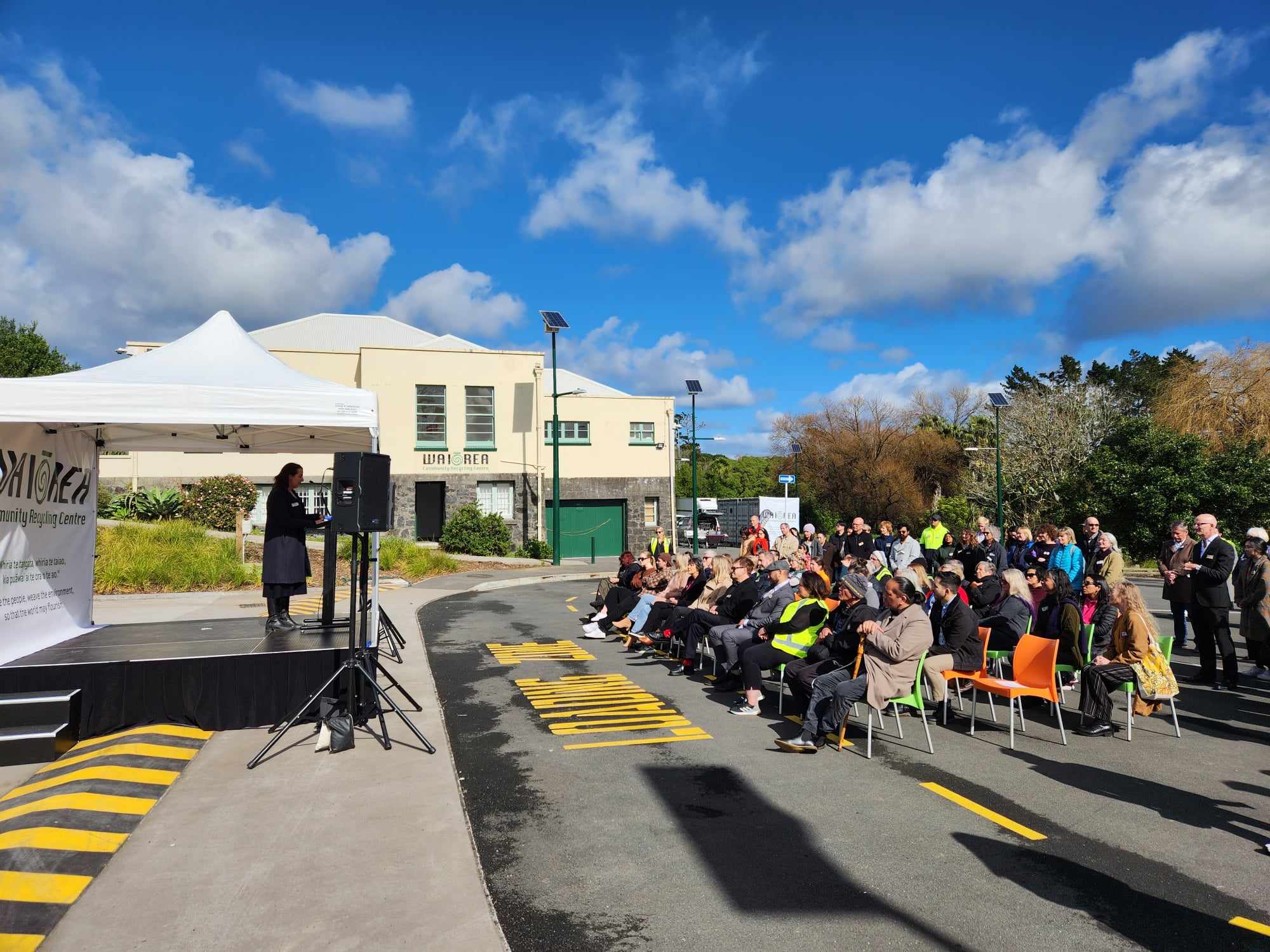
Councillor Julie Fairey speaking at the opening of Waiōrea Community Recycling Centre. Image: Pippa Coom.
- The (brand new at the time) vision of “greenlinks” for local cycling and walking. This evolved into the Waitematā Greenways Plan 2013, which continues to be rolled out via the Local Active Modes Plan (LAMP) with new connections being built as I write.
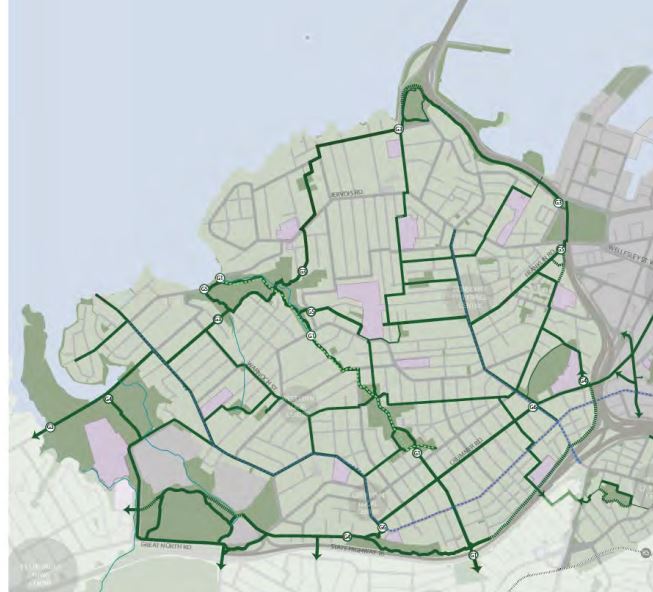
The Waitematā Local Board Greenways Plan, currently emerging into reality via the Local Active Modes Plan.
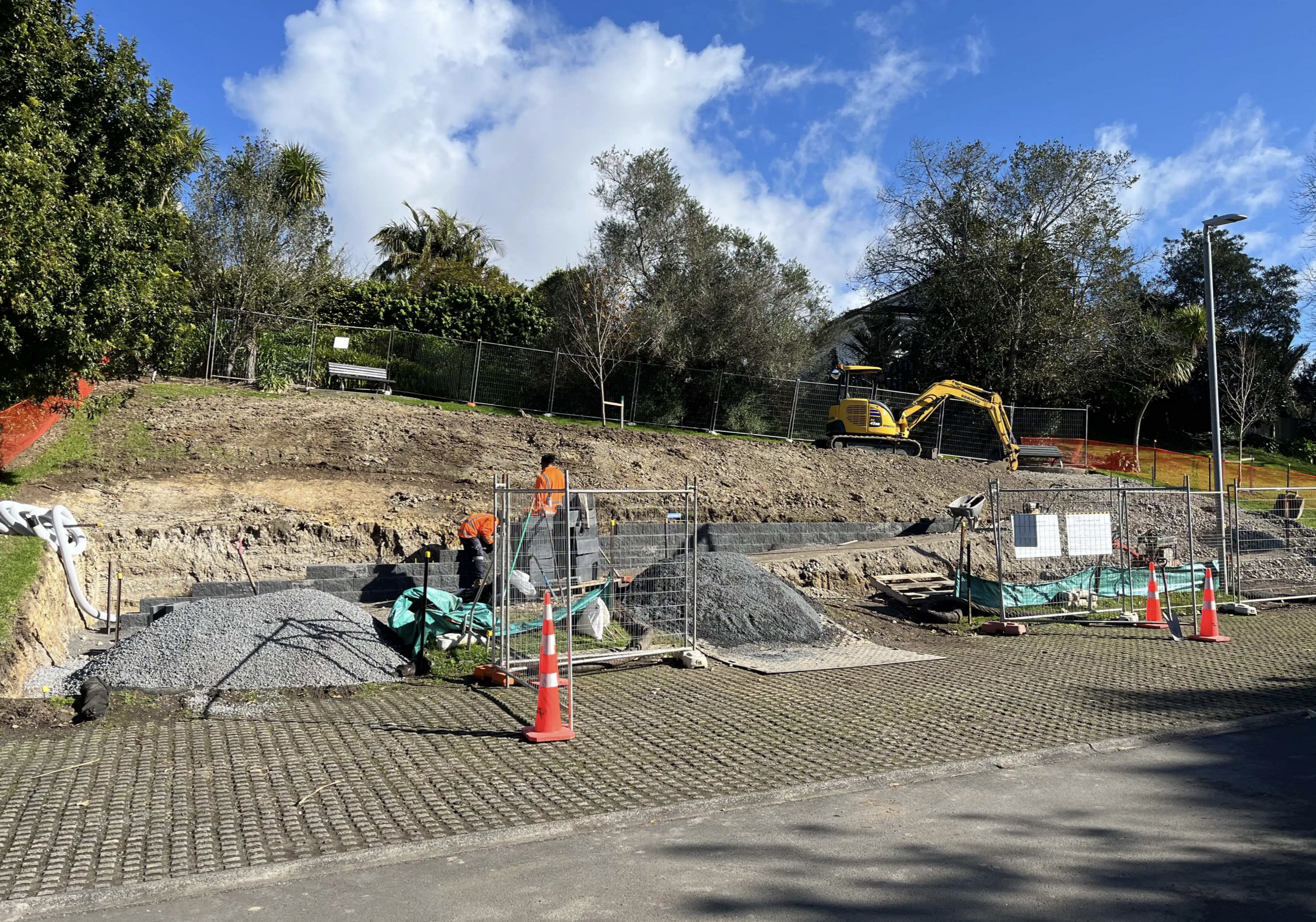
A new switchback path underway – it will provide better bike access between Cox’s Bay Reserve and Nottingham St, as requested by locals and delivered by the Waitematā Local Board’s Local Active Modes Plan. Image: Russell Brown, via Bluesky.
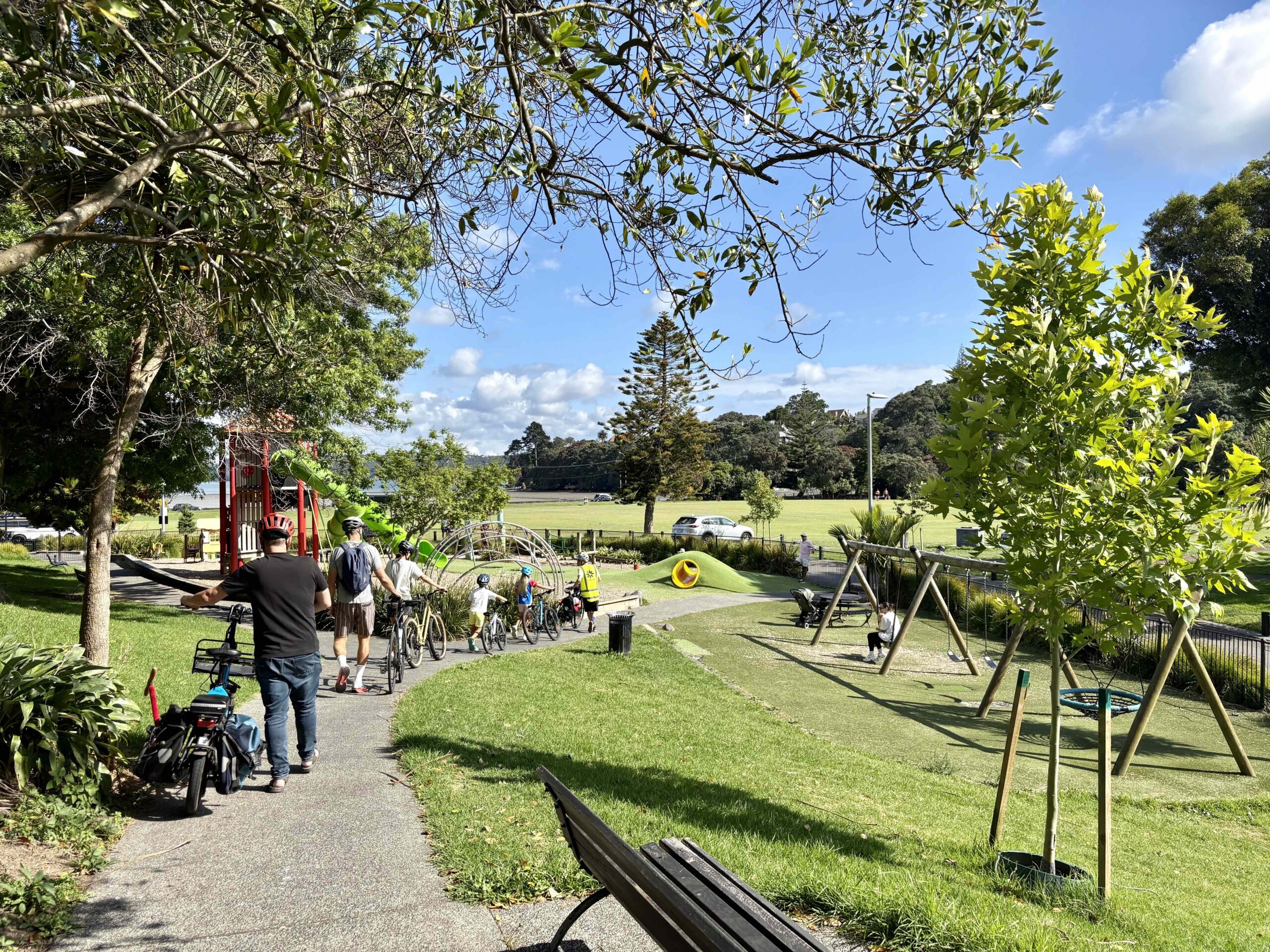
You used to have to walk your bikes downhill and through the playground, via some awkward gates… or, bomb down that grassy slope, not ideal. The new path will be much easier and safer all round! Image: Jolisa Gracewood.
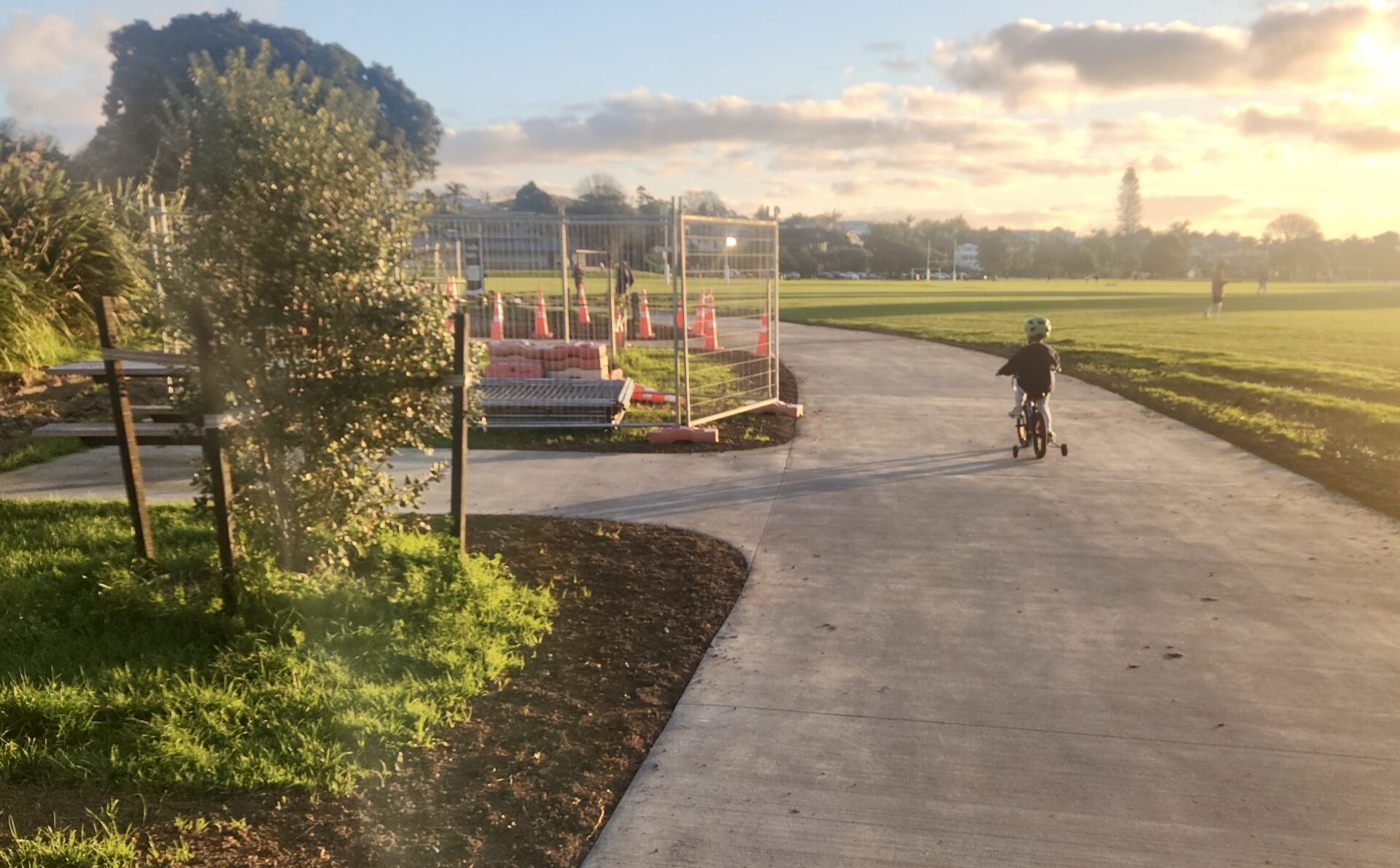
The Waitematā Local Board is also widening and smoothing the path around the southern edge of Cox’s Bay Reserve. It’s an increasingly popular link between the new paths on Meola Road and Garnet Road, and the Grey Lynn Greenway that goes through to Grey Lynn Park. Image: Pippa Coom.
- And, although it wasn’t in the plan itself, we remain proud of our contribution to the Point Resolution bridge over Tamaki Drive, which opened in May 2013. It was the Local Board who were instrumental in making sure it was beautifully designed and not just functional.
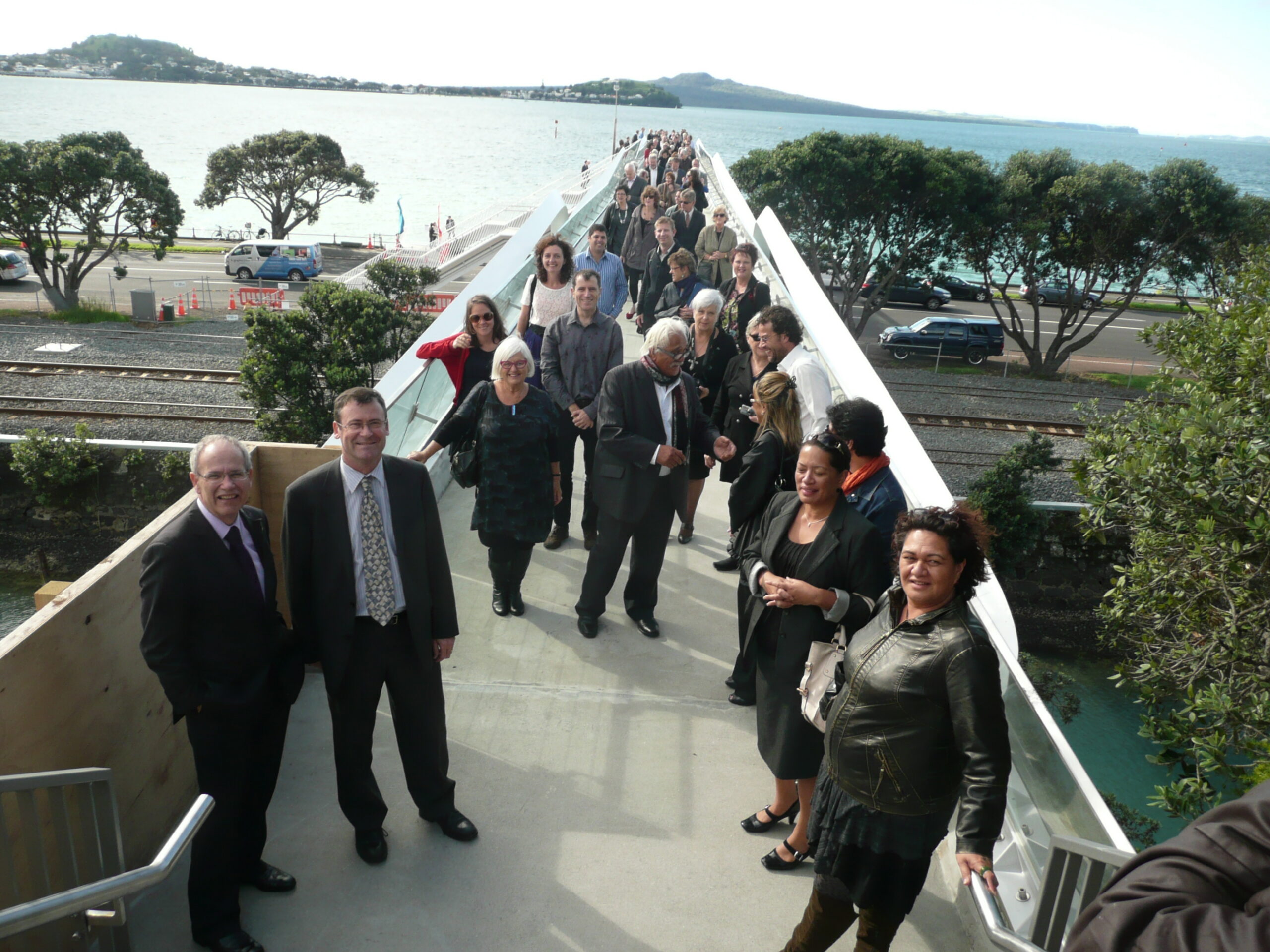
Celebrating the opening of Point Resolution overbridge in 2013. Image via Pippa Coom.
I’m also proud of how well the transport priority area of our 2011 plan has stood the test of time:
Connected, healthy transport options: Our communities will have effective, integrated transport options that are safe and people-centred.
Our list of initiatives ranged from small things that make a big difference – bike parking, safer crossings – to aspirational city-transforming goals, like being able to walk and bike over the harbour as in any normal city. (One mystery: why did we back a tunnel crossing? Forgive us! Maybe it was being touted as an affordable way to free up the bridge for active modes?)
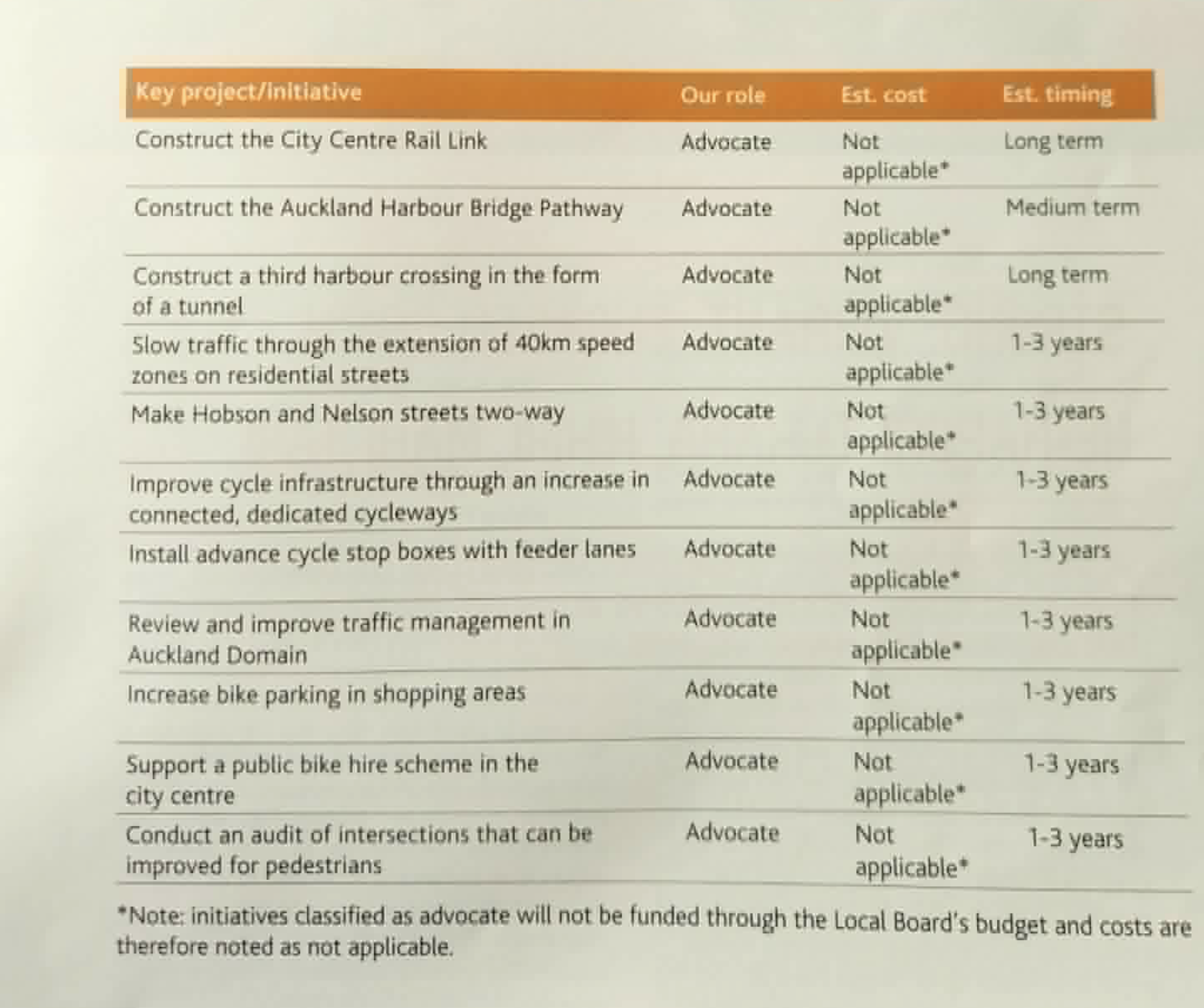
Transport priorities from the Waitematā Local Board’s first ever three-year plan. Image via Pippa Coom.
For that first local board plan, pictures were worth a thousand words. Keen to highlight our support for active transport, we asked for a photo of “everyday people on bikes”. Alas, all that could be found in the files was a shot of a lycra-wearing roadie who looked like he was being chased by a car.
Luckily we found a better pic to use, in the end. And the official photo libraries have come a long way since then!
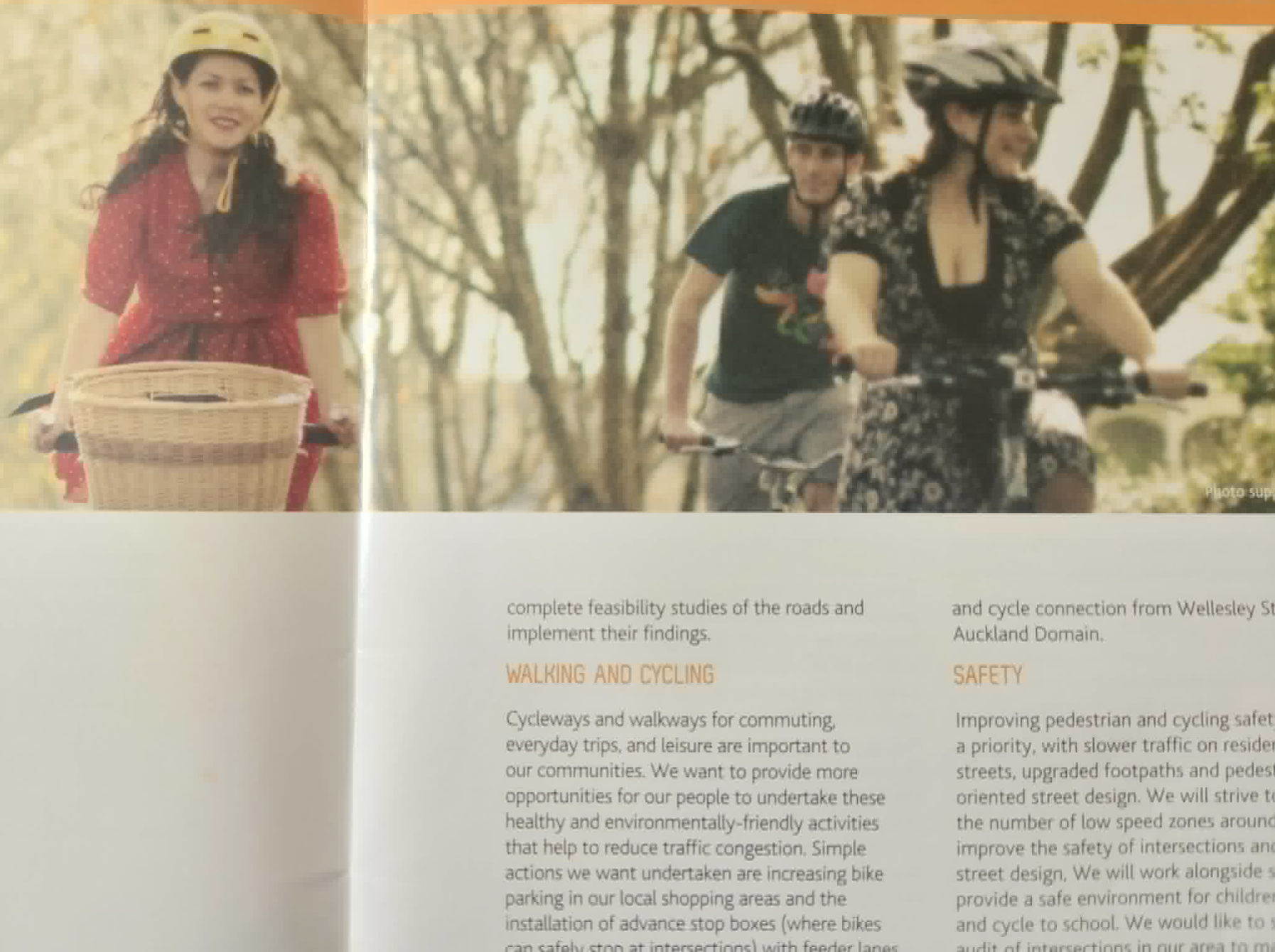
“Everyday people on bikes” – an image found for the first Waitematā Local Board plan. Image via Pippa Coom.
You might wonder: what gave us the confidence in 2011 to treat active modes as a normal thing to ask for?
It helped that – for the first time – a majority of Waitematā Local Board members rode a bike for transport. Our chair Shale Chambers was the Ken Livingstone of Auckland politics: someone who famously never rode a bike, but was a vocal supporter. (As Ken said in 2007, “Cycling is the fastest, cheapest, most healthy and environmentally friendly way to get around London.”)
We also drew inspiration from reading Greater Auckland, then known as Transport Blog; and from hearing overseas experts at Auckland Conversations events describe what was happening in the wider world; and from tracking the latest innovations and breakthroughs via social media – shout out to the brilliant StreetFilms, among others.
We wanted it all: “complete street” solutions, public bike-hire schemes, quality street design, safer speeds, connected cycleways and walkways for everyday trips, spaces for people to gather and hang out, integrated public transport that was easy to access and use, fun things like swings in bus stops, effective parking management (the late Dr Shoup influenced our thinking on this), and of course the City Rail Link.
Happily, we were in tune with the community on this, as the public feedback on our 2011 draft plan was surprisingly positive. Except for the AA, who as I recall were concerned that we “hadn’t got the balance right”, being somehow “too focused” on cycling. (For perspective, the former council’s budget for all active modes, across the whole of the central isthmus, was something around $40k per annum!)
Fast forward to today, and the current (draft) Waitematā Local Board Plan continues to build on that early legacy, now with an even stronger vision of leading Auckland’s low-carbon transport future. There is so much great stuff in the plan that I’m happy to support and want to see my local board achieve.
I remain a big fan of local boards and their three-year plans. Today’s plans may be streamlined into a common template, and share the same set of “key focus areas”. But each plan still reflects hyperlocal priorities and regional quirks, letting the diversity and delight of Auckland’s communities shine.
I’m particularly delighted to see that support for active transport and safe streets is now the norm, and increasingly celebrated. This is especially important with local boards about to take control of local streets. Long may the positive developments continue – and with your support, they will.
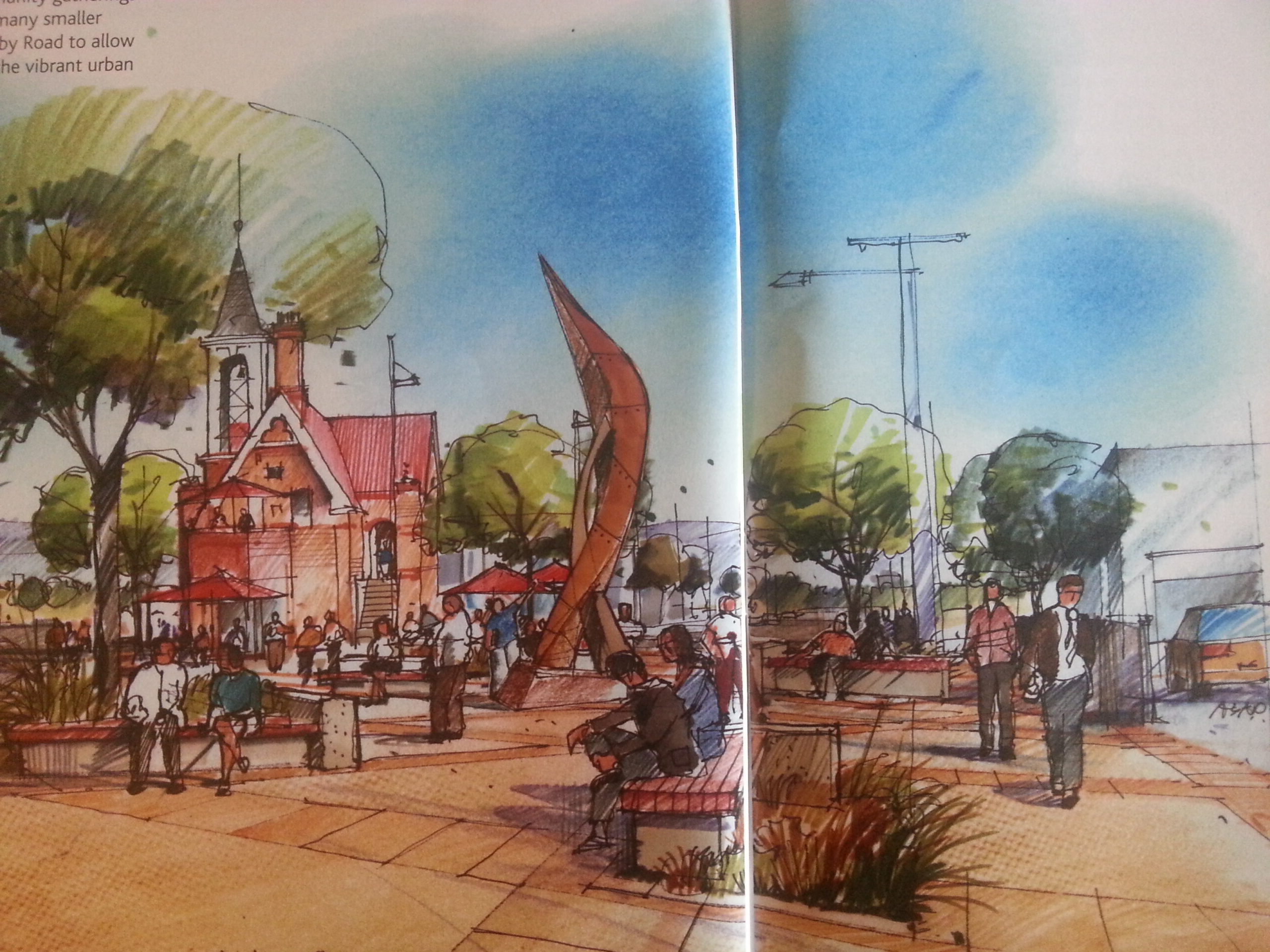
The 2014 Ponsonby Road Plan included this render of a lively pedestrian plaza, where Rose Road meets Williamson Ave. Could Waitematā Local Board finally deliver this vision, as encouraged by Patrick Reynolds here?
A question for readers: What stands out in your local board plan, for better or for worse? Feel free to share examples in the comments, to help others looking for information and inspiration!

 Processing...
This is an important post and I hope that more people act on it than have commented on it (so far, just me). Local Board officials and elected representatives do read feedback and submissions. If you want to be heard, you need to speak up.
Remember that the Local Boards will have responsibility for local roads. Do you want your roads to be managed for the benefit of Ute Man? If not, and if you’d like there to be more street trees, pedestrian crossings, filtered permeability, cycleways and other nice things, you need to ask for them. Explain why it’s important to have streets that are good for people.
Paint a picture of how you’d like your corner of Auckland to be, and help the Local Board to help you.