This summary of where we’re at was originally presented at a City Vibes event run by The Urban Room on 9th December 2025, and like all our work, is brought to you by the Greater Auckland crew and made possible by generous donations from our readers and fans.
We’re now a registered charity, so your donations are tax-deductible. If you’d like to support our work – and, what better time of year to make a gift for a better world? – you can join our circle of supporters here.
Imagine, a city
We’re a quarter of the way into the 21st century. The big whole-of-region Auckland Council is 15 years old; Auckland Transport 1.0 is dead, being eaten by its parent, as is Eke Panuku, its separate urban design and development agency.
Greater Auckland took off around the same time as the Supercity, running as a sort of unofficial parallel.
So what is this moment? Are we at an end, a beginning, or both? For the urban reshaping of our city. Are we there yet? Are we actually in this new century, prepared to leave the certainties of the previous one behind? Is this a city?
To me this is the end of the beginning. A kind of pivotal moment, an in-between. We are fully pregnant with the 21st century city, but just not quite yet full term.
Critically, the City Rail Link (CRL) is built, with the city being reshaped around it, but it is not yet running. Even so, imagine, an actual Metro in a New Zealand city! The transformation of a barely viable little freight network into a kind of Metro, even extended a little, all electrified with modern European trains and a city centre tunnel – the barely believable joy of it!
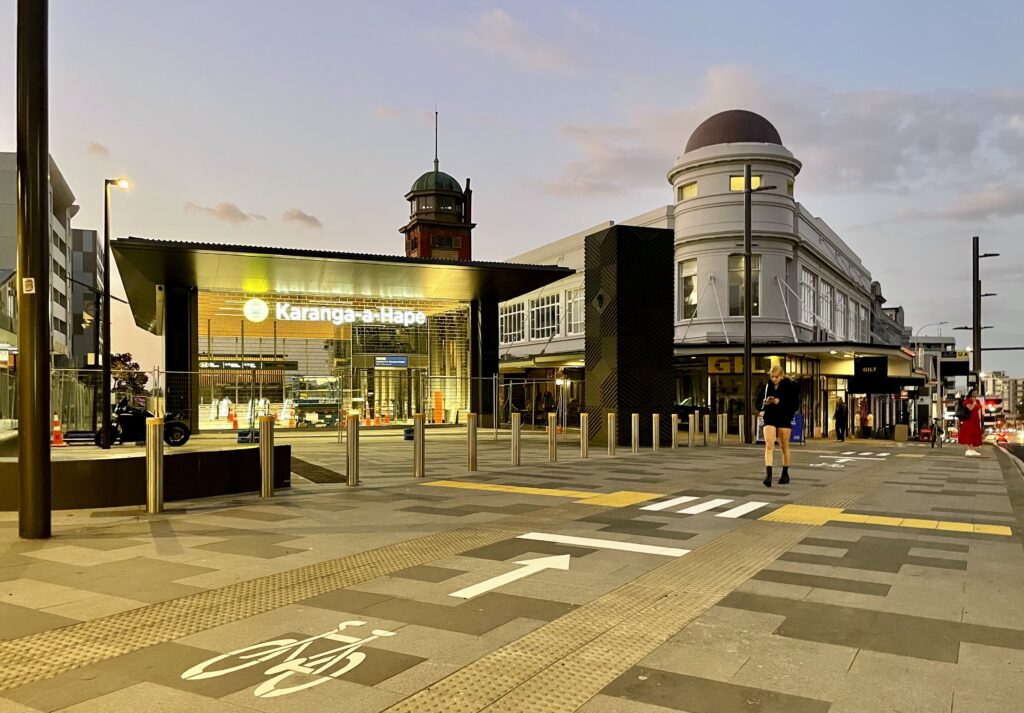 Karanga-ā-Hape Station and plaza, complete but not open, Dec 2025. Photo: Patrick Reynolds
Soon we really will have an actual high-order urban public transport system able to deliver meaningful numbers of people through our city – on a somewhat eccentric pattern, true, largely shaped by geographic and historic happenstance. Nonetheless this is new, a dislocation from 20th century Auckland. A time when serious moves were taken to close the whole legacy rail network down and pave over the thing. We had mayors and transport ministers actually pitching this. The contrast between these periods is enormous.
This partial rail network is being complemented by bus rapid transit: three major routes, two operating at least in part, and one as a ‘start-up’ pre-rapid service, with a permanent way in planning. With the three rail lines, this gives us a six route radial RTN. From zero, last century.
Imagine, a city.
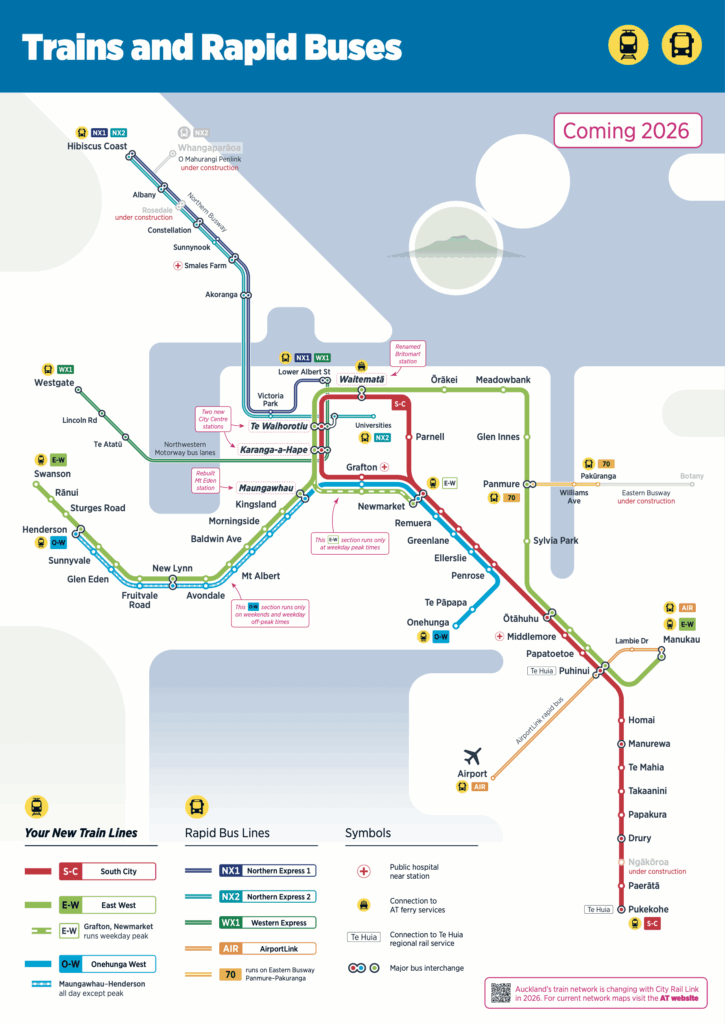
- Auckland Transport’s representation of the coming Rapid Transit Network.
Beneath this, and doing much of the heavy lifting in terms of ridership, is the balance of the bus system. It’s easily the most comprehensive, effective, and efficient in any Australasian city. Auckland now has an almost unimaginably good bus system, not just in patches, but nearly everywhere, and not just radial, but now serving cross-town routes too. Cleverly improved through near constant evolution, by some very smart, very dedicated people. Supported by wise funders and elected members (shout out here to the Climate Action Targeted Rate, set up by the previous council that delivered the latest expansion). This fact is still something of a secret, but is starting to break through.
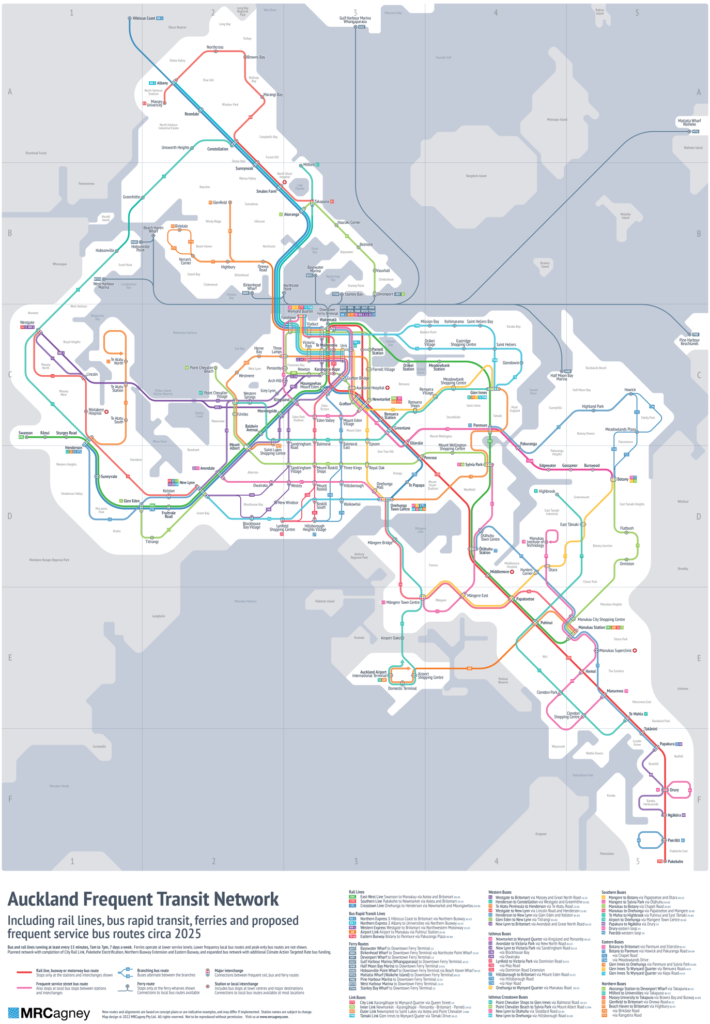
- Auckland Frequent Transit Network 2025
Electric buses are gradually replacing the loud and stinky older ones, which is a truly great thing for everyone across the city, whether they use them or not, especially for anyone who enjoys breathing. As well for those concerned about whole-of-life costs and public finances. Electric ferries are being added across the sparkling Waitematā from their expanded downtown hub too, transforming the experience of crossing the water.

- Associate Transport Minister Julie-Anne Genter and Mayor Phil Goff at an e-bus launch 2018. Photo: Patrick Reynolds.
In my view, these upgrades mean that for many journeys and most times, there are now sufficiently viable public transport alternatives to always having to drive, especially for high-demand destinations like the city centre.
Significantly this means our city is ready for the best tool to mange the scourge of traffic congestion: road pricing, known officially as Time of Use Charging. For only with sticks can carrots truly work, when driving is otherwise so incentivised.
This is a very big change, and a huge opportunity.

- Te Komititanga, outside Waitematā station. Photo Patrick Reynolds
These new public transport systems have also delivered an actual real city square downtown, where they meet. A well designed grand communal space that has instantly worked from the moment it opened, perfectly framed by the Edwardian edifice of the re-purposed Central Post Office, a public building, that looks like a public building, with a new public use, adorning a public space.
People flood this space naturally, doing everything and nothing, Te Komititanga and Waitematā Station together are an object lesson in world class civic reinvention through the marriage of well planned public services, infrastructure delivery, and high-quality design.
Imagine, a city.
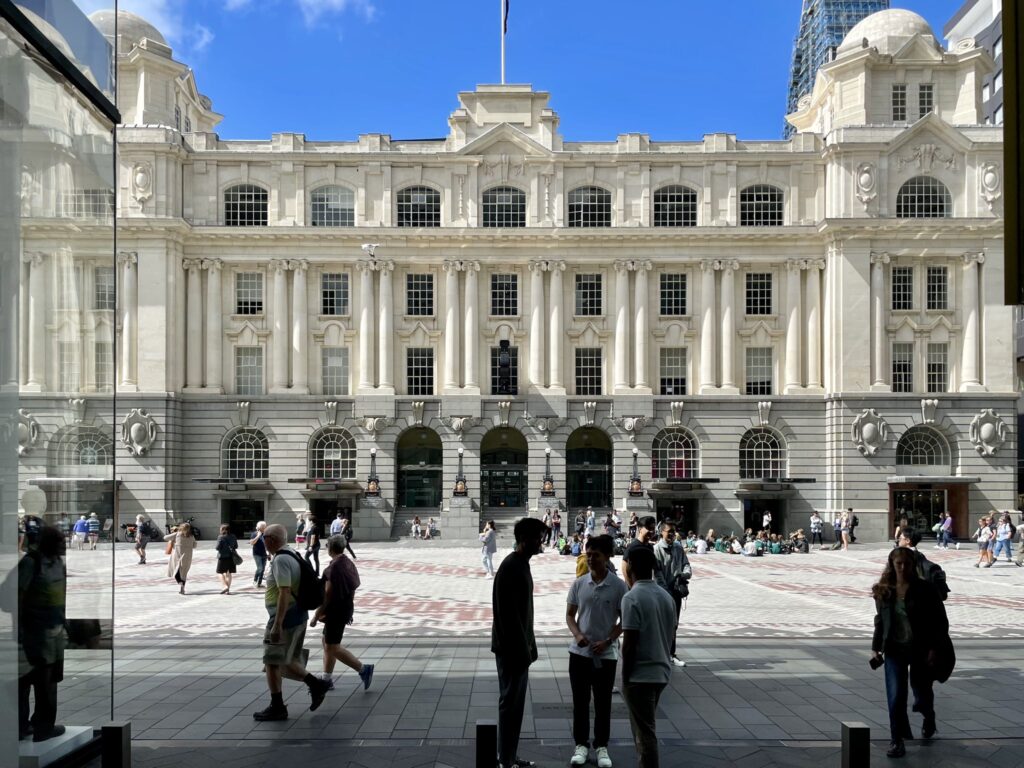 Waitematā Station and Te Komititanga. Photo: Patrick Reynolds
To me, too, the very conscious Te Reo Māori branding of these important new places is clever and valuable. Particularity is essential in public goods. Be more Auckland. Sameness plagues the contemporary built environment. What differentiates Auckland from Aakron, or Adelaide?
There is nothing that can more authentically differentiate Tāmaki from other cities around the globe as effectively than foregrounding this land’s first language and culture. Especially as it, and the dominant colonial culture, are growing together into new shapes, each under the influence of the other. Fight me.
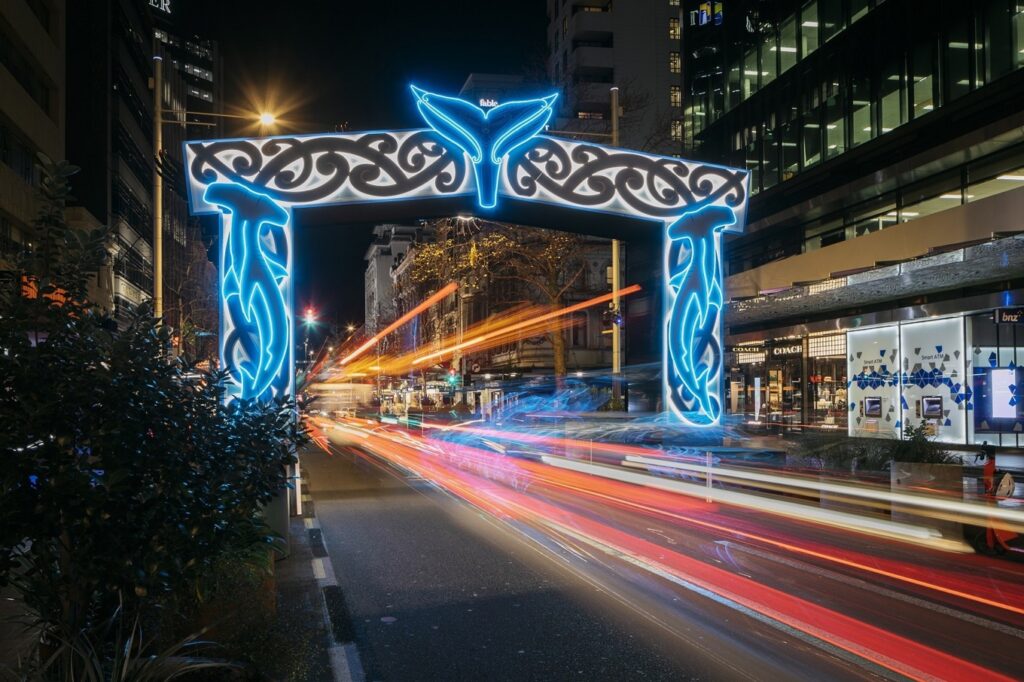 Tūrama, on Queen Street. Photo: Auckland Council
So at last our city has a clear civic heart, and some sense of itself. Somewhere obvious to celebrate, or protest, or party, or mourn, together. This is new. Auckland was literally centreless, heartless, and soul-less, pre-Te Komititanga. And it took the CRL to deliver this.
Form follows transport.
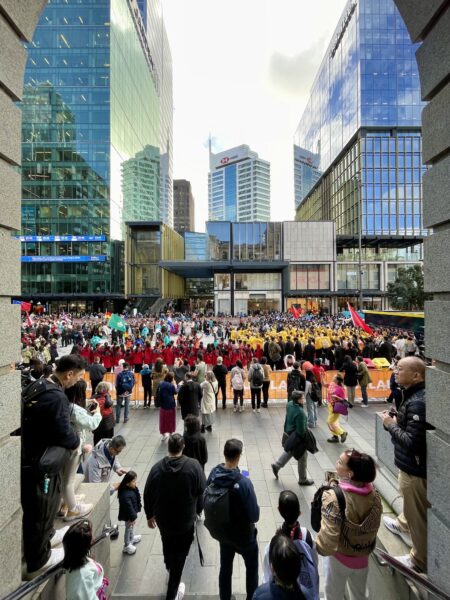 World Choir Games 2024. Photo: Patrick Reynolds
We have also added all sorts of other new people spaces, some leafy and inviting, some compact and enclosing, others long and connective. Both in the city centre, and in a number of suburban centres. We have managed to actually win back some street space from its almost total loss to motoring and parking last century.
Again, a lot of this has come with the CRL: city re-invention requires a burning platform, and in the need to re-shape streets around stations, by definition a pedestrian-first programme, the CRL provided that necessary imperative. Just as importantly, that the opportunity has been taken.
Which requires vision. To realise vision requires institutions shaped to deliver it. Here I think is the right moment to praise Len Brown’s mayoralty (including deputy Penny Hulse and others), and the Auckland Design Office, and Ludo, the individual, but also the very idea of the office of ‘urban design champion’. An office I think Auckland would still benefit from, though perhaps renamed.
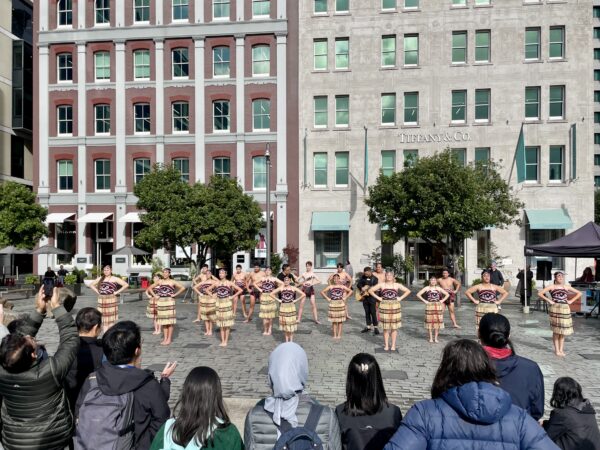 Takutai Square in Britomart. Photo: Patrick Reynolds
I have nothing but praise for the City Centre Master Plan, the enduring product of this set-up. It’s a perfectly weighted document: specific enough to be useful, but general enough to be endorsed. It hit at exactly the right altitude. It may be under attack now, yet its tangible successes are clear to see across the city. The CCMP should of course be iterated, as an evolving and learning document.
Also, we absolutely should carry out a whole lot of post-completion evaluations on all it has delivered so far. Once the CRL is open and has run for a decent period, we will be able to measure the effectiveness of the changes.
Till then, we have little reason to change course, beyond a few tweaks (e.g. the timing of traffic signals, to facilitate easy movement of people and public transport in particular). Because, even without the supporting purpose of an operating CRL, the city’s new spaces that have been completed are already self-evidently successful – witness Quay Street and Te Komititanga below where I’m speaking from.
Even though we are in a weird sort of interregnum – after the old, but before the new – there is literally every sign that the strategy of reorienting some public realm to people and place is already working here. This is best seen downtown, as this is where the supporting public transport services are already operating.
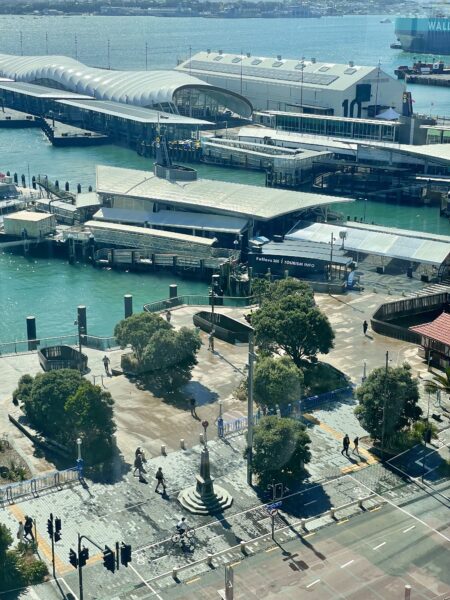 Te Wānanga, a new harbourside public space, with the Quay St upgrade, plus additional ferry berths beyond. Photo: Patrick Reynolds
What this all shows is that Auckland functions exactly as cities do everywhere across the globe. We are not special. We too, can function outside of a car. People in quantity outside of vehicles are the key economic metric for city success. The homo sapiens of Auckland are proving themselves more than capable of fulfilling this role.
Imagine, a city.
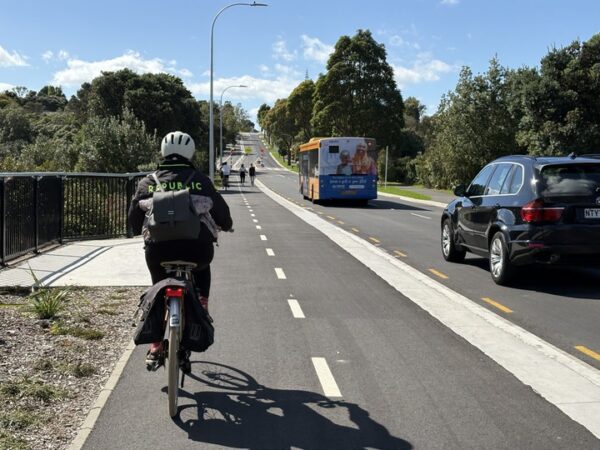 Meola Road, multimodal, functional, smart. Photo: Jolisa Gracewood
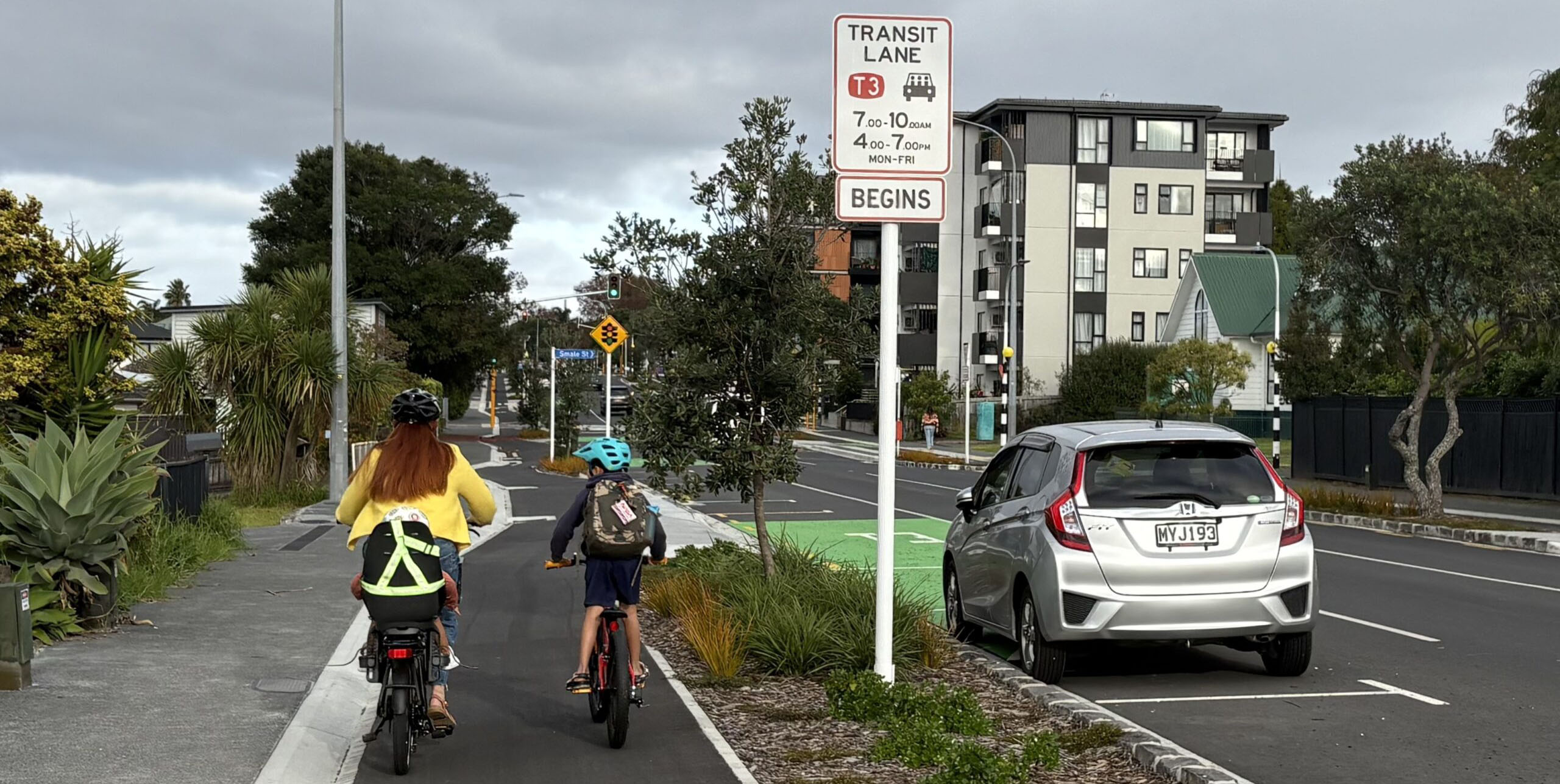 Point Chevalier Road, ditto. Nice, neighbourly, the new normal. Photo: Jolisa Gracewood
We have some dedicated bike paths, really good ones in places, I am beyond grateful for the recent Meola Rd and Pt Chevalier upgrade, for example. There are many other great little moments, including on two really important long routes, to the NW, and out to the east, which is getting a new high quality link at the moment. Were this London, they’d be called Cycle Superhighways, and branded CS1 and 2, and yes we should do that too.
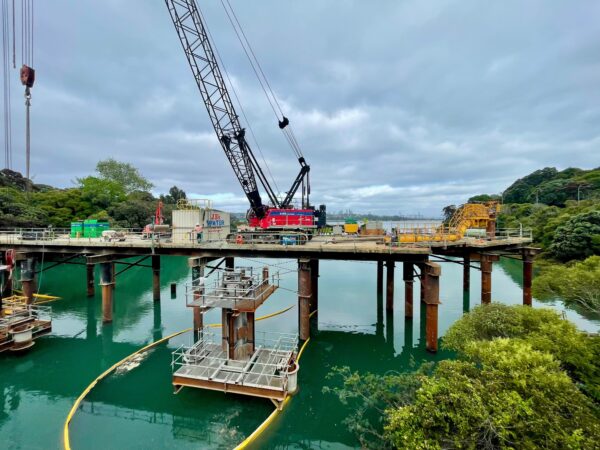 Work under way on the final connecting section of Te Ara ki Uta ki Tai, the Glen Innes to Tāmaki Drive Path. Photo: Patrick Reynolds.
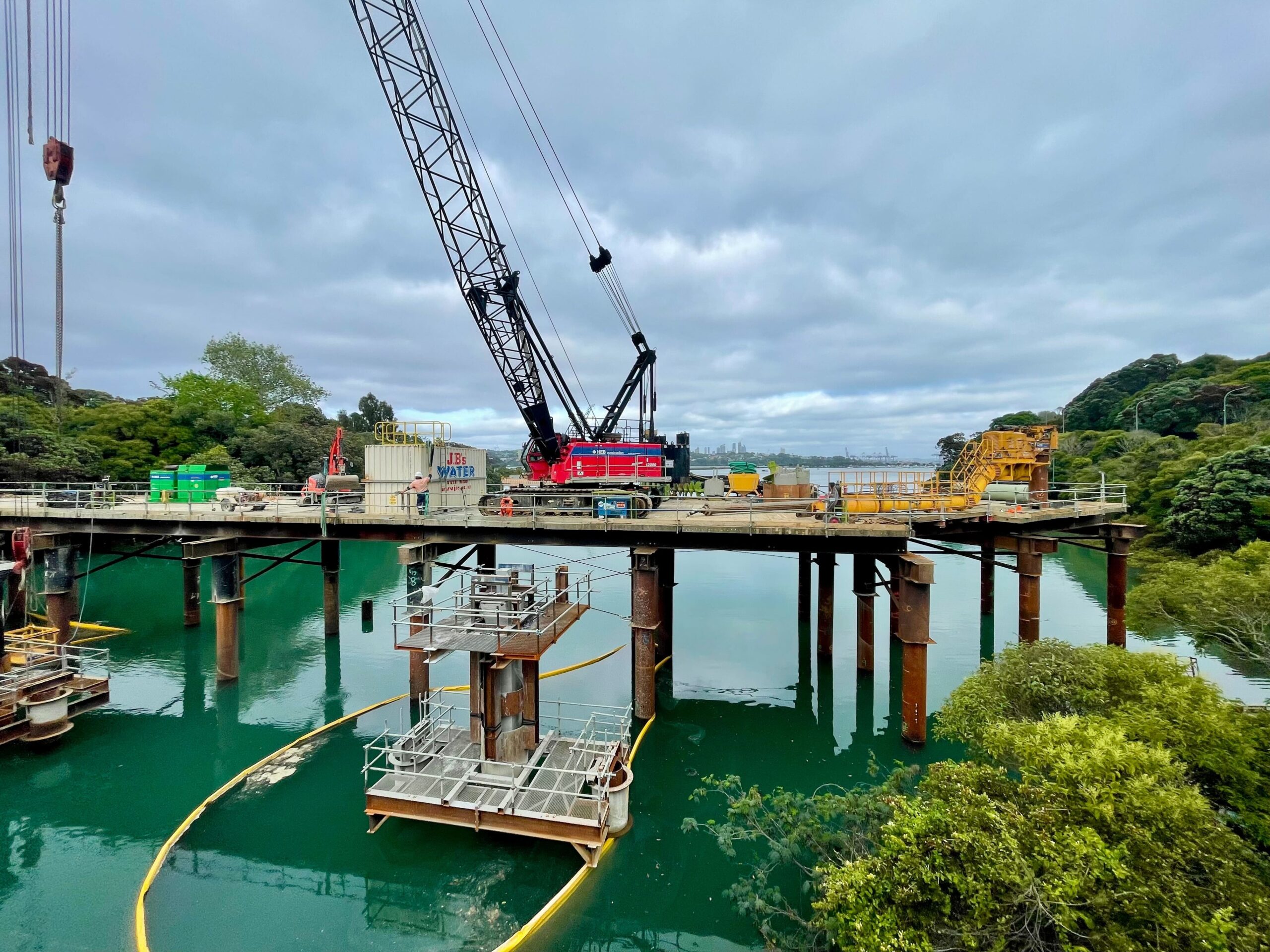
In general, this is our most underdeveloped network of all. Although – counts show that even this partial system now brings as many people into the city centre daily as the ferry system does. At a fraction of the operating cost. Truly, the stealth transport mode and place-uplifter.
Completing a minimum viable cycleway network across the city should be a near-term council goal. Bang for buck. It the cheapest missing network to add [Ed: leveraging the enormous road renewals budget for maximum value is the obvious place to start]. The capital cost of cycleways only gets higher when they are over-built [and/or located away from places people live and want to access], just to preserve absolute driving and parking priority.
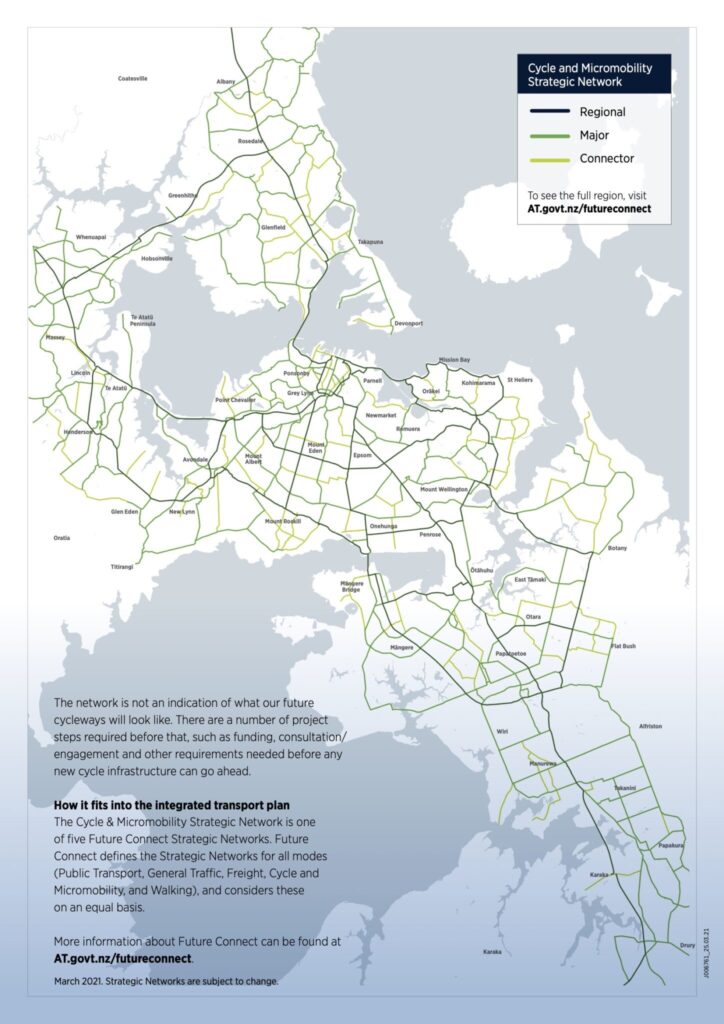 Auckland Transport’s Cycleway Strategy map: one thing to note is that every major waterway or body of water on this map is now crossable on foot and by bike… except for one.
The same is true for the urgent task of completing the Rapid Transit Network. The Eastern Busway and the in-planning NW Busway are both massive space-and-treasure-eating engineering projects. That’s because they are not transforming existing road-space, but are on new alignments, often requiring significant land acquisition and massive new structures as they’ve been directed to not only work around existing road systems, which already take the cheapest, easiest, and most direct routes – but even include their further expansion.
This is in contrast to the transport revolution of the post-war era, when the existing transport systems – and much else – were demolished to make way for the new mode. Now, we are just complementing the current dominant mode. This is the most expensive way to change things.
This point demands a deeper discussion. Here, I will just say that this is extreme rich-country behaviour. We are not having hard conversations here, especially around climate. We are attempting to fully indulge everyone – we are trying to do it all. I see this everywhere at the moment: we seem to live in an age that believes it can avoid trade-offs. Is this realistic? Have your fossil fuels and eat them too?
Form follows transport, but is also bound by regulation.
On this issue we have at last the possibility of significant city-enabling planning reform, in the form of PC120. Happily, thanks to the earlier Unitary Plan, plus some brave investors, we do have a few examples of what a more urban Auckland could be like – not just urban, but maybe even urbane? This is a big change for the advocates among us; no need to always rely on offshore examples.
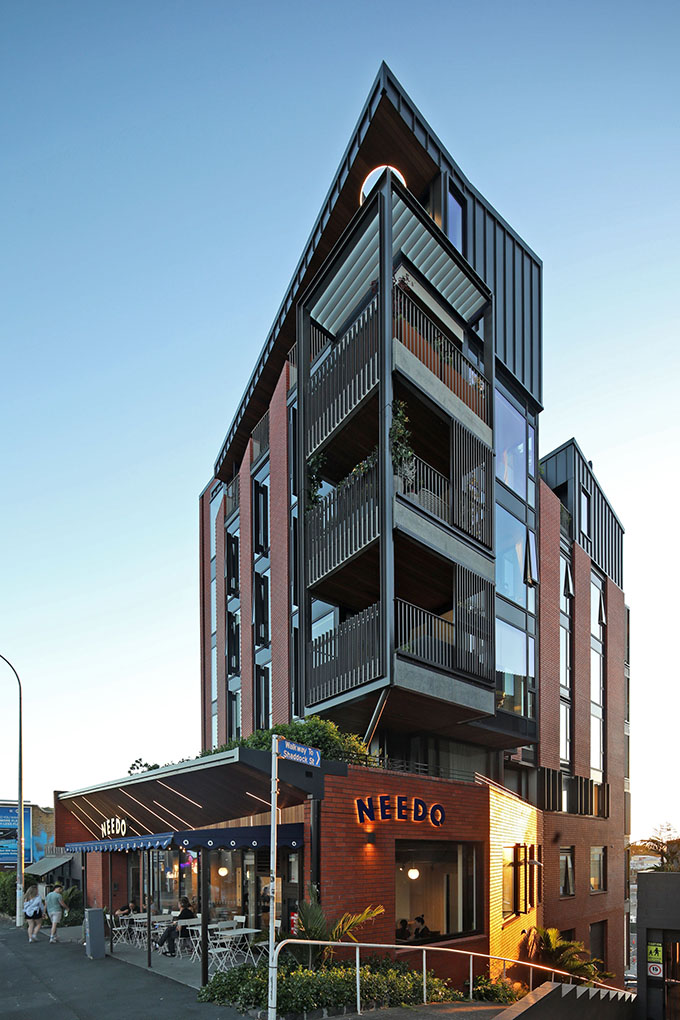 45 Mt Eden Rd ASC Architects. Photo: Patrick Reynolds
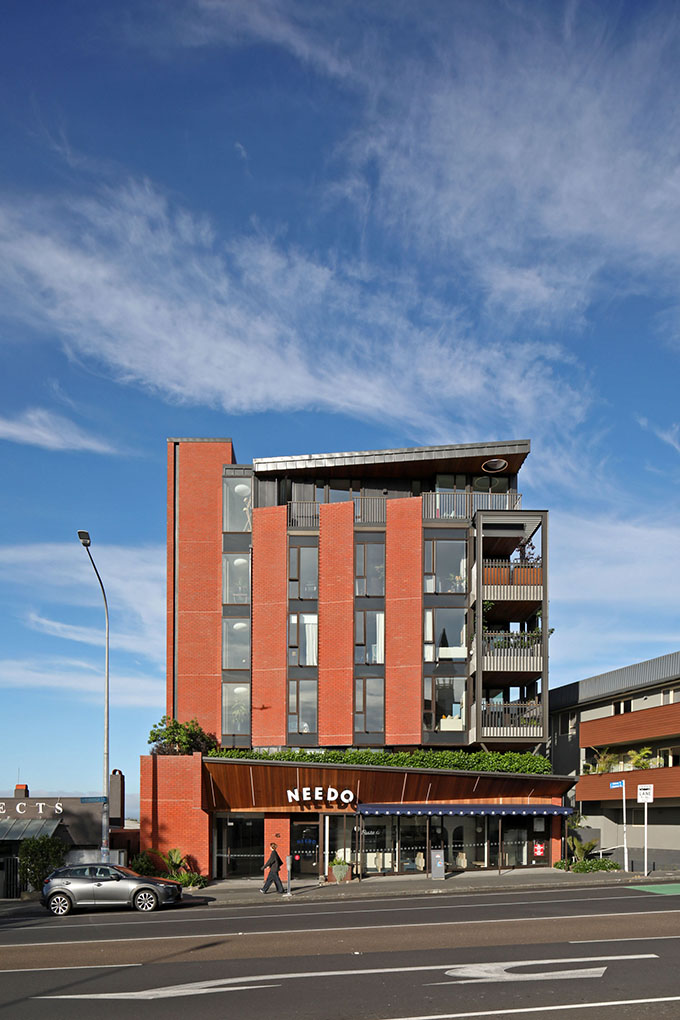 45 Mt Eden Rd ASC Architects. Photo: Patrick Reynolds
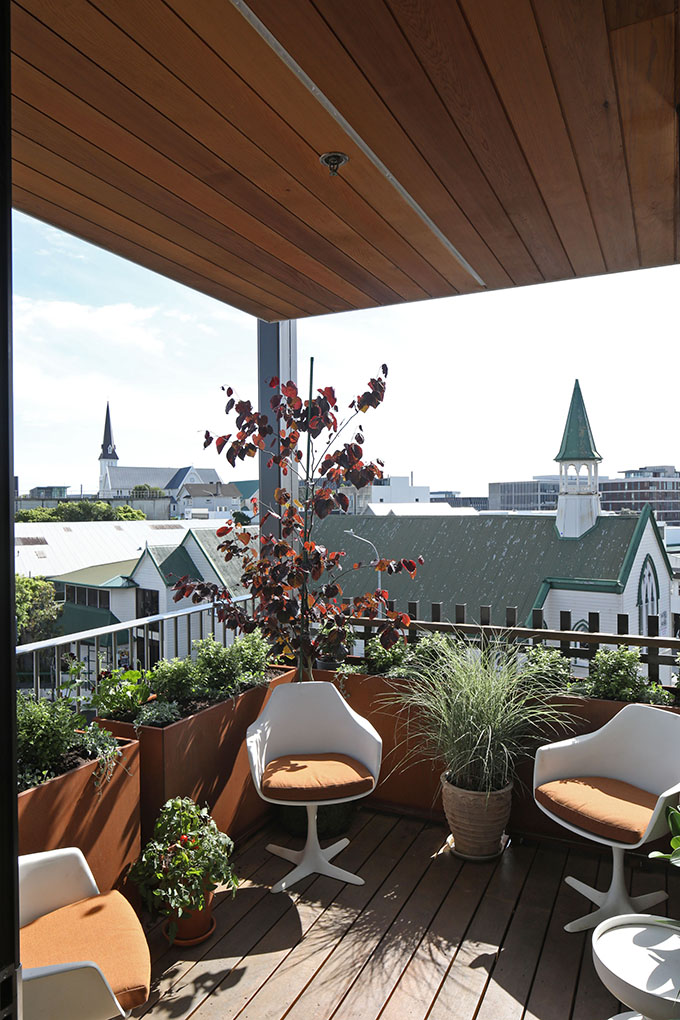 45 Mt Eden Rd ASC Architects. Photo: Patrick Reynolds
We even have in The Spinoff , and Simon Wilson, mainstream-ish media spaces and voices that discuss these things in ways beyond the tiresome tropes of Bernard Orsman’s ratepayer-funding shock-horror.
So, we can say Tāmaki/Auckland has a more varied and interesting bunch of personalities today. This is a city transformed, I feel we can proclaim this, should proclaim it now.
Transforming still, of course: city is really a verb, cities are always in a state of becoming, or declining, often both at once; they are unstable entities. That’s the dynamic and exciting thing about city life – change and the new are always there, at least as possibilities: Statluft mach Frei.
But.
This is an additive change. The late 20th-century city is still there, with plenty of momentum, sprawlling on, living bumper-to-bumper, stand-alone house to mall. Out on the edges, it is still growing fungus-like, eating more of the productive and beautiful countryside, fed by its ever expanding motorway enabler.
This is not some Etch-A-Sketch transformation where the previous city is erased and then replaced by something completely different. New skin is growing, but the old one is very far from shed. The old lizard lives on beneath its upstart new one.

Some people live largely in last century’s city still, perhaps ignoring the new city sprouting up around them, perhaps dipping in and out of it. This is to be expected. This is how change happens, outside of sudden dislocations through war or natural disaster (or unnatural ones, like what the US Interstates did to their cities).
Others, however, live entirely in the old world, determinedly unchanging, viewing anything outside of this norm as an incomprehensible outrage, a bafflement, as something no one sensible could want. Therefore inexplicable, outside of conspiracy or culture-war framing: wokeness, and always described as an appalling waste of money, their money, of course. This leaves them ranting and muttering at each innovation witnessed through their windscreen, to Hosking, et al. Some of this group are politicians. Which is also to be expected; complaint attracts attention, and gets rewarded. So it goes. Colonel Blimp.
Culmination.
So we are at a really significant point, in my view. Now, 2025/26, marks the end of the beginning. This thing is actually now airborne, and maybe unstoppable? We can more than pretend it’s a city, or imagine we could one day have one – we can actually live it.
The hardest part has been done. The start. As Keynes said:
The problem isn’t in the search for new ideas, it’s in getting away from the old ones.
Let me be clear, additive change is a good thing: it is much less dislocating, and we should retain what is valuable from the previous age – but only within reason, and if momentum is maintained. Stagnation is the alternative, and stagnant cities die. We do need to envision the future and build the necessary institutional muscle, capability and capacity, to continue the realisation of those visions.
As Thomas Carlyle said:
Go as far as you can see; when you get there, you’ll be able to see farther.
Keep imagining, a city.
Ngā mihi nui
Patrick Reynolds, The Urban Room, December 2025
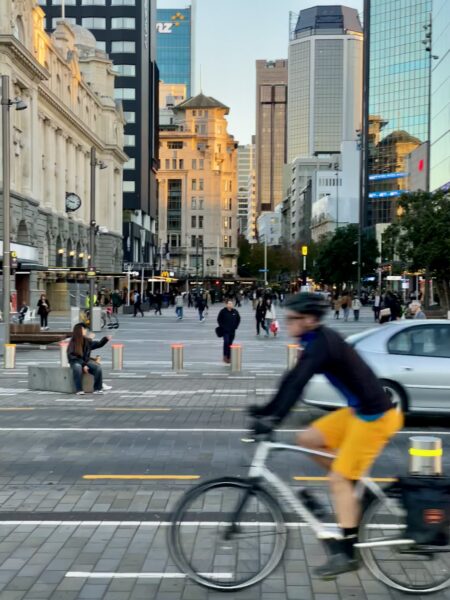 Downtown, moving, changing. Photo: Patrick Reynolds

 Processing...
Thanks Patrick for a great talk. City Vibes, The Urban Room Foundation breakfast events, will return in Febraury 2026 (second Tuesday of the month). sign up at http://www.theurbanroom.com if you want to find out more about the series.
Thanks Patrick, excellent.
I got a slight twitch when looking at your future connect snip and seeing “March 2021”. Its a bit like disney’s Futureworld with passenger submarines and monorails, a view of the 21st century from such a long time ago. Time to fund micromobility, like the AMC – Active Mode Corridor between future growth area’s Drury, Paerata and Pukekohe removed just before the new 15000 strong campus was announced along it. Future connect didnt signal its arrival, or its removal.
The photo’s are interesting, but we truly have embraced hard concrete infrastructure, like we’ve yet to subdue NZ’s wild natural environment, but here in the city – we have. Time to give action to an urban ngahere strategy, while our cities are still livable for trees to grow.
Im looking forward to a city i want to live in and visit the center of, in a fast changing world.
“The only way to hope is to hope big” – Winona LaDuke.
“Out on the edges it is still growing fungus-like, eating more of the productive and beautiful countryside, fed by its ever expanding motorway enabler.”
Beautifully put, Patrick. Halting sprawl is the most critical step towards creating a city of opportunity and health. Continued sprawl undermines all our other efforts.
Patrick, your vision is much more energising than that of the Leader of the Opposition, Chris Hipkins:
“We’ve had a series of governments now who have encouraged people to be aspirational for New Zealand….I don’t think we can afford to do that anymore.”
Talk about giving up without a fight, Chris! People need to believe in something. Leadership means giving them a reason to believe.
https://www.rnz.co.nz/news/political/581766/chris-hipkins-promises-different-labour-opportunity-to-stamp-my-own-mark
Full quote:
“We’ve had a series of governments now who have encouraged people to be aspirational for New Zealand and have promised things that have been completely unrealistic. I don’t think we can afford to do that anymore. I think people will lose faith in a whole democratic system if we see politicians continuing to do that, I’m not going to fall into that trap.”
Note the “completely unrealistic” comments. tunnelled LRT fell into that category, look forwsrd to him reverting to the more realistic surface level option.
I hope he does this, but I worry that the need for an improved harbour crossing will push that boat out.
Look to Toronto if you want to see what surface-level LRT gives you – a slow and infrequent tram.
Thanks so much for everything you do, Patrick.
With our bus system getting so much better, does it do away with the need for light rail?
Not in my view.
This post is focussed on ‘the vision thing’, relying on what we newly have, and nearly have, I do hope it’s clear I’m not saying the city is finished.
The post does ask for a ‘what’s next’ follow up. Clearly there is a huge void in the Rapid Transit map through the isthmus and Mangere, among other things.
In my view that should be first, and by first I mean immediately, be filled with a pre-RT BRT-lite bus service. While surface LR Queen St to Mt Roskill is planned, designed, and funded.
I knew I had written about this somewhere already:
https://www.linkedin.com/posts/patrick-reynolds-4946ba22_below-is-the-official-rapid-transit-plan-activity-7379693527812919296-sEJr?utm_source=share&utm_medium=member_desktop&rcm=ACoAAAS7KTAB4aQh_v3k1npAjZM3wt7qYbDr90A
Light rail (i.e. trams) are for local trips when buses run out of capacity. Some of our buses are going to run out of capacity, so they’ll be replaced by trams then. Trams are great for local trips with lots of stops/people, but they do trade off speed for this.
For area to area transport, we’re starting off with buses (e.g. NX1, WX2) and once they hit capacity they’ll move to either light metro or heavy rail, they’re not good for frequent stops, but they are good for large numbers and relatively fast speeds.
And thank-you Stephen!
What stands out to me as missing is the lack of pedestrian/cycle facilities on the harbour bridge.
Yes. Glaring deficiency.
Yes. Liberating a lane would be a big step forward; demonstrating the network-wide benefits of road space reallocation.
Liberating a lane on the bridge. Completing Airport to Botany busway. 24/7 bus lanes on the major routes. Add in green public spaces for Captain Cook and Marsden Wharves, and Shed 11 going back to replace the Cloud. A rejuvenated Aotea district with the ToD going in above the new station.
Could all be done by 2030. Imagine that.
The other biggie is a city-wide low traffic neighbourhood programme. It could also be delivered quickly.
As for the Airport 2 Botany project, a major rethink should lead to reallocating traffic lanes instead of widening at intersections. This would have considerable network benefits. Had they done this earlier, they could have saved hundreds of millions of dollars.
The important point is that they need to make the shift away from “predict and provide” ideology, which leads to road widening (eg Carrington Rd) or prevents proper reallocation (eg Greenlane West), and start using up to date “decide and provide” design methods. It’s much cheaper, quicker to deliver, and delivers (some of) the safety improvements and VKT reduction we so desperately need.
Yes and low traffic neighbourhoods would lead us to reallocating road space to PT and Active modes ( start with the NW Busway)
Does A2B need road widening? Doesn’t te Irirangi Drive habe a massive median precisely for this purpose
It does, Kraut, and they’re using that. I haven’t seen what they’ve been doing since this government came in. But under the last one, they were still insistent that in addition to the bus lanes they needed two traffic lanes and multiple stacking lanes at each intersection. I think the way they looked at it was that the widening was needed to fit bike lanes.
I put in a lgoima about it a few years ago, which was bounced between all the organisations for some months before anyone would answer it. It basically showed that the design was ruined by an ideological refusal to accepting traffic evaporation exists.
… two traffic lanes *in each direction*…
Te irirangi does have a median but it is only 1/3rd of the A2B corridor.
Why do Aucklanders hate The Cloud so much? It’s a cool (if underused) building on the waterfront.
The Harbour Bridge is quickly approaching the end of its life and, frankly, isn’t a nice enough bridge to spend money to preserve. I hope they demolish it and replace it with a better one that can have space for both transit (dedicated) and walking/cycling.
The “CRL” is a joke! The Chinese built one of the largest railway stations in the world, over multiple levels, in less time than what it has taken to build this STILL unfinished project. God help us if a decision is ever made to build a subway to the North shore!
You may be surprised at how long some of us (and their predecessors) have fought for that one. I won’t claim that it isn’t frustrating when good things take (too) long, but that doesn’t make the CRL itself a joke. Comparing us to China isn’t always helpful – we don’t have an autocratic govt (albeit ours is certainly trying to speed up infrastructure delivery – of motorways), and we don’t have the population and concentration of funding to throw money at priority projects like a country that has nearly a fifth of the world’s population.
So yeah, could be faster. But that’s not the same as “it will be bad”.
Not a joke, but it has taken far too long with enormous disruption to the city centre.
There sure is a stark difference between the aesthetic appeal of older builders and those that have been built since the latter half of the 20th Century.
One for Auckland to grow in its sense of itself is for designers, developers and planners to realise that it is past time for globalised minimalism to do-one.
This is where I think I share some of the author’s enthusiasm for the potential of biculturally informed design. Some of this has been previewed in the designs for the new Karanga-a-hape and Te Waihorotiu Stations (although fundamentally these are necessarily functional and dull builds).
Maori motifs and traditional Eurocentric designs seem to be quite sympathetic in many ways (particularly if you traces Eurocentric designs through the Art Nouveau and Arts and Crafts movements). The same as probably true for the cultural designs of other cultures (and anything beats another glass and steel box).
If implemented on a grand scale, one interesting challenge would be avoiding the risk that one culture’s motifs were simply tarting up the other.
The but network has gotten much better in the past 15 years, but not unimaginably so.
The North Shore (and probably some other areas too) have a lot of room for easily imagined improvement.
https://wrongsideofmycar.blogspot.com/2022/03/the-isthmus-buses-really-are-better.html
We *almost* got that cross-town between Birkenhead and Takapuna, except it goes to Akoranga which is a much less central bus station than Smales Farm.
The entire thing is indeed quite easy to imagine, but I will believe it when I see anyone coming up with a reasonable cross-section for Glenfield Road.
The NX1 and NX2 could certainly do with more frequency. Especially to the HBC.
This is a wonderfully elegant and intelligent piece. Quite possibly the best urban piece I have read in this country, at least for a long time.
But, I will put something out there that perhaps won’t win me many fans, here. And that is, in light of PC120 and RMA reform, I think there is real value in some of our areas of special character. Yes, it’s European heritage and perhaps that isn’t trendy. Yet, we are a melting pot, and the article talks of Edwardian magnificence as well as rich indigenous traditions.
I really really wish we could move beyond ultra polarised and un-nuanced arguments and realise that there is a balanced middle ground.
Perhaps I hope in vain.
There is real value in some of our special character areas. The value is tge clusters of buildings representing specific eras of development. That value is almost always a single street or a single block on a single street. The appropriate way to protect them is proper heritage protections for those properties, not special character rules designed to prevent affordable housing nearby with no protection at all for the heritage value of the heritage homes.
Oh what utopian joy funded mainly by those who will never use it, but for “public good” – this is a golden opportunity for taggers, fare dodgers, driver’s strikes and [offensive language deleted] conned into thinking CO2 is poison etc. An ongoing drag on tax & ratepayers throughout NZ. Nice one
At high concentration CO2 is a poison. I wouldn’t recommend testing this if you don’t believe it.
And if he hates things for public goods which most will never use, wait till he hears about the roads, footpaths, libraries, swimming pools…
I’d like to know where he lives, so I can whinge about his subsidised roads that I (and “pretty much everyone I know!”) will never use. Its a disgrace, this “society” thing. A disgrace I tell you.
‘Particularity is essential in public goods. Be more Auckland’
eggsellent!
Lovely piece Patrick! I’ve thought for a few years now that Auckland is growing into a ‘proper’ city, it is certainly exciting to see what comes next. Every time I am in the CBD I wonder about the carpark on the corner of Abert and Victoria Street West (Elliot St carpark). In my view it is the perfect place for a large inner-city park. The sloping topography means the carpark could simply be covered with a massive concrete lid (strong enough to carry enough soil for plenty of planting) – It would be a fantastic project for our best Landscape Architects. I know there is a plan for a green network down Victoria Street, connecting Albert and Victoria parks, this would serve to enhance that network. I know the council doesn’t have the cash to buy such large plots of CBD land, but what a shame it would be to miss the opportunity. This is the blog post where we dream right? What do you think?
Turning that area in a public space will add more character to the mid-town area, which desperately need a better vibe.
Perhaps getting surface level light rail on Queen Street (like Melbourne or Sydney) and revival of some big commercial buildings like Smith & Caughey’s and IMAX cinema complex will make mid-town more attractive again to businesses and visitors.
that’s actually not a bad idea if the NDG Tower proposal can’t be resurrected. A plaza-of-sorts for the north end of Te Waihorotiu Station.
something that maybe even miffy might concede to calling a park.
Great post, and great to see in the current push towards building more roads, there has been lots of positive change on PT in the city over the last 25 years. On cycling, one thing I’d love to see in Auckland is a cycle hire scheme like London’s Santander Cycles. These work brilliantly for short trips and add a huge convenience factor to being able to cycle. I imagine it’s not the cheapest thing to setup but seeing how much they are used in London it would seem like another effective way to get people to use the cycleways.
Patrick, I was a junior designer many many years ago when I first encountered your urban photography (which was often used for Auckland Council marketing material). Your love of Tamaki Makaurau was evident then and your passion for urban renewal is even more vivid and powerful now.
Thank you for being a true believer for this city, and for your steadfast vision of everything Auckland could become and is transforming into as CRL come into fruition.
What this city needs more of is more determined creative and intelligent people to continue pushing civic love and pride forward, and I’m thankful we have champions like you leading the charge. Kia kaha.
Allen thank-you!
Trying to sing it up, I do believe we can make it so.
A city thrives on aspiration, imagination and passion!
Queen Street has become a ghost town
No more Office workers or shoppers on Queen Street you find beggars everywhere harassing people for a dollar specially the homeless. Its not safe to walk late on Queen Street as youth Gangs are out to rob people or stab them
if you went into the central city for once, you’d be proven wrong, but i understand that evidence is triggering for you and you’d rather try and fearmonger everyone into listening to you.
Sincerely, a young person who hasn’t been robbed or stabbed on Queen Street.
William it’s true there are no girls from the typing pool, or elevator operators, or newspaper boys, or haberdashers, or any of the thousands of workers with city jobs of yore, spending their schillings on pints of flat beer in awful slop houses or dreamily window-shopping crinoline dresses in department store windows on the one late shopping night of the week.
But nor are there gangs of knives wheeling youths roaming the mean streets of downtown Auckland. So funny, you really need to leave Howick or where ever you are just once to see what the actual world looks like… cities change, well successful ones do, to keep up with the changing world.
PS there have never been more jobs, more residents, and more shops in the city centre than now.
The city was absolutely heaving on Thursday and Friday and as I have mentioned before, a huge number of people (non gang members and homeless) milling around as late as 10:30pm on Friday.
Maybe William meant Queen St, Palmerston North?
Would be keen if William can clarify if he has been in Queen Street, CBD recently. Even better if it was in the last few weeks when we had such a pleasant stroll down Queen St to Waitemata Train Station Square, then all along the waterfront to North Wharf. There was joy, and people from all walks of life were enjoying a beautiful Auckland summer evening.
There is, in fact, a haberdashery in the Auckland city centre, replete with haberdashers.
You can always tell someone who just listens to Newstalk ZB from their car in the suburbs and never actually goes downtown…
Thankful for commenters like Burrower who show the next generation of Aucklanders with civic pride will be the key to Tamaki Makaurau’s revitalisation!
Fearmongers and soothsayers, please devote your energy elsewhere.
+1
Thanks, Allen.
Factor in grass, trees and gardens, this needs no imagination.
Andrea
The sooner we grass Captain Cook and Marsden wharves, now that they are back in public control, the better.
The big park planned for Wynyard Point looks great, but its a concrete jungle to the east of the CBD. A green park on these wharves would bookend the city centre waterfront nicely.
Love this article! It would be great to also mention the impact of the Unitary Plan on house prices, and how (relatively) affordable it is to live in Auckland these days, thanks to freeing up of land for development. We are now viewed as a case study for other cities looking to manage house price growth. Desirable and relatively affordable – double whammy!
Great stuff Patrick. Love the positive attitude, and informed.