With the cost (and the value) of CRL in the news recently, we’ve gone back and dug up this post from Matt a few years ago in 2023 on what CRL brings.
The City Rail Link has been in the headlines a bit recently so I thought I’d look at some of them.
First up, yesterday the NZ Herald ran this piece about the ongoing costs of the CRL.
Auckland ratepayers will be saddled with an estimated bill of $220 million each year to run and maintain the $5.5 billion City Rail Link once it opens in 2026.
The costs are outlined in more than 1000 pages of just-released documents for an extraordinary budget committee meeting on Wednesday where Mayor Wayne Brown will present his first “Mayoral proposal” for a new 10-year budget.
Bernard Orsman has always put quite a negative spin on news about the CRL and as usual from him you have to actually read down to the middle of the article to get the real details.
A summary table of the estimated annual costs to the council shows ratepayers will shell out $160m in interest on loans to build the project, $41m for depreciation, more commonly known as wear and tear; and $64m in operating costs to run the stations, extra rail services the project will enable and track charges from KiwiRail.
These costs come to $265m, but the net cost to ratepayers will be about $220m after $44m of revenue is taken into account, including some funding from Waka Kotahi NZ Transport Agency.
It’s notable that the CRL is the only project where capital costs are grouped with operational costs like this. Furthermore, the council has billions in other debts that it is paying – currently around $12.4 billion and it is expected to rise to around $18 billion by 2031. Even with the council on the hook for half of the costs of the CRL, that still only represents a portion of that debt, most of which is to fund other transport and water infrastructure projects. That Auckland would have to pay for it’s share is not new and has been part of the debate around the CRL all along.
What is more interesting is the operating costs to run the stations and additional rail services. That is $64 million per year, a lot of money sure, but it needs to be put in some context.
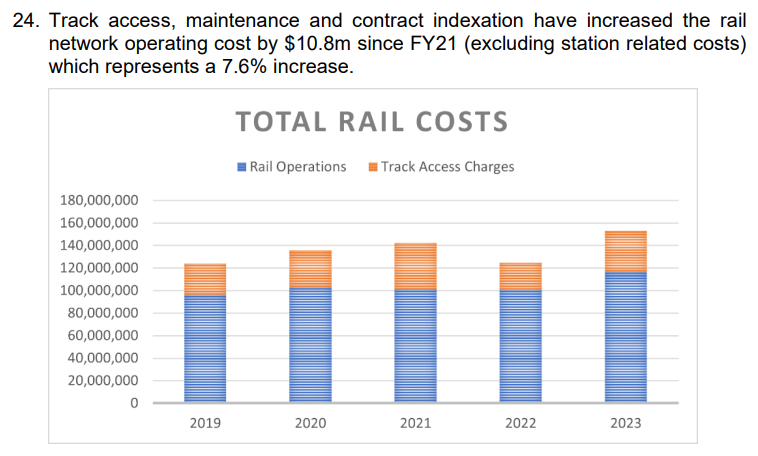
- The recent information released around the fare changes shows we currently pay around $150 million per year to run rail services, (including track access charges). So this represents around a 42% increase.
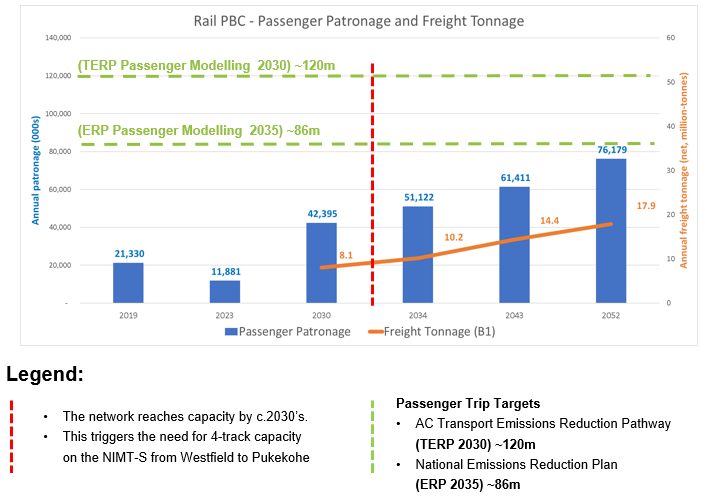
- But what that investment achieves is what is important and in that regard, the CRL is a game-changer. Prior to COVID, we reached around 22 million annual trips on the rail network. With changes from COVID and the rail network closures for repair works usage is currently just over 12 million but without the closures the network would likely have recovered at a similar rate as buses which would put it closer to 18 million trips.The CRL likely won’t even open till some time in 2026 but AT’s current modelling suggests usage will quickly rise to over 42 million trips by 2030 and without additional investment in the wider network, will hit capacity in the early 2030’s somewhere between 42 and 51 million trips. That means a 42% increase in operational costs for a doubling in usage.
With additional (and expensive) investment in the wider network, AT estimate that by 2052, rail network usage could rise to over 76 million. That’s a massive increase, and higher than the more expansive networks in cities like Brisbane and Perth achieved pre-COVID too.
Putting these figures to the side a little bit, the reason for investing in the CRL was never for it to turn a profit – very few road or public transport projects do that. It has always been about the overall economic benefit that investment delivers. By enabling more people to get move around the region, and especially to/from the city centre, faster and easier it is good for improving access, good for reducing congestion, good for the climate and importantly, the CRL has already helped spur billions in private development.
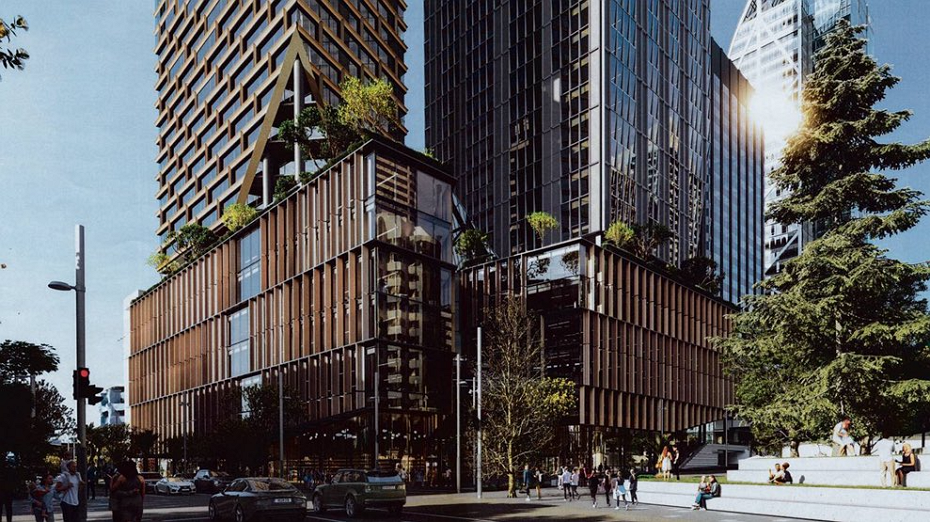
We even saw a prime example of that just two weeks ago with Precinct Properties buying the downtown carpark, which they’ll replace with a development likely to cost billions. That simply wouldn’t have been practical to do without the CRL and it’s ability to move large numbers of people to and from the area.
There is a wider issue here and that is why the CRL is so expensive to begin with and the Herald also covered that last week.
New Zealand is the most expensive country in the world to build new infrastructure. That was the charge levelled yesterday by Sean Sweeney, chief executive of the City Rail Link (CRL).
“But,” said Sweeney, “I don’t just want to complain about it. I have some thoughts on how to fix it.”
In a keynote address at the NZ Rail 2023 conference in Auckland, Sweeney noted that the cost per kilometre for building a “metro” or rapid transit rail line in New Zealand is US$922.37 million ($1.493 billion). This is an estimate of the cost of the CRL.
But in the United States, where costs are also regarded as expensive, it’s a third less, at US$601.85m/km.
In Australia, it’s only US$321.43m/km, which is almost two-thirds less than the New Zealand figure. France gets the work done for less again: US$255.55m/km.
And Portugal, South Korea, Spain and Finland manage to build transit lines for around US$100m/km. More than nine times less than New Zealand.
In many of the low-cost countries, the contractors are the same as those that do the work here. The lead tunnelling contractor for the CRL was the French company Soletanche Bachy.
Sweeney’s figures come from research by the Transit Costs Project, a private research company attached to New York University’s Marron Institute of Urban Management.
There are actually other projects more expensive per km than the CRL but New Zealand comes out on top in part because the CRL is only NZ project in the Transit Costs list. That’s also a part of the reason why it’s so expensive to build in NZ too, we don’t do projects like this very often so we have no retained experience, either in the construction sector or public officials. He also cites issues with things like how risks are allocated.
“The prevailing approach has been to load risk on to the contractor, even when it’s unrelated to their work.”
He gave the example of contractors being required to carry the risk for “below ground” events. “But they don’t know the local geology. So either they have to take that risk and it could force them out of business, or they charge a higher price.”
“When I started at the CRL I had to argue very hard to prevent contractors being made to carry the risk of the Government changing the regulations. But we’re the Government!”
[…..]
“Why should contractors have to accept that risk?”
Politicians and officials might believe they’re driving a hard bargain on behalf of taxpayers. “But,” said Sweeney, “because they load up their costs, we end up paying more.”
Finally, there has also been some commentary around when the CRL will be complete. Radio NZ reports:
Underground rail construction of Auckland’s City Rail Link (CRL) is 80 percent complete but there is no guarantee the November 2025 deadline will be met, the project’s boss says.
The CRL project is due to be handed over to Auckland Transport in November 2025.
Preliminary work on the 3.4 kilometre track, spanning four underground stations, from downtown’s Britomart to Mt Eden, began in 2016.
City Rail Link Limited chief executive Sean Sweeney told Nine to Noon there was still a huge amount of testing that needed to take place before the underground could be opened to the public.
“We’re responsible, basically, for handing over a railway that is able to be operated by Auckland Transport,” he said. “Once we’ve handed it over, they have to do a fair amount of work learning how to operate it so that it’s ready for public operations.”
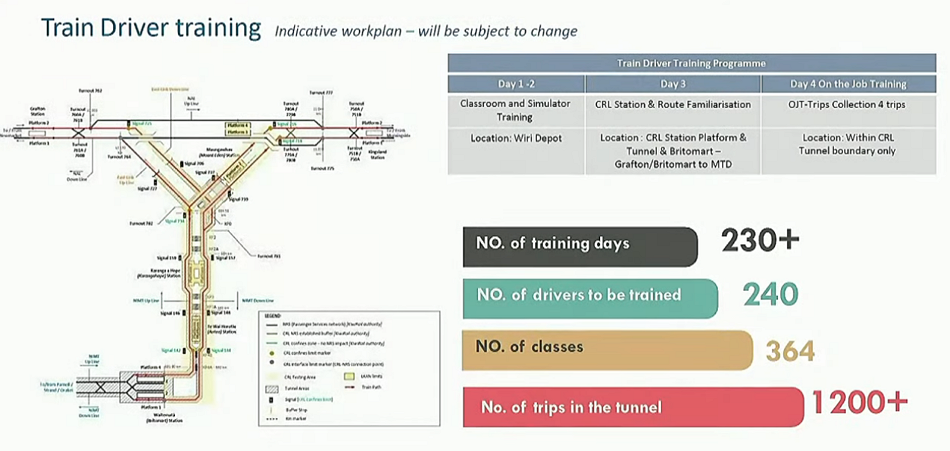
While it might be making headlines now, this isn’t particularly new and Sweeney gave some more detail about it a few months ago. One such example was just how much driver training needed to take place, while still maintaining the existing schedules.
There’s a few more years of construction, testing and training still to go but the images and videos being put out by the CRL team do highlight that the stations and tunnels are really starting to look like a railway.
This post, like all our work, is brought to you by the Greater Auckland crew and made possible by generous donations from our readers and fans. If you’d like to support our work, you can join our circle of supporters here, or support us on Substack.

 Processing...
I am not anti CRL at all, but I do think there would have been better ways to spend that money. $6 billion isn’t a lot in todays terms, but when the project was started, that could have bought a lot of light rail; probably could have done 4 lines or more. And as far as I understand, the running costs for LR are actually less than the buses they replace.
I feel like the biggest gains from the CRL are:
– Increased capacity. But the trains aren’t anywhere near full at current capacity
– Increased frequency. I reckon they could have achieved every 10 mins as it was if they tried. For example could have ditched the Onehunga line and replaced with LR.
– Speed increase for the western line. But some of that could have been achieved by just skipping Newmarket
– The extra 2 stations. I wonder how much it would have cost to just extend the current line to somewhere near Aotea? Cut and cover.
Compare that to 4 new LR lines that would already be up and running with high density housing being built nearby, that would have been a real game changer for Auckland, and turn us into a proper city.
You should be anti-CRL because you have thought the issues through and you are right on every point.
Jimbo that’s an extremely narrow and essentially inadequate list of benefits:
1. Current capacity isn’t the issue, read the post! It’s about future capacity, capacity that’s extremely valuable (again, read the post – example of Precinct development)
2. Frequency, ‘could do better if tried’ really, that’s your argument? There are hard limits set by any system and AKL’s pre-CRL are very low.
3. Come on, do the math, skipping NM would save western line 2-3 minutes (while dropping a useful destination, and still keeping capacity and frequency permanently reduced), but CRL saves 10-24 minutes for many more passengers.
4. You ignore benefits of through running entirely.
5. New stations at the heart of the biggest concentration of employment, education, and entertainment in the nation. Do I really need to explain why this is an extremely valuable thing? And no another terminating station would not deliver the same benefits, even if there were space to build one in midtown.
etc etc
Yes you can find things that cost less, that’s always easy, but you can’t find anything that cost less and has anywhere near these benefits.
We tried proposing $5bn LRT…….
All the haters will have disappeared about 1 day after it opens. or at least drowned out by those embracing it.
“– Increased capacity. But the trains aren’t anywhere near full at current capacity”
You have obviously not ridden on the EMUs during peak morning and peak evening trips,, when there is standing room only. In the morning peak you cannot get onto some trains at Baldwin Ave and Morningside, as they are full
“– Speed increase for the western line. But some of that could have been achieved by just skipping Newmarket”
In 2024 over 4300 people boarded trains at Newmarket Station.
You can extract boarding stats via the AT web site
If you visit Newmarket Station during the peaks you will see many passengers crossing to and from the Western Line trains to the Southern Line. ie Someone works at Middlemore but lives in West Auckland.
Tax payers should not be vindicated to cough up such a large sum the users should pay for it Government must step in or the council must organize concerts rugby netball basketball football and hockey matches and all proceeds should go to the CRL. Waka Kotahi should transfer the millions of dollars collected from traffic fines to this cause
Ummm, this is not how public infrastructure works (or should work). Its not give a little charity funding thing.
We can disagree on WHAT public infrastructure is needed.
But taxes are *exactly* for paying for things like the transport infrastructure that supports New Zealand. Including for “local” stuff. Especially in a nation like NZ where Councils have quite limited rates base, and most infrastructure is part- or primarily paid for by taxes.
If you feel that is wrong, tell govt to reduce income and business taxes and allow Councils to raise their rates to the same degree. Of course govt will tell you to bugger off – because they don’t like to give up the power of deciding where the money is spent. In fact, they keep making it harder and harder for local Councils to decide what to spend money on, even when they tax the locals.
Love your creativity. Especially as people could take public transport to the events, win/win!
Teresa Government must provide these facilities and then charge everyone fairly Public climb on buses with no AT card No fines Drivers are least bothered We need a law and punishment for these blokes Why should taxpayers bear the cost it should be pay as you go Just like the toll on motorways
$220M/630,000 ratepayers = $349 / yr ~$1/day
It’s always transit/cycling projects that seem to have to prove they “turn a profit”, but never big motorway projects like the Roads of National Stupidity.
Something like CRL is 1000000000x more beneficial for Auckland and NZ’s economy than the East-West Link, Northern Gateway, and Mill Road combined, but infrastructure for cars are treated differently in carbrained New Zealand.
Don’t forget the benefits CRL provides with easing train traffic congestion through to the Northland section of the main trunk line, increasing the frequency of trains through the isthmus benefits freight not just passengers.
I commute from Mt Albert to Greenlane, changing in Newmarket. I have heard the Western Line will go through K’Rd to town and back out west via Newmarket at peak times. Can anyone confirm?