This guest post by transport planner and urbanist extraordinaire Darren Davis is shared with kind permission from his blog Adventures in Transitland. Welcome home, Darren!
The header image shows the Cross River Rail construction site at Roma Street station in Brisbane City Centre (Credit: Chris Olszewski CC BY-SA 4.0)
I’m back in Aotearoa after a 2.5 year stint in Australia’s Sunshine State. So what are my thoughts about my time on the West Island (aka Australia)? Read on…
Opening thoughts
Australia is a big country. If it weren’t an island continent, it would be the world’s largest island. But it’s also one of the most sparsely populated places in the world with half of Australia’s 28 million people concentrated in Sydney and Melbourne, with 5 million in each city, and 4 million in South East Queensland, from where I recently returned. Nearly 90 per cent of the population lives within 50 kilometres of the coast, meaning that the vast interior is very, very empty.
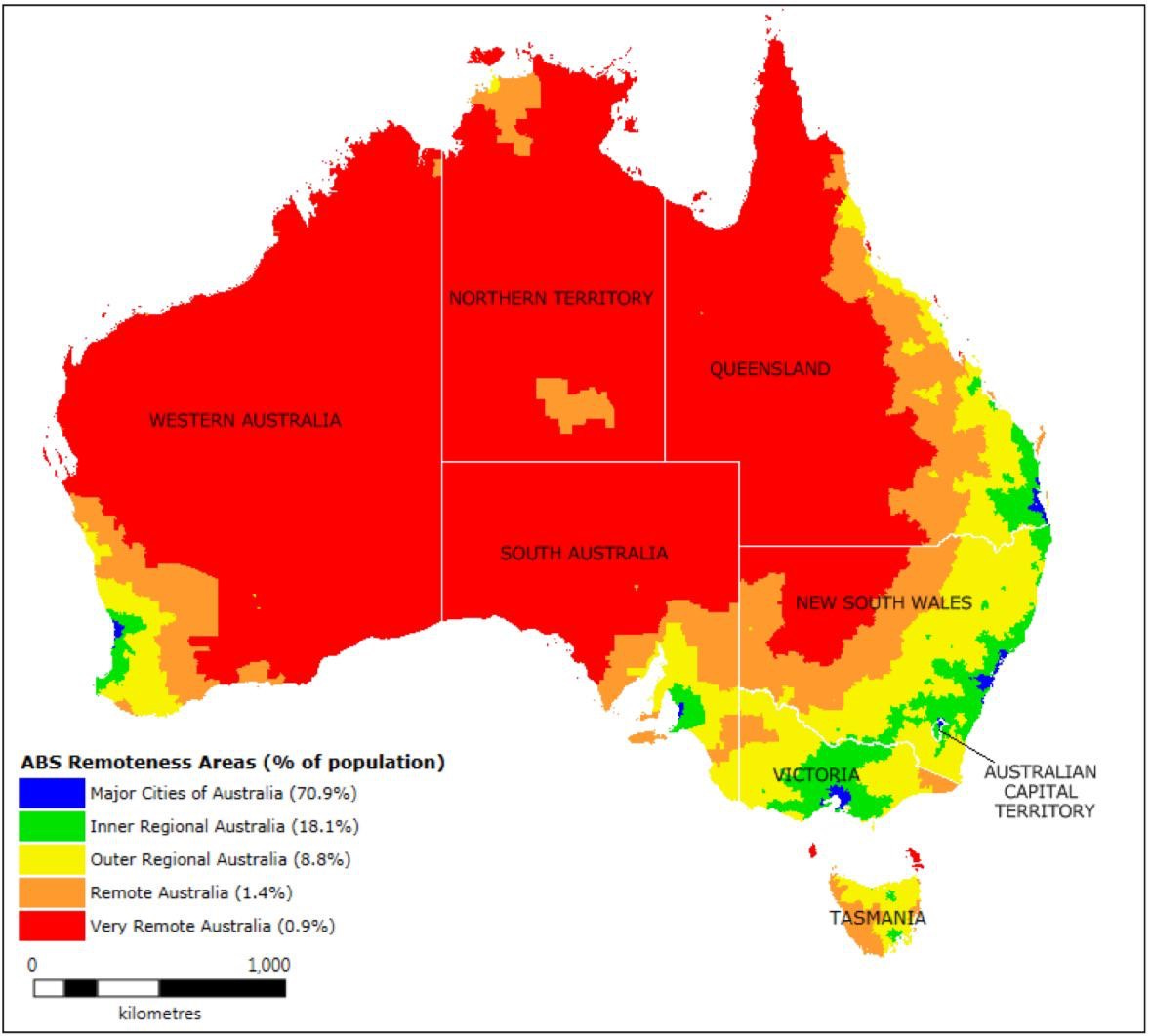
Less than 1 per cent of Australians live in the red zone. Image credit: Brilliant maps
Unlike Aotearoa/ New Zealand, Australia does not think small. Its ambitions are as a middle power and it exercises significant influence in the Pacific and South East Asia. Its vast mineral resources gives it leverage that a food-rich but resource poor country like Aotearoa/ New Zealand cannot match. As a think big country, it can envisage and deliver projects of huge scope and ambition. Large scale public transport investments like Metronet in Perth; Sydney Metro; Melbourne’s Level Crossing Removal Program and The Wave rail and busway project on Queensland’s Sunshine Coast come to mind. But in thinking big, Australia often misses getting the smaller details right and the legacy of car-oriented planning is plain to see in the giant high-speed stroads that pepper the suburban landscape of Australia’s largest cities.
Politics and politically-driven investments are also plain to see. State and federal elections are won or lost in the mortgage belt in the outer metropolitan areas of state capital cities and this is where transport investments are often concentrated. Areas that vote solidly for one or other party are often given short shrift. A case in point is Western Sydney, Western Melbourne and Ipswich and Logan in Brisbane. These more deprived areas only get significant investment when formerly safe seats suddenly become contestable. Mixed Member Proportional in Aotearoa has largely done away with the perceived political payoff from such pork barrelling as the overall nation-wide party vote determines the electoral outcome, not small but significant swings in a small but significant number of outer metropolitan marginal seats.
So how does this all play out in South East Queensland?
My last two and a half years in South East Queensland have seen these same issues playing out in microcosm. The state has slightly more people than Aotearoa/ New Zealand (5.7 million in Queensland versus nearly 5.4 million in Aotearoa/ New Zealand) but Queensland is 6.5 times the size of Aotearoa/ New Zealand.
On the positive side, around 40 per cent of the state’s transport budget for the current four-year period is going to rail investment in South East Queensland. This will contribute to delivering some big ticket rail improvements in the lead-up to Queensland hosting the 2032 Olympic and Paralympic Games such as:
- Cross River Rail: A new 10.2 kilometre line through Brisbane City Centre, including 5.9 kilometres of twin tunnels with four new underground stations. This will increase rail capacity through the city centre from four to six tracks and vastly improve rail access to the southern part of Brisbane City Centre.
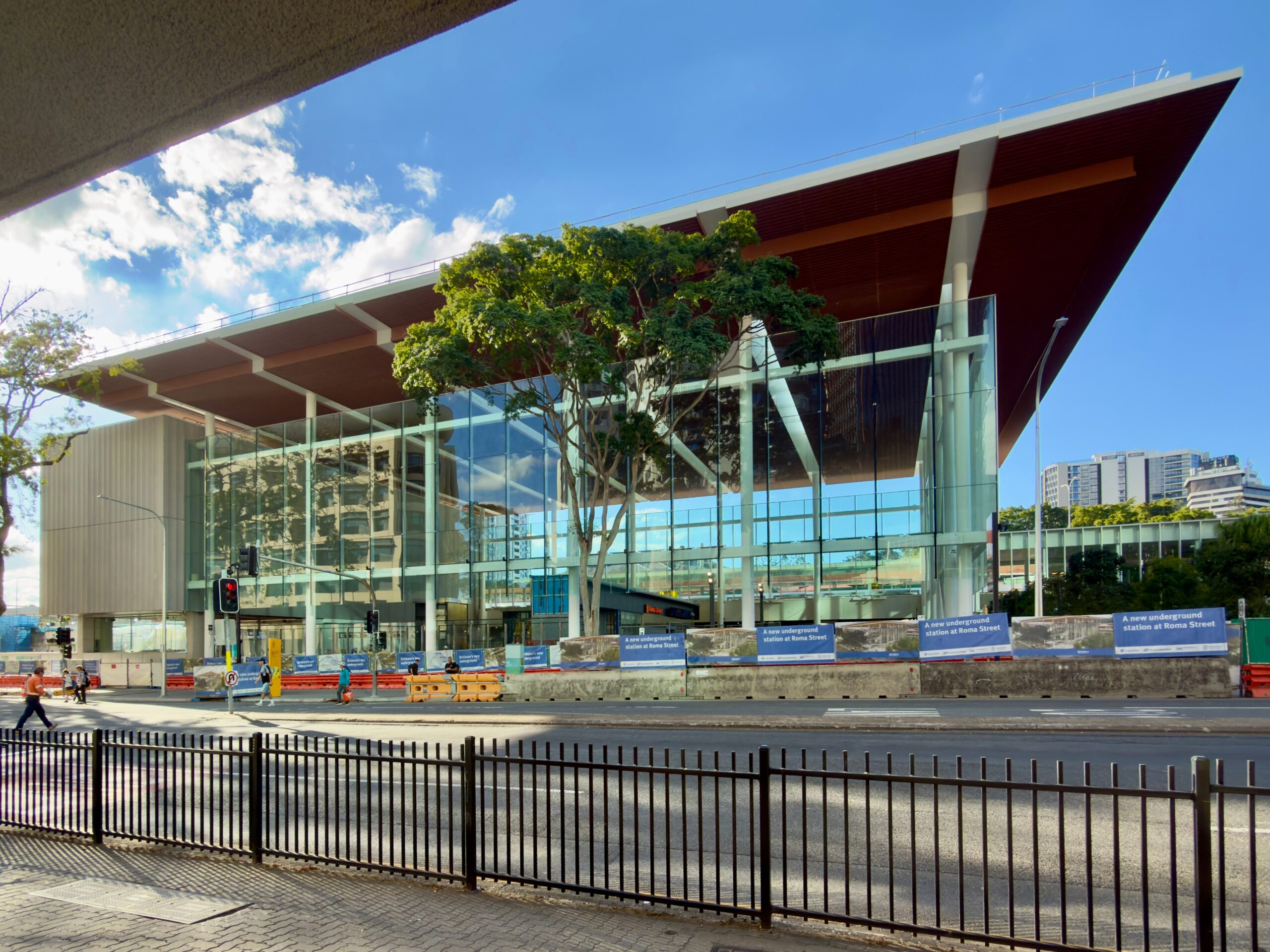
Cross River Rail construction site at Roma Street station in Brisbane City Centre. Image credit: Chris Olszewski CC BY-SA 4.0
- Logan and Gold Coast Faster Rail: Quadruplication of a 20-kilometre section of the Gold Coast Line in Logan between Kuraby and Beenleigh, including upgrading nine stations and grade separation of road/ rail crossings.
- Sunshine Coast – The Wave Rail and Metro: This project extends the current Sunshine Coast rail line by around 27 kilometres between Beerwah in the Sunshine Coast Hinterland and Birtinya on the coastal Sunshine Coast with intermediate stations at Aura, Caloundra and Aroona. It is complemented by a Metro-style (as in Brisbane Metro style) bus rapid transit route served by articulated battery electric buses from Birtinya to Sunshine Coast Airport via Maroochydore City Centre.
- Gold Coast Light Rail extension: The 6.7 kilometre Gold Coast Light Rail extension south of the existing tram network between Broadbeach South and Burleigh Heads opened to the public on Sunday 9 August 2026.
The patronage paradox
While the scale of rail infrastructure investment is impressive, what is less impressive is the lack of investment in public transport service improvements as opposed to infrastructure investments. In the past two and a half years, the on-the-ground public transport service improvements have been:
- Roll out of the early stages of the $A69 million bus service improvement programme in Logan and Ipswich in outer metropolitan Brisbane. This was funded by the previous Labour government partly, I suspect, to shore up political support in traditional Labour voting areas. Service improvements include weekend service to Beaudesert in the Scenic Rim region, Sunday and public holiday service to significant growth areas in Flagstone and Yarrabilba, and a new service between Ipswich and Springfield.
- The final stage of the $16.4 million Northern Gold Coast bus improvements programme, co-funded by the state government and Gold Coast City Council.
- Introduction of Sunday and public holiday train service on the Doomben Line in Brisbane, the only line not to have every day service up to this point.
- The roll-out of Brisbane Metro, bi-articulated battery electric buses on two key very high frequency busway routes (M1 – Eight Mile Plains to Roma Street and M2 – University of Queensland to Royal Brisbane and Hospital).
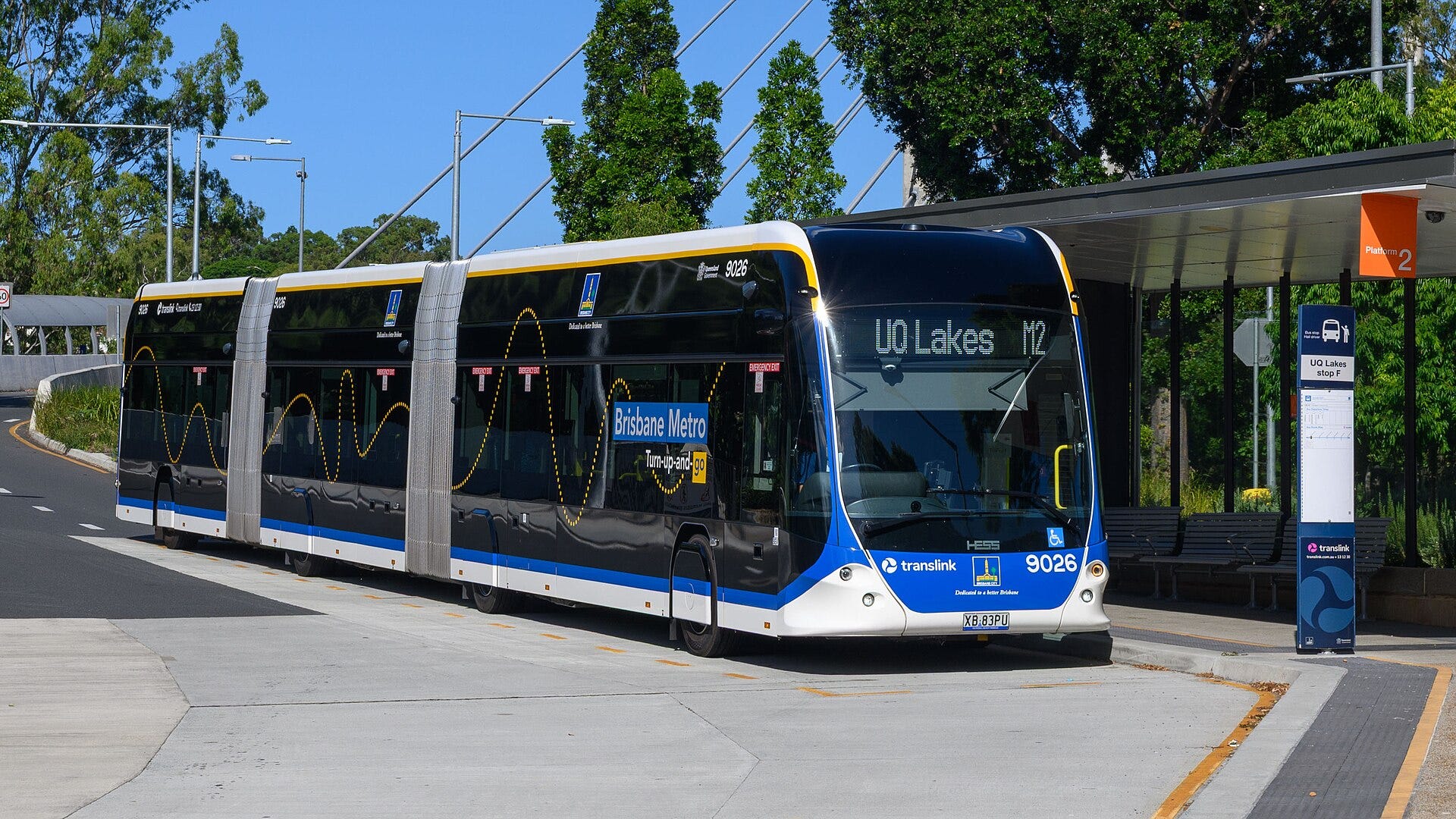
Brisbane Metro Vehicle (aka the bus that dare not speak its name) at University of Queensland. Image credit: your_local_bus_photographer CC BY-SA 4.0
- The accompanying “evolution” of the southside bus network in Brisbane in support of the Brisbane metro project, implemented on 30 June 2025.
- A Townsville Airport to city centre bus route implemented on 29 June 2026 along with a similar Cairns Airport to city centre bus route to be implemented on 23 November 2026.
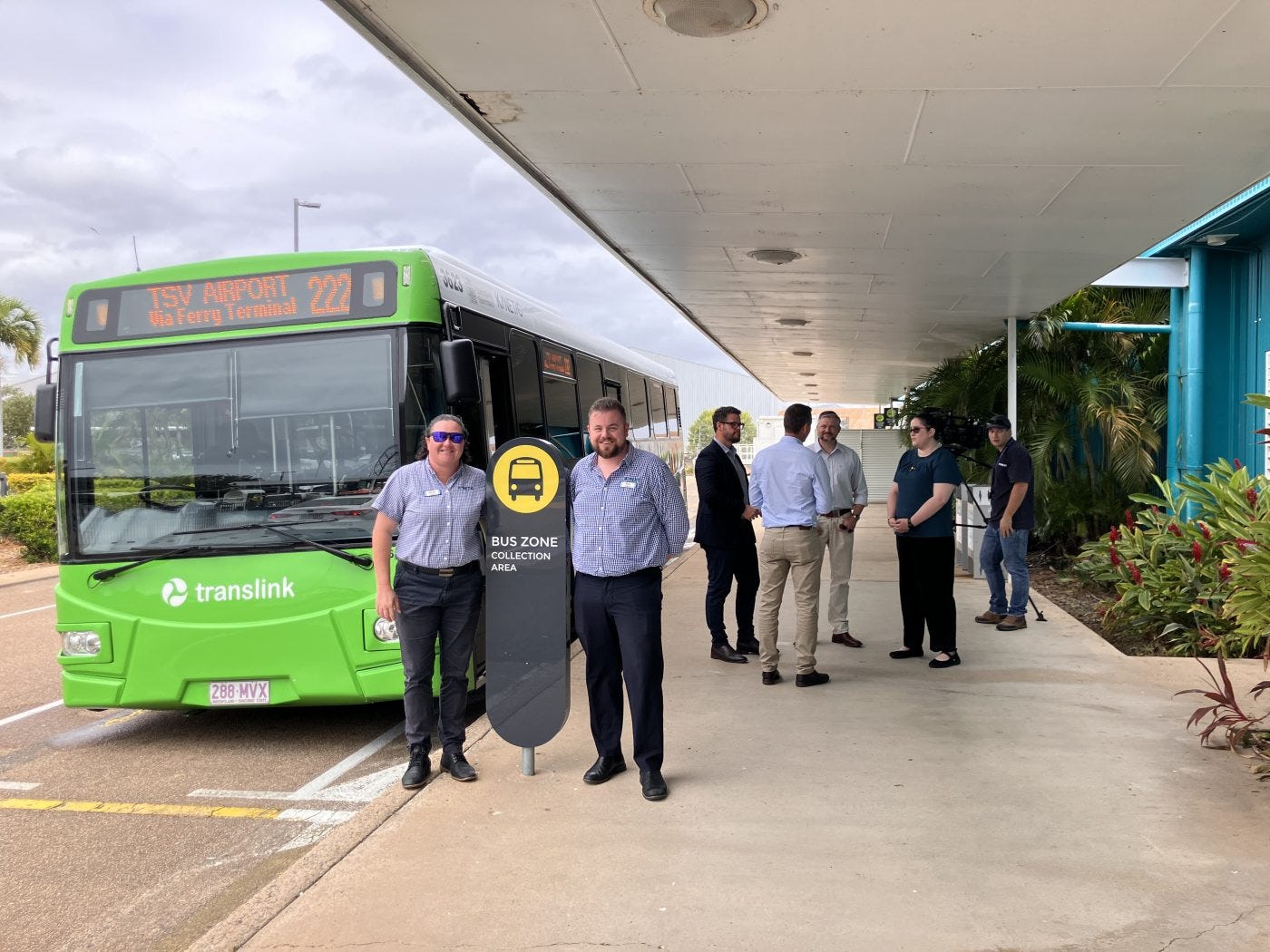
Townsville Airport now has an urban public transport connection to the city centre. Image courtesy of Kinetic.
It’s worth bearing in mind that these improvements cover a state with a slightly larger population than Aotearoa/ New Zealand. But the paradox is as follows: In spite of lacklustre investment in new or improved public transport services, patronage has grown steeply, driven by the introduction, now enshrined and embedded in Queensland law, of 50 cent flat public transport fares for all urban public transport in Queensland.
The South East Queensland public transport patronage figures speak for themselves:
- 2022/2023 financial year patronage – 153.25 million
- 2023/2024 financial year patronage – 170.54 million (+11.2% on 2022/2023)
- 2024/2025 financial year patronage – 192.88 million (+25.9% on 2022/2023)
2025/2026 financial year patronage has yet to be published but trends indicate a similar increase in patronage as in the previous financial year.
The 25 per cent increase in patronage in two years puts South East Queensland well ahead of pre-pandemic patronage while many cities and regions are still well below pre-pandemic patronage levels. While of course no service, no matter how cheap, will be used if it’s not useful, it’s telling that price sensitivity shown here, notably while cost of living is a top of mind issue in Australia, has had a significant impact on patronage. This has been accompanied by a perception shift caused by the Brisbane Metro project which has been equally successful at building patronage, even though it in effect only replaced two bus routes run by articulated diesel buses with two identical routes run by bi-articulated battery electric buses. Sometime perception does become reality.
Final thoughts
Australia is laudable for its ability to think, act and deliver big. Mostly on projects that have merit in their own right, but not always. But public transport service investment is funded out of the same pot as the rest of state government investment whereas in Aotearoa/ New Zealand, revenue in the National Land Transport Fund has to be spent on land transport. This so-called “hypothecation” of transport funding gives more public transport opex funding certainty than is the case in Australia.
The other striking observation from Australia is just how politicised – for good and bad – transport investment is in Australia. This politicisation has led to big projects for good – such as Victoria’s regional rail revival and Melbourne metropolitan level crossing removal projects, Sydney Metro, Perth’s Metronet rail projects and Brisbane’s Cross River Rail – while other large projects are possibly lacking in a similar level of merit.
This politicisation, along with Australia’s electoral geography and preferential voting system gives possibly undue weight to relatively small numbers of swing voters in marginal seats, often in the outer metropolitan areas of Australian state capital cities. And gives an undue lack of weight to relatively large numbers of non-swing voters in the poorer parts of Australian state capital cities. Unless of course, their votes are at risk in a state, territory or federal election.
For all of its bugs and flaws, the regionally-led approach in Aotearoa/ New Zealand does a good job at the regional level and is relatively transparent when compared to Australia, with decisions here generally being taken by democratically elected bodies in public and subject to media, stakeholder and public scrutiny. Where we fall down is in the inter-regional and national public transport planning space. While we have a national state highway network fully funded nationally as a single, integrated network, we are far from having anything parallel at a national level for public transport.

 Processing...
What has happened with Cross River Rail, I thought all the big down-under rail projects (CRL, Sydney Metro, Melbourne Metro Tunnel) were all opening roughly the same time but CRR seems to have blown out by a number of years?
Last I heard, it was due to rolling stock delays (IE, not enough trains for the services needed)
Every time I use Gold Coast Light Rail – and I like it, I am reminded that multiple governments have screwed up light rail in Auckland by over thinking it, while Queensland just gets on, builds it and people flock to it
Only weird thing; the 50 cent cap per trip is nice, but why don’t they just make it $1 and nearly double revenue? I can’t image somebody deciding to not take the right rail as it is 50 cents more.
To be fair, we would walk around the area, and when we got tired or wanted to go further just jump on the train. Made getting around so much easier, and even when I was there on business trip, preferred light rail/heavy rail over taxi’s/uber even when the company was paying
To be fair, Queensland is capable of equal stupidity.
The next stage of Gold Coast Light Rail was planned to head to Collangatta and Gold Coast Airport, but now is going to be bus-based, for reasons that are not entirely clear.
https://www.tmr.qld.gov.au/projects/gold-coast-light-rail-stage-4
We were just there on holiday and left the day before the light rail extension opened. We didn’t hire a car so just used the bus to get to and from our accommodation in Broadbeach. It was painfully slow and I think they need a more frequent service given how busy it was. But cheap and hard to resist at 50 cents.
We used a combination of buses, the light rail, trains and public transport ferries on our recent trip. All were very cheap, but generally over-crowded. I would have preferred to pay a bit more for a better service (more frequent and less crowded). The bus and tram were both extremely slow. We also used Lime bikes (I was annoyed when they got rid of them in Auckland). I didn’t see any Lime scooters over there and I felt safer on the footpaths.
Thats exactly where the Auckland lime bikes went! Sydney and Brisbane. 🙁
Any infrastructure project is inherently political, because to build infrastructure you need consent which is granted by mana whenua on behalf of tangata whenua.
What? Any infrastructure project is always already inherently political because it is big and costs a lot of money. It is valid to include tangata whenua as one of many layers but as _the_ cause of politicisation?! Stop dreaming.
Tourism is NZs second largest export earner and Australians are the largest group.
They come to see our lakes, fjords, mountains, parks and gardens and our vey special flora and fauna
Its not much better here TBH. Look at Dominion Road. If we spent billions building LR we are allowed to take all the car parks away to make it work well, and run the rail down Queen Street to Britomart. But buses don’t get the same (free) privilege. They get caught in terrible traffic off peak so a few people can park their car, they have to take a massive detour via a residential road with speed bumps, they have bus stops every 10 seconds, and they terminate in midtown where no one wants to go. We could get most of the benefit of LR for pretty much free, but thats not cool enough.
252 2 the core!