This is a guest post by Darren Davis. It originally appeared on his excellent blog, Adventures in Transitland, which we encourage you to check out. It is shared by kind permission.
As 2025 comes to a close, it’s hard not to feel whiplash at the breadth and speed of the government’s “Reform” programme embracing resource management; local and regional government; development levies; infrastructure funding and three waters. In this, a common thread is an implicit or explicit narrative that regional and local governments are hopeless spendthrifts. In order to counter a natural tendency to doomscrolling, here are some good news stories from 2025 about public transport across the motu.
Monday 3rd February 2025 – Pukekohe
Pukekohe Station reopened and electric train service started at the completion of the Pukekohe to Papakura electrification project. Electric trains now serve the major growth hub every 10 minutes at peak, every 20 minutes during the day, and half-hourly in the evening every day of the week.
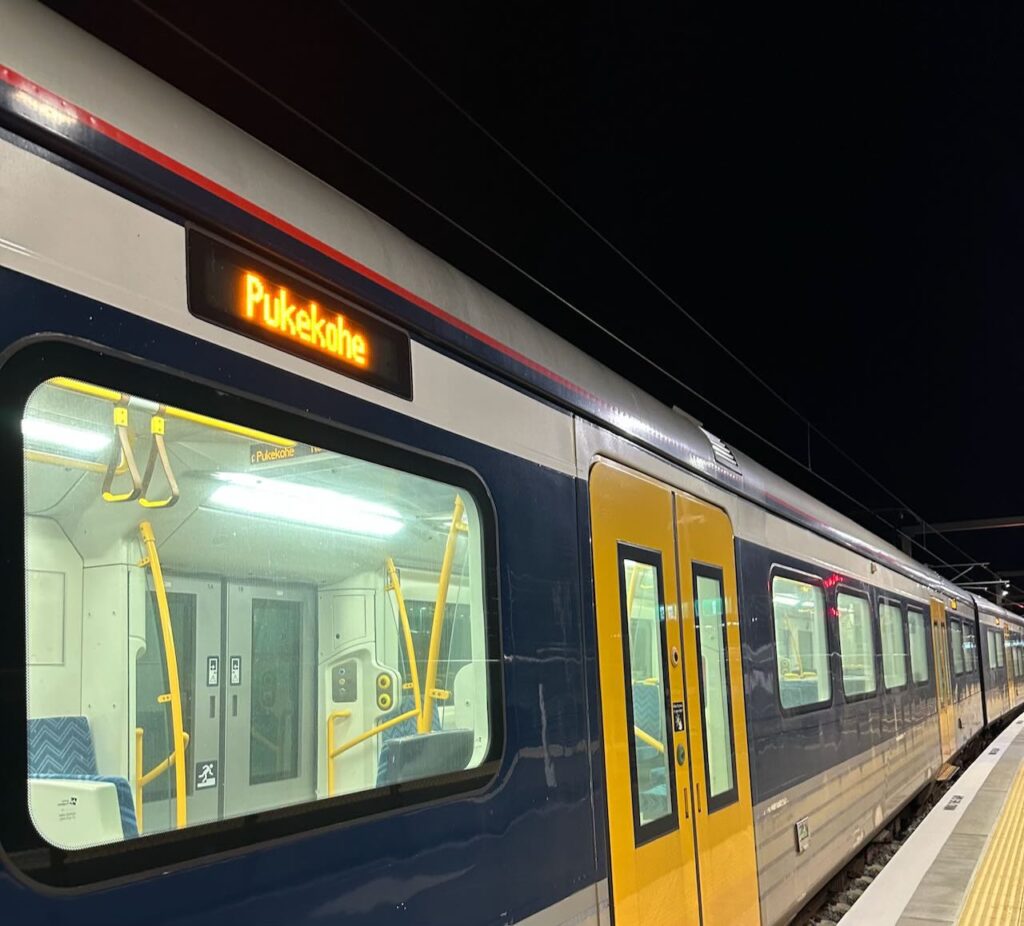
An AT EMU being prepared for service as the first ever electric train from Pukekohe at 5:11am on 3rd February 2025. Image credit: Darren Davis
Monday 10th February 2025 – Pukekohe
Te Huia added Pukekohe as a station stop, dropping Papakura at the same time. The new stop gives Pukekohe residents access to the Waikato while retaining the connection for Waikato passengers to the Auckland urban train network at Pukekohe and Puhinui.
Wednesday 12th February – Tāmaki Makaurau/ Auckland
The first test train travelled through the 3.45km City Rail Link tunnel under Auckland City Centre as the very first step in an extensive testing process in the lead up to the public opening of City Rail Link in the second half of 2026.
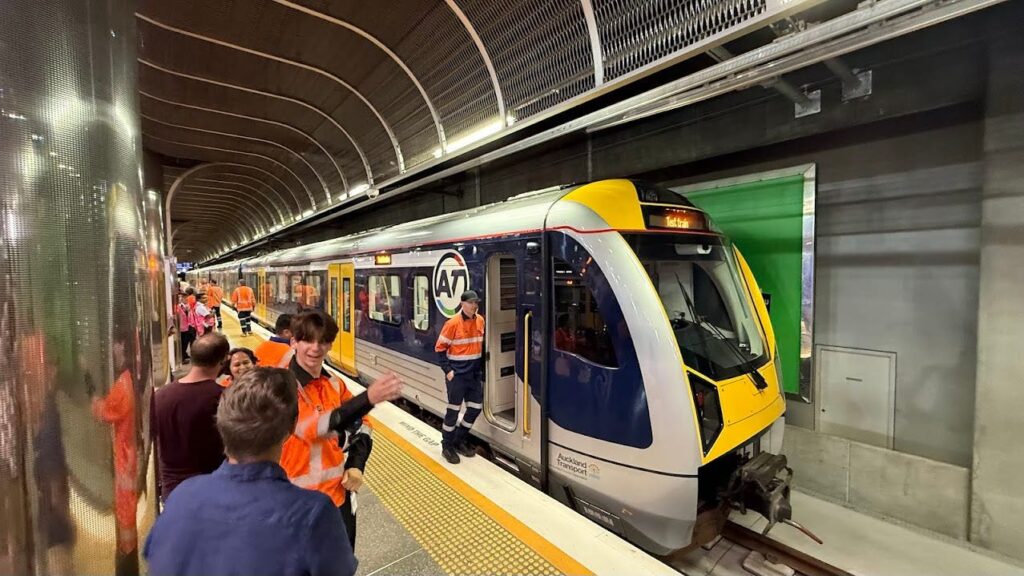
City Rail Link test train at Waitematā/ Britomart Station prior to entering the City Rail Link tunnel. Image credit: NZ Transit Buzz
Friday 7th March 2025 – Te Papaioea/ Palmerston North
This week marked one year since Horizons Regional Council launched their fully electric bus fleet and new bus network into Palmerston North and Ashhurst, leading to a 41.3% increase in patronage to just shy of a million annual boardings at 999,415.
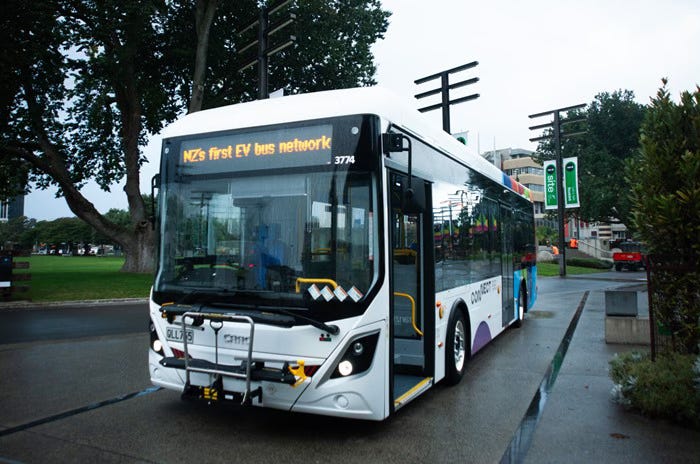
E-bus in Palmerston North. Image credit: Horizons Regional Council.
Sunday 27th April 2025 – Tāmaki Makaurau/ Auckland
Auckland Transport launched 26 electric double-deckers on the WX1 Western Express frequent service from Northwest Centre to the city centre via the Lincoln and Te Atatū bus interchanges. The capacity increase is to meet the growing demand from the new Northwest bus network launched in November 2023 which hit 5 million passenger trips in its first year and is now well above pre-pandemic patronage levels.
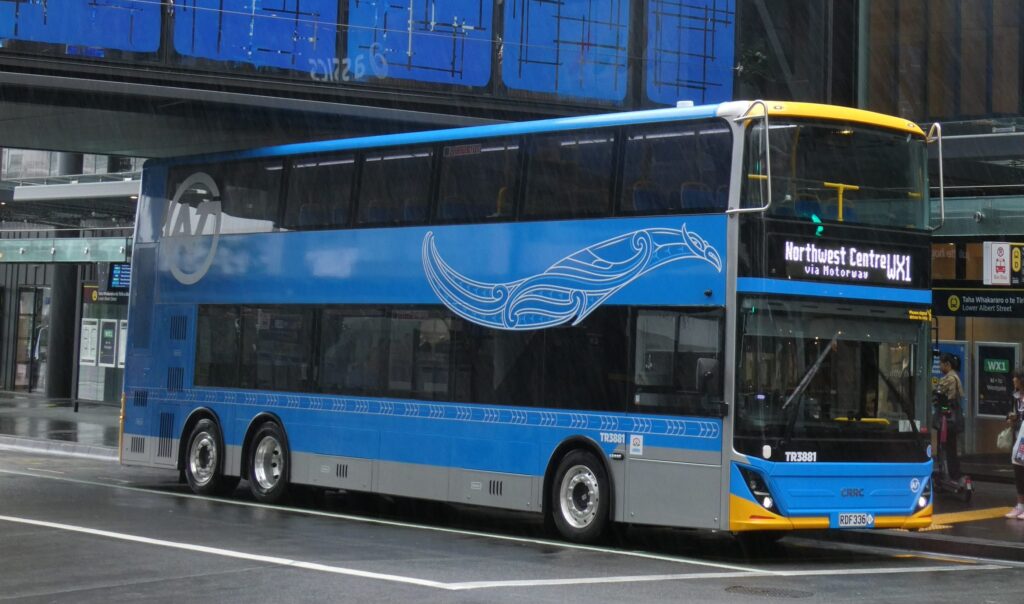
Western Express bus at Lower Albert St Bus Interchange. Image credit: Shaun Baker
The WX1 runs every 10 minutes all day, every day of the week and every 15 minutes in the evening until midnight.
Monday 28th April 2025 – Tauranga Moana
Tauranga’s new permanent city centre bus stops opened on Durham Street, making it easier and more accessible for passengers to catch the bus. This relocated stops from the temporary hub further along Durham Street to a location closer to the University of Waikato Tauranga campus, city centre retail and Tauranga City Council’s new offices on Devonport Road.
Monday 28th April 2025 – Ōtautahi/ Christchurch
Metro’s Route 7 Halswell to Queenspark passengers saw the frequency of the service increased thanks to funding from Waka Kotahi/ NZ Transport Agency and Environment Canterbury.
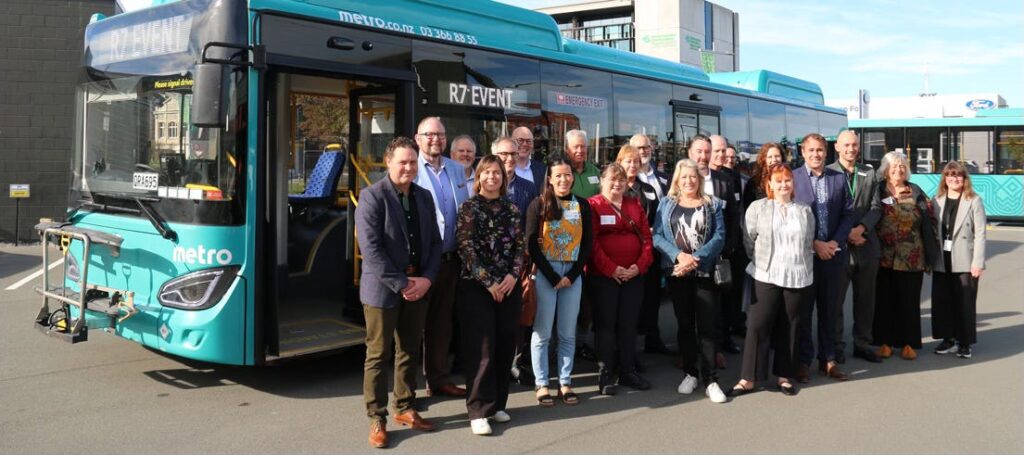
Celebrating the route 7 frequency improvement. Image credit: ECan
The service now runs every 10 minutes from 5.30am to 6.30pm on weekdays and every 15 minutes outside of those hours, including on weekends.
Saturday 17th May 2025 – Ōtautahi/ Christchurch
The first of the revived Southerner train journeys set off for Ōtepoti/ Dunedin, being the first time since 2002 that a scheduled inter-regional passenger service has stopped at Te-Tihi-o-Maru/ Timaru and Dunedin. The four-day Southerner revival sold out in record time and will return on 22nd, 23rd, 24th and 25th May 2026, travelling daily from Christchurch to Dunedin return. These trips can be booked on the Great Journeys of NZ website.
I was fortunate enough to be on the first trip and highly recommend it. The scenery between Te-Oha-a-Maru/ Oamaru and Ōtepoti/Dunedin in particularly is simply spectacular and nearly completely missed by the State Highway 1 route over the Kilmog and Waitati Hill.
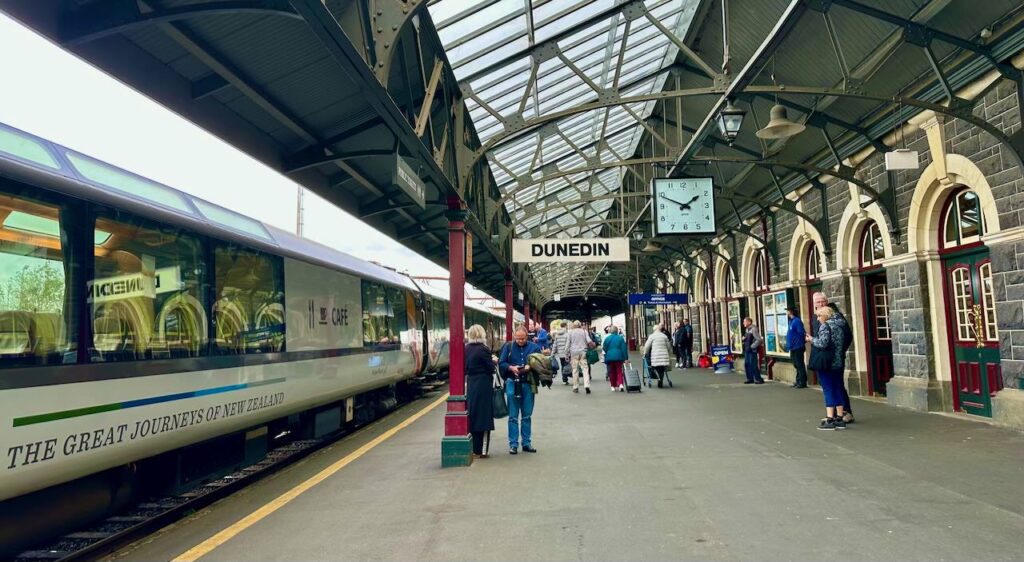
17th May 2025 see the first inter-regional passenger train at Ōtepoti/ Dunedin Station since 2002. Image credit: Darren Davis
Monday, 30th June 2025 – Tāhuna/ Queenstown
Route 1 from Sunshine Bay to Remarkables Park via Queenstown town centre and Queenstown Airport gets timetable adjustments. It is frequent all-day, every day of the week, every half-hour late evenings and runs from 6am to 1am every day of the week.
Jacks Point gets a direct service to Queenstown town centre for the first time and Kā-muriwai/ Arrowtown gets a faster service to Queenstown via Malaghans Road and Arthurs Point. The current route 2 Arrowtown service will now run via Five Mile to Frankton Hub to serve the major retail areas on the Frankton Flats. More info on the Queenstown changes here.
Sunday, 27th July 2025 – Kirikiriroa/ Hamilton
The Te Huia rail service now has Sunday service with a northbound train leaving Hamilton at 2.45pm with a return service leaving Auckland at 6.15pm. As an aside, this means that Aotearoa now has a single inter-regional train with a public transport focus running every day of the year. Which doesn’t seem like a whole lot for a country of over five million people.
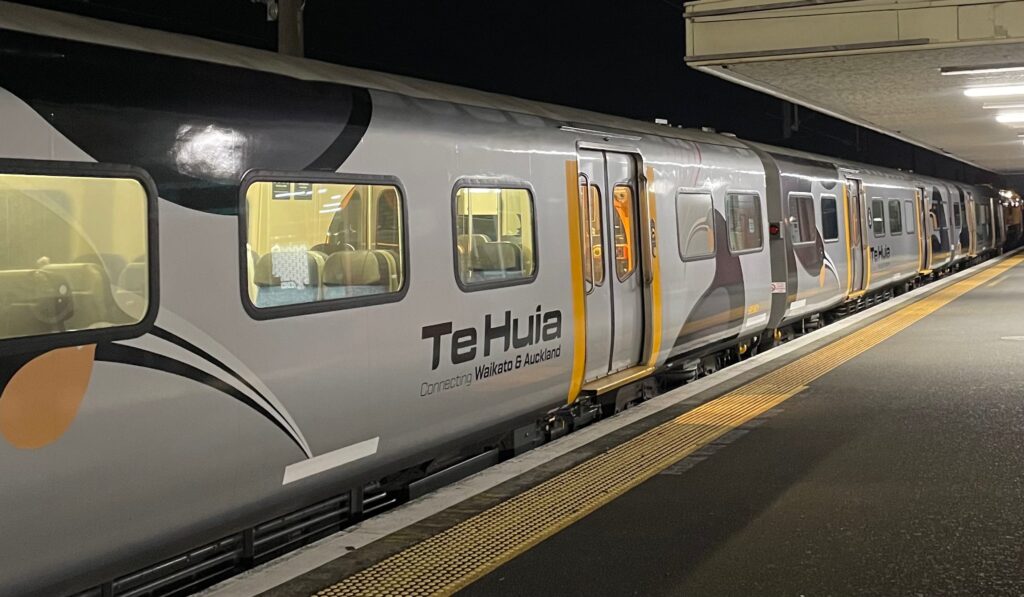
Te Huia is now a daily operation with the launch of Sunday services. Image credit: Darren Davis
Monday, 11th August 2025 – Whangārei
The upgraded Rose Street Bus Hub opened with covered seating, upgraded shelters, colour coded bus stops, safer crossing points, an information office and public toilets.
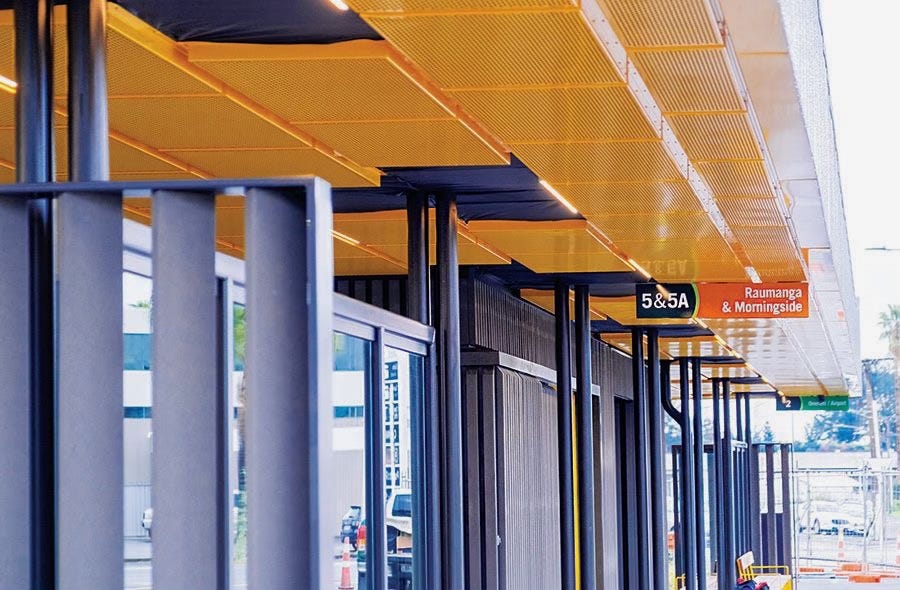
Rose Street bus hub Whangārei. Image credit: Whangārei District Council
Sunday, 17th August 2025 – Tāmaki Makaurau/ Auckland
Auckland Transport improved frequencies on Dominion Road, New North Road and Sandringham Road services meaning that they now run at least every 15 minutes from 6am to midnight every day of the week. In addition, routes 353 and 355 from Botany Town Centre to Manukau now run every 30 minutes until 11pm. Route 901 from Constellation Busway Station to Smales Farm Busway Station now runs every 20 minutes at peak, every 30 minutes at other times and route 923 in Northcote now runs every 20 minutes until 7pm every day of the week.
Monday, 1st September – Ōtautahi/ Christchurch
New 84 Rolleston West and 85 Rolleston East direct services to Christchurch city centre began operation with 16 trips in each direction on weekdays.
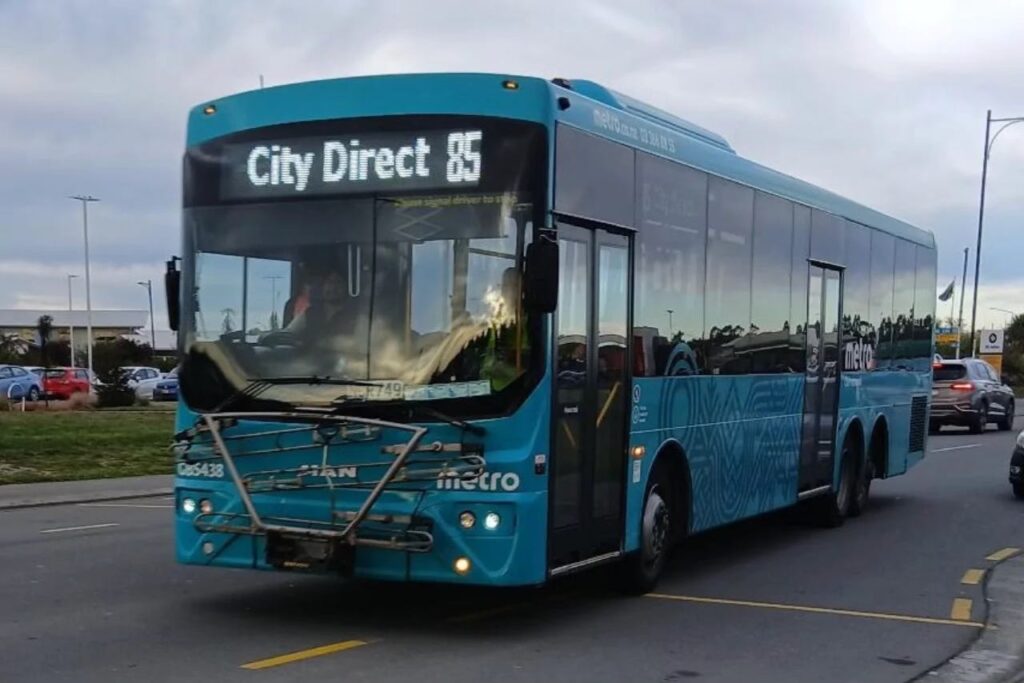
Rolleston Direct bus. Image credit: Environment Canterbury
Monday, 8th September – Tāmaki Makaurau/ Auckland
An eastbound dynamic bus lane launched on congested Maioro Street. This works by having the kerbside lane on Maioro Street eastbound becoming a dedicated bus lane from 6am to 10am on weekdays, reducing travel times for citybound buses.
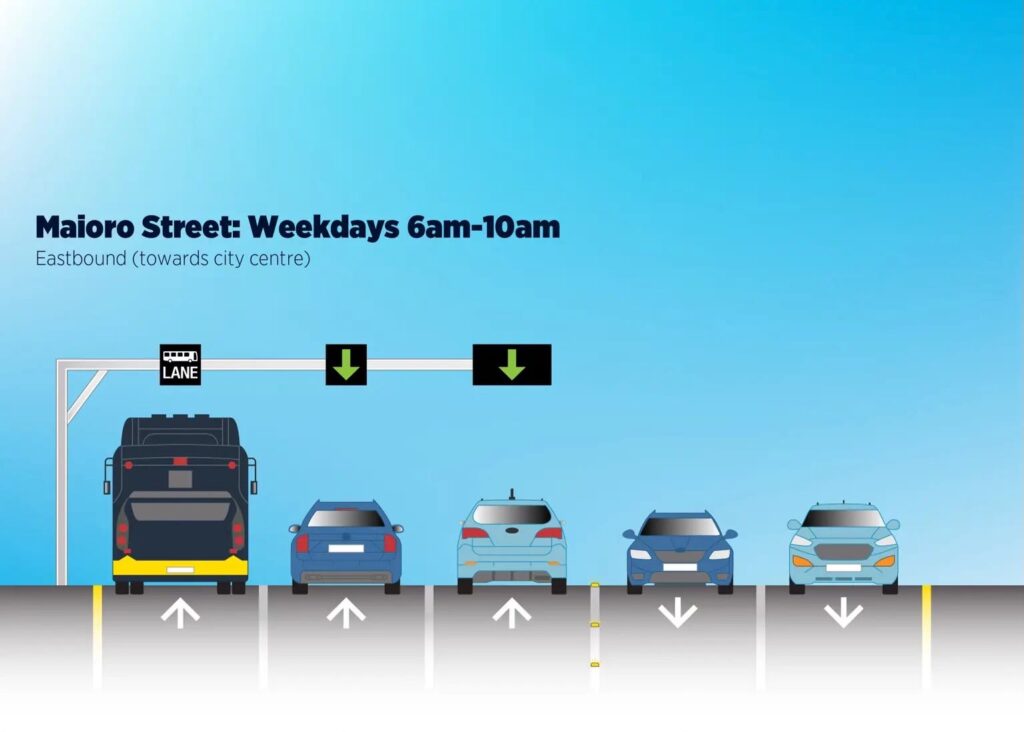
Maioro Street eastbound dynamic lane graphic. Image credit: Auckland Transport
Thursday, 18th September 2025 – Tāmaki Makaurau/ Auckland
Tāmaki Makaurau’s Third Main project was officially opened on this day. The project includes a 6.5 kilometre third rail line between Wiri and Westfield junctions; track upgrades at Quay Park to enable flexibility for freight moving in and out of Port of Auckland; track upgrades at Wiri and Westfield Junctions; and the redevelopment of Middlemore Station to include a new third platform.
This project enables both improved freight and passenger rail services by separating them at the most congested part of the Auckland rail network.
Sunday, 2nd November 2025 – Tāmaki Makaurau/ Auckland.
A number of bus improvements in South Auckland. More services launched on route 309 from Māngere to the city centre, a new route 311 started between Māngere Bridge and Ōtāhuhu Station via Mahunga Drive; an improved route 326 providing better access to Middlemore Hospital was introduced as were more frequent services on routes 31, 32, 33 and 325. In East Auckland, new route 738 was launched between Maraetai and the Pine Harbour Ferry Terminal.
Monday, 10th November 2025 – Ōtautahi/ Christchurch
The next stage of the roll-out of the Motu Move national public transport ticketing project took place in Christchurch with the launch of contactless payments with debit and credit cards, phone (Apple/Google Pay), or smart watch on all urban buses in Christchurch, Waimakariri and Selwyn as well as on the Diamond Harbour ferry.
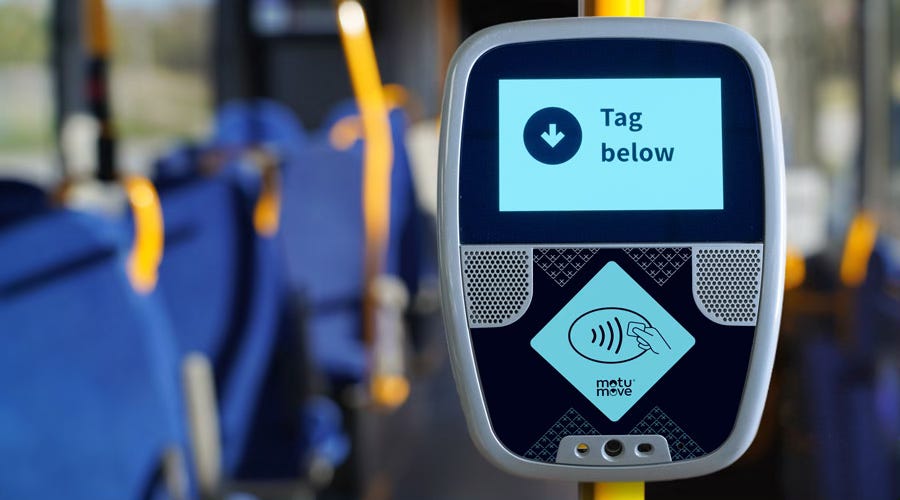
Motu Move validator on a Christchurch bus. Image credit: Environment Canterbury
Friday, 28th November 2025 – Te Ika ā Māui/ South Island
Mainland Rail announced the launch of periodic scheduled passenger train services between Ōtautahi/ Christchurch, Ōtepoti/ Dunedin and Waihopai/ Invercargill. The first trips will be on January 20th from Christchurch to Dunedin and on January 21st from Dunedin to Invercargill. This will be the first time that a long-distance passenger train has served Invercargill since the end of the Southerner in 2002.
The rolling stock is made up of seven S Carriages, including a cafe car, and one generator carriage purchased from KiwiRail. The carriages have a capacity for 390 passengers and were formerly used to run the daily Capital Connection train between Palmerston North and Wellington.
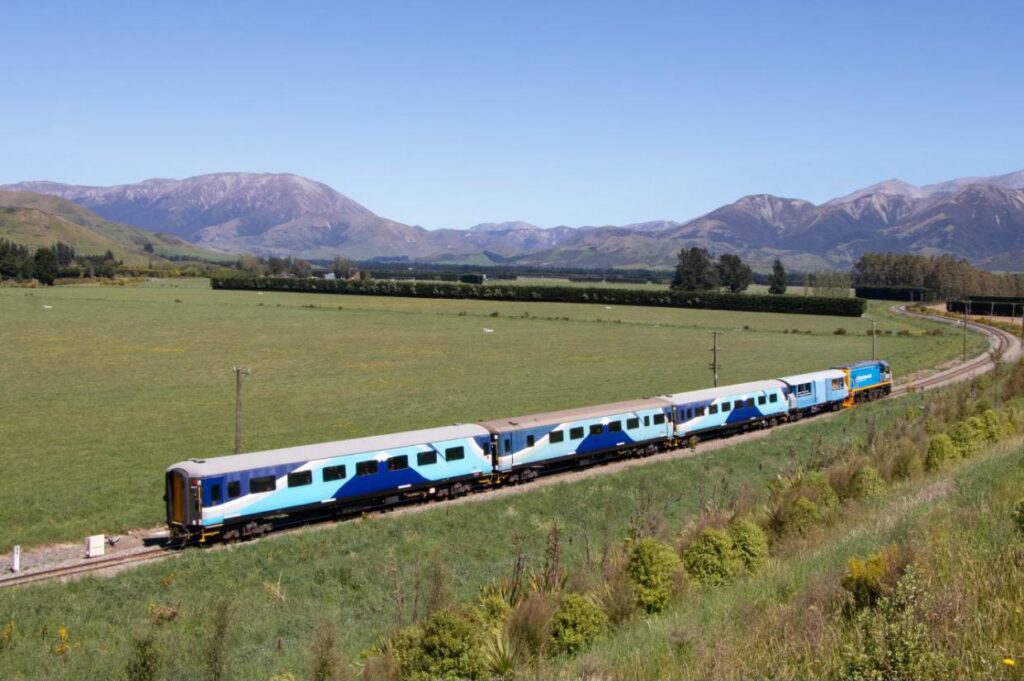
Mainlander train set on a test run. Image credit: Rail and Tourism Group Holdings
Tickets for the inaugural journeys are on sale at the Mainland Rail website. I will be on the first trips from Christchurch to Dunedin and from Dunedin to Invercargill.
Saturday, 29th November 2025 – Tāmaki Makaurau/ Auckland
After what appears to be an eternity, but was really a mere seven years or so, Albert Street re-opened as the primary West Auckland bus route from the city centre with bi-directional 24-hour bus lanes linking the Lower Albert Street Interchange to the Te Waihorotiu City Rail Link station, due to open in the second half of 2026.
Most buses using the corridor are electric, including the electric double-decker buses (pictured below) operating the WX1 Northwest Busway precursor service.
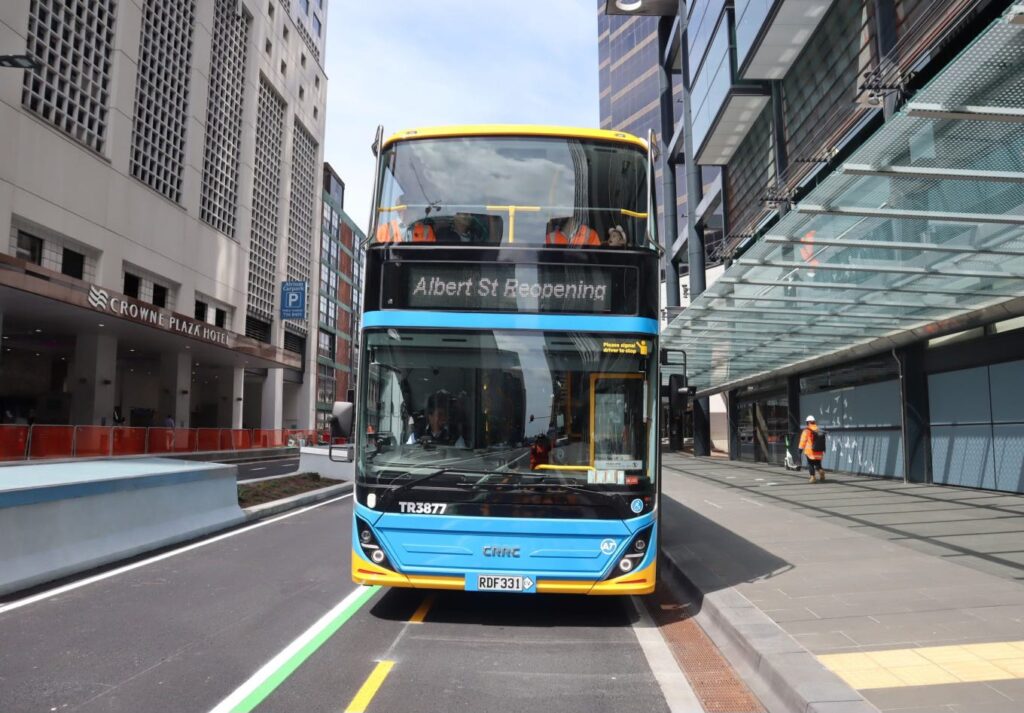
Albert Street fully reopened to buses on 29th November 2025. Image credit: Auckland Transport
In addition, route 12 linking West Auckland to the North Shore saw its frequency improve to every 15 minutes from 7am to 7pm every day of the week, with less frequent evening services retimed to better connect with trains at Henderson.
Final thoughts
While the current government may not be as public transport friendly as its predecessor, regions around the motu are still getting on with the job of making the best of things and implementing service improvements when and where they can. As someone who has spent most of my career in public transport, it can often seem to be a thankless task so we should be grateful for the work of regional council and Auckland Transport staff, even as we urge them to do more, better and faster.
In this post, I’ve largely focused on service and infrastructure improvements but let me know in the comments if I have missed anything you consider significant.
We’re now a registered charity, so your donations are tax-deductible. If you’d like to support our work – and, what better time of year to make a gift for a better world? – you can join our circle of supporters here, or support us on Substack.

 Processing...
Brilliant and very encouraging catalogue of improvements. Thank you for your commitment over many years.
It’s great to see passenger rail services on the increase, even if sparse. Can we please have a service that runs from Wellington to Taranaki??
November 29 AT Bus services removed from Hobson Street, causing a great inconvenience for esidents and Tourists
Making space to plan improvements for Hobson St to be more than just a motorway on-ramp.
“Aotearoa now has a single inter-regional train with a public transport focus running every day of the year.” Well, except most of January. And over long weekends. And on days next to long weekends.
True! And if Auckland is to be the North Island centroid of a long distance passenger rail, these holiday weekend and summer shutdowns must cease. Tourists cannot use a service that is shutdown during the time people tour.
You realise these shutdowns are only temporary measures to get the rail rebuild done?
Te Huia may cease to run before the shutdowns end. The service is only funded until July.
how long can “temporary” go on until it’s effectively permanent?
We’ve had “temporary” shutdowns down in Wellington for the last decade.
That’s the party line. I think some of are jaded enough to not buy it, time will tell.
Because of space constraints on rail corridors achieving adequate seperation from moving trains and maintainance tasks will inevitably result in track closures. And when catchup for for maintenance, or actual renewal is required to cope with years of deferred maintenance, or now heavier and more frequent loads, these closures, such as now being experienced, will be significant.
Nice work.
Reminded me of all the Te Huia opposition, which has since disappeared.
There was endless press about how “subsidised” this service was.
As another commenter has mentioned, Te Huia has an uncertain future.
https://archive.is/HRkS7
Have you taken it yet?
Te Huia’s opposition is in power, they haven’t disappeared.
Thanks for putting that together Darren.
I’ve used buses in Auckland, Palmerston North and Christchurch as well as Te Huia.
I hope you can share your experience of taking the train between Christchurch and Invercargill next month.
I would really love the train service to be put back on from Wellington to Napier – even just so that people could use it for weekend trips to Napier – going up on Friday afternoon, coming back Sunday night, at the very least.
And of course, the Wellington to Auckland train needs to be put back to what it was – once a day each way, and then when that is established, once a night each way. The present deal of 3 trains a week is pathetic.
It’s also marketed – and priced – as a premium tourist ‘rose’, making it impossible to use for ‘transport’…. which I have become acutely aware of when looking at using it to avoid driving teenagers to the central north island for a summer camp (a one- way date would be more than the cost of the 5- day camp, and three train doesn’t even run on the day we’d need anyway).
Last year I was in the USA and did a long- distance Amtrak, which managed both options in the same train – you could pay a premium for a sleeper cabin and restaurant car meals, or a public transport fare for a (comfortable and spacious) seat in another carriage, access to a viewing carriage and purchase food from a cafe car or take your own. Why can’t we manage that here?
‘Ride’, not ‘Rose’, sorry!
We can’t manage it because;
– Kiwirail’s budget is negligible when compared with NZTA’s
– Our rail infrastructure is ancient
– Our rolling stock is also ancient, and as far as I’m aware we don’t have any sleeper carriages
– Many of the regional railway stations have been demolished
Sure there are other reasons, but the majority of our transport infrastructure budget has been allocated to roading for decades
I absolutely concede we can’t manage sleeper services without significant changes, but given the train is running currently (albeit infrequently), surely it wouldn’t be too hard to add a more basic and reasonably priced ‘transport’ option by adding a carriage at the back – by all means sell all inclusive tourist fares with high class dining etc, but also provide an alternative option allowing locals to use it as a viable means of transport.
Would be an interesting trial, a budget service. it might however drag ridership away from full fare.
So, Anon, to rephrase what you’re saying mister constructively: we can manage it. We just have to reallocate budget.
*more constructively
Hi Guys (and Gals)
I really appreciate the postings and behind-the-scenes work you do on
behalf of all kiwis. Your postings are always interesting, informative
and positive. I have made a much needed donation. I really feel that the
transport situation particularly in Auckland is moving forward at an
encouraging rate. Keep up the great work that you do. Hopefully more
readers will show their appreciation.
Firstly, it is going to take a long time to win the public’s support for public transport in Auckland. At best it is only marginally reliable. While AT is promising improved reliability the proof will be if the commuter rail network can run without any faults for an entire year. Which, if AT was honest, is very unlikely.
Secondly, there has been no effort to improve safety for commuters. The amount of violence we have seen on the entire network, buses, trains and ferries over the past few years has been appalling. Yet no one wants to tackle this problem.
Frankly, the state of the rail corridor and stations, which are covered in graffiti (including new show-case station at Mount Eden / Maungawhau) says that no one is on top of the problem. If youth or vandals are able to wander unimpeded along the rail corridor at night, what is stopping them from turning their attention to more serious crime including boarding the trains and hassling commuters?
There is no way I would allow by daughters to travel on the train after 6pm. Until the problem is fixed you will not have my support.