This is a guest post from Wellington-based Kasey McDonnell, which originally appeared on their blog threesixtysix,. It is republished here with kind permission.
Boy am I horny for bus lanes.
Splash paint on a road, reserve it for buses that carry 70 people each, and you’ve instantly improved public transport.
Our city buses rock. They produce half the pollution of your average petrol car. Plus, you don’t need to pay attention to the road. Rather than trying not to hit kids or getting hit yourself, you can read, listen to a podcast, or brainrot before work.
Wellington buses carry tens of thousands of people a day, and they are transporting more people every year. By getting more people to catch buses instead of driving, we can reduce pollution and turn parking spaces into parks or homes.
In a gorgeous move, our councils are looking to boost our bus capacity with dedicated bus lanes on the Harbour Quays next year.
Every day, hospital workers like my sister-in-law will get to work faster and more reliably. Tourists to Wellington will have options to travel straight to Te Papa, the Town Hall, or Tākina. Each extra dollar invested in public transport will go further. We can add more useful services to Wellington suburbs. There is a bonanza of benefits.
Let’s get into it.
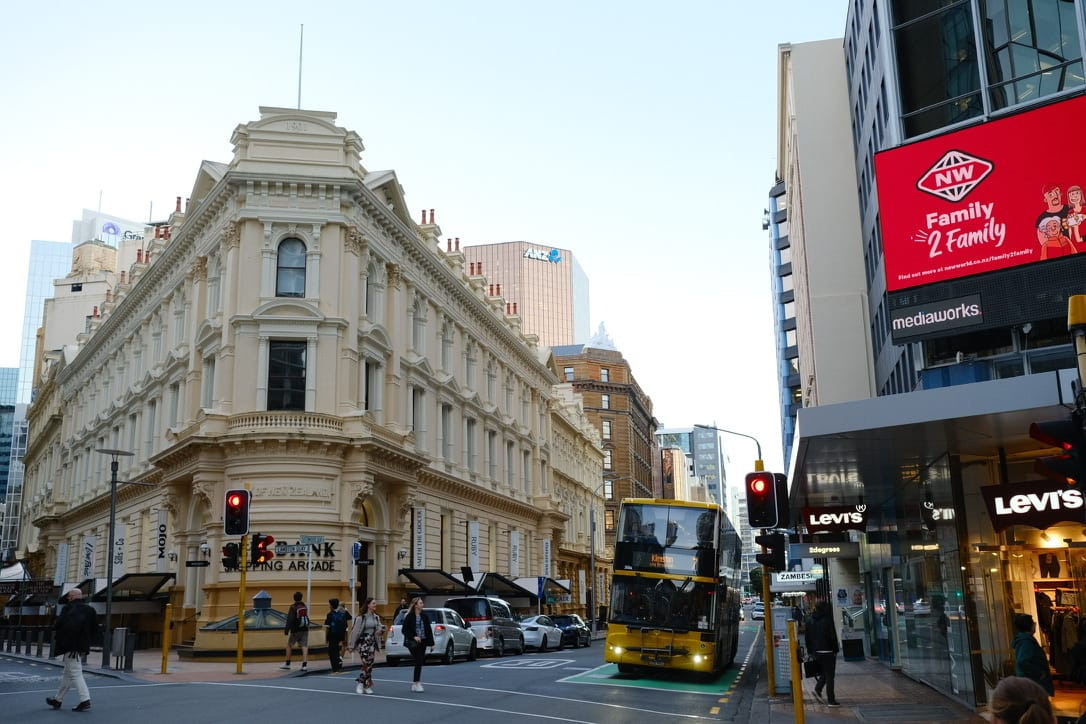
We have bus lanes across the city. More are on the way for the Harbour Quays.
Bus lanes bring better buses
Adding bus only lanes is a very effective way to get more people using public transport. They’re more effective than fares: price seems to matter less for motorists to switch than improving convenience and reliability.
We have some local evidence for this thanks to the last Government’s half price public transport policy in 2022. It didn’t inspire lots of people to ditch car keys for a bus card. The main people who benefited were people who already had good access to the bus or train.
“Non-users think of [public transport] services as unrealistic alternatives for travel, since they are not available in their area… or are going to take too long.”
The bus can take twice as long as driving, so no wonder improving service is a priority. Bus lanes speed up journeys, meaning each bus runs more services an hour. You can offer more bus services with the same budget.
Congestion goes down, too. People who switch from car to bus no longer contribute to traffic, leaving more room for drivers who need to drive.
Creating more space for better buses is a better system for current and future bus passengers.
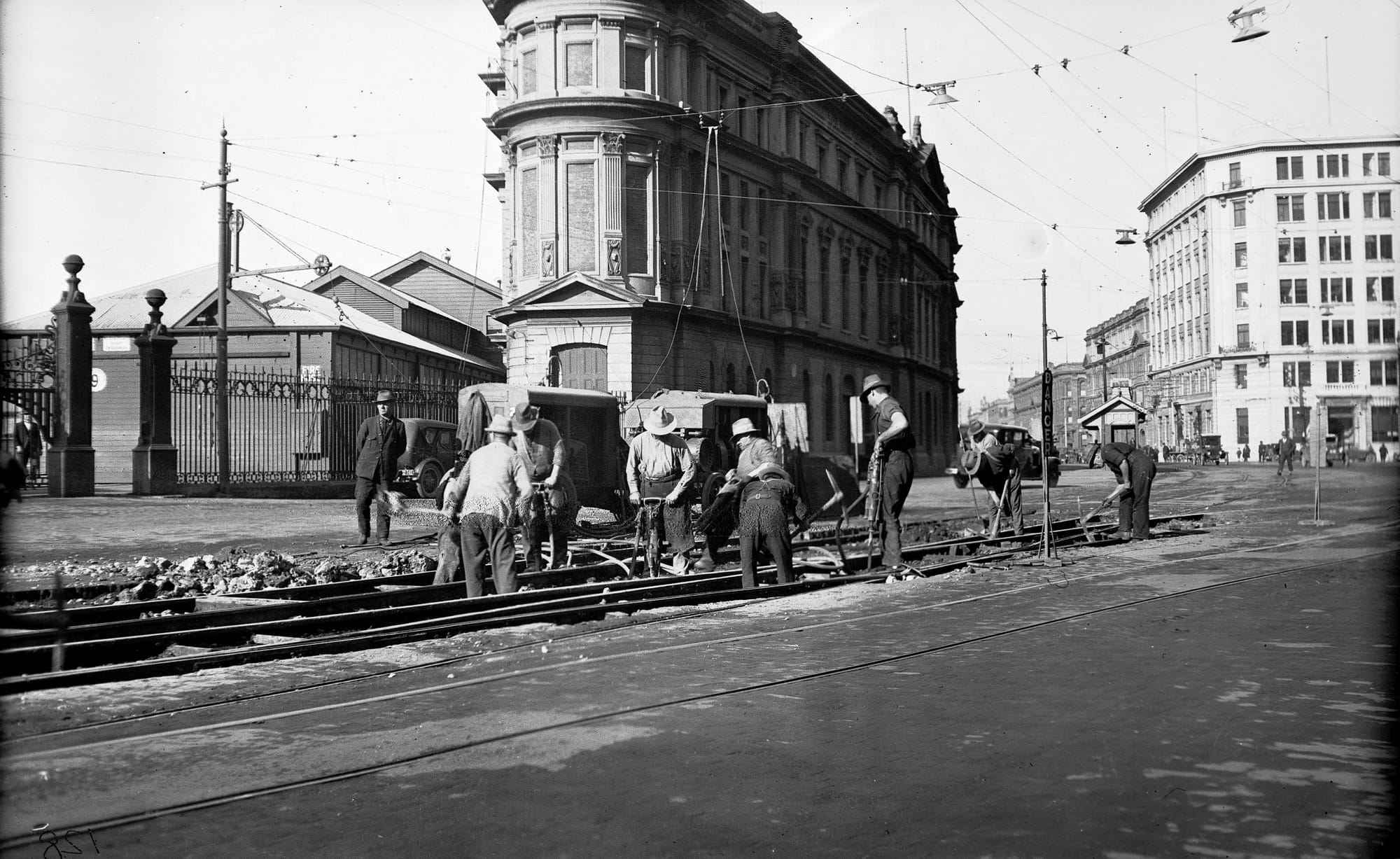
The Harbour Quays in the 1900s were transformed by trams. Soon, they’ll transform for buses.
Hello, Harbour Quays
Back in the day, trams travelled down the Harbour Quays. I wouldn’t be surprised if the old steel lines still sit under the roads. Next year, assuming the next council doesn’t screw it up, public transport will return to the Quays and I’ll furiously celebrate.
First, the context: The Golden Mile is full – we can’t fit more buses in there without ruining the service quality. The Golden Mile can comfortably carry 80 buses an hour. Right now, we’re stuffing in 105.
We have a growing network, so we need space for far more buses. The plan is to add bus lanes along Jervois Quay, Customhouse Quay, Wakefield Street, and Cable Street to connect to Cambridge and Kent Terrace.
Routes like the Airport Express and Hospital Express will run along these lines – they’ll run about six minutes faster, too. Courtenay Place won’t be so congested, so travel times through there will become about three minutes faster.
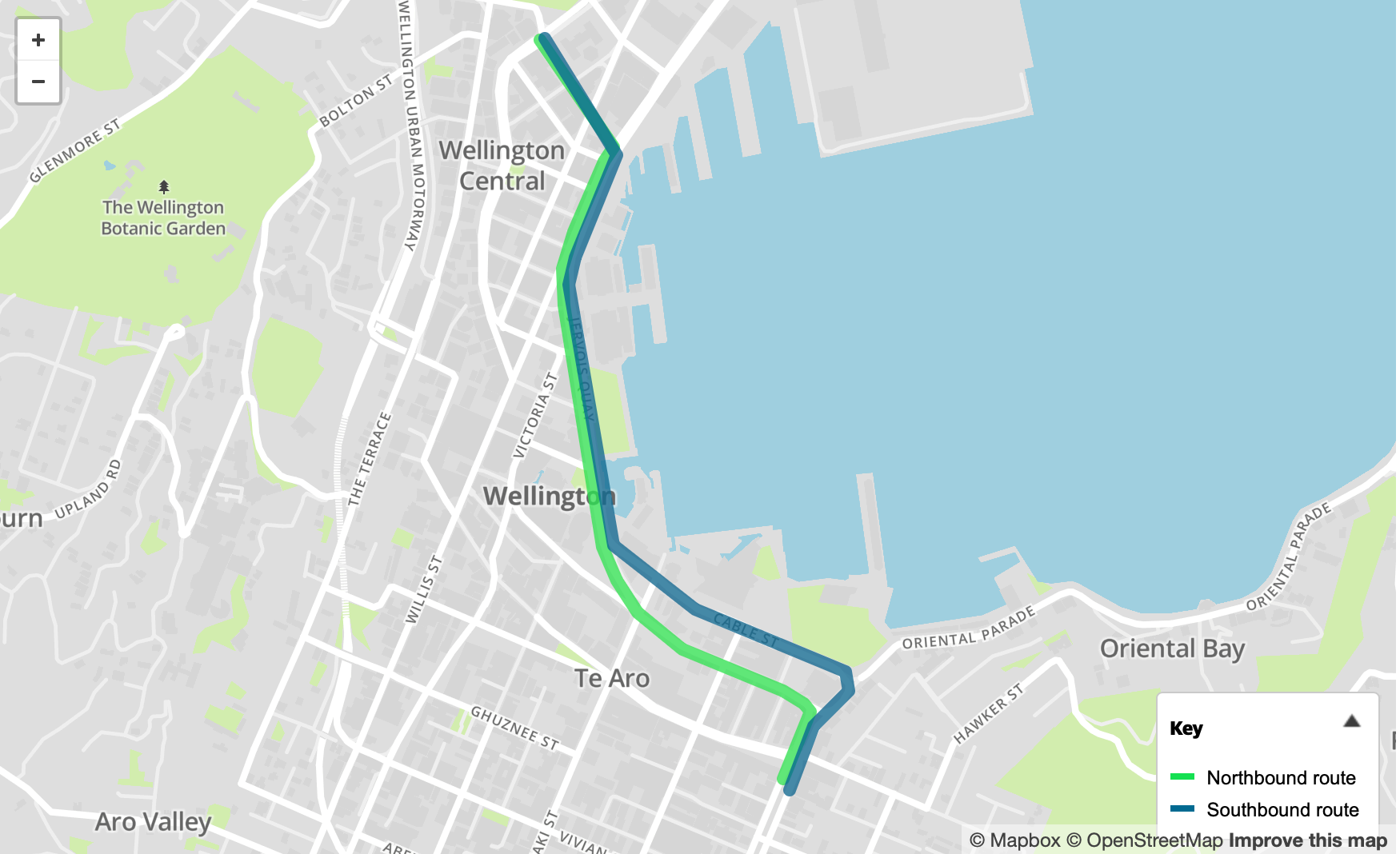
The beautiful bus lanes coming to our city next year.
Progressive mayoral candidates want this project to happen. Both Andrew Little and Alex Baker have committed to these bus lanes if they become Mayor. With enough progressive people alongside them at Council, it will happen in 2026.
Despite the clear benefits, when Simeon Brown and the Coalition government were elected, they revoked $40m of funding for these lanes. This Government promised at the election to tackle climate change, yet their actions often seem to do the exact opposite. Take from that what you will.
When the Coalition cut the funding, councillors chose to cut the budget by 80% instead of finding the money elsewhere. The lost budget for this project means we’ll get basic bus stops without quality of life improvements. Hopefully there’ll be public support for improving that stuff when people have hooned down Wakefield Street in their beautiful, blisteringly fast bus.
Wellingtonians already take the bus at least seventy thousand times every single day. Bus lanes are a beautiful, affordable way to improve their trips and encourage tens of thousands more people to switch to public transport.
The Harbour Quays should just be the beginning. Imagine bus lanes through to Island Bay or along the Ngauranga Gorge.
The more bus lanes we build, the more of us can brainrot in peace knowing our commute has cut pollution. Who said we can’t have it all?
This post, like all our work, is brought to you by the Greater Auckland crew and made possible by generous donations from our readers and fans. If you’d like to support our work, you can join our circle of supporters here, or support us on Substack!

 Processing...
Here in Tamaki Makaurau, the Northern Express proves this point, and has been proving this point for almost two decades.
Apart from capacity, they are basically untethered trains, or trolley buses, or whatever you want to label something that can carry some people, but not everybody.
Trains continue to be the superior method of transport, particularly when they have tracks, and hardwired electrical power.
But I agree completely, in Aotearoa buses can help with the postcode lottery we are birthed into, and public mass transit needs to be visible to ensure the fight against the private motor vehicle can continue.
bah humbug
Imagine what the NEX would be like if it was actually a busway its whole length (the city side)?
As a son of Lower Hutt I emphasise with the frustration that Wellingtonians, Tawamaltians, Poriruastanis and even possibly the life forms in Upper Hutt must feel about transport in the wider region.
Good to see that some modest improvements are on the way. In the meantime I’ll keep dreaming of an alternative history where railways were punched through to both Island Bay and Miramar in the early 20th C (not to mention lines to Wainuiomata, and through the Haywards).
Imagine tunneling the Quays and putting a park and public space on top, perhaps the long-desired events center of a size somewhere between the CakeTin and TSB. Maybe a LRT line….
Still, this will be a much needed improvement.
Good until the next earthquake?
Japan seems to manage.
Besides, the central implication of your quip is that nothing at all should be built in Wellington.
It is a serious issue, but true survivable infrastructure does cost. Building enough new stuff that can allow Wellington to survive and grow may be an opportunity cost. Abandoning the city isn’t an option before the big shake.
It should be properly evaluated vs other options that aren’t quite as risky. E.g. a new hospital for the lower NI built in Palmie (as closer to other centres and less risky) rather than directly on the EQ fault with the extra costs.
Well how about doing the physically easy, and low cost stuff first?
Some signs, some green paint, a little bit of relocated kerbing here and there, and voila, more bus lanes.
Reducing public transport journey times. And faster moving buses require less of them to cover the network at current frequencies creating opportunity to increase network coverage, or increase network frequency.
Public transport planning here has been blighted by vested interests protecting general roadway space for both private car movement and storage. This has made extremly expensive alternatives to roadway reallocation politically much more favourable then ever fiscally warranted.
WWC pay 100s of millions to destroy it as it it is a risk their precious road.
See Sea to City bridge for example.
Your map is more than a little misleading, in that currently Bus routes exist all the way down the Golden Mile ie Lambton / Willis / Courtenay. Why have you not shown them here for the full story?
It’s probably just the core combined roots and or the bus lanes only?
Yay for bus lanes anyway.
These are just the new proposed bus lanes to show the route they’ll take 🙂
This post seems to come from a Green candidate/s running for Wellington City Council, showing a lack of understanding of bus operations through Wellington’s city central area.
The ‘Quays’ routing has been tried on a number of occasions during the late 1960’s and 1970’s and failed due to passengers wanting to board/de-board buses on the Golden Mile between Courtney Place and Whitmore Street not along Wakefield Street, Jervois and Customhouse Quays.
The frequent 2 route between Seatoun, Miramar and Karori Park even in the tram days, a busy route due to the large catchment along the route and it needs to travel along the golden mile like with the 1 Route between Island Bay and Johnsonville and Churton Park.
The Wellington City Council need to make the golden mile totally car/van free except for emergency vehicle, bus priority traffic light phasing between Courtney Place to Taranaki Street, Taranaki Street to Willis Street and Willis Street, along Lambton Quay to Whitmore Street (near Bowen Street and the Cenotaph) to allow higher movement of buses
Once Motu Move is operational in the Wellington region, it will help to speed up board/de-boarding along the golden mile.
Awesome context! Hah I wrote the article but I’m not running for council or involved in any political party.
Thankfully these bus lanes will start off with express services – which provides the dual benefit of speeding up travel times for those services and reducing congestion for Golden Mile bus routes which most people will continue to use.
Totally agree that the Golden Mile needs to be car free honestly! It blows my mind that it isn’t even now!
Kasey – Need to listen what the travelers want as they use the buses, as they want easy access to transport.
Things have changed since the 60s and 70s however, and it will be interesting to see how things go now. The waterfront is a people magnet (though possibly fewer jobs than there used to be, but more jobs in the office buildings nearby?) and there’s Te Papa, plus the Quays is a faster route if you want to go through to other south or eastern suburbs from the train station.
Sian – Nothing has really changed other than the former goods stores have either been demolished or converted into entertainment/hospitality venues
Even in the tram days, Wakefield Street, Customhouse and Jervois Quays have been the main arterial route for vehicles originating from Oriental Parade, Kent Terrace, Tory Street, Taranaki Street, formally Cuba Street and Willis Street.
Back from Brisbane They have trackless trams yes trackless trams working together on bus lanes
Seems to work well
And 50 cents a trip
The problem with this proposal is that it makes transfers and hubbing, which we were told are the basis of the network Topology , really hard,
Routes that go along the current GM route don’t appear to interact at all with the proposed new stops meaning that to transfer will require transiting across 6 lanes of traffic on the quays and then a walk to Lambton Quay….
eg If you want to get from the Airport to Karori there appear to be no common stops at all…
The only routes proposed to use the quays are express routes to bypass the city centre. The fact that they don’t interact with the Golden Mile is the point. If you want to get from Kilbirnie or the Hospital to the Golden Mile, you use the 2 or the 4. If you want to bypass that up to the train station, you use the express routes.
This is a good news story, tge 2 and 4 are so popular that they now justify full express service duplication.
Sailor Boy – This has been tried on a number of times over the years and failed. Passengers want to board/de-board buses along the Golden Mile.
The AX and the 2 have stops in common at both Kilbirnie and Hataitai, so no problem getting from the airport to Karori. But it looks as if this will cost more than now, because the AX is a flat fare irrespective of distance, but Kilbirnie/Hataitai-Karori is an extra zone compared with Golden Mile-Karori.
Mike M – There are also common Routes 1 and 2 stops with the Airport Express along the Golden Mile between Whitmore Street and Courtney Pace.
The Quays, as well as the waterfront, are far busier places these days in terms of employment, events, attractions etc.
I would imagine if you ran the trial there now, 60yrs later, you’ll get a vastly different result.
Make all of Wellington CBD car-free*
*…so it’s easier to shut down for street racing.
Rebuild the Midland Hotel. Everything else is secondary.