This is a guest post by David Slack, who has kindly shared it from his excellent long-running newsletter ‘More Than a Feilding’, for the benefit of Greater Auckland readers. (Header image and accompanying photos also by David Slack.)
If the only line Joni Mitchell had ever written was about paving paradise and putting up a parking lot, she’d have left words for the ages.
How do you change and grow a place without ruining it? Sometimes resisting will be the right thing to do. Sometimes it will be merely fear dressed up as preservation.
The city I live in could do with many more homes, it could do with many more homes built where there are many already.
Some of us call this sensible densification, some call it ruin. Especially if you live in a seaside village with heritage villas.
I’ve been hanging out a little lately with architects. Such good people to spend time with — happy, positive, inquiring minds. They like to create, to explore new possibilities. I like their fundamental optimism that no place in the world is so nice that you can’t make it nicer.
Ken Davis and Julie Stout have been thinking and talking for a long time about what you might be able to do with the village of Devonport.
They don’t just turn out drawings and plans, they get out and about and hold meetings and discussions and bring in speakers and films and they do some great work with the University of Auckland, mentoring first year Masters students.
Right now in the village at DEPOT 3 Vic Road you can walk and see for yourself what those students have produced.
The brief was to explore Devonport’s future and design some possibilities. This included a meeting one evening in the Harmony Hall where they got to hear a few dozen of us talking about what we liked most about the place and what we’d like to see it become.
Let me sing the praise of an architecture design that far exceeds your expectations.
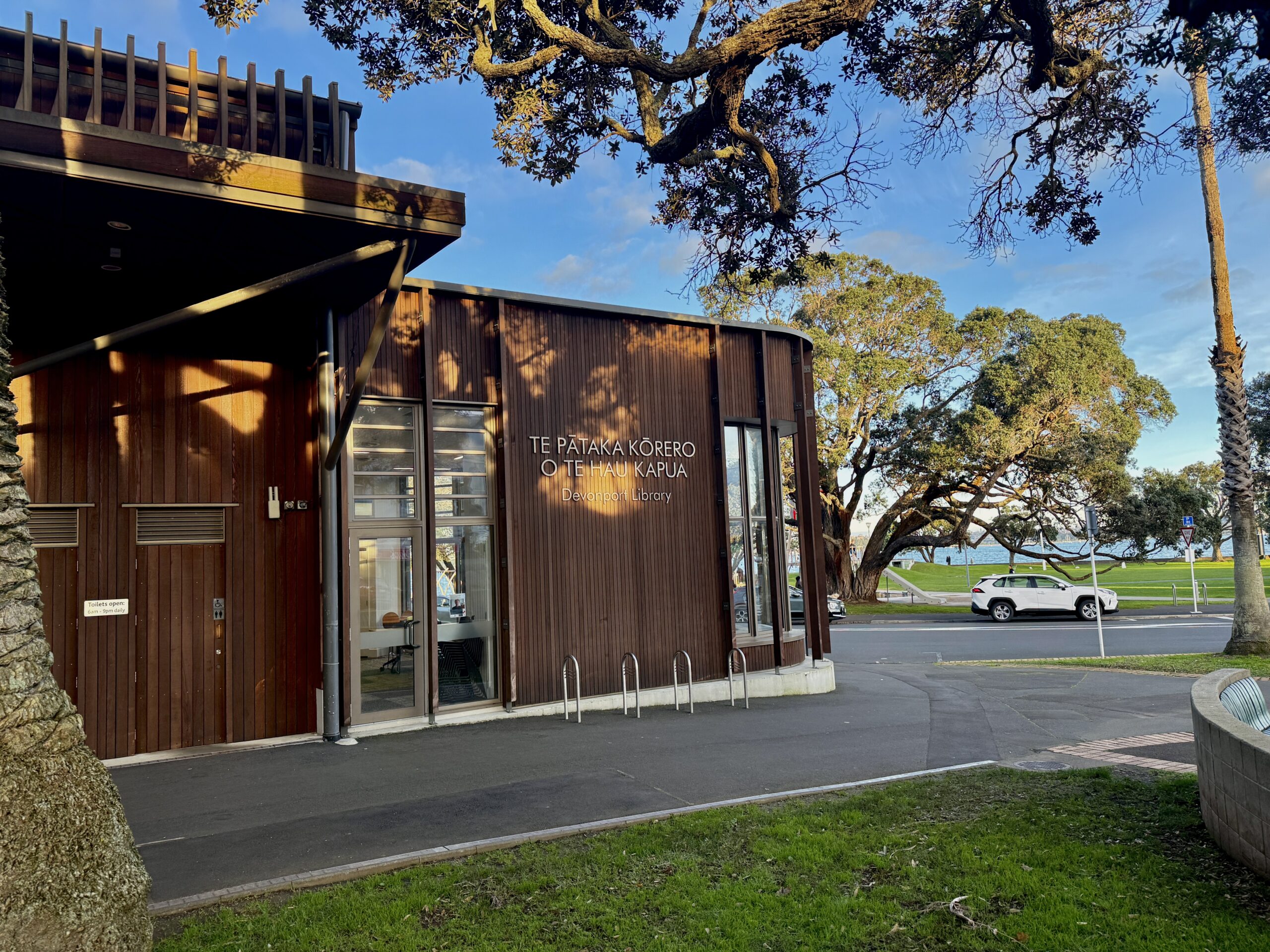
A decade or so ago when we heard we were getting a new library I thought that’ll be nice. When they said it would be designed to make it better for gathering and use green design to make it more comfortable, I thought well that all sounds nice too I guess, but I never thought: this will be a place so great that it lifts my spirits just walking past it, let alone how good it is to go in and enjoy it all.
 Same thing when they told us a decade before that they were going to rework the beach at Windsor Reserve. They were going to build a groyne that would change the wave and sand action. Good luck making that rocky thing swimmable I thought, but they absolutely transformed that beach by doing that, and it is loved and swum in by so many of us now. Same with the beach further along at Torpedo Bay.
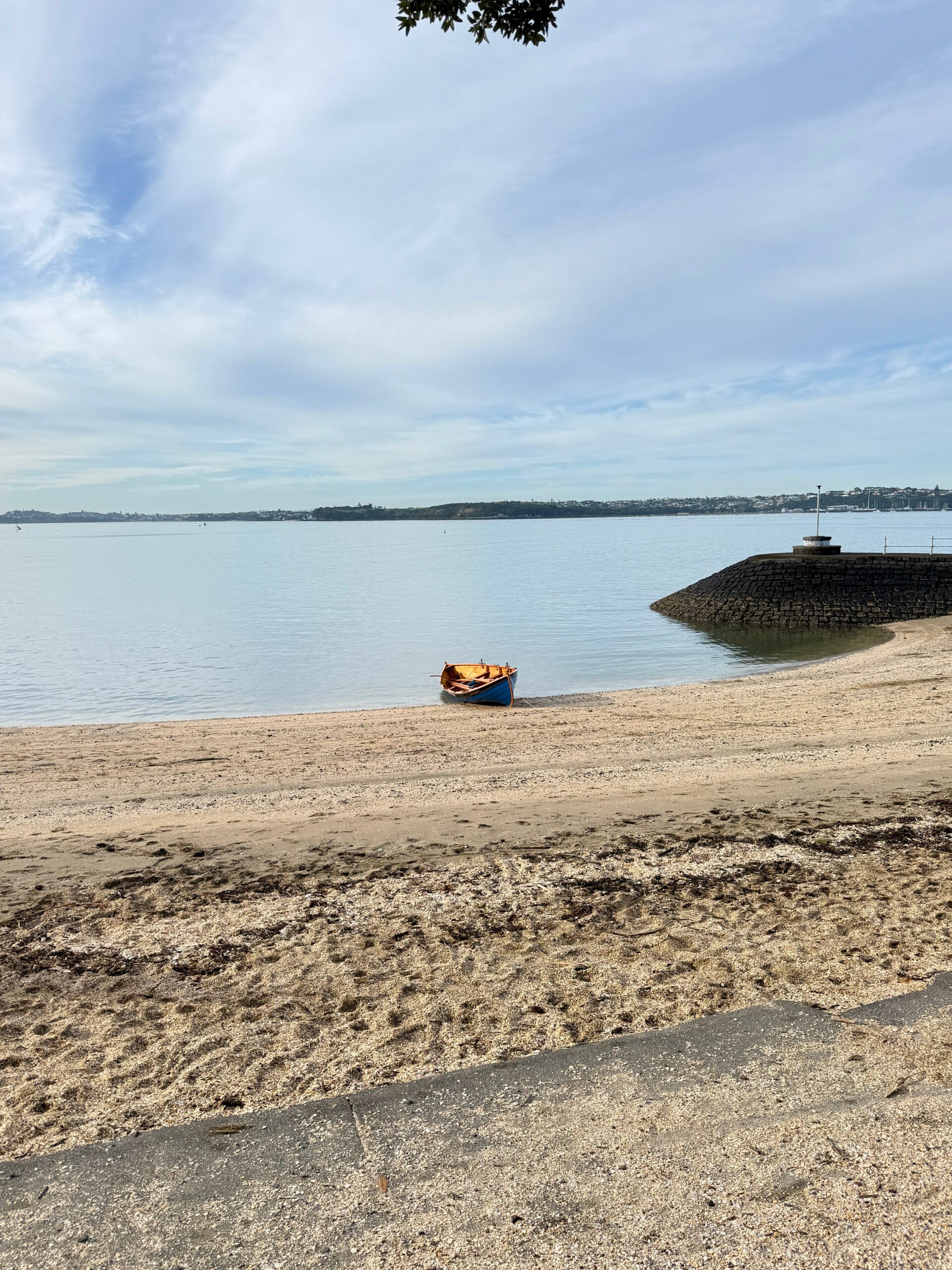
What a difference good design can make.
This week the Masters students’ designs went on display, an array of colour posters, maps, source material and 3D printed models. My first impression walking in, catching only glimpses behind many heads and shoulders, was: this might be a bit tame, just your usual modern geometric ideas. But no.
As the speeches began I found myself alongside one of the designs and I could take it in fully. I just loved it. It imagined a building of just a few floors — none of the suggestions go too high — with apartments, shops, workshops for weavers and carvers and crafts. It draws from the idea of waka and sails but it doesn’t labour it at all, just a lightness and openness and curve to it that emphatically carries the idea.
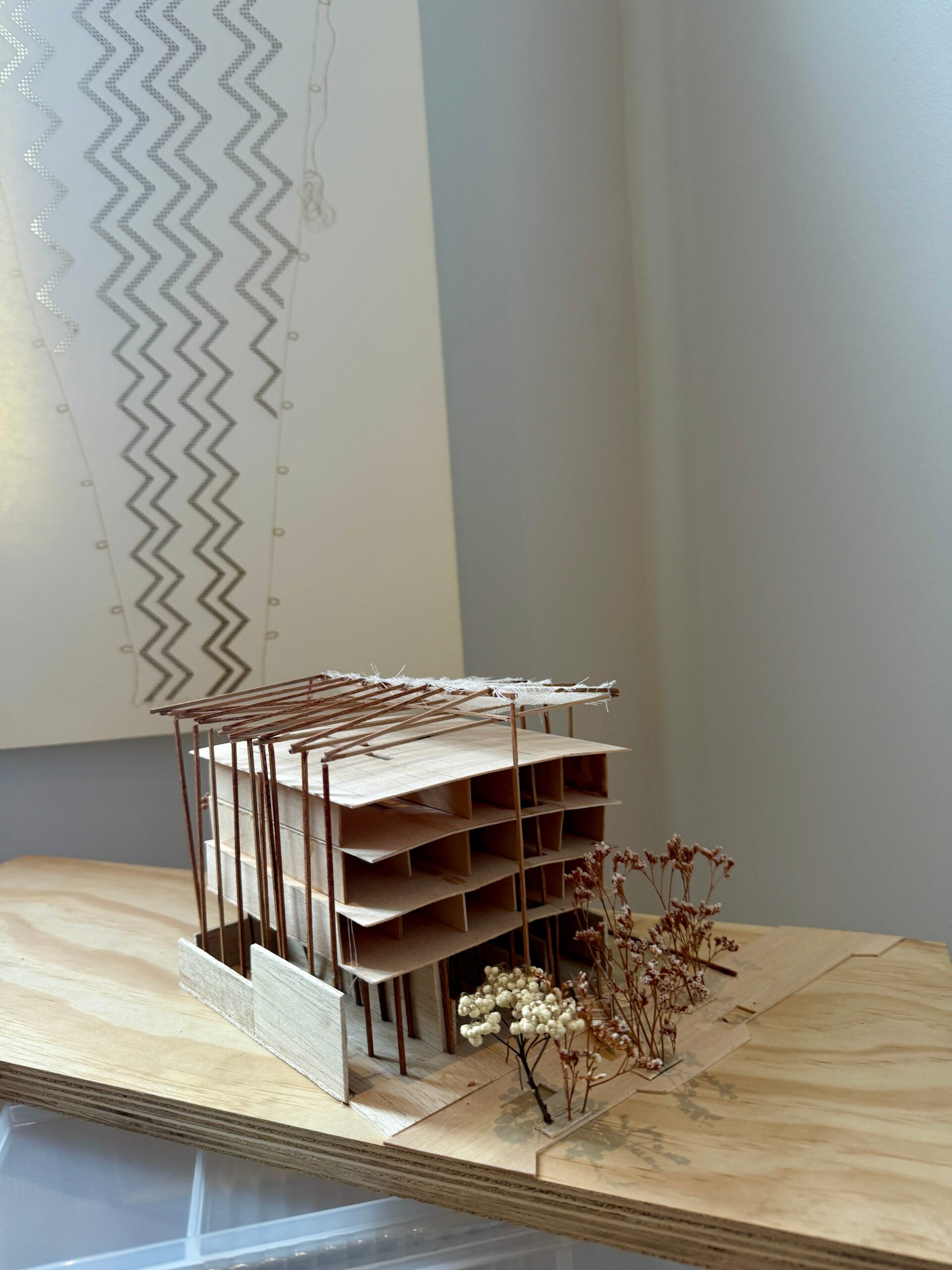
The more I looked the more I liked it. After the speeches I found the designer, to tell her how much I loved it. She beamed.
The next day I went back for a better look, then out into the village to match designs to actual buildings and spaces. Each of them had been given a location to work with, taking many of the simplest and dullest of the simple box shaped commercial buildings and suggesting something better. Each one would lift these places in genuinely exciting ways, but not in any way that might scare people off. I could see people going for this.
We were told at the opening there are perhaps 100 living in the actual village: this would lift the number into nearly a thousand. That’s what it’s all about. A whole lot more activity, a whole lot more business, a whole lot more people using the buses and ferries.
The original name for fifteen-minute city is of course: village. A place where you can walk to everything. People can recoil from this kindest of propositions because they sense a threat. To their car.
Here’s a fresh thought about that: we’re happy to see utes backing boats down the ramp onto the beach. But if they started driving along the beach itself and parking, how would we feel? We would surely say piss off with that. We know how nice it is to have the sand to ourselves.
Cars have latitude at present in other public spaces that really constitute the sand, not the ramp. If we rearranged things better, we could actually have a nicer time, all of us.
Like so many of the things I write about here, intensification is not just something we vitally need to do, it stands to make things so much nicer if we do them.
Ken Davis talks about how it works best when all the engines are firing, public and private together. The private sector can provide the investment power, but the public side brings something else entirely: overarching design strategy — the kind of inspired work that Eke Panuku did at places like Northcote and the Tank Farm.
Left purely to private developers, you get the usual scatter-gun approach – each site developed in isolation, maximum return per square metre, no real thought for how it all fits together. The result feels like a collection of separate projects that happen to be next to each other, rather than an actual place.
But when there’s genuine public leadership on the design vision — thinking about how buildings relate to streets, how public spaces flow, how the whole thing works as a neighbourhood rather than just a series of investments — you get something way richer.
These students have sketched out a place I’d really like to like to live.
Urban Adaptations – Te Hau Kapua Mō Apōpō / Devonport Tomorrow runs until this Sunday 27 July 2025 at DEPOT, 3 Victoria Road, Devonport.
As well as an exhibition featuring the work of eighteen Architecture Masters students from the University of Auckland School of Architecture and Planning, there’s a public programme of talks and films.
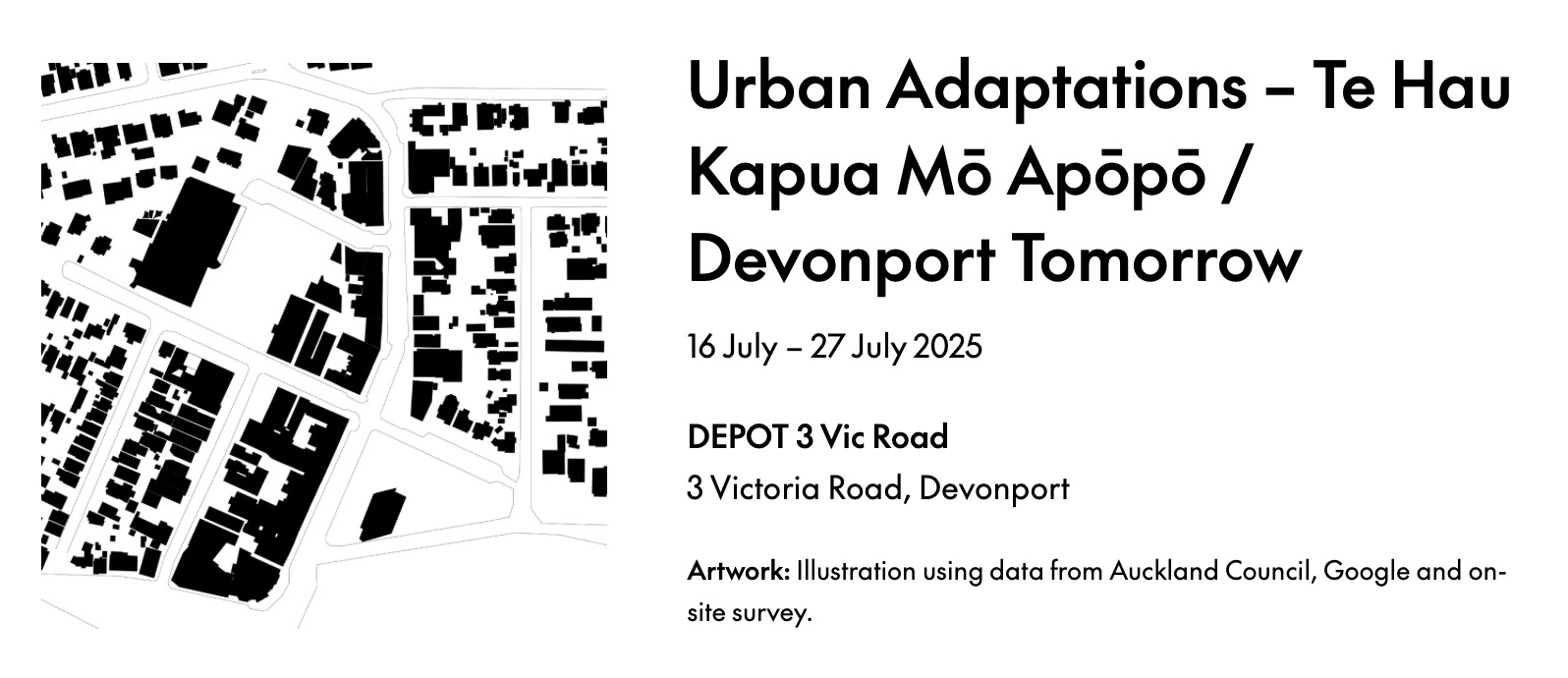
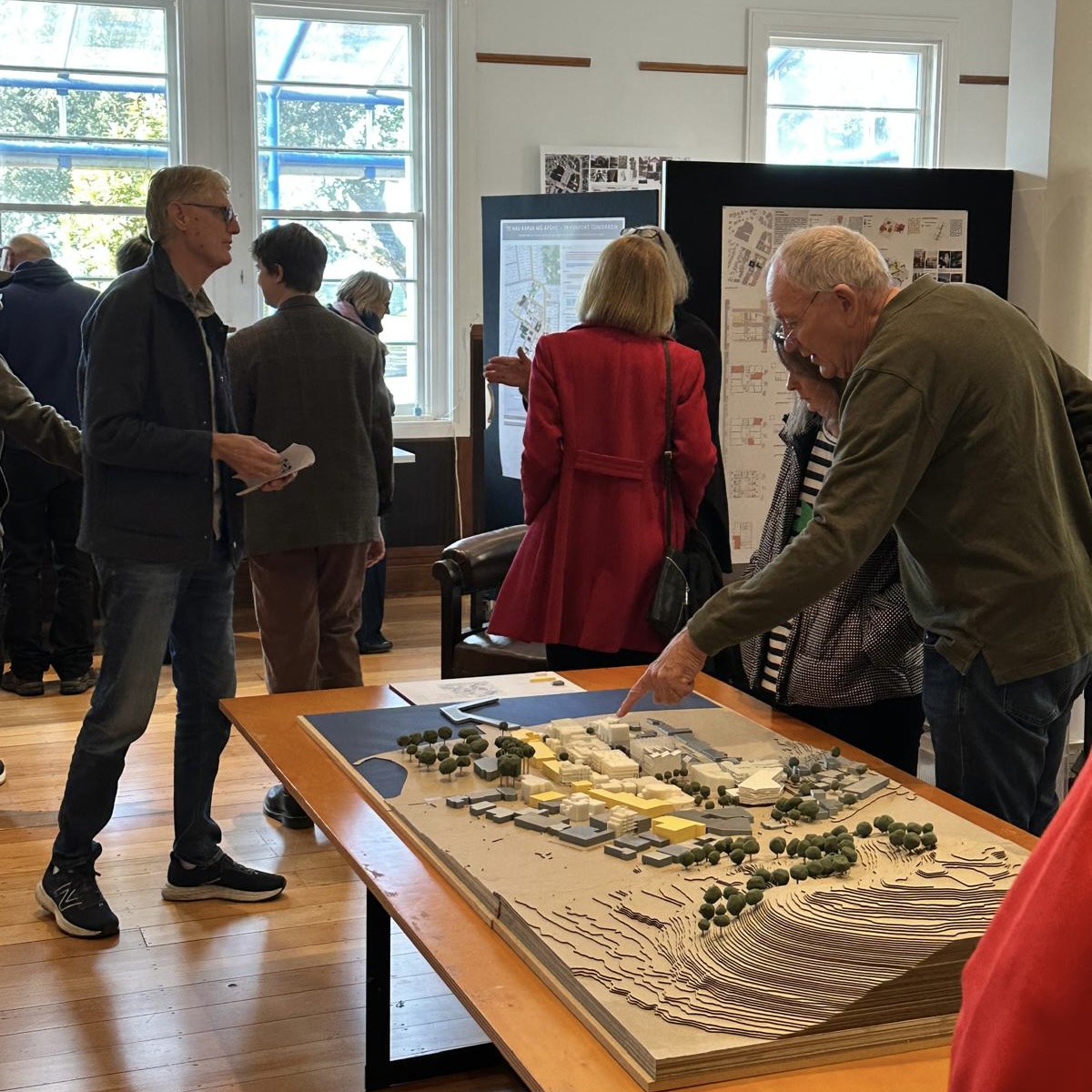 Image via DEPOT (Facebook)

 Processing...
I love this – it’s really good to be reminded of all the ways that our city of villages has already been made better, and could be made even better. Kudos to the architects and students for sparking conversation, which in itself is a kind of genuine public leadership.
Devonport is delightful, with its shops and library right by the water, and access to the city via one of the coolest varieties of public transport. If more people (including young people like the architecture students) were lucky enough to live there, that in turn would further boost the vibe. Onwards and upwards!
Simplicity has the fences up and begun clearing the large site on Morningside Rd for another great project. The area is a little run down and this will be a great addition to the area.
The 7 and 8 storey development is 150m from the Morningside train station, and will feature a rooftop resident work-from-home space, approximately 1,500 native trees and plants in extensive landscaped grounds, and a resident pavilion lounge and cafe.
The development will be built to a minimum Homestar 7 standard, with a 150-year design life. It will have solar panels, rainwater harvesting and a focus on minimising construction waste.
A few decades ago China were building very large apartment buildings. The costs were low, reducing emissions, commuting times, and required infrastructure. We in the west were critical but now most world cities are going ahead with large popular apartments.
You had me until the last bit – yikes. Look at the misery Chinese youth experience and tell me that’s not tied to their ghastly living situations and over-production of poor quality apartments.
Thanks David, beautifully put.
I don’t want to ruin the positivity – but – why does Devonport, an area of Auckland with virtually no growth allowed, get a nice new flash Library? If Auckland Council want all the growth in the outer suburbs, then that’s where they need to invest almost all of their money.
South Side says Amen.
That Library project started a long time back. That community needed it. Plenty of other communities need libraries now. Is Council collecting development contributions for Milldale and Drury for community spaces?
Ormiston centre is to get a library space in new retail development, if Council can make that work, but a well-designed purpose-built library like Devonport or Birkenhead can deliver much more for a community than just bookshelves in a shop.
“Is Council collecting development contributions for Milldale and Drury for community spaces?”
I can definitely confirm that they are collecting development contributions. As to when and to what kind of community spaces will eventually come, that depends on politicians, rates (not all is funded from dev contribution) and the economy (as in, how expensive it is to build things in any given period, for example)…
When we were submitting on The Long Term Plan, Council told us:
“At current funding levels we are not able to sustain the extensive community asset portfolio. Prioritisation ensures we invest in critical renewals to maintain compliance and satisfy health and safety requirements but at current funding levels the portfolio will continue to degrade over time.”
And
“The investment required to provide regional and local community services is significant and continues to increase as our community asset portfolio ages and grows in size as we respond to growth in Auckland and adapt to and mitigate climate change impacts. As our portfolio has increased in size the investment requirement to support those assets over the long term also increases.”
It’s all nonsense. If we were intensifying rather than sprawling, there would be a bigger population to share the costs of a more compactly held asset base. And failing to maintain the assets built up by past generations, because we’re focusing instead on keeping rates low for the current generations, simply destroys the opportunities of some communities, and ruins prospects for future generations.
This is the epitome of extraordinary selfishness.
Devonport needs a library. It also needs parking meters, protected cycle lanes, and many apartment buildings. If it gets the amenities without enabling more housing and modeshift, Council is doing a poor job of allocating resources.
So true, and if some assets are not maintained it will be more costly to sort later than if maintained more regularly.
It seems weird to do this for Devonport, home of the most smug, privileged NIMBYs in the city, where nothing will ever be allowed to change without actually sending the troops in
Exactly why opening their eyes to what coordinated architectural contribution could do for them.
This is delightful, exactly the kinds of conversation should be having about our character areas. Less about black and white character versus no character protection, and more about what makes each place great and how do retain that while also addressing the challenges of today. The ideal outcome is the best of both worlds – characterful local neighbourhoods that are rich in identity, diversity, density, and activity. I couldn’t think of a better group than students to lead and stimulate that conversation.
A deliberate focus on “Worst House [shop, building, car-park] On The Street” can gain real uplift and support to move past NIMBY response. This project looks like a really good provocation to good redevelopment.
Lovely piece…
I’m sceptical that replacing the input of private developers with self-appointed and over-educated boffins is going to leave the average man or woman feel more at home in their given neighbourhood.
Thanks, David, for your continued advocacy for all aspects of a better city, including better housing, better transport infrastructure and better public amenities. Great post.
“Left purely to private developers, you get the usual scatter-gun approach – each site developed in isolation, maximum return per square metre, no real thought for how it all fits together. ”
Yes, since 2016 (unitary plan beginning) there has been wholesale change of many many streets in Auckland. Along with the 2020 UPS-UD to remove the parking minimums has really created the perfect storm of car based intensification.
No neighbourhood planning from Council, no parking management plans from AT, and hence cars parked all over berms and all over the road.
Great article and what they are doing.
I visited Singapore last year and saw how they masterplanned the development of their city. It is a much better approach, and means that while there is a lot of density, there is also a lot of greenery. I think the reason so many people are against density here is that we do it so badly – poorly designed for sun, insufficient off-street parking (we need to recognise that many people still own a car AND use public transport), too little green space, multi level dwellings not suitable for an aging population, etc etc. I read something recently that a number of developers had revisited their future designs as they weren’t selling well, and I can’t say I’m surprised. A young couple in my family have just purchased their first home and they chose to live further out rather than live in a new denser and poor quality development.
I hear all the time from successive governments that we can learn from Singapore (and we can), Im just not clear what they have in mind.
Density, walking amenity, rapid transit, master planning, management of car usage…..it doesnt seem to be any of those.
I love this from David Slack, and the brilliant Julie Stout, I’d follow her lead anywhere.