This guest post by Darren Davis originally appeared on his great blog Adventures in Transitland, and shared here by kind permission.
The header image shows the westbound Borealis in Welch Township in May 2024. (Image credit: Jerry Huddleston from Hampton, Minnesota, US, CC BY 2.0, via Wikimedia Commons)
Given that Aotearoa/ New Zealand is in a post-election interregnum, I thought it timely to do a tour of some interesting public transport developments globally, starting with the United States.
In an increasingly polarised world in increasing collective denial about the climate crisis we are all facing, let’s have a look at some recent public transport developments of note in the United States. I am planning on doing a number of these pieces, which should each be readable in eight minutes (hence the title!).
At the edge of a fiscal cliff
While I hate to start on a bum note, it’s been a rough ride for public transport in the United States since the pandemic, not helped by a not particularly sympathetic federal government.
Long story short, public transport ridership in the United States has struggled to recover from the pandemic, exacerbated by real and frequently reported issues of homelessness, mental health and addiction issues among the remaining public transport passengers. This collectively has contributed to a funding death spiral of reduced revenue and increased operating costs.
The supreme irony is that the best transit agencies with the highest patronage and highest farebox recovery have been the most impacted. And agencies with minuscule patronage, and therefore very little fare revenue, have avoided the worst of this.
The San Francisco Bay Area has been a poster child for the negative impact of all of this, exacerbated by a very high rate of working from home. But even in this darkness, there are a couple of points of light.
Caltrain, which runs the commuter rail between San Jose in Silicon Valley and San Francisco, has long been smart about how to deal with a fiscal crisis. Instead of a death spiral of service cuts leading to lower ridership, it has used California High Speed Rail funding to electrify its network with new, much faster and more sustainable electric trains from 2024. This was on an improved timetable that moved strongly away from a peak commuter focus to regular all-day, every day service, generally every 30 minutes.
The impact has been immediate and clear. In the two years since electrification, ridership has increased by 85 per cent overall, and a whopping 150 per cent at weekends.
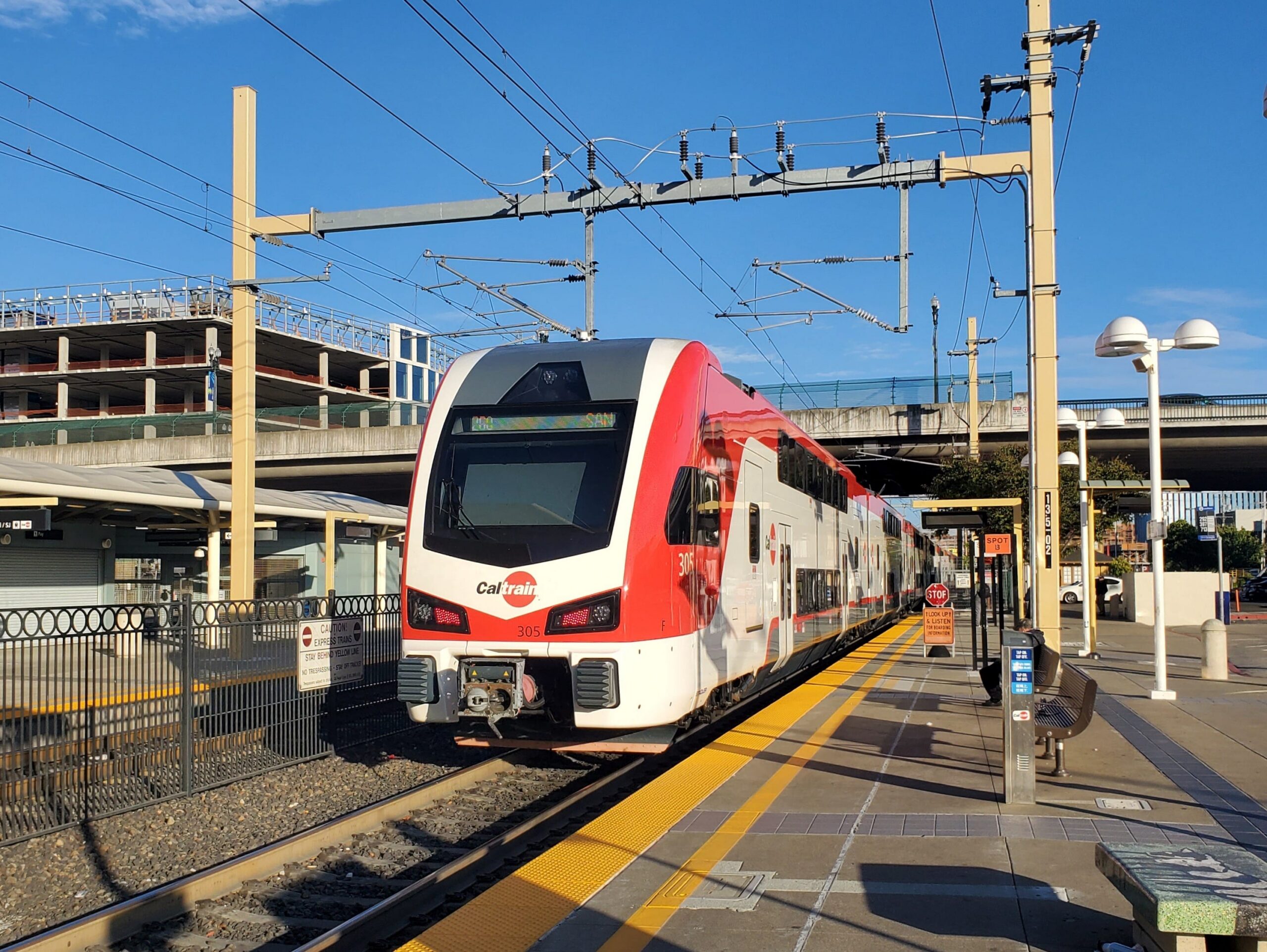
Caltrain EMU at Millbrae Station. By Pi.1415926535 – Own work CC BY-SA 4.0
And in the November 2026 Midterm elections, San Francisco voters approved a 15-year parcel tax for Muni operations. It is expected to provide approximately US$177 million to US$184 million annually for operational costs. And across the five county San Francisco Bay Area, a 14-year sales tax passed protecting operating funding for Bay Area Rapid Transit (BART), San Francisco Municipal Railway (Muni), Caltrain, Alameda County Transit, Valley Transportation Authority, SamTrans, ferries and other public transport services. So it looks like the Bay Area at least has edged itself back from its fiscal cliff.
CoCo in Colorado
Also on the Midterm ballot in the United States, voters in the Front Range region of Colorado supported a regional sales tax raising $US295 million annually and borrowing powers for the Colorado Connector (CoCo) passenger rail programme.
This will provide intercity passenger train service along 290 kilometres of Colorado’s Front Range corridor with major stops in Fort Collins, Boulder, Denver, Colorado Springs, and Pueblo. This corridor has around 85% of Colorado’s population and 86% of its jobs with a catchment of roughly five million people.
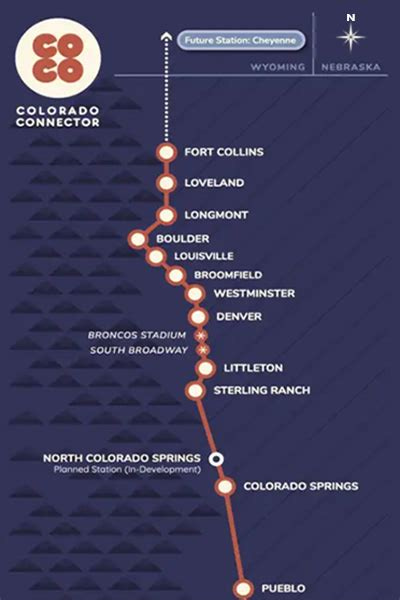
Colorado Connector Corridor. Image source: Colorado Connector website
The planned staging is as follows:
- 2029: Denver–Fort Collins starter service. The northern section is planned to open with three return trips per day.
- From 2029: northern frequency increases. Denver–Fort Collins service would progressively increase from three to up to 10 return trips per day, making it substantially more useful for everyday rather than occasional travel.
- 2032: expansion south to Pueblo. The next major stage extends passenger trains from Denver through Colorado Springs to Pueblo, initially for up to eight daily return trips.
This is a sensible programme of incremental upgrades along the highly congested I-25 corridor in Colorado.
Not so Brightline
In not so great news, Brightline, the private higher-speed passenger rail service between the South Florida cities of Miami, Fort Lauderdale and Palm Beach and Orlando, has recently filed for bankruptcy protection in the United States.
While this isn’t great news, Brightline continues to operate and offers a sound and well-used public transport service. It carried just over 3.1 million passengers in 2025, up around 13% from 2024. Its top speed is 200km/h between Orlando and Cocoa, 180km/h between Cocoa and West Palm Beach but slower at 127km/h from there to Miami where there are quite a number of level crossings. It offers 11 daily round-trips from Orlando to Florida and 18 daily round-trips on the shorter segment from West Palm Beach to Miami.
The fundamental issue was that its financing model was based on over-optimistic projections of how quickly ridership would build, not that there isn’t strong demand for intercity rail transport in what is admittedly, even by United States standards, a very car-oriented region.
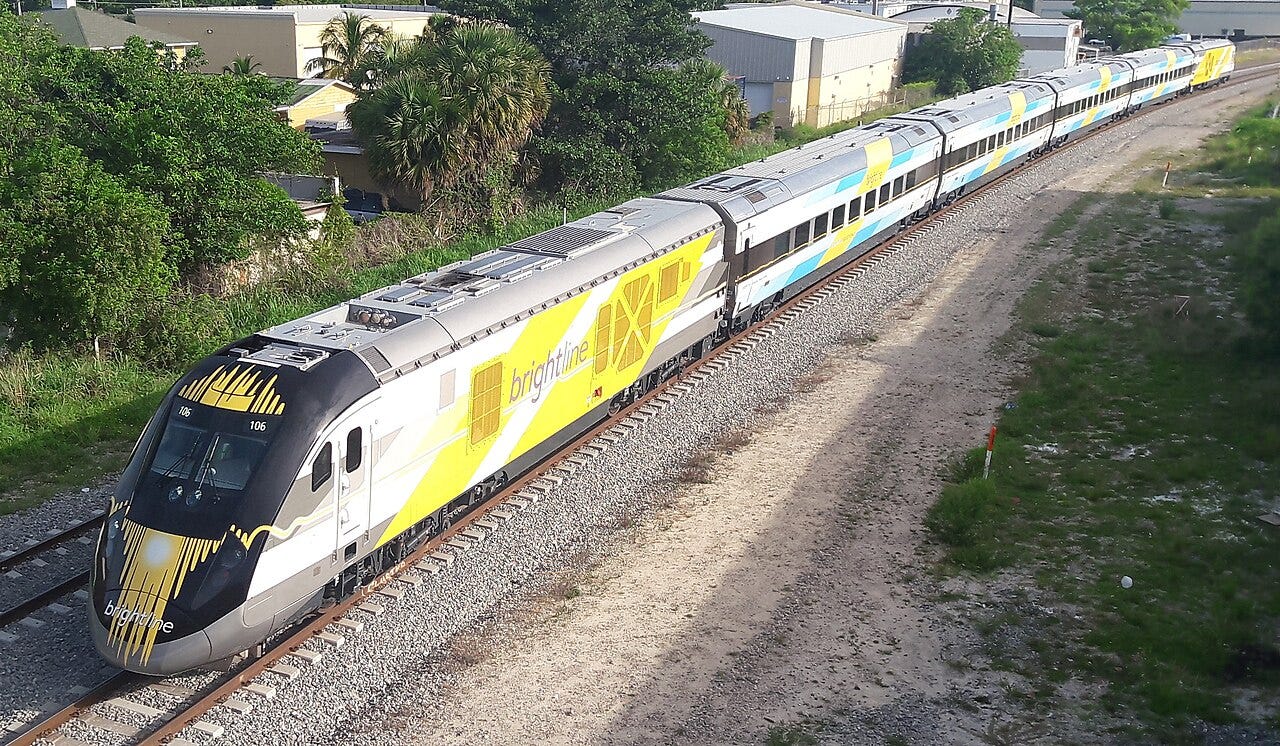
Brightline also directly competes between West Palm Beach and Miami with South Florida’s Tri-Rail commuter rail which runs slower parallel service on a more inland corridor at lower prices to Miami Airport. While Brightline is much faster and offers a more elevated service, its important South Florida travel market is quite price sensitive.
The lesson here is that private capital invested in passenger rail needs to be patient money willing to play the long game. And that there is market appetite for and use of passenger rail services in the United States – also attested to by the success of the new Mardi Gras train between New Orleans and Mobile, Alabama; and the new Borealis train between Chicago and Minneapolis. Read on for more on these.
Mardi Gras
The Trump presidency is possibly one of the less public transport friendly administrations in the United States in a long time. But nonetheless Amtrak, the national public rail passenger transport provider, has launched new train services in and around the Trump era. This includes the Mardi Gras in the deeply conservative Deep South from New Orleans, Louisiana, through Mississippi to Mobile, Alabama with strong political support from all three states through which it operates.
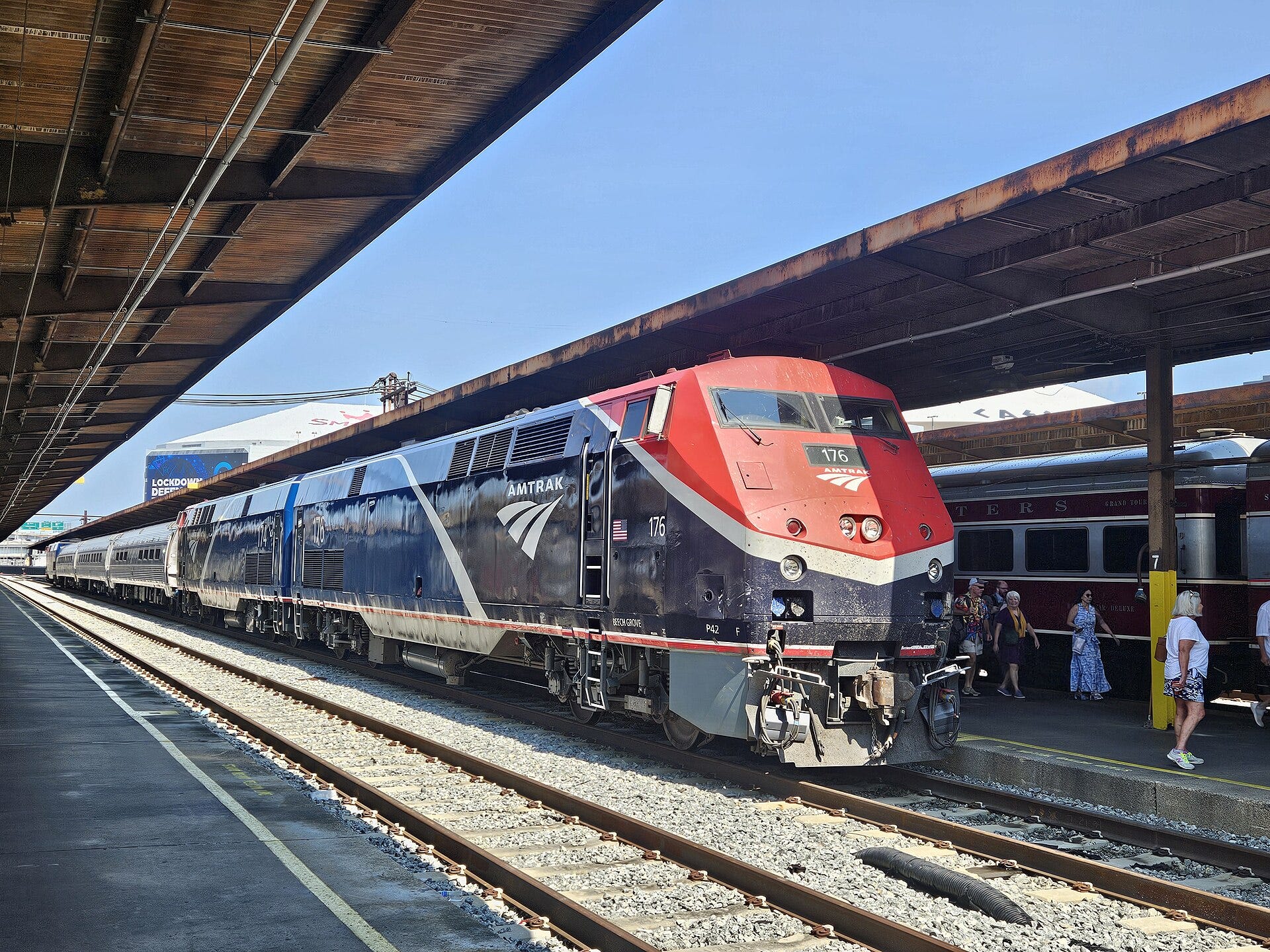
The first revenue run of Amtrak’s Mardi Gras train after arrival in New Orleans. Image credit: Rainclaw7, CC BY-SA 4.0 via Wikimedia commons.
The Mardi Gras Service began on August 18, 2025, with two daily return trips. Tickets on the inaugural trains sold out within a day. In mid-September 2025, Amtrak began adding a fourth car to some trains that were selling out due to New Orleans Saints home football games.
In December 2025, Amtrak reported that the service had drawn 46,000 riders since its launch, putting it on track to double the service’s projected 12-month ridership of 71,000. By April 2026, ridership had exceeded 100,000.
The lesson here is that regional and long-distance rail garners wide public and political support across the political spectrum. If Mississippi, not known as one of the more progressive states, can back regional rail connectivity, then surely this is also possible in slightly more progressive Aotearoa/ New Zealand.
Borealis
Borealis is a daily Amtrak inter-city rail service between Chicago and the twin cities of Minneapolis/ St Paul, Minnesota, via Milwaukee, Wisconsin which began on May 21, 2024. When combined with the pre-existing daily Empire Builder service between Chicago and Seattle/ Portland via St Paul, it doubles the train service between these cities.
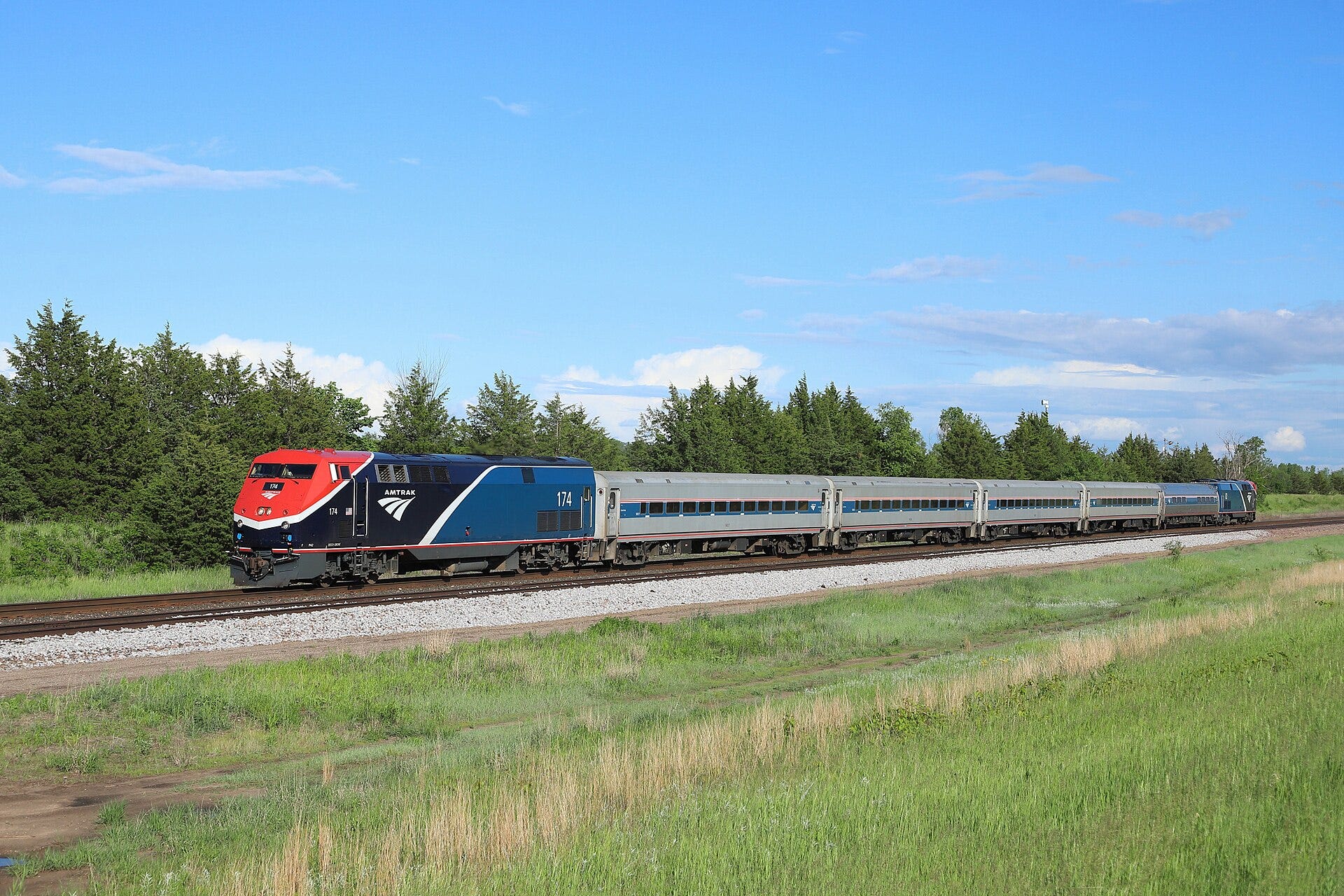
The westbound Borealis in Welch Township in May 2024 Image credit Jerry Huddleston from Hampton, Minnesota, US, CC BY 2.0, via Wikimedia Commons
Ridership was originally projected to be 124,000 passengers per year. But by October 24, 2024, Borealis ridership had already surpassed 100,000 passengers within five months of service. Total ridership in the first year of service was 205,800 passengers, contributing to overall ridership in the Chicago-Twin Cities corridor more than tripling.
In October 2026, the service reached its 500,000th passenger, well beyond pre-launch ridership estimates. In the same month, Amtrak announced that a fourth passenger car will be added to the Borealis to meet surging demand.
Are we being trumped by Trump?
Given that even in Trump’s America better things are happening with regional and longer-distance passenger rail, it seems that we may be missing a trick here in Aotearoa/ New Zealand.
Even just thinking of tourism, New Zealand’s number two export earner, and thinking about how Ngā Haerenga/ NZ Cycle Trail has opened up many new areas to the visitor economy, we risk leaving regions like Hawkes Bay, Taranaki and Southland behind if they remain disconnected from rail travel. Not to mention the significant mobility and economic benefits generated by sustainable mobility choices.
Outside of the largest cities, New Zealand is still very much a fly and drive country. And that won’t change until we move ourselves out of the paradigm that those are the only two normalised travel choices between cities, towns and regions across the motu. If Mississippi can do it, then why not Aotearoa/ New Zealand?
If you enjoyed this read, be sure to check out more of Darren’s writing at Adventures in Transitland.

 Processing...


