For many years, Auckland’s rail network has been going through a substantial, and disruptive, rebuild. While the programme is reaching its end date, with CRL opening later this year it’s vital we no longer see this level of disruption on the rail network again. KiwiRail has provided us with a guest post explaining how they will be approaching track maintenance and renewal in the future.
As always, feel free to add your thoughts and any questions in the comments.
This is a guest post by Jon Knight – KiwiRail’s General Manager Auckland Metro Network
Why and when the Auckland rail network will close in future
In a few short months, Auckland will have a modern rail network befitting any growing city as the region’s population approaches 2 million.
We’ve heard a lot about the benefits the City Rail Link (CRL) will usher in – better manage congestion on our roads, less need for purchases of costly petrol and a more efficient way for Aucklanders to move around the region for school, work, recreation and major events.
So what happens when our shiny new network is open? Will those lengthy complete network closures be consigned to the dustbin of history?
How we got here
CRL will bring more frequent trains across Tāmaki Makaurau and shorter journeys. It required several significant programmes of work to bring the whole system up to date.
Getting the metro to a ‘steady state’ was a major effort, requiring more than $2bn in funds from central government (excluding the direct City Rail Link project investment) and support from our partners Auckland Transport and City Rail Link Ltd.
Originally built for freight trains, Auckland’s rail network had little or substandard drainage in place – leaving it over-reliant on swales and vulnerable to climate events. Most of its foundations were more than 60 years old, and some of Auckland’s rail tunnels were built in the early 1900s.
We brought the priority areas of our 150-year-old rail network up to modern standards at the same time as building brand new lines, such as the Onehunga-West Line from West to South Auckland, and new underground CRL and other stations.
Big-ticket items
Delivering the major capital projects needed to support CRL meant long summer closures over the past few years, along with multiple weekend and holiday full and partial shutdowns at other times. These big-ticket items included the now-completed Pukekohe to Papakura electrification, Third Main Line and Wiri to Quay Park projects – and the current construction of three new stations in southern Auckland.
In addition, those full network closures allowed for more concentrated and difficult work, such as the digging under rails to replace foundations and drainage. The five-year Rail Network Rebuild replaced foundations and ballast across almost half the network, along with more than 1600 sleepers, and built rail that can cope with a high-speed metro network.
Happily, that rebuild work is now complete and the large-scale infrastructure projects are all but done also. Taken together, these set the Auckland metro network up to support more frequent train services in the decades to come.
Regular, proactive maintenance of our network
It falls to rail network owner, KiwiRail, to manage and maintain the metro tunnels and rail infrastructure, including signals and train radio systems.
About two years ago, we shifted to a proactive and scheduled maintenance approach to increase our productivity. Our Metro Maintenance Plan identifies what assets (e.g. track, signals, foundations) within the rail network require repair, replacement, or upgrade and over what time frame, creating a work schedule that can be relied on.
Our teams are now out six days a week, all through the night, to keep our modern metro network in tip-top shape. This is consistent with how urban passenger railways operate all around the world.
We divided the Auckland network into 36 zones, and cycle through each of these zones every 14 weeks. That means we are looking at each part of the network three times a year, inspecting our assets and undertaking scheduled maintenance and any repairs necessary to keep it working at full capacity.
Each zone is self-contained enough to allow for maintenance work, even on rails, while trains continue to operate elsewhere.
This schedule of regular preventative jobs has meant we’ve reduced our reactive maintenance work programme by around a third. It prevents gear from breaking and small problems from becoming ones large enough to necessitate capital works and lengthier shutdowns.
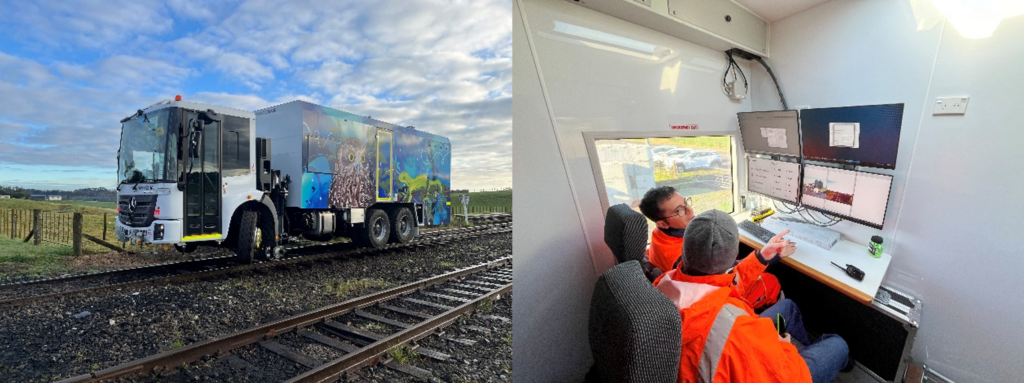
The Automated Track Inspection System (ATIS) is equipped with modern inspection systems positioned around the vehicle to assess the condition of the track and electrical network. This state-of-the-art system, now at work on the Auckland metro, is designed to enhance our track maintenance and safety.
How will KiwiRail keep trains running?
The work we have done on the network in past years creates this maintainable network.
In addition to fixing underlying problems, we have created on-tracking points for our maintenance vehicles, further sectioned overhead lines, built additional cross-overs, and enhanced bi-directional signaling.
This gives us the means to access and work on individual sections of the network at different times.
We are leveraging technology, automation, and mechanisation, to increase the speed at which our teams can work on the network.
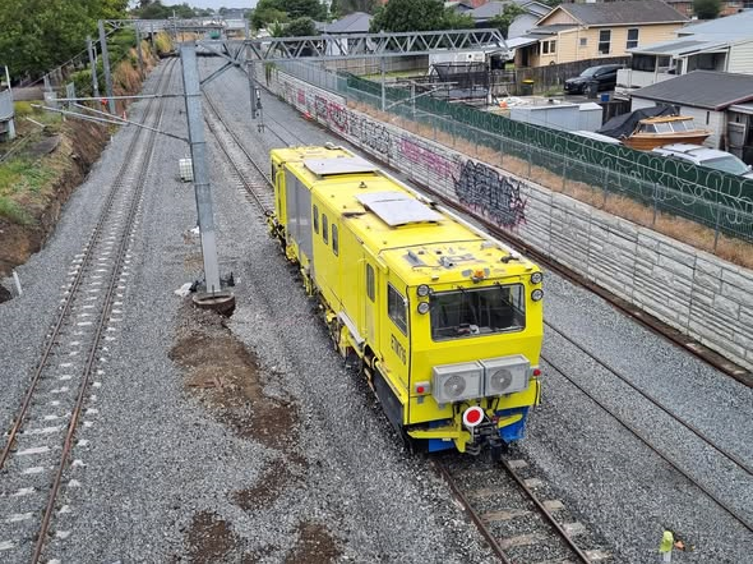
A dynamic track stabiliser is just one of machines that helps keep the network in shape. It simulates train pressure and movement, applying tonnes of pressure and vibrates the ballast to lock everything into place, so it fits together.
Closures for asset renewal & upgrade
Weekly night maintenance occurs on the network throughout the year commencing around midnight through until around 5am daily. Asset upgrades and renewals work on major rail assets must also continue to keep the infrastructure healthy, so it performs effectively. This type of work is more invasive than regular weekly maintenance and requires more time to complete.
As such, asset upgrades and renewals are scheduled around a year in advance, targeting Christmas, Easter, public holidays and weekends. This work occurs in 24-hour shift patterns to make best use of both daylight hours and evenings over the calendar year.
These activities are scheduled for partial network closures, which enables targeted intervention and lower levels of disruption to train services. This is standard practice for other modern international metros so they can successfully and reliably operate when passenger demand is highest.
After CRL opens, some lines and sections of lines will still have to close from time to time. But our new approach will mean train services can continue operating in the region on most days of the year.
Shutdowns will be shorter and forecasted much earlier in advance via long-term asset management plans. A summer closure will still be needed to deliver intensive, often more invasive work, but it will be targeted and work forecasted far in advance.
All this supports a more resilient, reliable, sustainable rail network with reduced disruption. Aucklanders will have the certainty they need to plan around the holidays and get to major events and New Year’s celebrations.
Greater Auckland’s work is made possible by generous donations from our readers and fans. Support our work by joining our circle of supporters here and setting up a reoccurring donation.

 Processing...
Yay, still summer rail closures 🙁
Can they at least minimise them and align it with when people are actually off work? Most people go back to work early January, but the rail lines have often remain closed for another couple of weeks.
What is meant by describing the “Onehunga-West Line” as “brand new”. The Onehunga line was opened over 150 years ago. The line West of Onehunga only exists on paper – it was designated in 1955 (later amended to allow construction of the SH20 motorway) but remains unfunded so what is meant by “Onehunga-West Line”?
Referring to the new ‘Onehunga West’ service in AT’s new network. Agree, not new at all. Just a different half-hourly operating pattern.
I think this refers to the coming service pattern of Onehunga to the west NOT through the CRL, ie via Maungawhau NAL platforms. Off peak only.
Yes AT’s line naming is confusing and needs to change.
Disappointing that holiday shutdowns will continue to exist. If I travel to London or Sydney over the holidays, I can still take the train… Will continue to render the AirportLink – S-C / E-W connection to the city unreliable for visitors.
Actually TfL does shut down on bank holidays and weekends. Just not for a whole month.
So basically there will still be holiday closures, summer closures and night closures.
They are basically just assuring us that there will be not be long term rebuild closures, and network testing closures – which we already expected to be the case…
“Shutdowns will be shorter and forecasted much earlier in advance via long-term asset management plans. A summer closure will still be needed to deliver intensive, often more invasive work, but it will be targeted and work forecasted far in advance.”
How much shorter? They used to be a week, this doesn’t sound like it will be a week.
Also, will every single long weekend continue to be a train free time?
I don’t want to be too negative a voice here, but is it really internationally standard for whole network shutdowns to occur like this regularly even after a multi-year rebuild (that included whole lines offline for several months)? Are there similar sized networks in other cities that we can compare maintenance programmes with?
The article doesn’t specifically say whole network shutdowns, it specifically mentions they can be more targeted.
Unfortunately this is left open to interpretation, but my guess would be part of a particular line closed rather than the whole network.
What is promising is it looks like there is a lot more scope to close off one track on small sections of the network meaning trains can continue to get through on the other track.
True, but the lack of specificity doesn’t exactly inspire confidence.
Given that we still have the entire level crossing removal project to do (and in the case of the west fund) I would assume that there are going to be closures related to those works.
Hopefully just partial lines, but there are going to be times where shutting off power and access will be required for periods that extend beyond overnight.
Agree, I think significant capital works will still require decent closures. It’s an argument to work on as many of the level crossings as possible at the same time.
They also failed to build the underpass linking the GI2TD path to Gowing Drive as planned during the months-long shutdown of the Eastern line, so if we ever get to see that built it would presumably have to involve a lengthy shutdown to put in an under- or over- pass.
It definitely is. In the UK, they shut down whole lines around the entire country to perform maintenance works over holidays. Similar things happen in Melbourne, London Underground ect. There’s no way to do major works like drainage, points replacement or foundation replacement overnight.
The network is definitely more segmented now. They can now easily close more smaller sections for this type of work.
The main difference is that Auckland has a small network with only one track sector. It’s really just two lines with a loop and two branches, all feeding into the same two tracks at the core.
Internationally it is absolutely normal to shut down a whole track sector for major renewals. The difference is most other cities have several sectors on their network so they only close a third or fourth of the lines at any given time.
I also don’t want to be too negative, but it is very disappointing that Kiwirail still can’t own up to to their role in “how we got here”. You built and then didn’t maintain the rail network. The “how we have got here” is deliberate decisions by Kiwirail to underinvest in the network and kick the can down the road until CRL forced you to do something. “Two years ago we shifted to proactive and scheduled maintenance”, what were you doing prior? Undermining (literally) commuter rail in Auckland. I look forward to the change in approach!
Southdown Avondale would provide more resilience/alternative routing during work closures.
https://www.transport.nsw.gov.au/future-trackwork-calendar
And from Perth
https://www.transperth.wa.gov.au/Service-Updates/Service-Update-Details/24385
Maybe not Jon’s department, but when will we get an announcement about funding for the Pukekohe to Hamilton segment of the Golden Triangle Electrification programme?
One big unanswered question – why will we still have infrequent late evening and night services? Looks like each line will still only get half hourly trains beyond around 8pm which is pretty poor – this means even the combined CRL section will be down to just four trains an hour.
Word is KiwiRail is the driver of this low evening frequency. I was hoping this guest post would help shed some light on why, but it does not. Does anyone know why KiwiRail pushed for evening frequencies to be kept low?
Yes. The low evening frequency is both weird and annoying. How can you create demand for public transport when you’re not offering a frequent service?
Does Kiwirail think we should all be in bed by 8pm?
It’s because they have the majority of freight services to run. In daylight hours the passenger services take priority. Midnight to 5am maintenance takes priority. Offpeak they ramp up freight throughput.
This highlights the importance of four-tracking the railway lines through Auckland and removing bottlenecks. It’s absurd to run a passenger and freight system in an urban area with only two tracks.
It’s also absurd that no funds have been allocated to support this designation and detailed design.
There’s no notable differenct in freight services during the evening when compared with the off-peak daytime. There’s little stopping AT from running 15 min or even 20 min services up to midnight.
So the freight argument doesn’t hold water? This is just KiwiRail saying “no” because they can?!
Its like they are buttering us up to allow shutdowns every public holiday. How is that good news?
I’ve given up relying on trains when I visit Auckland. It’s either a public holiday, a weekend, summer time, or even school holidays…
“do most rail lines shutdown over christmas holiday period around the world?”
AI Overview
No, most rail lines around the world do not completely shut down for the entire Christmas holiday period. While Christmas Day (December 25) often sees reduced or zero service in many regions, the norm globally is to operate on a modified or Sunday schedule to accommodate holiday travelers [interesting spelling mistake at end].
OK, sorry for the AI , but just want a quick check: checked for Summer holidays instead, us being southern hemisphere makes things a bit different:
No, most rail lines around the world do not completely shut down over the summer holiday period. Instead, the vast majority of international networks continue operating, though they frequently reduce their schedules, experience weather-related disruptions, or execute targeted line closures for engineering. Complete network shutdowns are rare anomalies, usually isolated to specific regions like Auckland undergoing extensive, multi-year infrastructure upgrades.Operations by RegionEurope: Networks like France’s SNCF or Norway’s Bane NOR actually experience peak intercity demand during summer. They adjust schedules slightly, staggering minor maintenance closures between May and September rather than halting all transit.United Kingdom: Operators like Network Rail typically drop commuter capacity by 12–17% over the summer holiday months. Instead of total summer shutdowns, they prefer intense block closures during the shorter winter Christmas and Easter breaks.North America: Major intercity and commuter networks continue full service to accommodate heavy seasonal holiday travel. However, extreme summer heat frequently forces temporary speed restrictions or localized cancellations due to rail buckling or “sun kinks”.New Zealand: Auckland and Wellington serve as major exceptions to the global norm. Transit agencies like Auckland Transport and KiwiRail have repeatedly enacted full, month-long network shutdowns over the December–January summer holidays. This footprint is driven by intensive construction windows required for the City Rail Link (CRL) project.
doh, lost the formatting.
I have used metro and subway systems in Europe for many years, many much older than Auckland’s. Not even once have I come across a line closure for maintenance or even short term repairs. Somehow the engineering seems to work differently in the Northern hemisphere.
Germany is currently in a situation were decades of insufficient funding necessitate month-long closures of important corridors like Berlin – Hamburg. There are occasional line closures of metro lines, too. I have seen a few times that they would close a section in the middle of the line and have rail replacement busses between two stations.
The main difference compared to Auckland is that many bigger stations are on multiple lines so that you can close one line but still get to that place by train, “just” a little slower than normal.
It’s nice to have a thorough rundown of the work completed and the new maintenance programme. Also great that KR is engaging with Greater Auckland. I am concerned about the “Summer Shutdowns” still being a thing!? For how long? All lines? Will we get long weekends where we can use trains too, or do we just accept every long weekend and summer holiday is train free (sorry visitors!). Please say it ain’t so KiwiRail!
We are retired and live rurally, we try and use trains from our nearest station. (Pukekohe) the only way for us and a large proportion of the population to get to the station is by car. The station upgrade is great but no thought was given to parking, if we travel after 9.00 am we have to walk a considerable distance if we can find space.No consideration appears to have been given for older or passengers with any health or mobility issues. Is there a future plan for parking as passenger numbers increase? How much parking will there be at the new stations, papakura and paerata?
It’s unrealistic to expect people to use buses, there simply are not enough.
It will always be a struggle to get folks to work over holidays, union and otherwise. Ironically not the construction workers… who would be bereft of their OT / holiday pay!
And the pattern is so established. Having a world class network (or core anyway) – should enable high frequency travel at night, on weekends, holidays, tourists.. all of it.
So I hope they get to a different approach on maintenance (big civils of course need closures) – which historically has been completely neglected, hence some of the unscheduled closures.
The reality is, because of these long and repeated closures, I like many have given up on rail in Auckland. It is too inconsistent, has weird interchanges that lengthen travel time (e.g. Onehunga to city requires a change of trains and a 10-15 minute wait at Newmarket). It is just too random and unreliable. Really an underground figure * under the isthmus is what should have been built rather tahn taking old lines not suitable for purpose. Auckland is at a similar stage to AVncouver in the 1980’s. Vancouver build a brand new modern system that is the envy of many and well used and expanding. Auckland (Like NZ infrastructure projects in general) went for the cheap, not really fit for purpose option that in the long run will prove a lot lot more expensive and a lot less reliable.